
Set Date(s)
May / December 1921
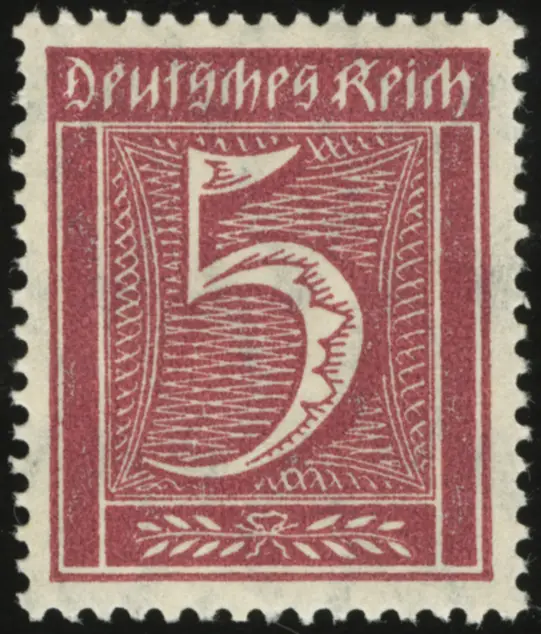 MiNr. 158
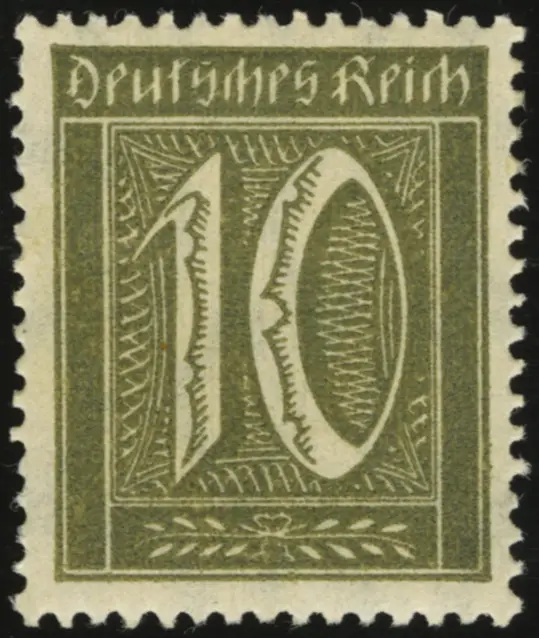 MiNr. 159 a
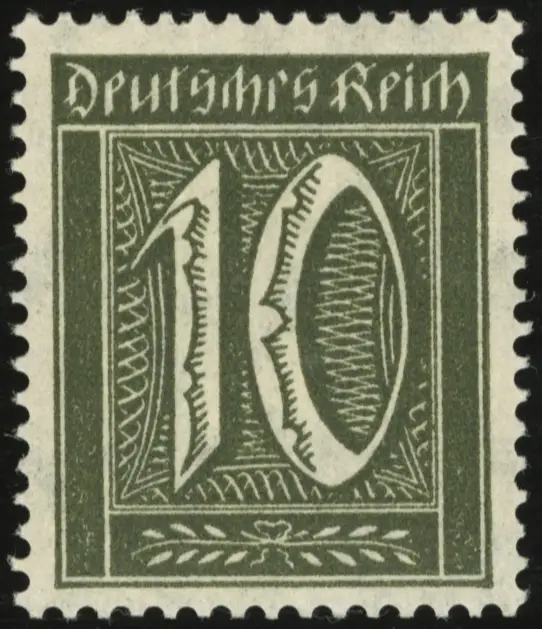 MiNr. 159 b
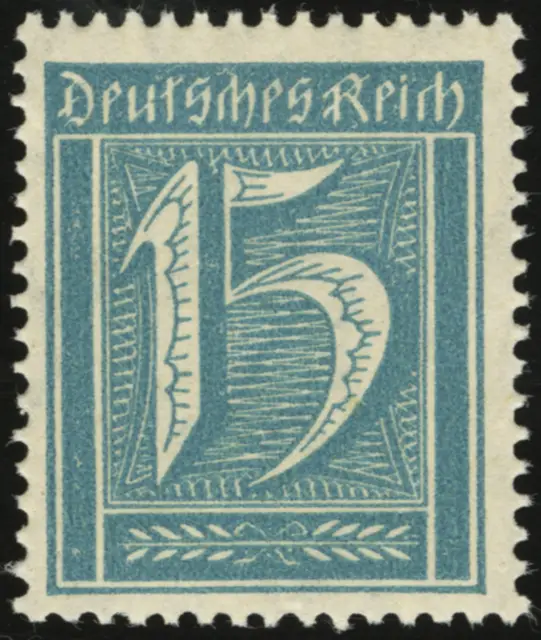 MiNr. 160
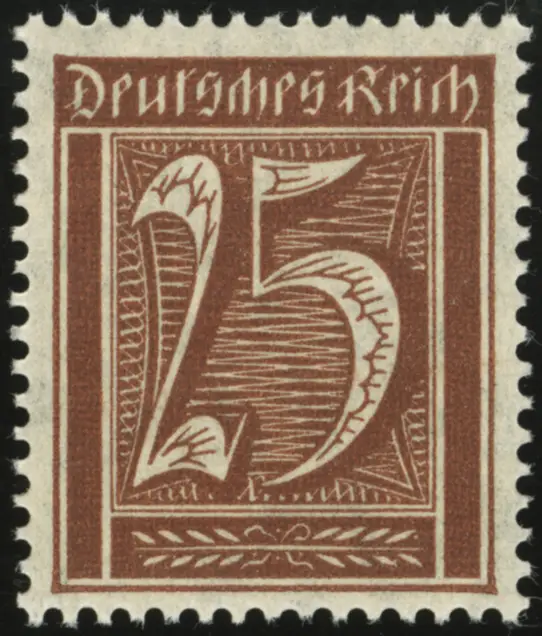 MiNr. 161
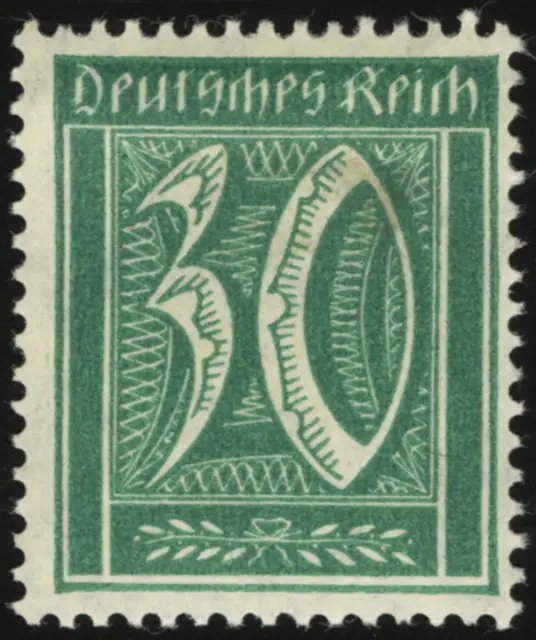 MiNr. 162
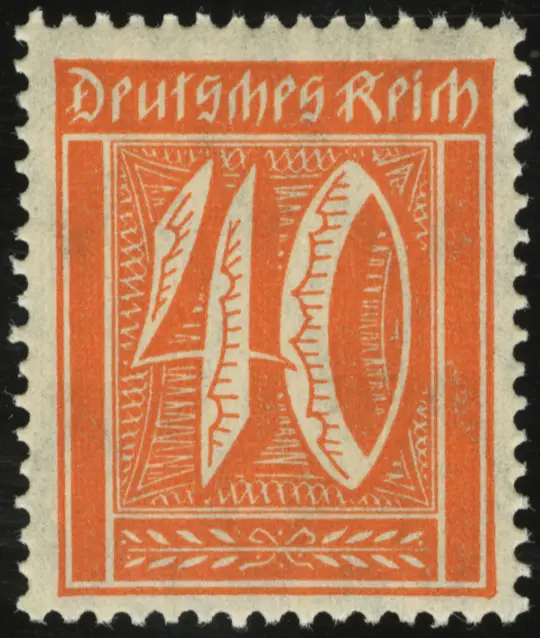 MiNr. 163
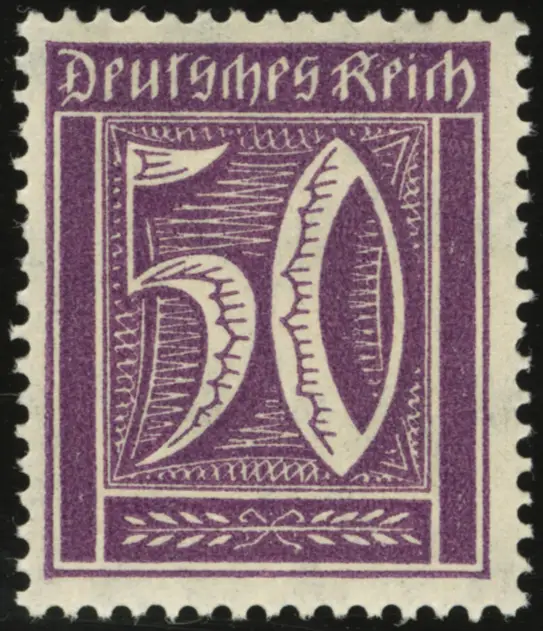 MiNr. 164
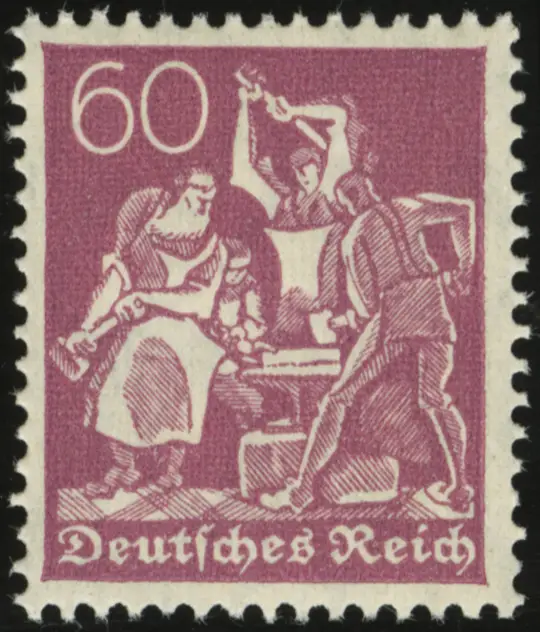 MiNr. 165
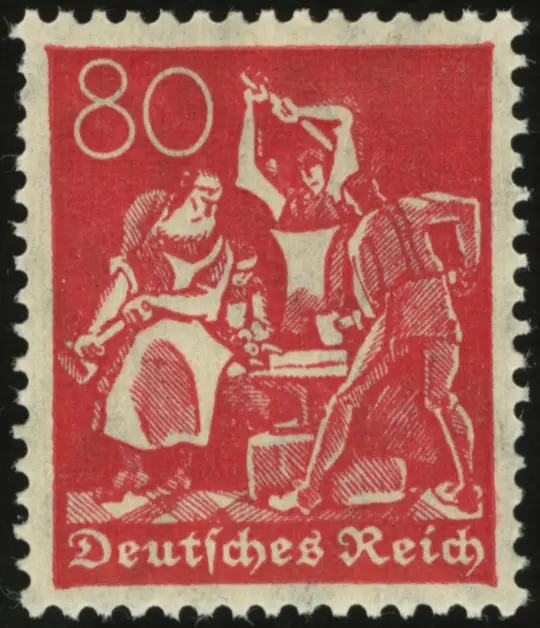 MiNr. 166
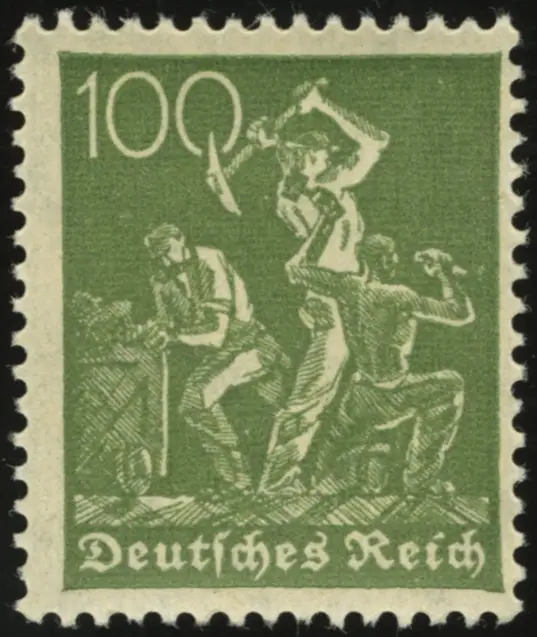 MiNr. 167
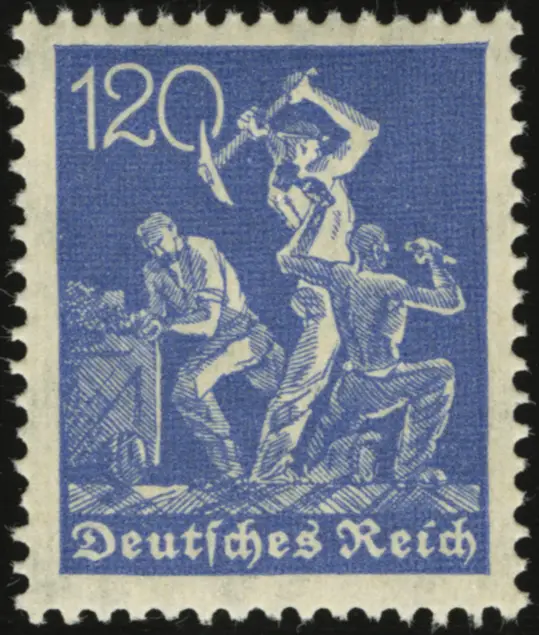 MiNr. 168
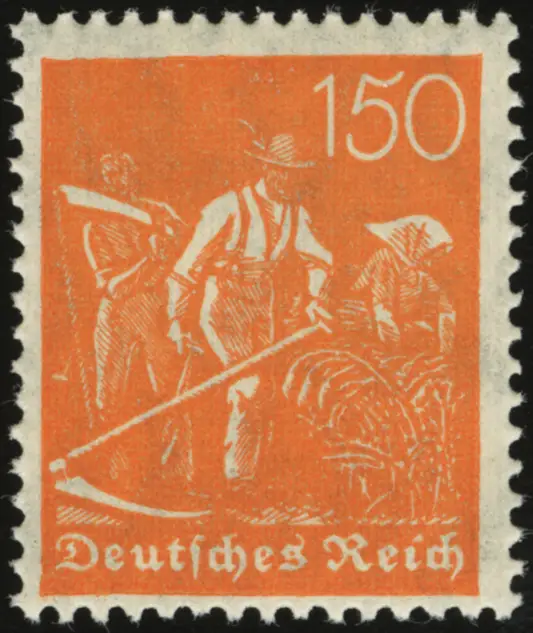 MiNr. 169
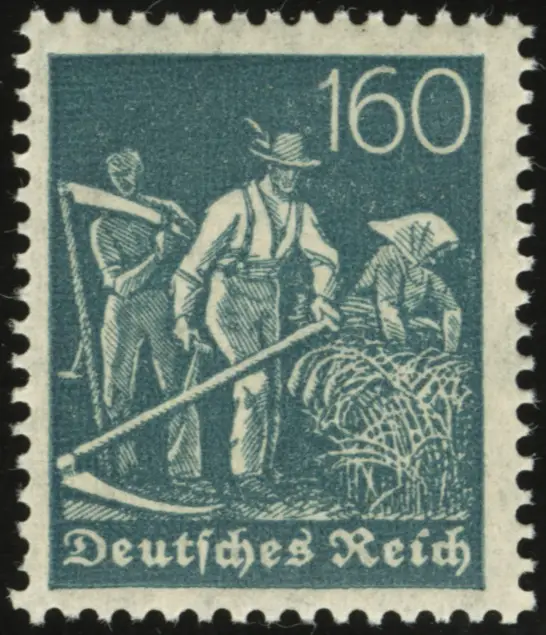 MiNr. 170
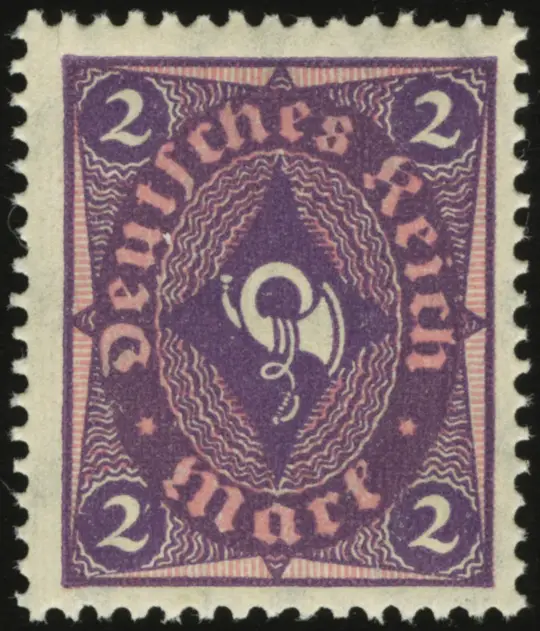 MiNr. 171
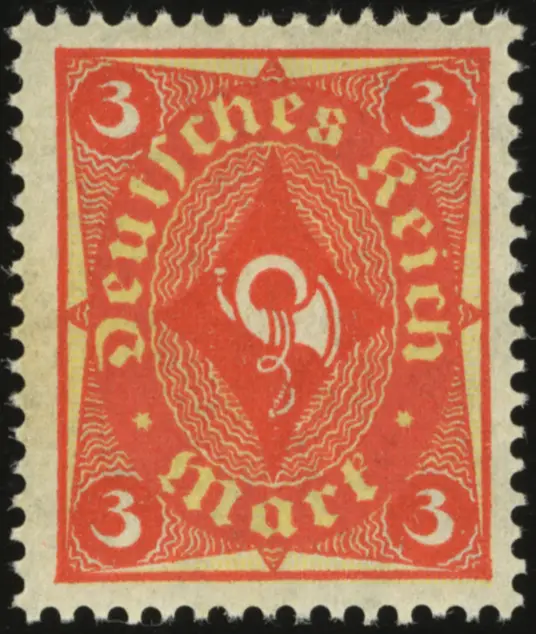 MiNr. 172
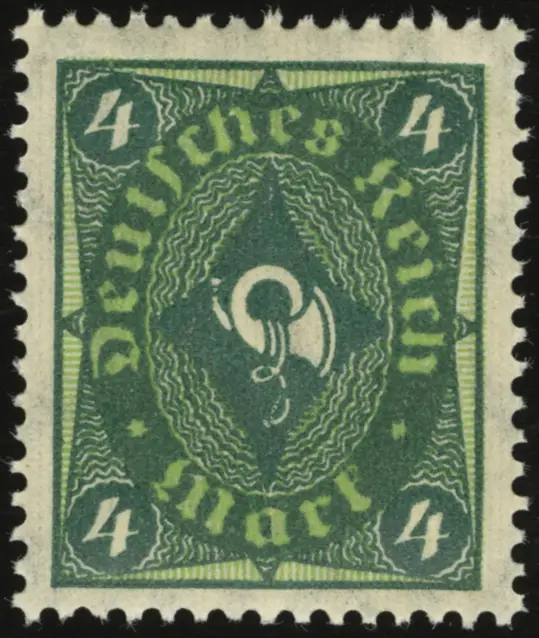 MiNr. 173
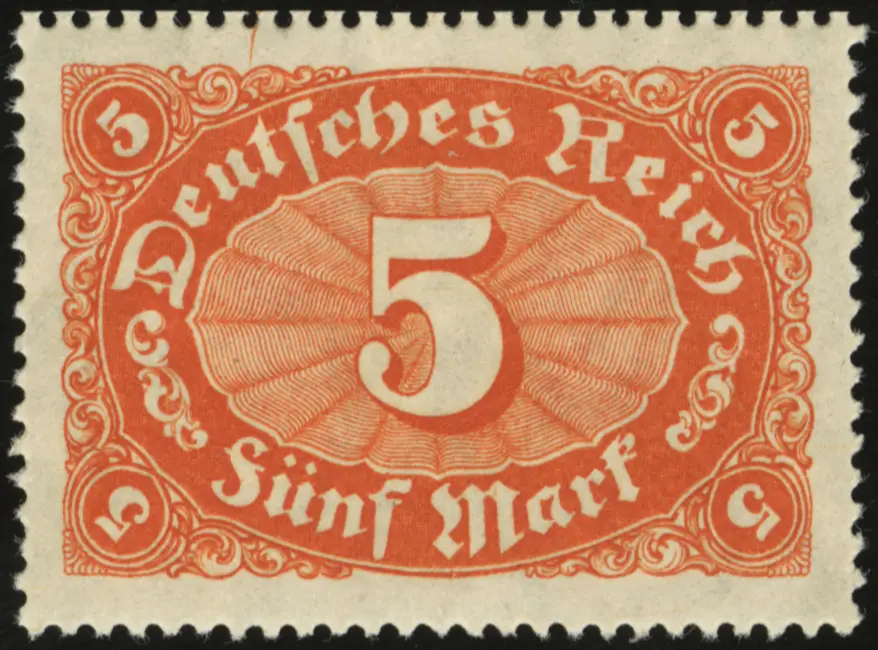 MiNr. 174 a
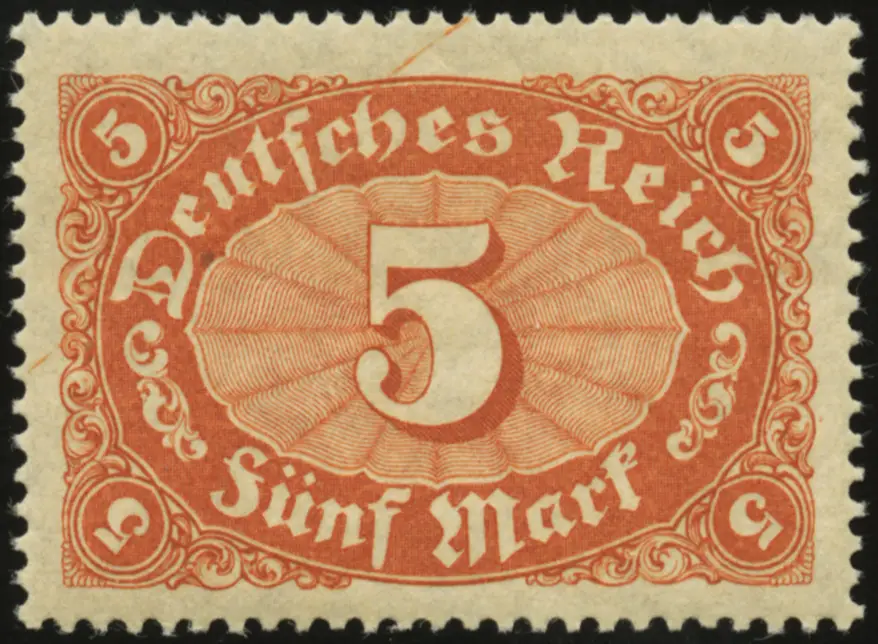 MiNr. 174 b
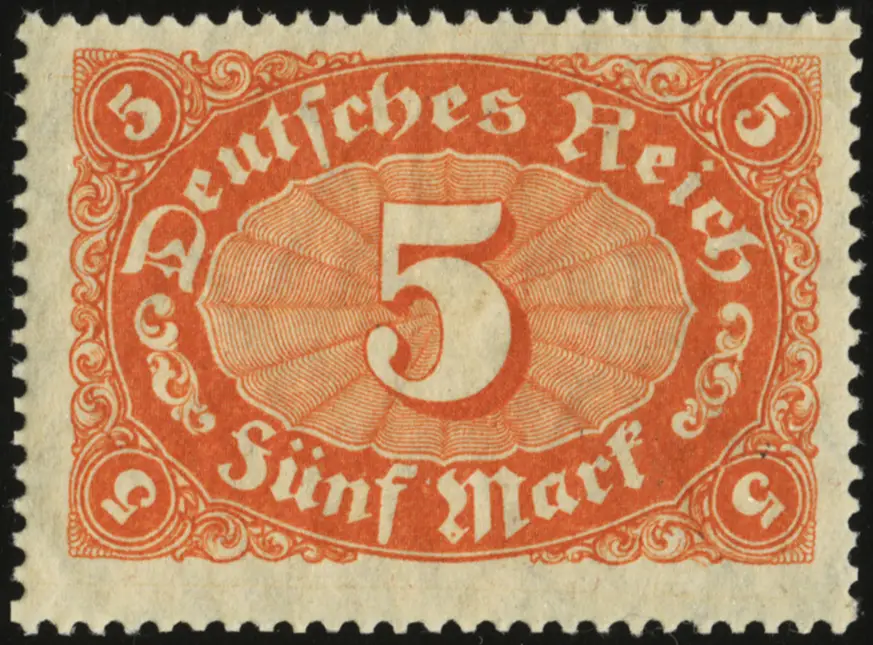 MiNr. 174 c
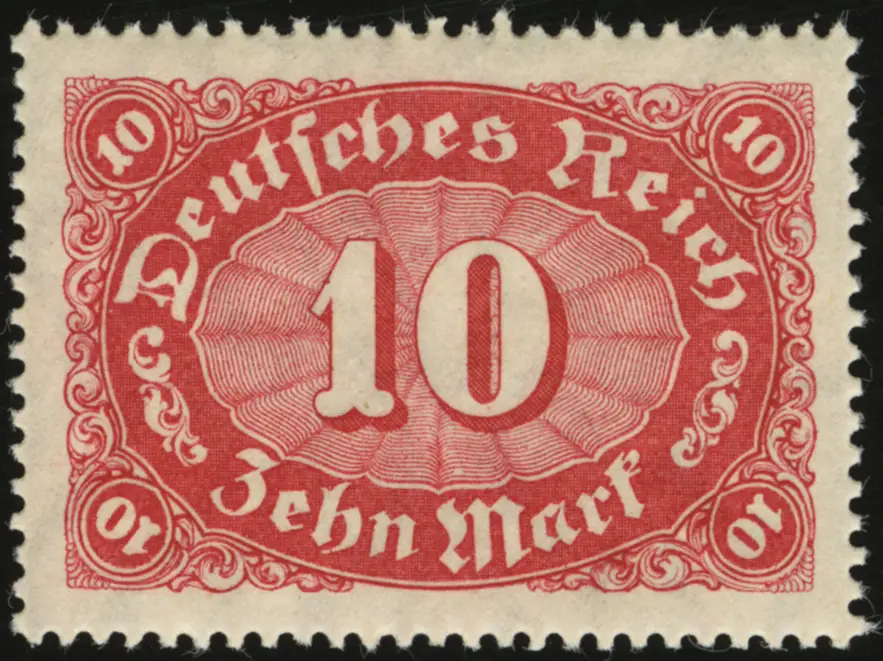 MiNr. 175
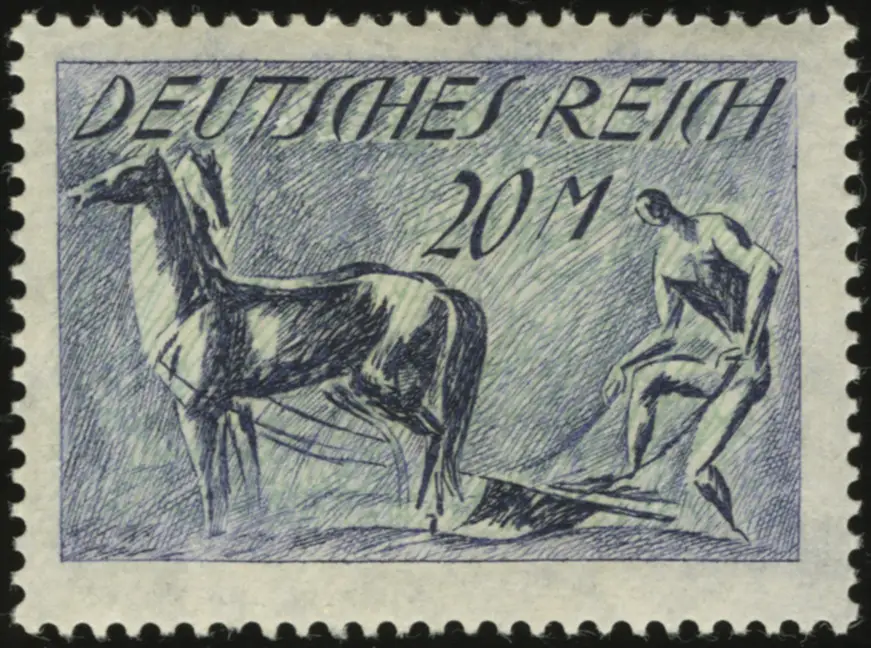 MiNr. 176 a
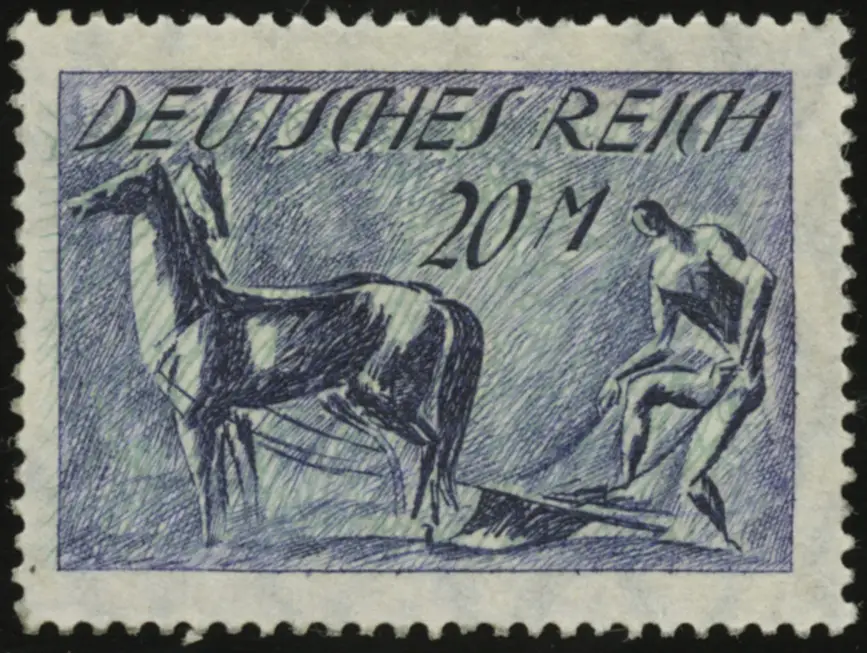 MiNr. 176 b
In 1921, Germany began issuing this set of definitives featuring numerals and depictions of various German laborers.
The individual issues were first released on staggered dates beginning in May (5, 10, 30 Pf) and ending in December (2, 3, 4 M).
The 30 Pfennig value (MiNr. 162) can be found with two plate flaws, one of which is a dot in the bottom of the “0”.
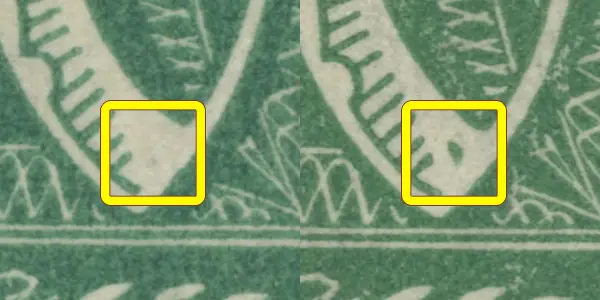
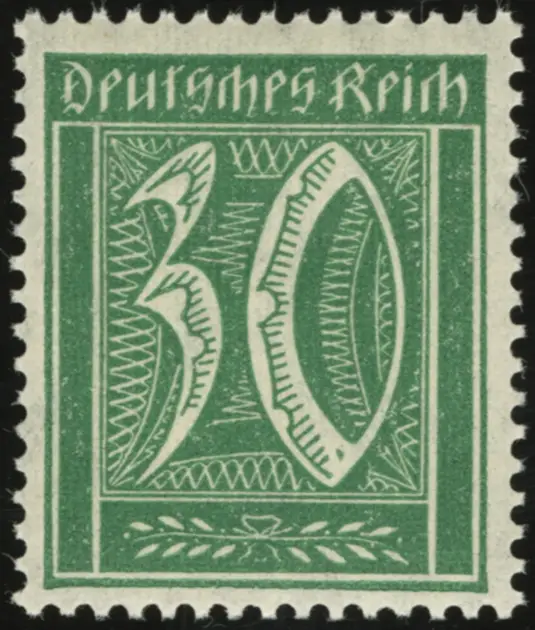 MiNr. 162 I
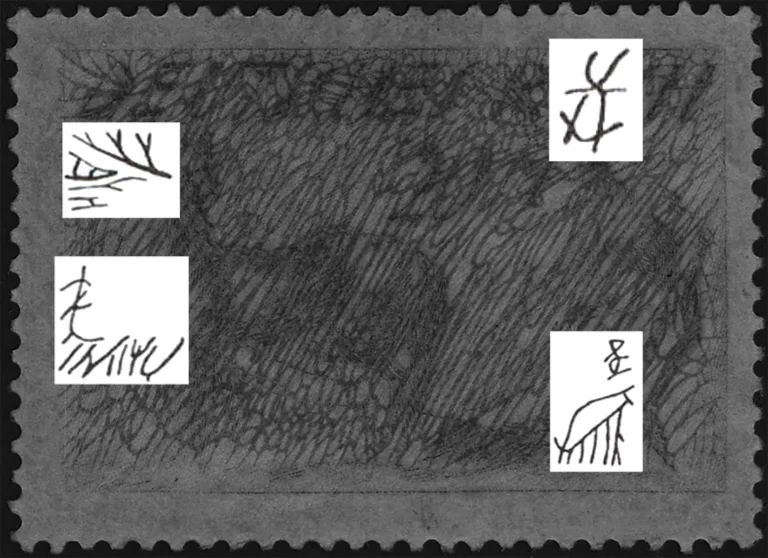
The 20 M value can also be found with inverted burelage. Due to the design of the stamp, this can be very difficult to detect — the easiest manner is to observe the pattern of the burelage in the corners of the design. Below is an image of the burelage pattern on a normal 20 M stamp, with examples of the corner patterns found on the normal variety.
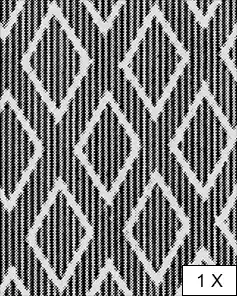
Stamps of almost identical design, but with a waffle watermark instead of lozenges, were released beginning in December 1921.
MiNr. 158
MiNr. 159 a
MiNr. 159 b
MiNr. 160
MiNr. 161
MiNr. 162
MiNr. 163
MiNr. 164
MiNr. 165
MiNr. 166
MiNr. 167
MiNr. 168
MiNr. 169
MiNr. 170
MiNr. 171
MiNr. 172
MiNr. 173
MiNr. 174 a
MiNr. 174 b
MiNr. 174 c
MiNr. 175
MiNr. 176 a
MiNr. 176 b
In 1921, Germany began issuing this set of definitives featuring numerals and depictions of various German laborers.
The individual issues were first released on staggered dates beginning in May (5, 10, 30 Pf) and ending in December (2, 3, 4 M).
The 30 Pfennig value (MiNr. 162) can be found with two plate flaws, one of which is a dot in the bottom of the “0”.
MiNr. 162 I
The 20 M value can also be found with inverted burelage. Due to the design of the stamp, this can be very difficult to detect — the easiest manner is to observe the pattern of the burelage in the corners of the design. Below is an image of the burelage pattern on a normal 20 M stamp, with examples of the corner patterns found on the normal variety.
Stamps of almost identical design, but with a waffle watermark instead of lozenges, were released beginning in December 1921.