
Set Date(s)
1917
By 1916, the German war effort was suffering under the weight of the Entente naval blockade, which had been in force since shortly after the outbreak of the war. Having been unsuccessful in its attempts to break the blockade, Germany decide to construct a class of unarmed cargo U-boats to serve as blockade runners. This class, the U-151 class, was originally to consist of seven boats, but only two, Deutschland and Bremen, were completed in accordance with the original specs. The remaining five were completed as heavily armed long-range U-boats.
Deutschland and Bremen were built by the Deutsche Ozean-Reederei (German Ocean Shipping Company), a subsidiary of the Norddeutscher Lloyd (North German Lloyd) shipping company and the Deutsche Bank, which was created explicitly for this enterprise.

Deutschland made two voyages to the U.S. In the summer of 1916, she delivered a cargo of chemical dyes, medical drugs, gems, and mail to Baltimore, Maryland, then returned to Bremerhaven with a cargo of nickel, tin, and crude rubber. In the fall of 1916, she delivered a cargo of gems, securities, and medicinal products to New London, Connecticut, and returned with a cargo of silver bullion. Before Deutschland could embark on a third voyage, relations between Germany and the U.S. deteriorated significantly, so she was converted to an armed U-boat, the U-155.
Bremen departed Bremerhaven in September 1916 for Norfolk, Virginia. She reportedly carried funds which were to be used to pay an American firm to build more cargo submarines for Germany. She never arrived in Virginia, and her fate remains unknown.
For the eventually-cancelled third voyage of Deutschland, the German postal authorities offered to carry regular mail (as opposed to high-value mail requiring insurance) originating from within any of the Central Powers.
These Tauchbootbrief letters contained two parts, the outer envelope and the inner envelope. To send mail by this manner, the sender had to attach the proper postage for normal foreign post and have it cancelled at the post office of origin, then place the entire letter, unsealed, in an outer envelope bearing only the words “Tauchbootbrief nach Bremen” (submarine letter to Bremen). The outer envelope was then franked with a 2 Mark stamp to cover the cost of the service.
Most Tauchbootbrief are from Germany.
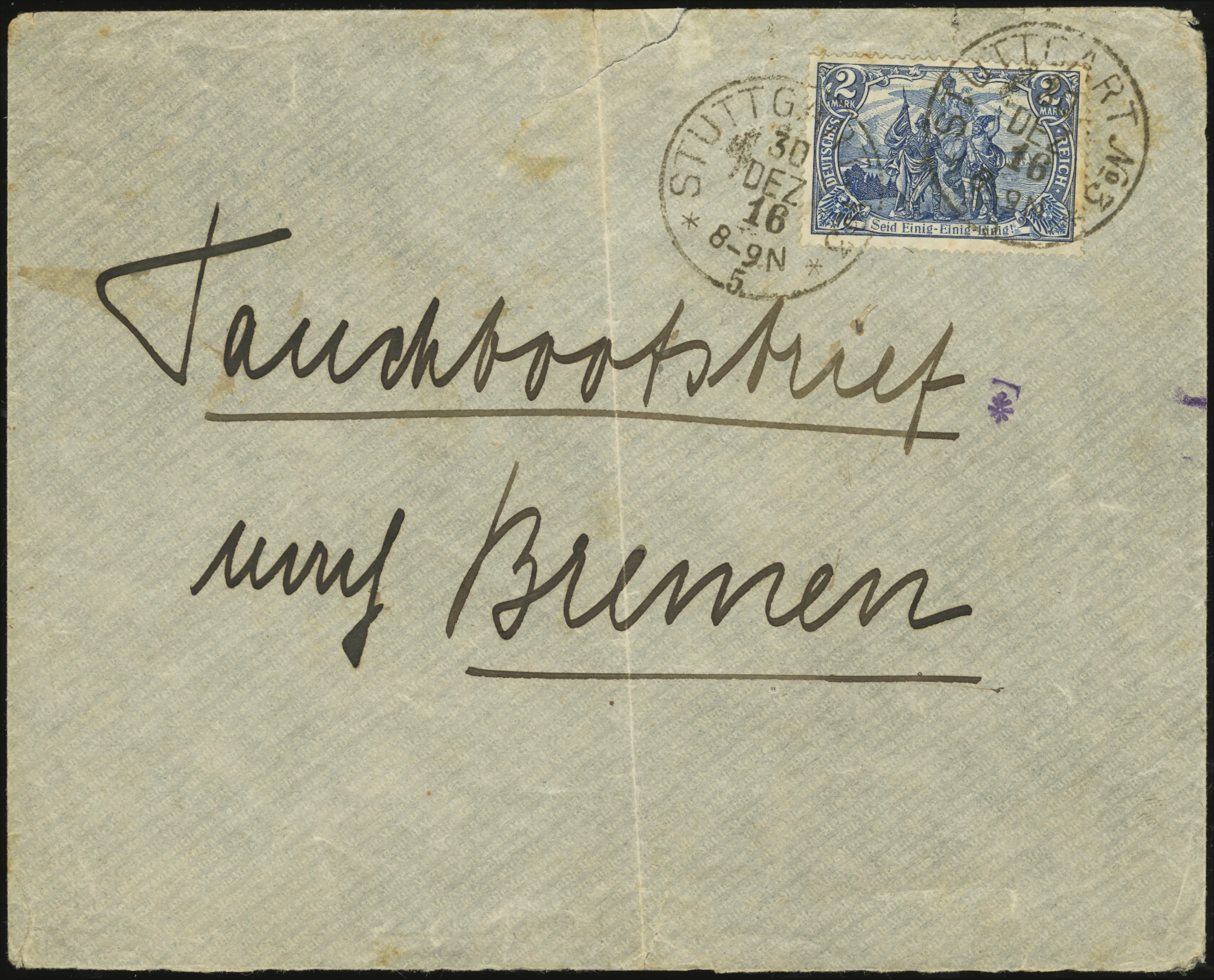 German TB (front)
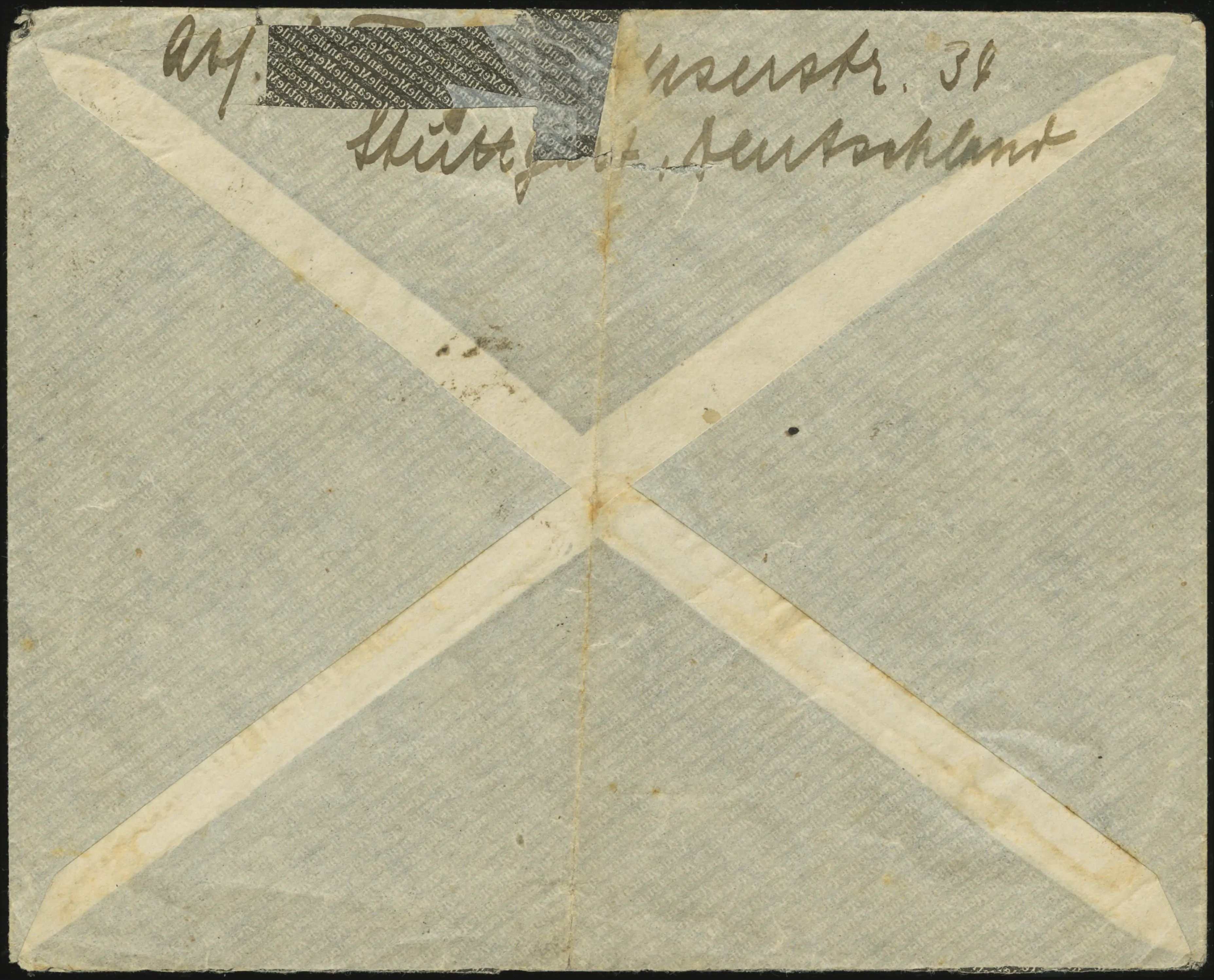 German TB (rear)
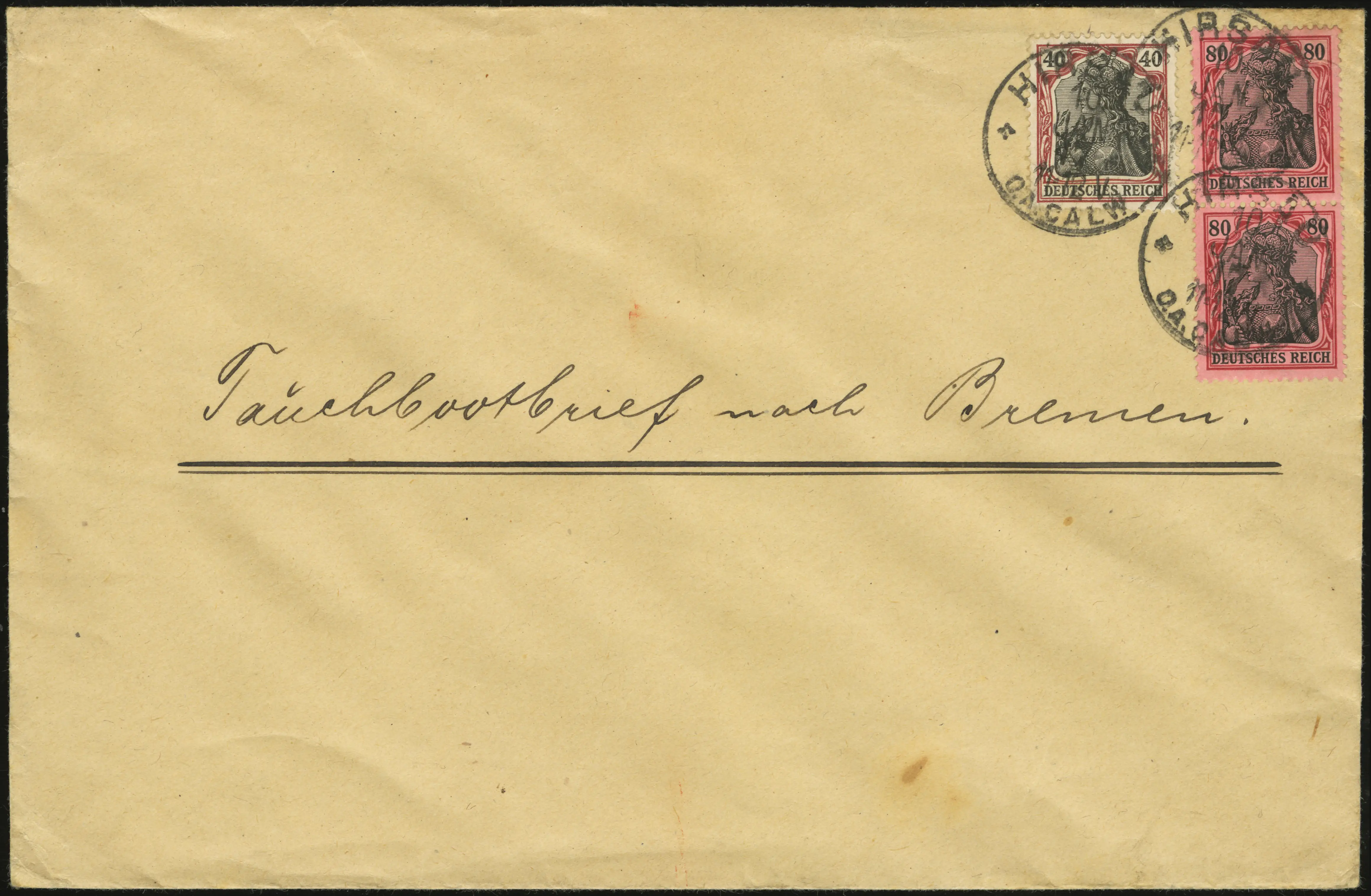 German TB (front)
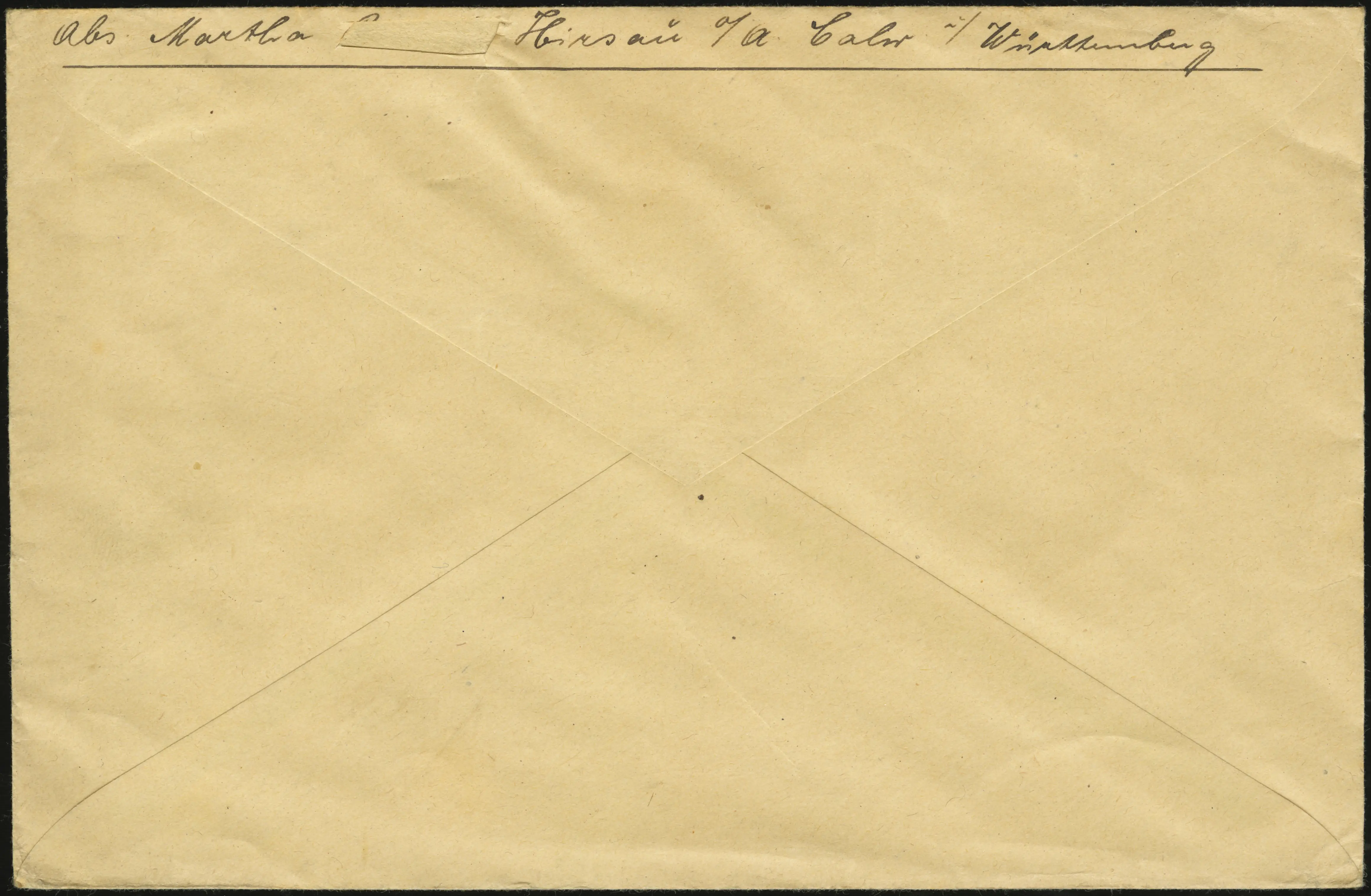 German TB (rear)
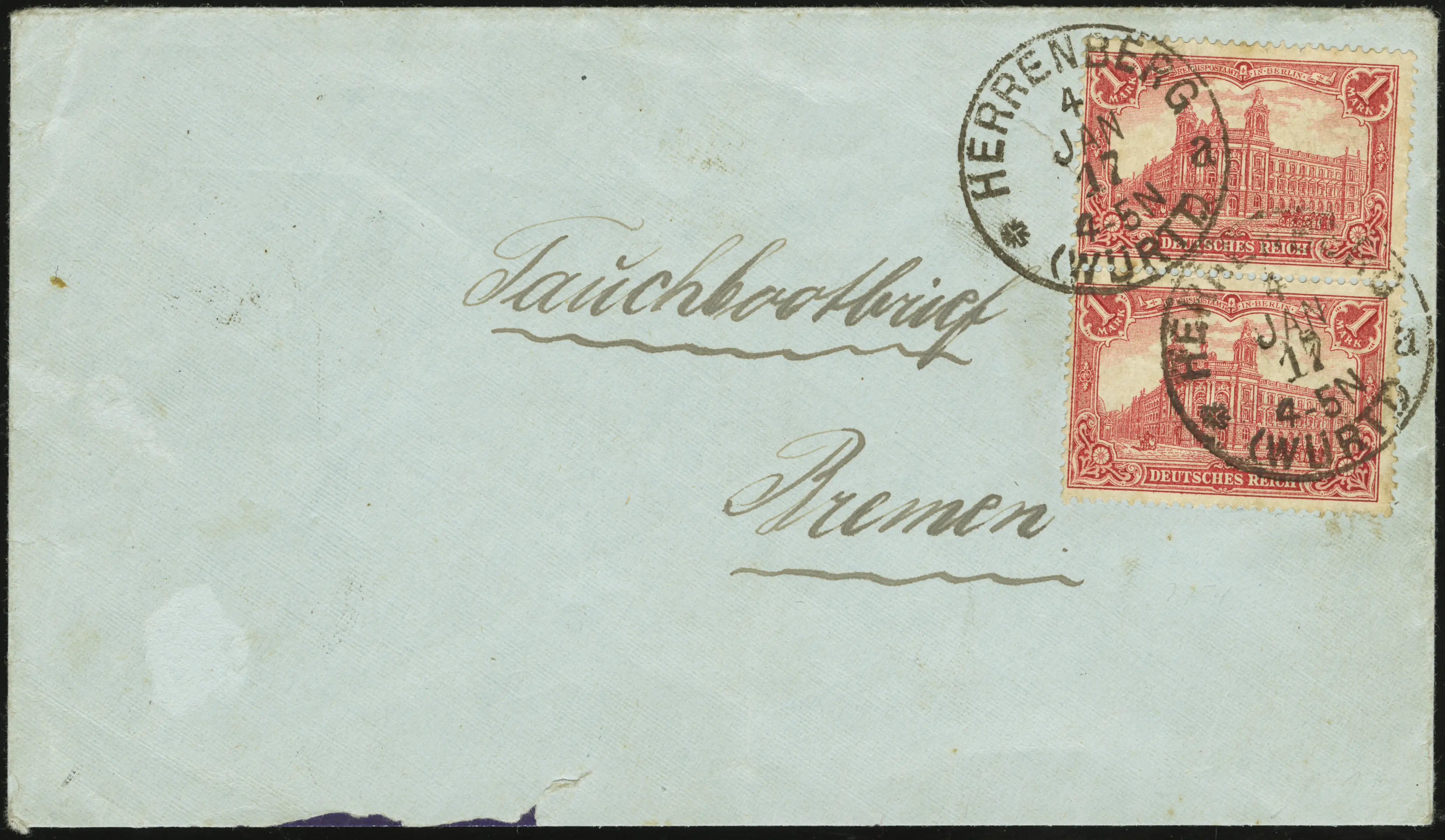 German TB (front)
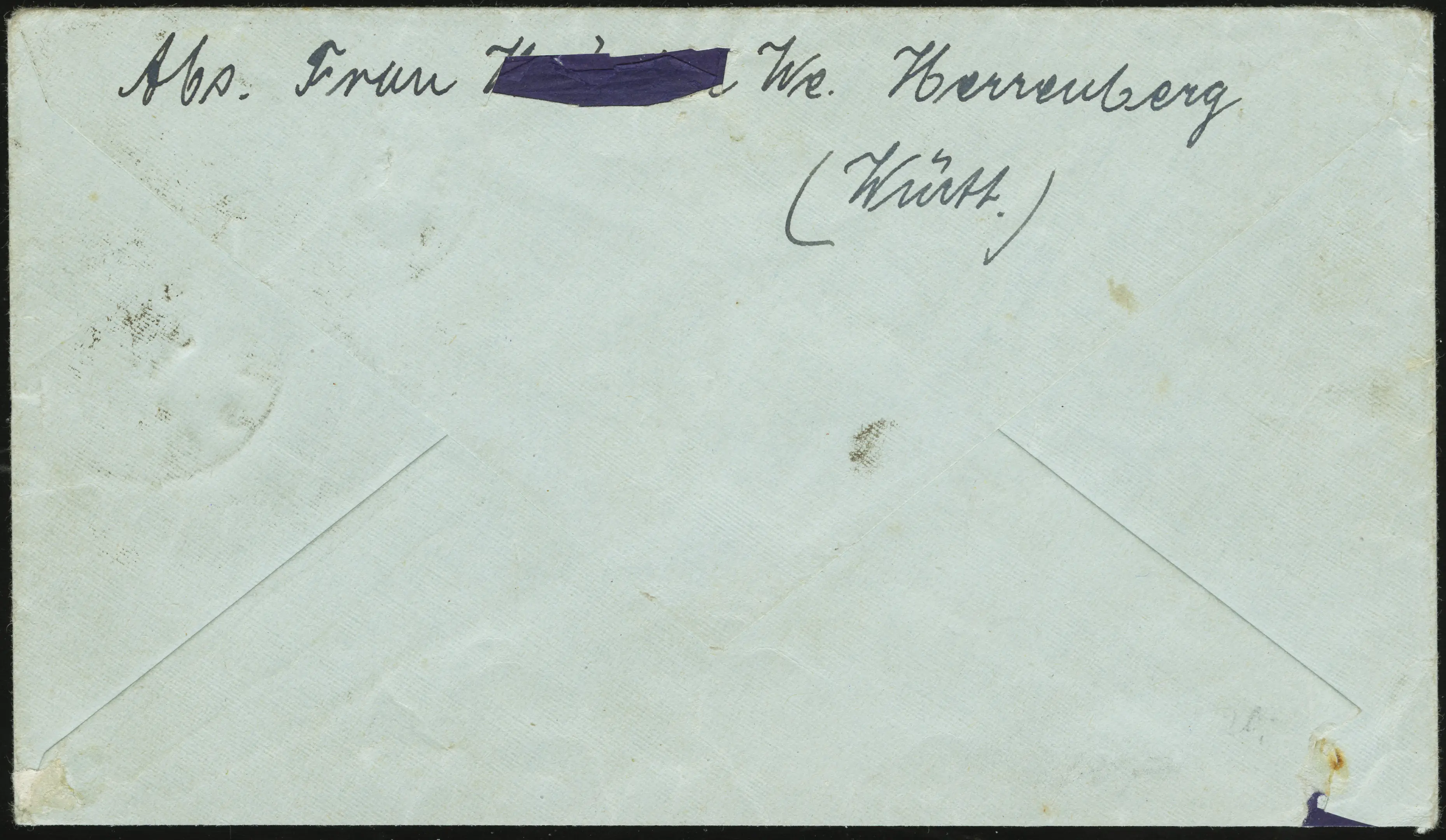 German TB (rear)
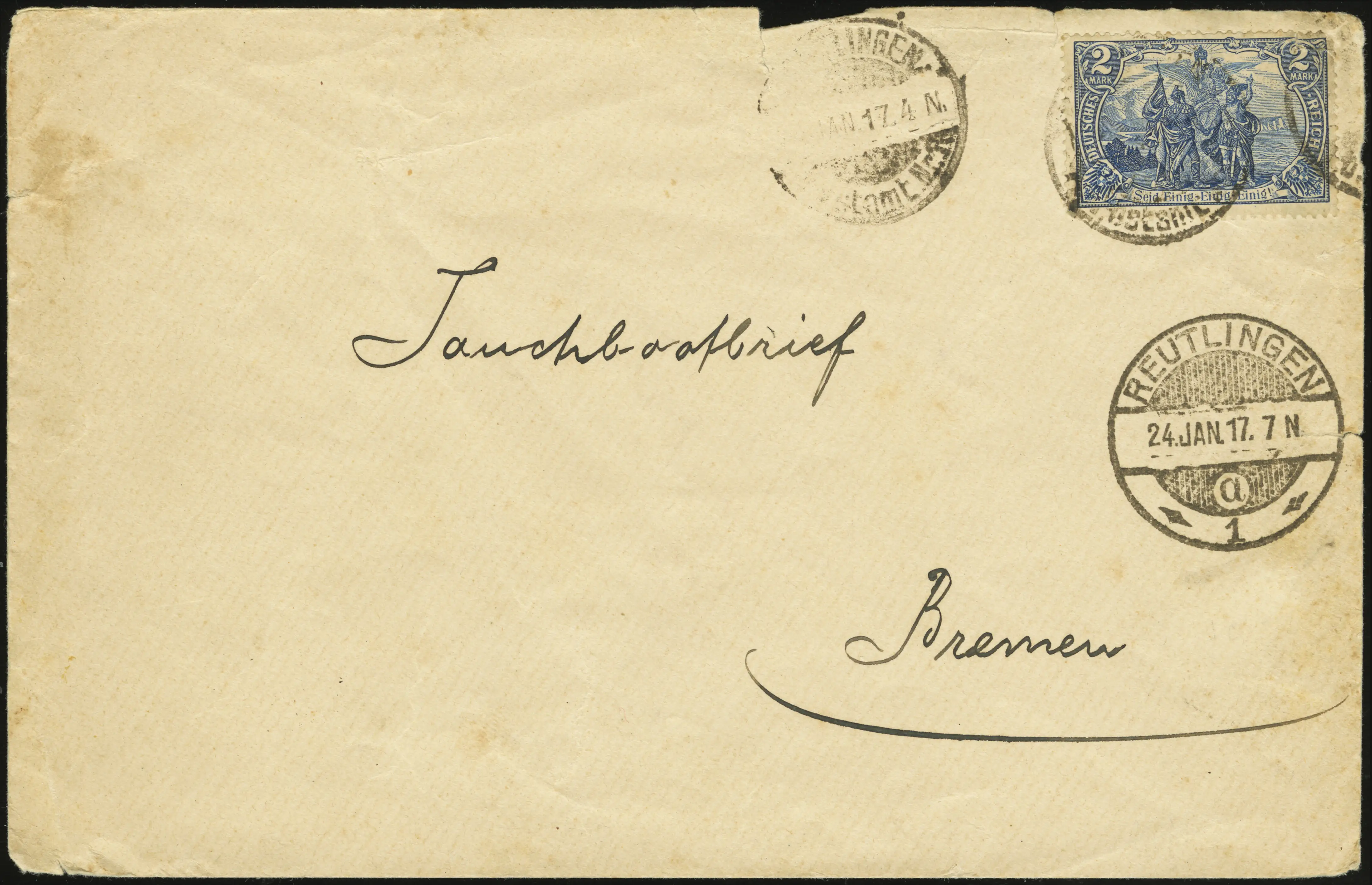 German TB (front)
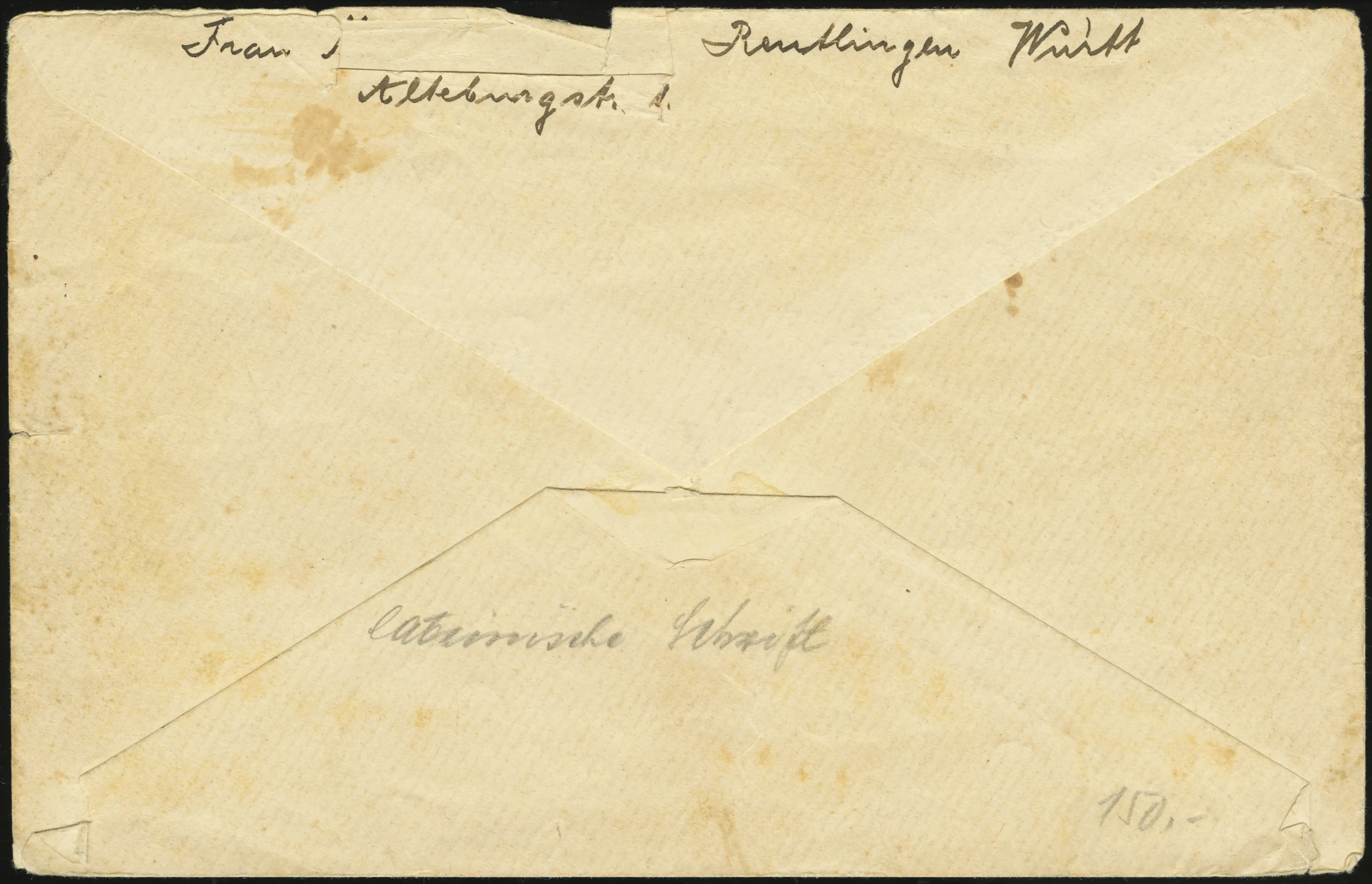 German TB (rear)
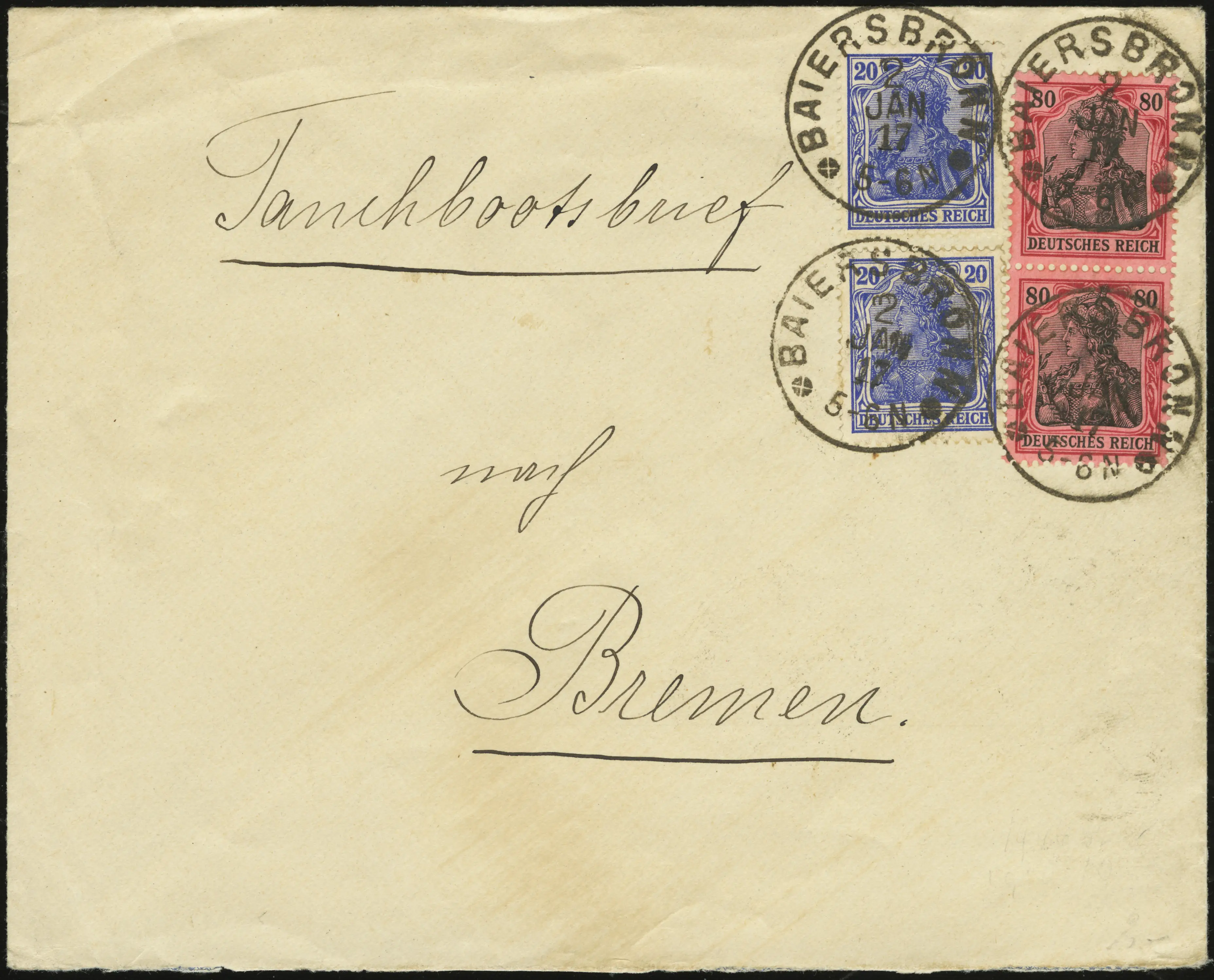 German TB (front)
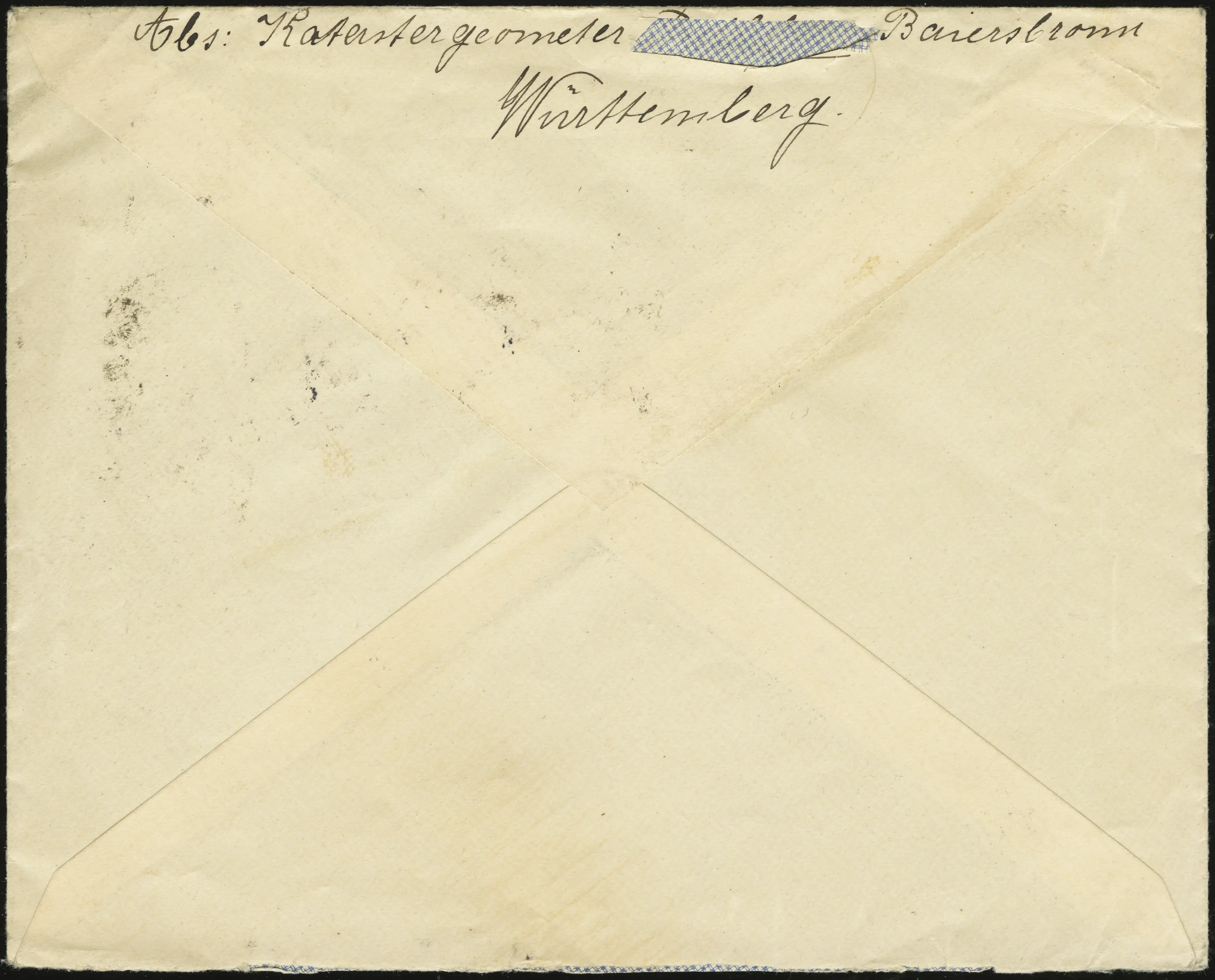 German TB (rear)
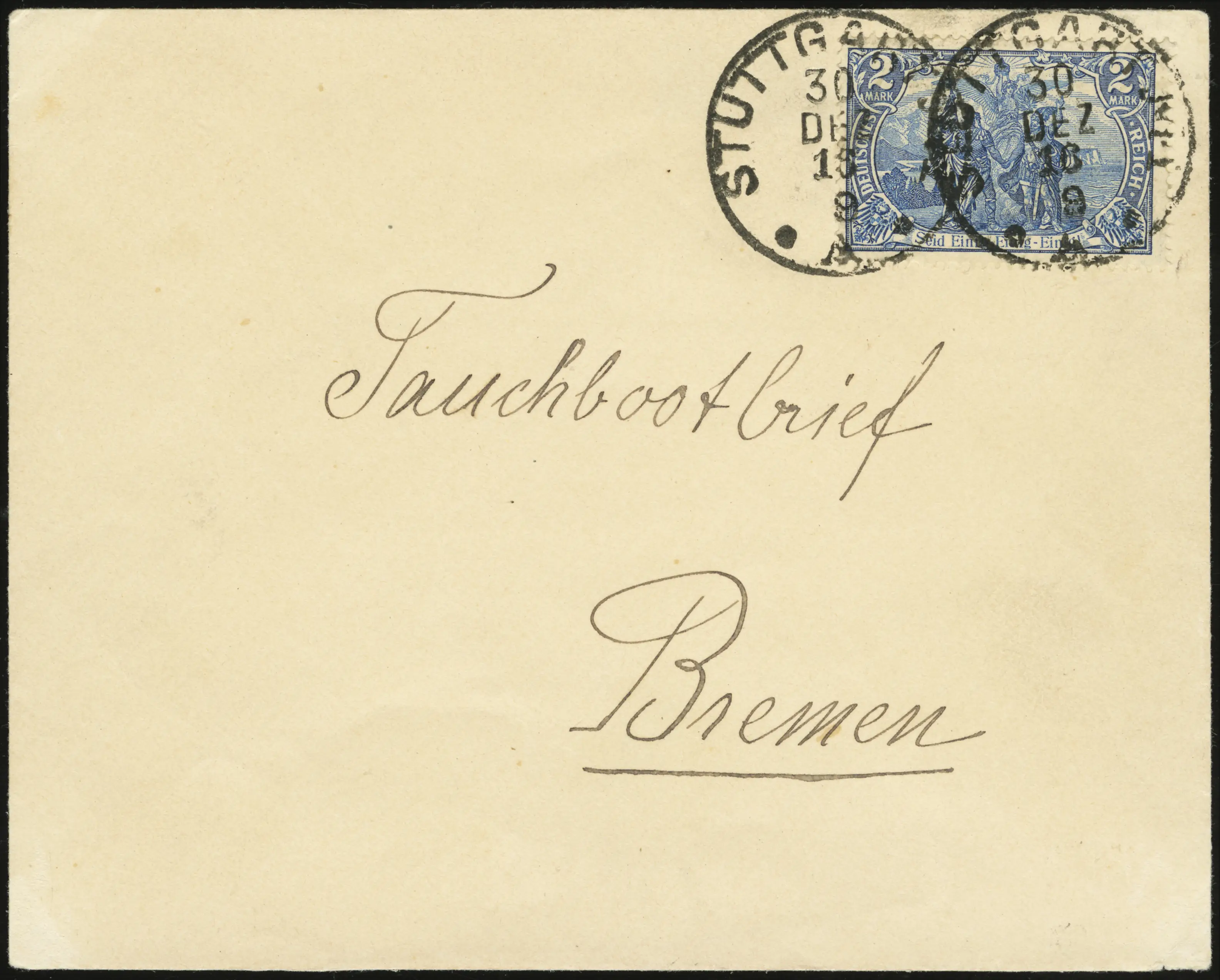 German TB (front)
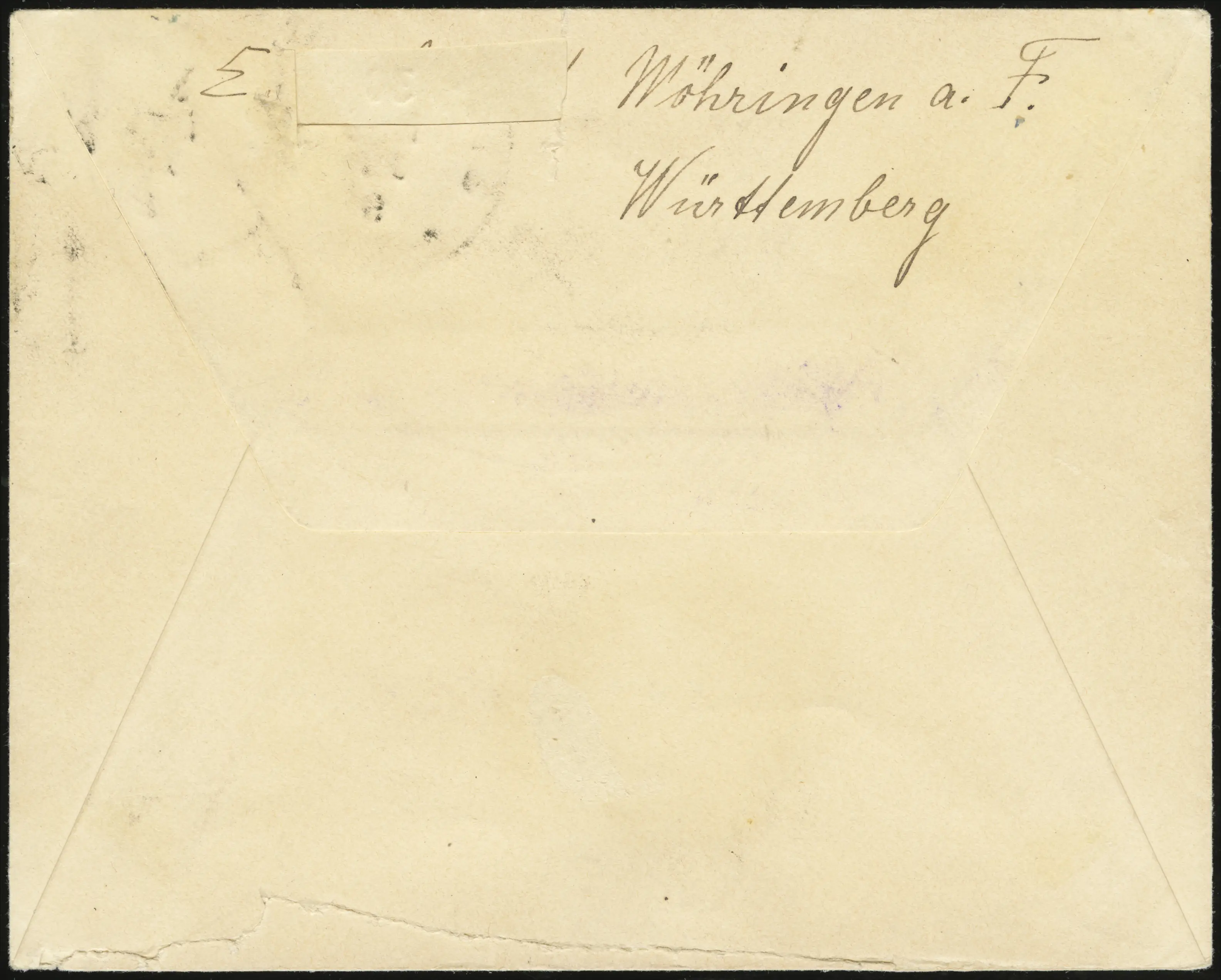 German TB (rear)
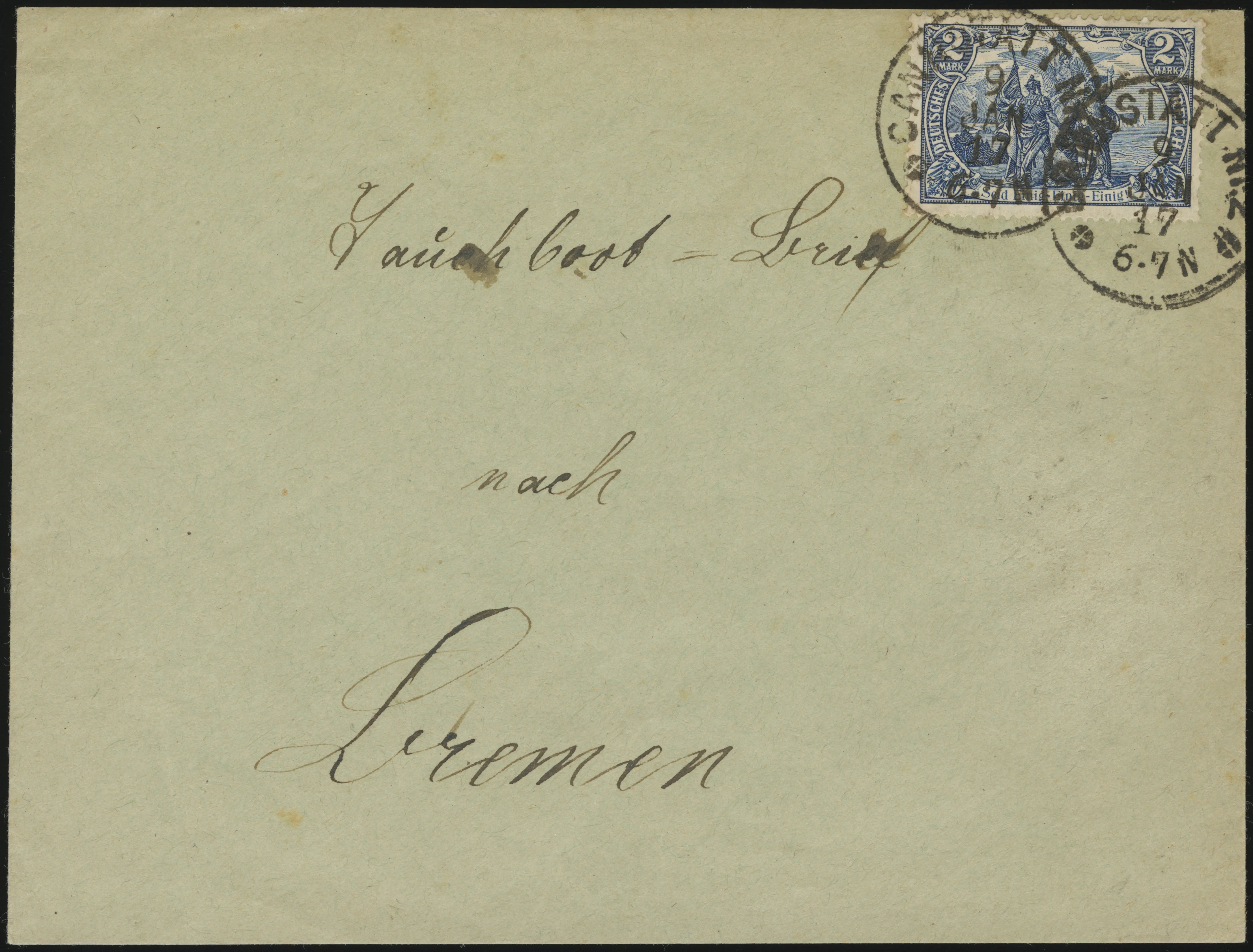 German TB (front)
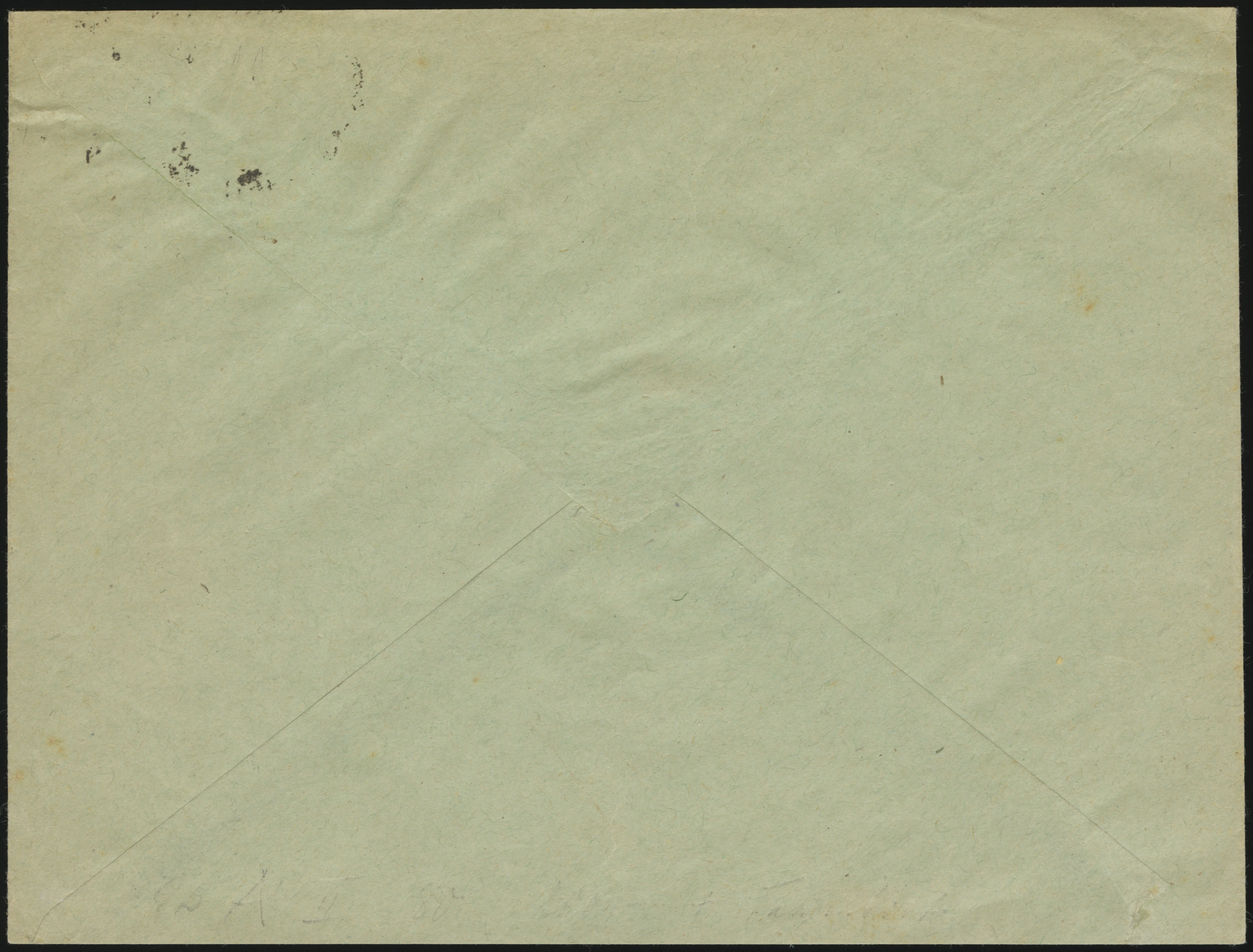 German TB (front)
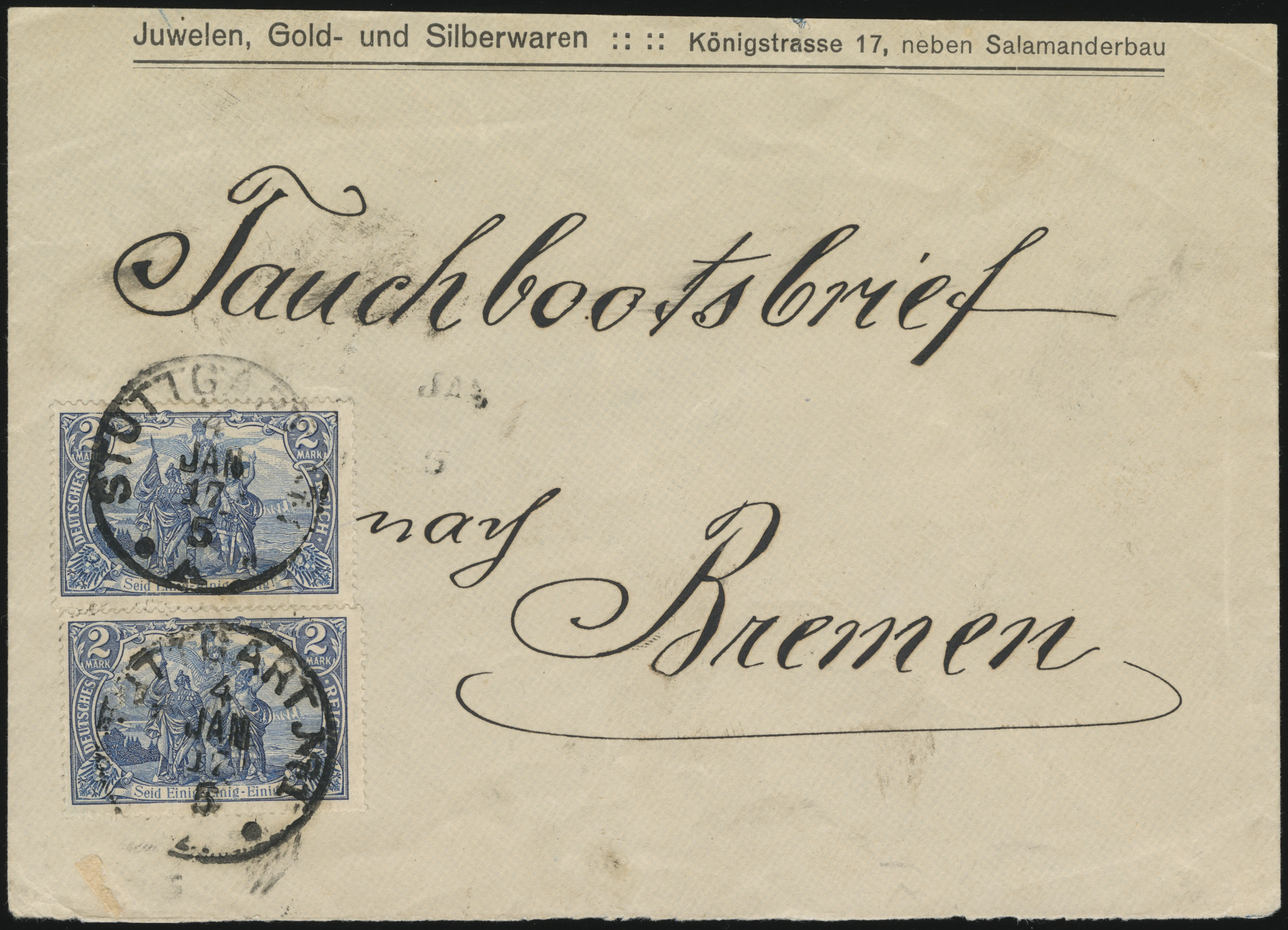 German TB (front)
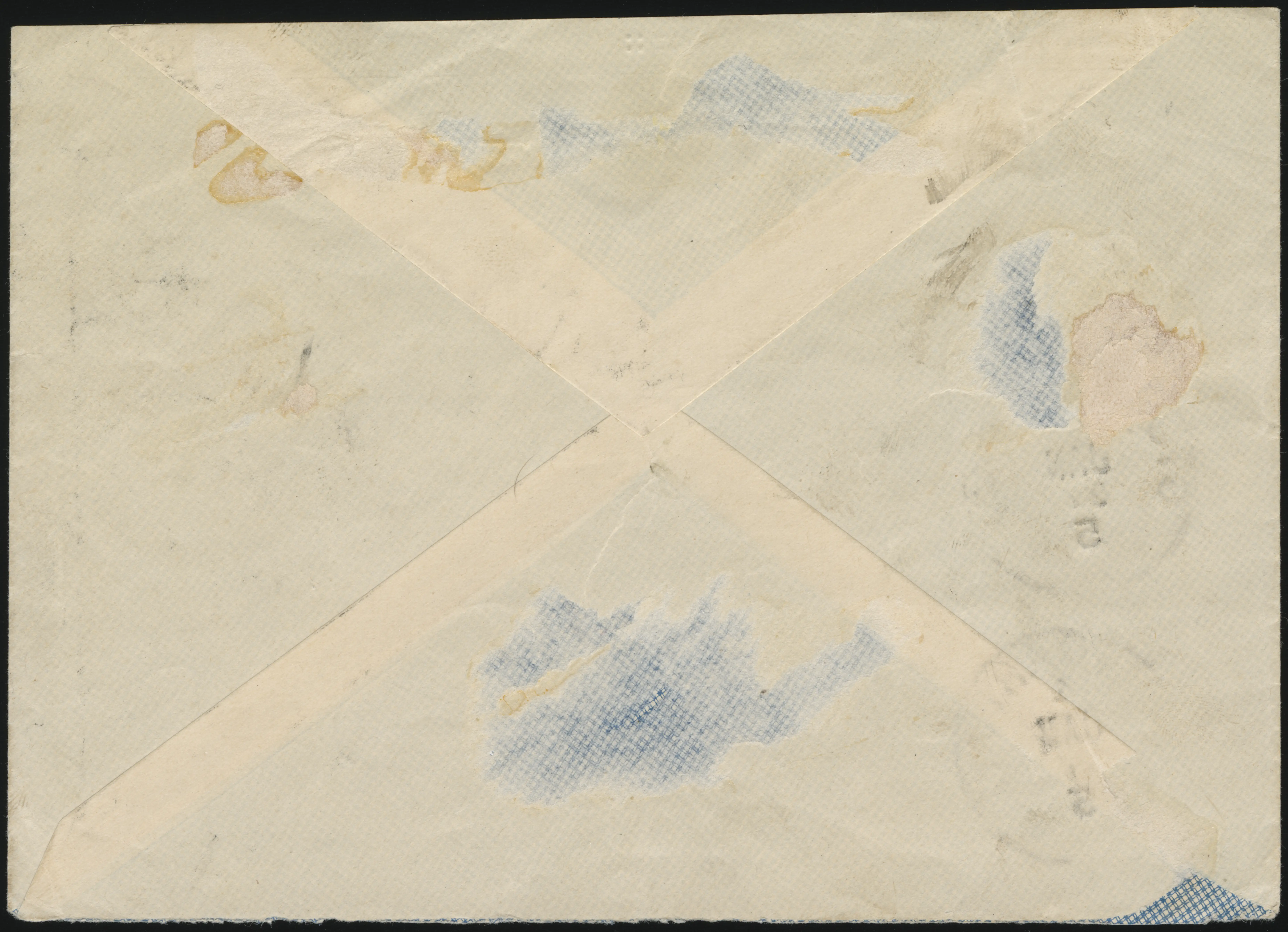 Ship-TB-Out-DE-Stuttgart-170104-01-rear
Tauchbootbrief are also known from Austria, Hungary, and Bavaria. None are known to exist from Turkey.
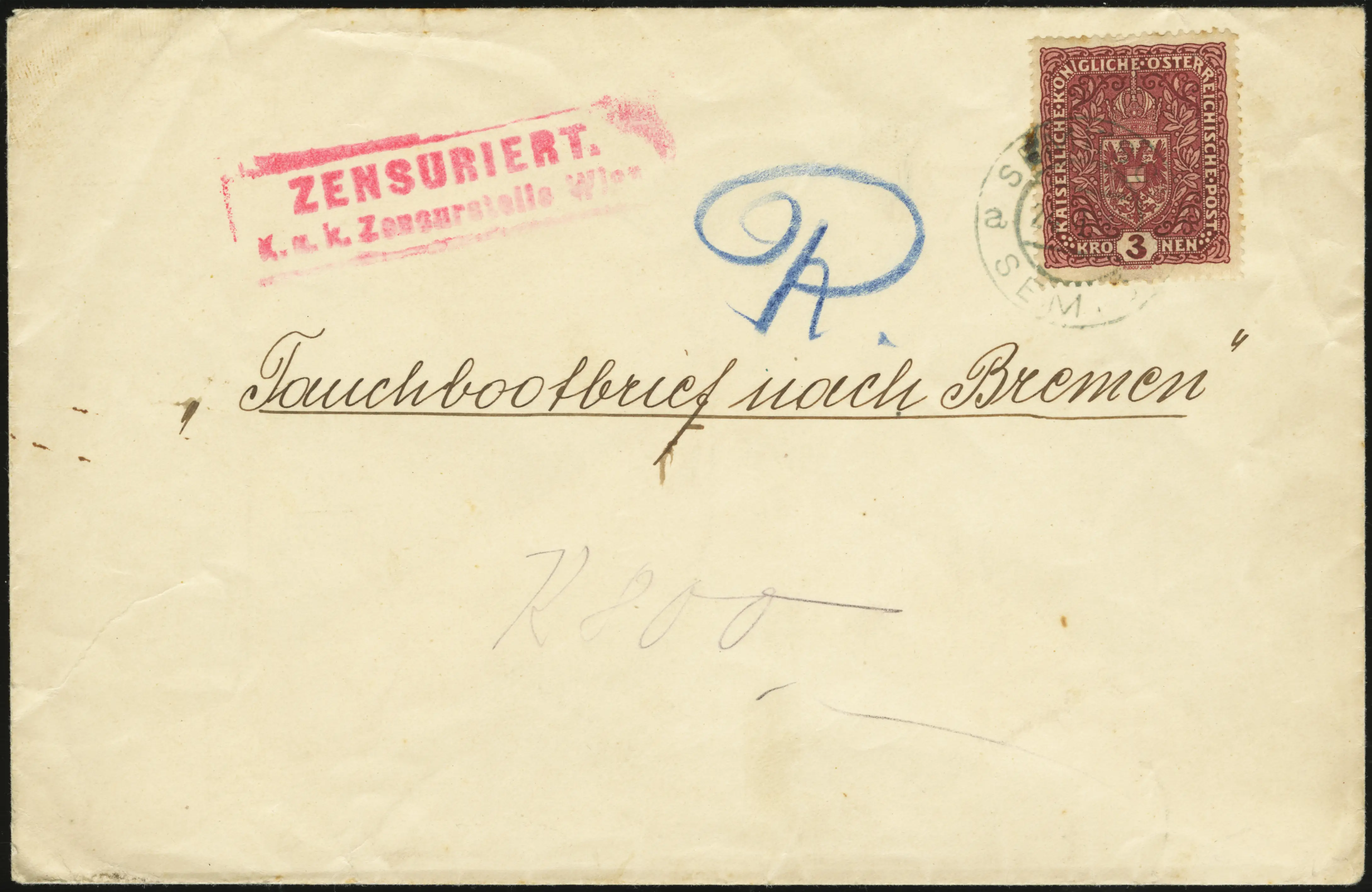 Austrian TB (front)
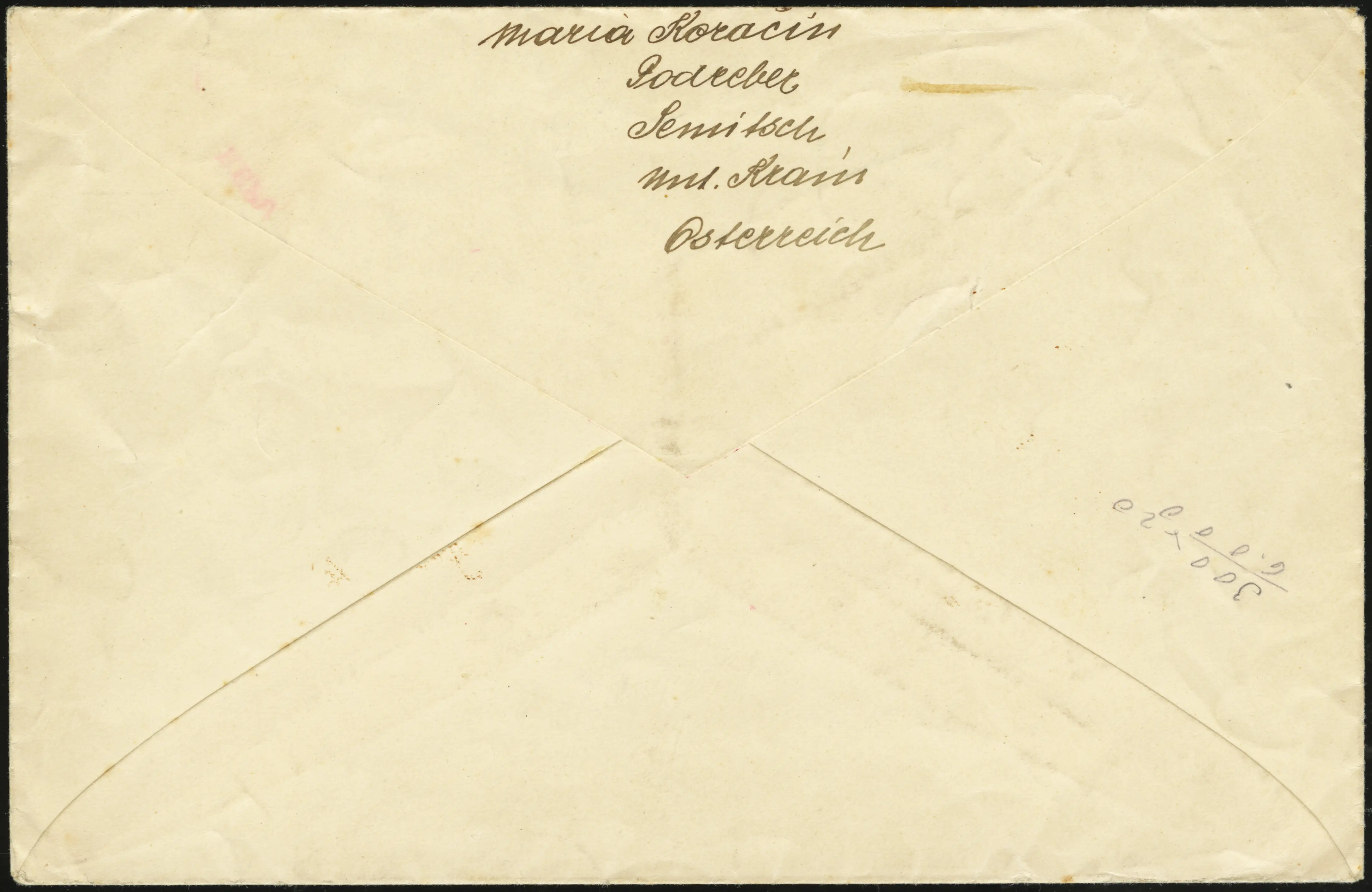 Austrian TB (rear)
The inner envelopes contained the address information required to get the letters to their destinations, had the voyage not been cancelled due to the changing relationship between Germany and the USA by early 1917.
By 1916, the German war effort was suffering under the weight of the Entente naval blockade, which had been in force since shortly after the outbreak of the war. Having been unsuccessful in its attempts to break the blockade, Germany decide to construct a class of unarmed cargo U-boats to serve as blockade runners. This class, the U-151 class, was originally to consist of seven boats, but only two, Deutschland and Bremen, were completed in accordance with the original specs. The remaining five were completed as heavily armed long-range U-boats.
Deutschland and Bremen were built by the Deutsche Ozean-Reederei (German Ocean Shipping Company), a subsidiary of the Norddeutscher Lloyd (North German Lloyd) shipping company and the Deutsche Bank, which was created explicitly for this enterprise.
Deutschland made two voyages to the U.S. In the summer of 1916, she delivered a cargo of chemical dyes, medical drugs, gems, and mail to Baltimore, Maryland, then returned to Bremerhaven with a cargo of nickel, tin, and crude rubber. In the fall of 1916, she delivered a cargo of gems, securities, and medicinal products to New London, Connecticut, and returned with a cargo of silver bullion. Before Deutschland could embark on a third voyage, relations between Germany and the U.S. deteriorated significantly, so she was converted to an armed U-boat, the U-155.
Bremen departed Bremerhaven in September 1916 for Norfolk, Virginia. She reportedly carried funds which were to be used to pay an American firm to build more cargo submarines for Germany. She never arrived in Virginia, and her fate remains unknown.
For the eventually-cancelled third voyage of Deutschland, the German postal authorities offered to carry regular mail (as opposed to high-value mail requiring insurance) originating from within any of the Central Powers.
These Tauchbootbrief letters contained two parts, the outer envelope and the inner envelope. To send mail by this manner, the sender had to attach the proper postage for normal foreign post and have it cancelled at the post office of origin, then place the entire letter, unsealed, in an outer envelope bearing only the words “Tauchbootbrief nach Bremen” (submarine letter to Bremen). The outer envelope was then franked with a 2 Mark stamp to cover the cost of the service.
Most Tauchbootbrief are from Germany.
German TB (front)
German TB (rear)
German TB (front)
German TB (rear)
German TB (front)
German TB (rear)
German TB (front)
German TB (rear)
German TB (front)
German TB (rear)
German TB (front)
German TB (rear)
German TB (front)
German TB (front)
German TB (front)
Ship-TB-Out-DE-Stuttgart-170104-01-rear
Tauchbootbrief are also known from Austria, Hungary, and Bavaria. None are known to exist from Turkey.
Austrian TB (front)
Austrian TB (rear)
The inner envelopes contained the address information required to get the letters to their destinations, had the voyage not been cancelled due to the changing relationship between Germany and the USA by early 1917.