Set Date(s)
September 1897 / 1899
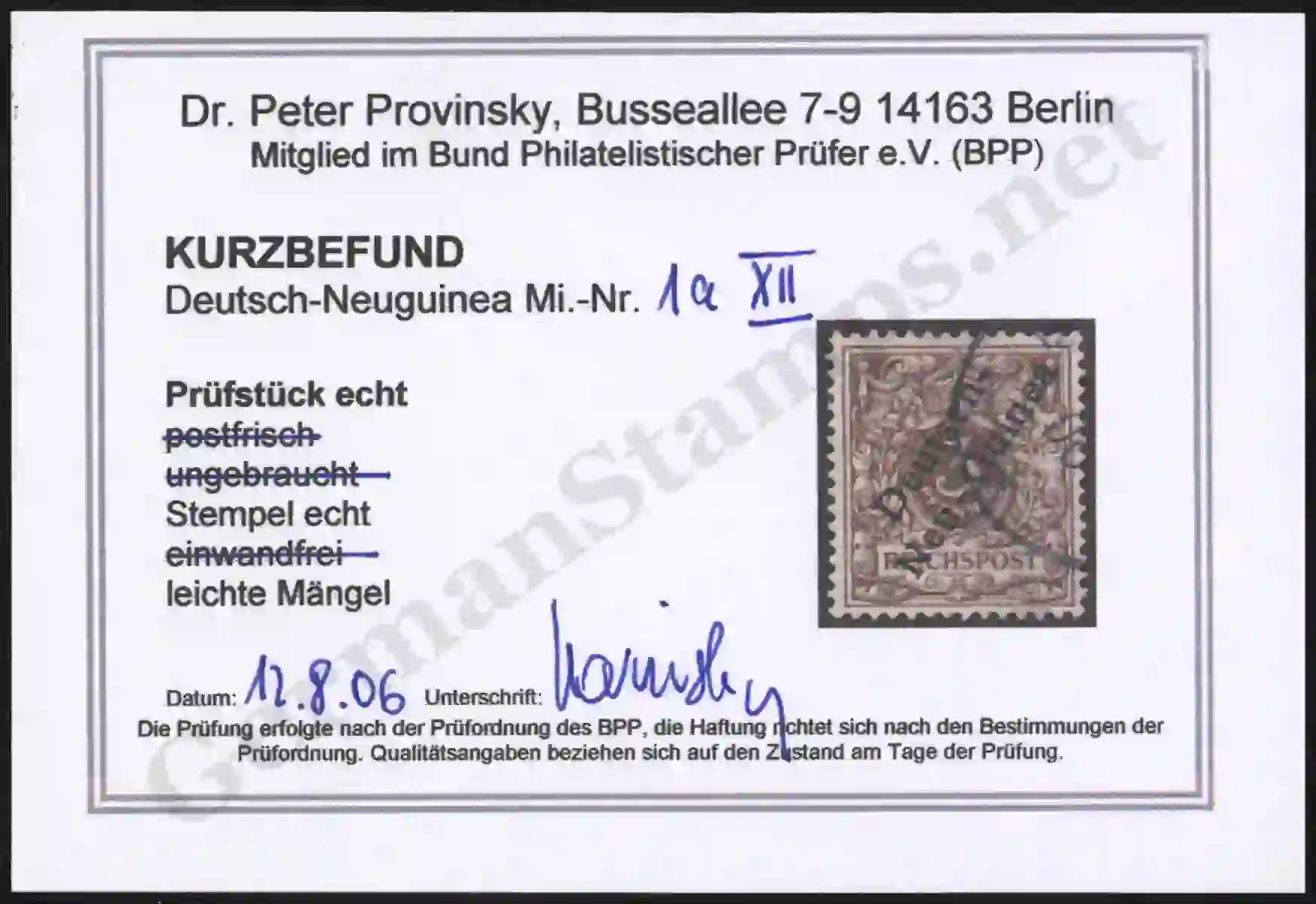
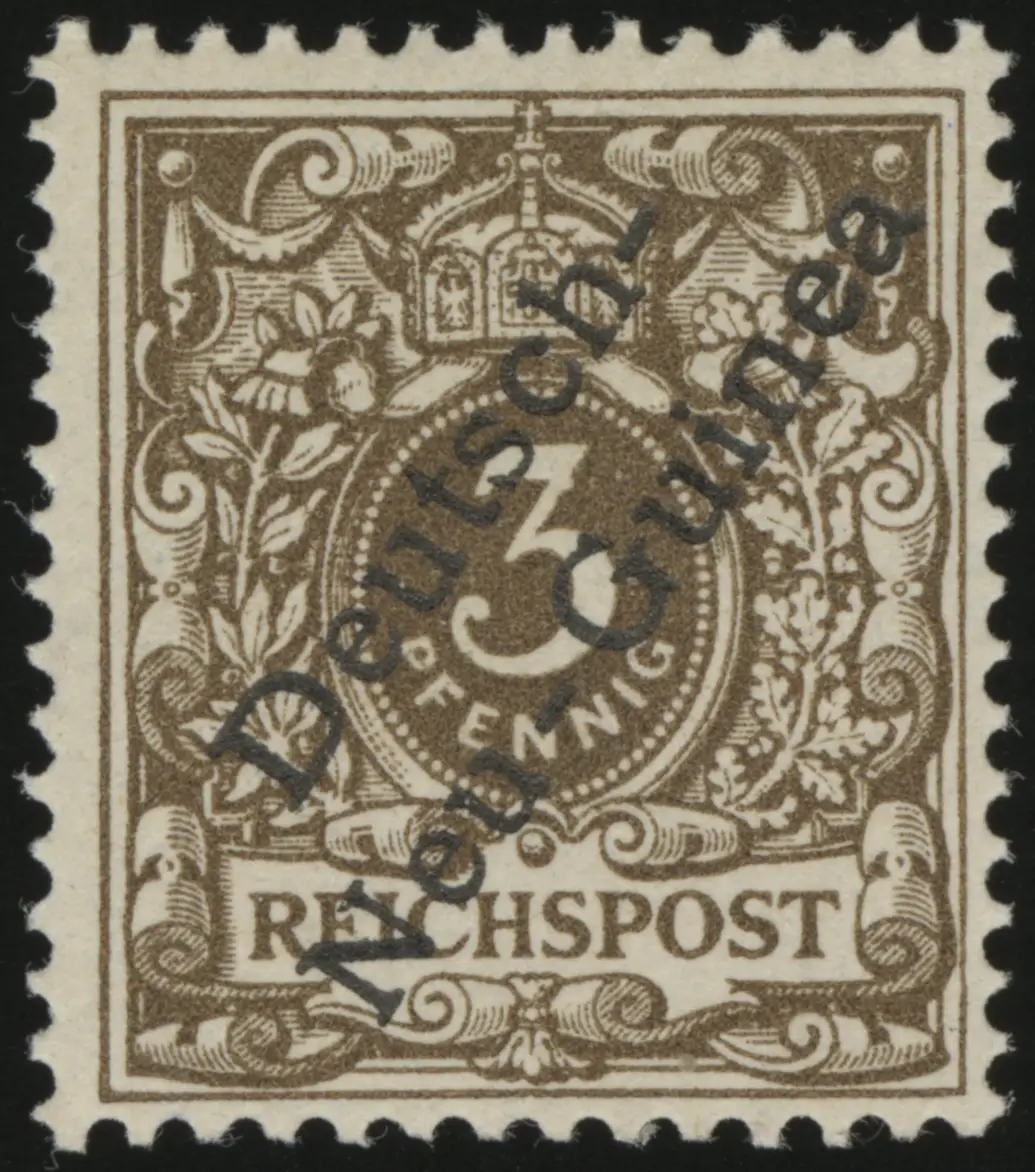 MiNr. 1 a
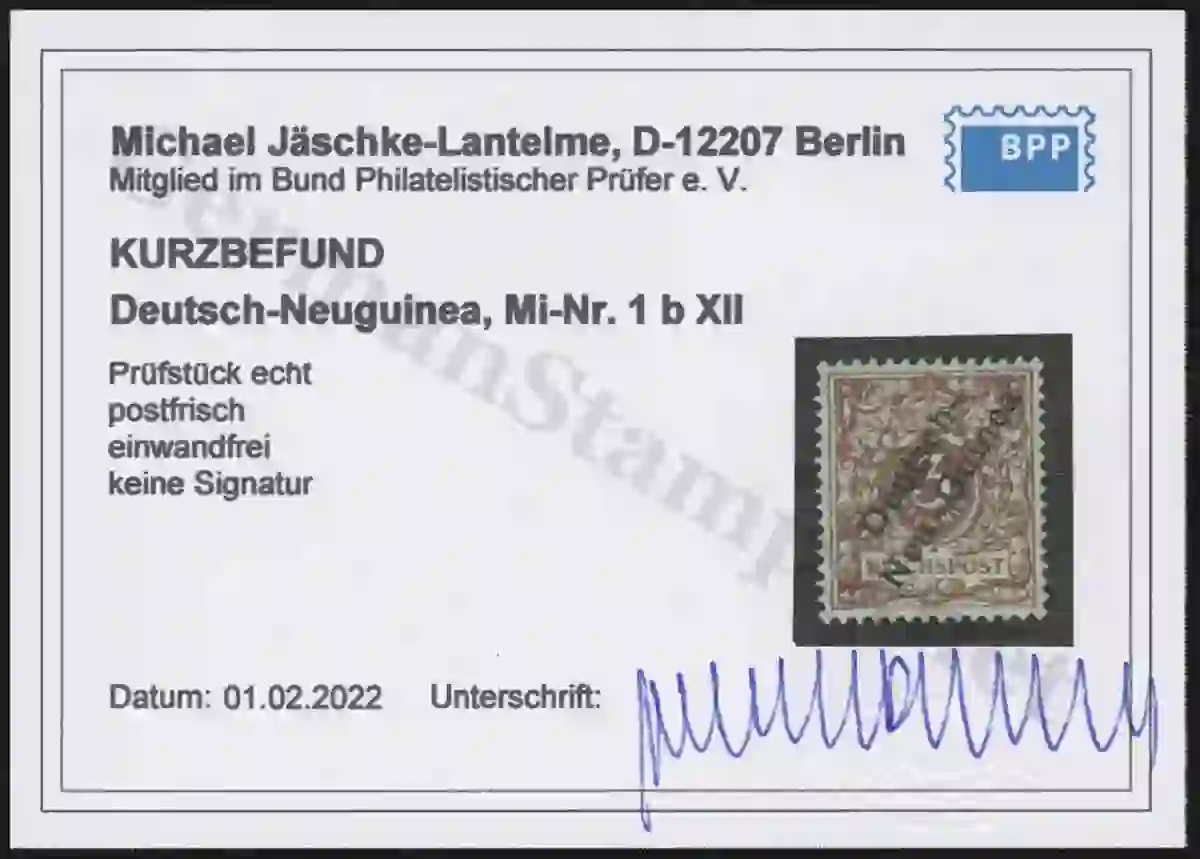
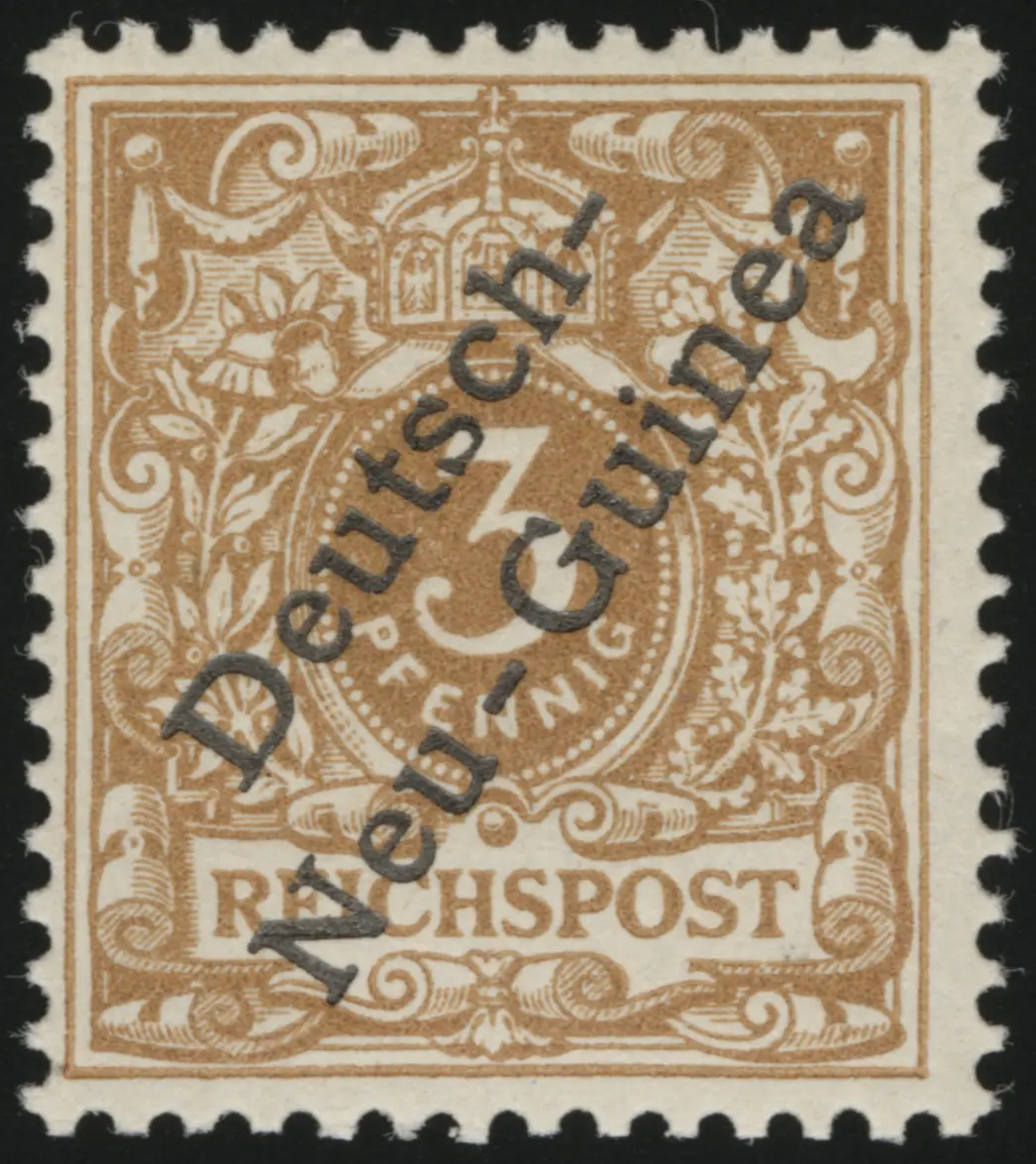 MiNr. 1 b
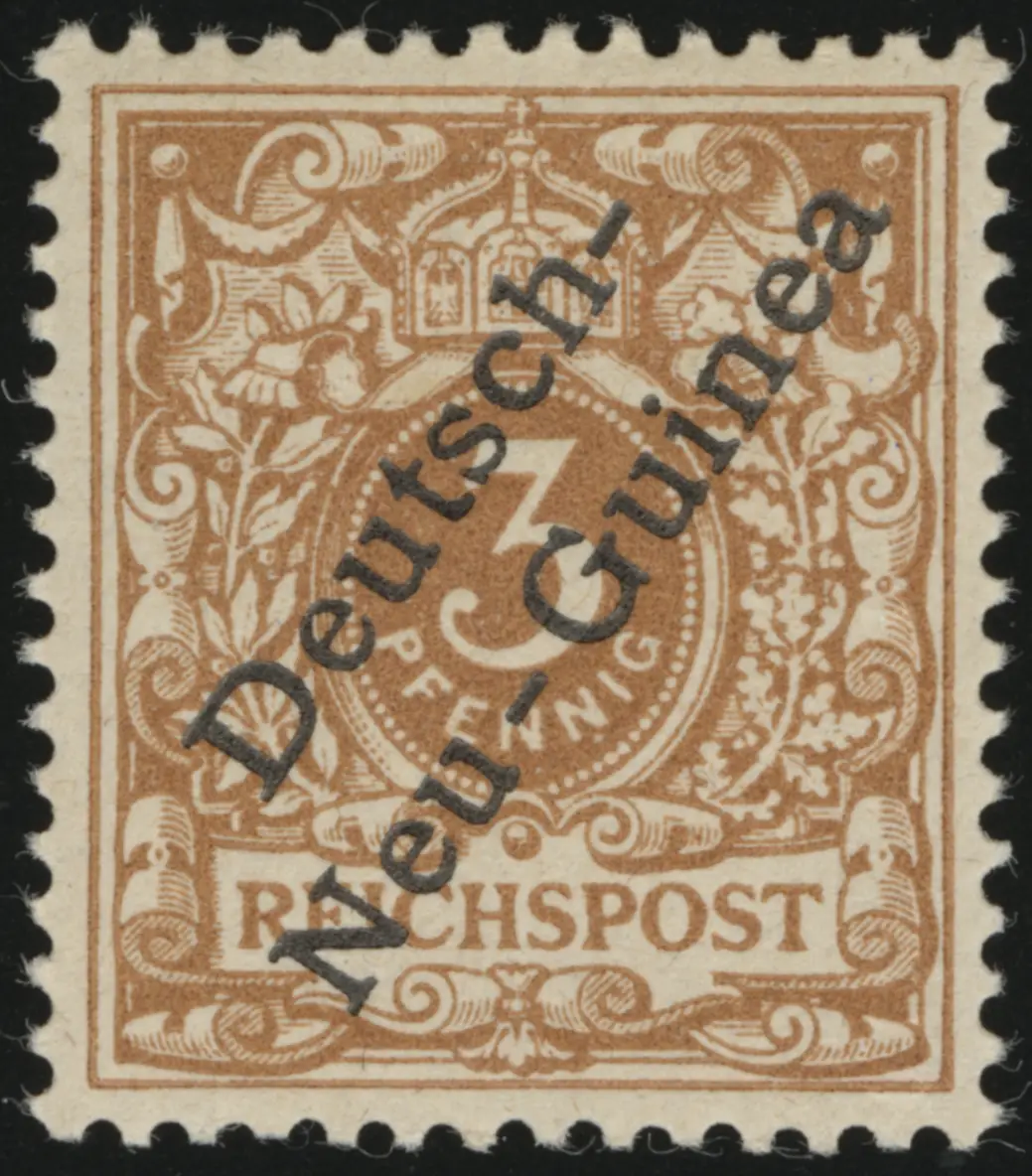 MiNr. 1 c
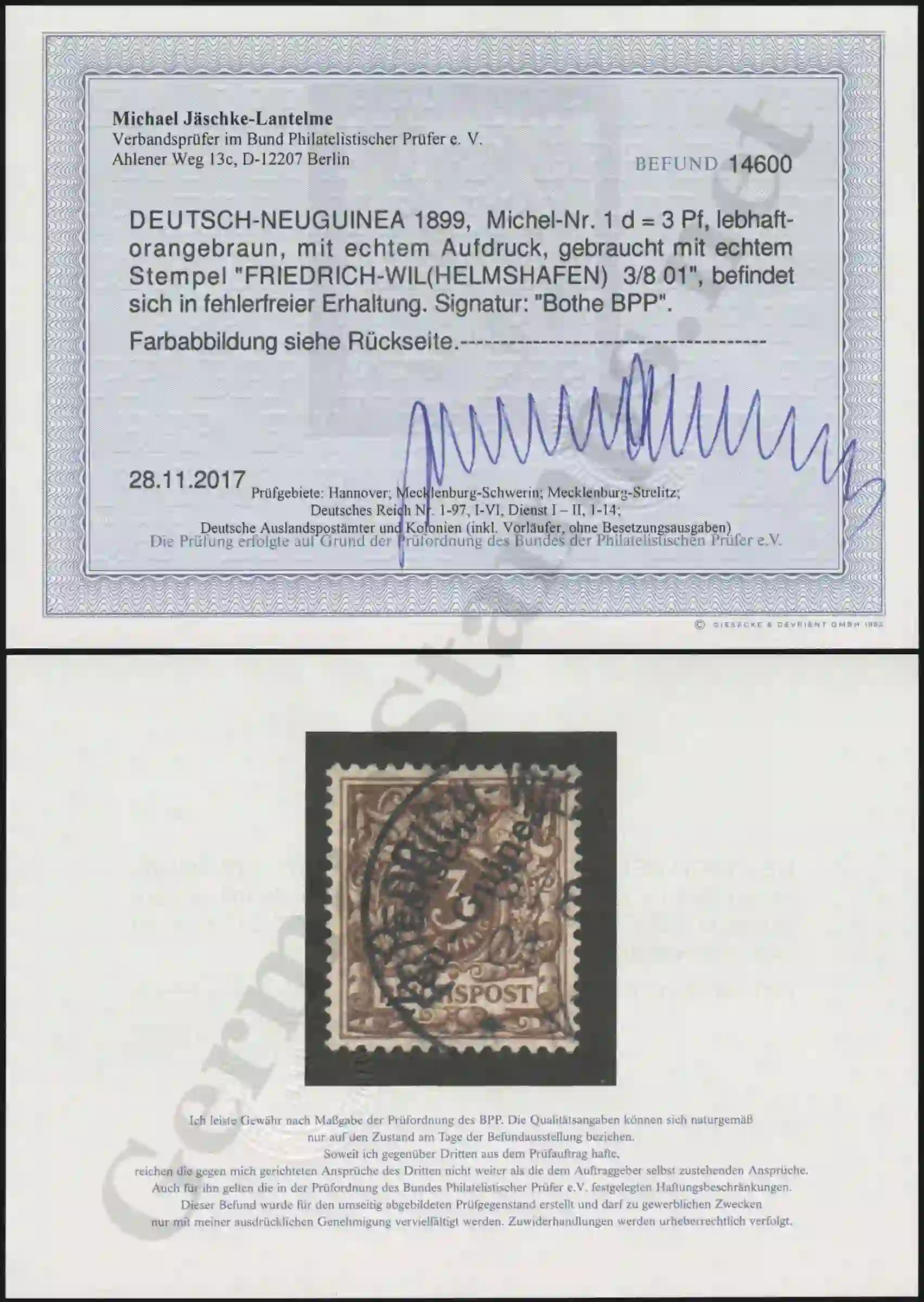
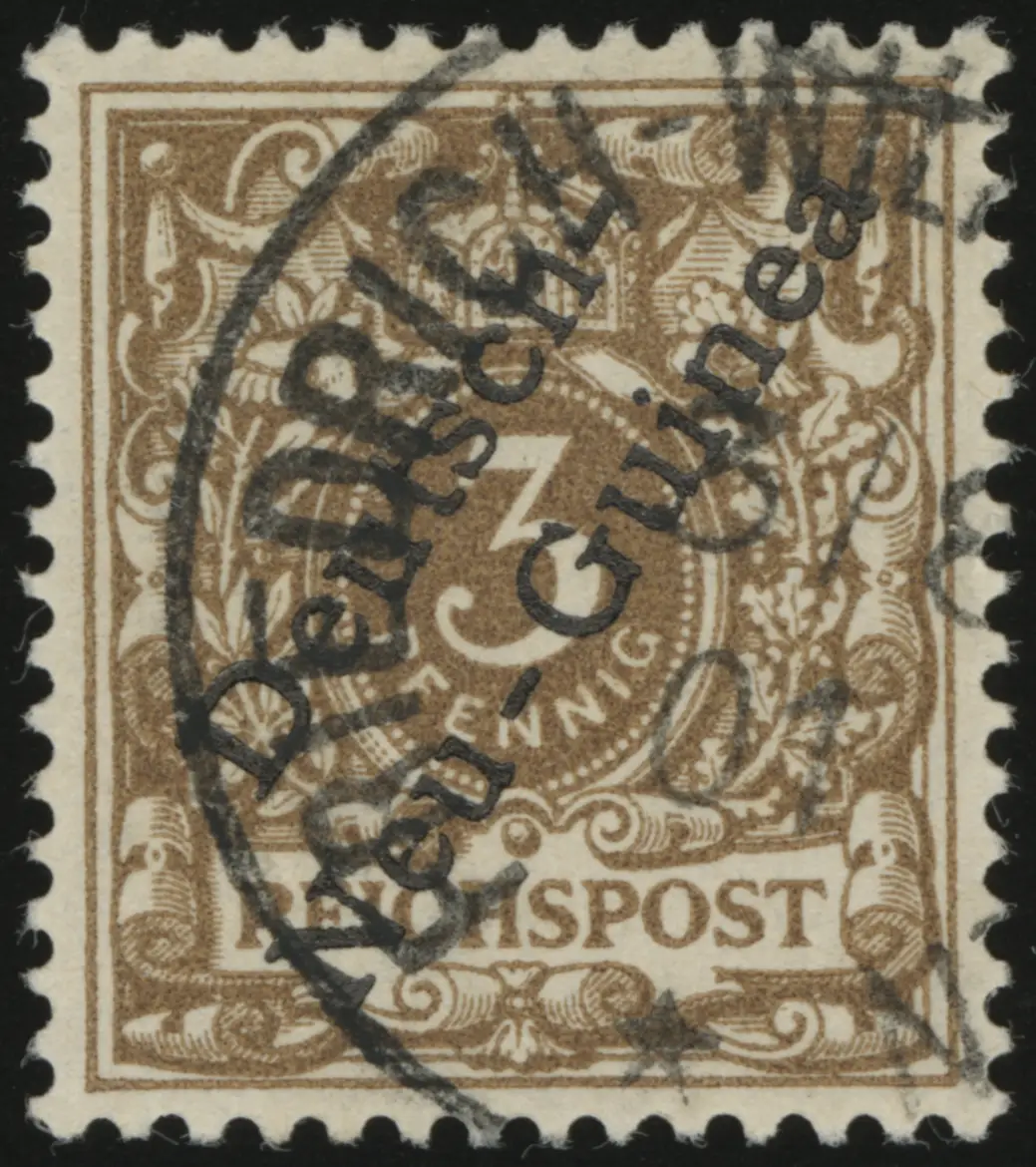 MiNr. 1 d
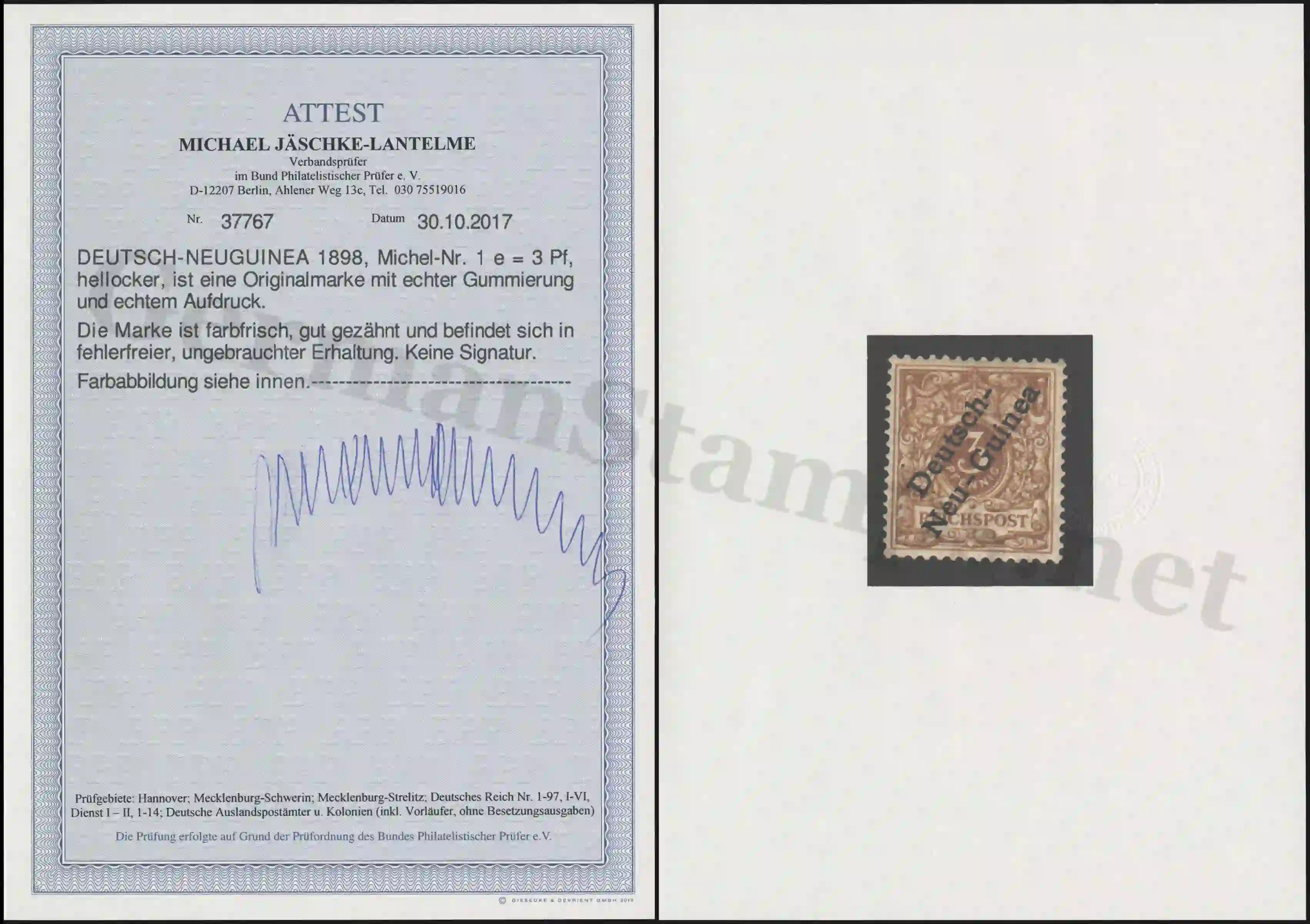
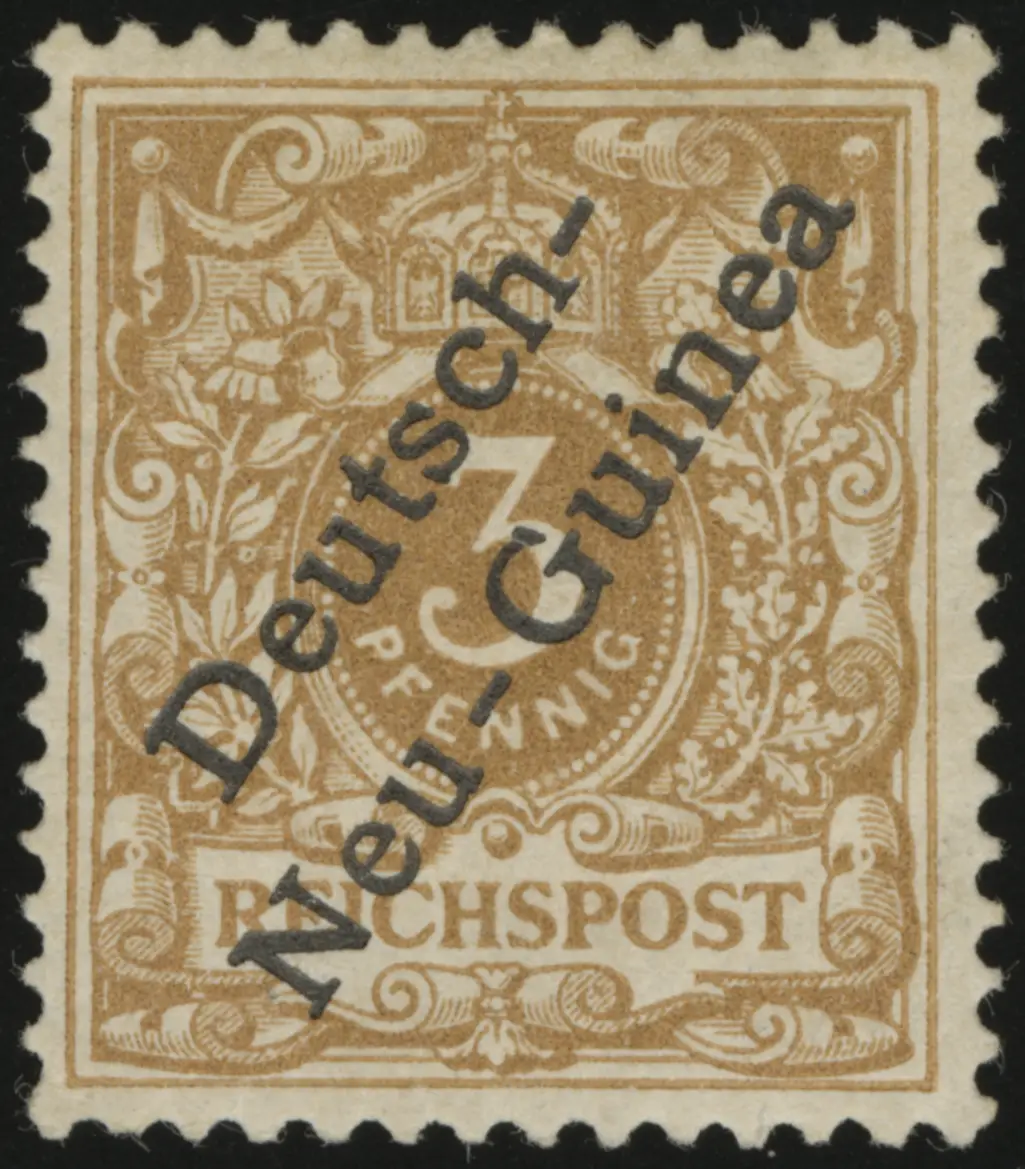 MiNr. 1 e
 MiNr. 1 f
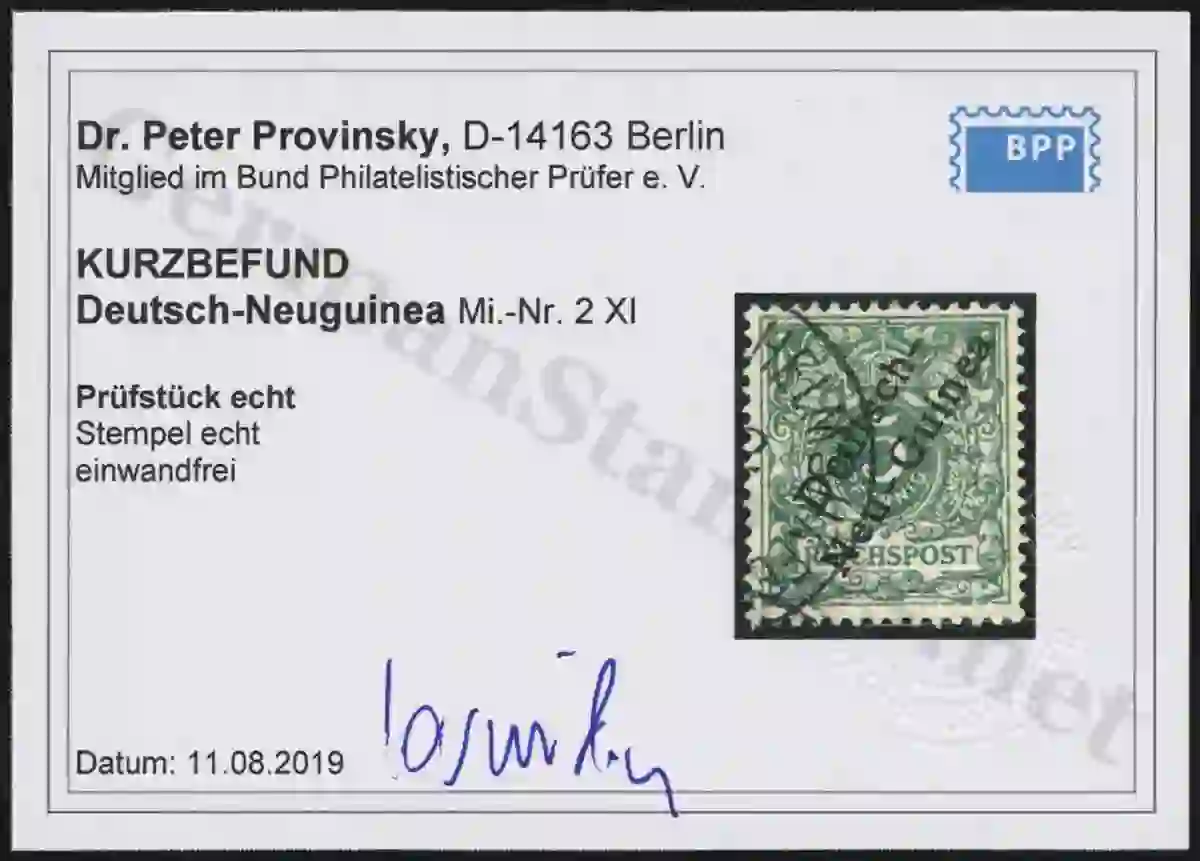
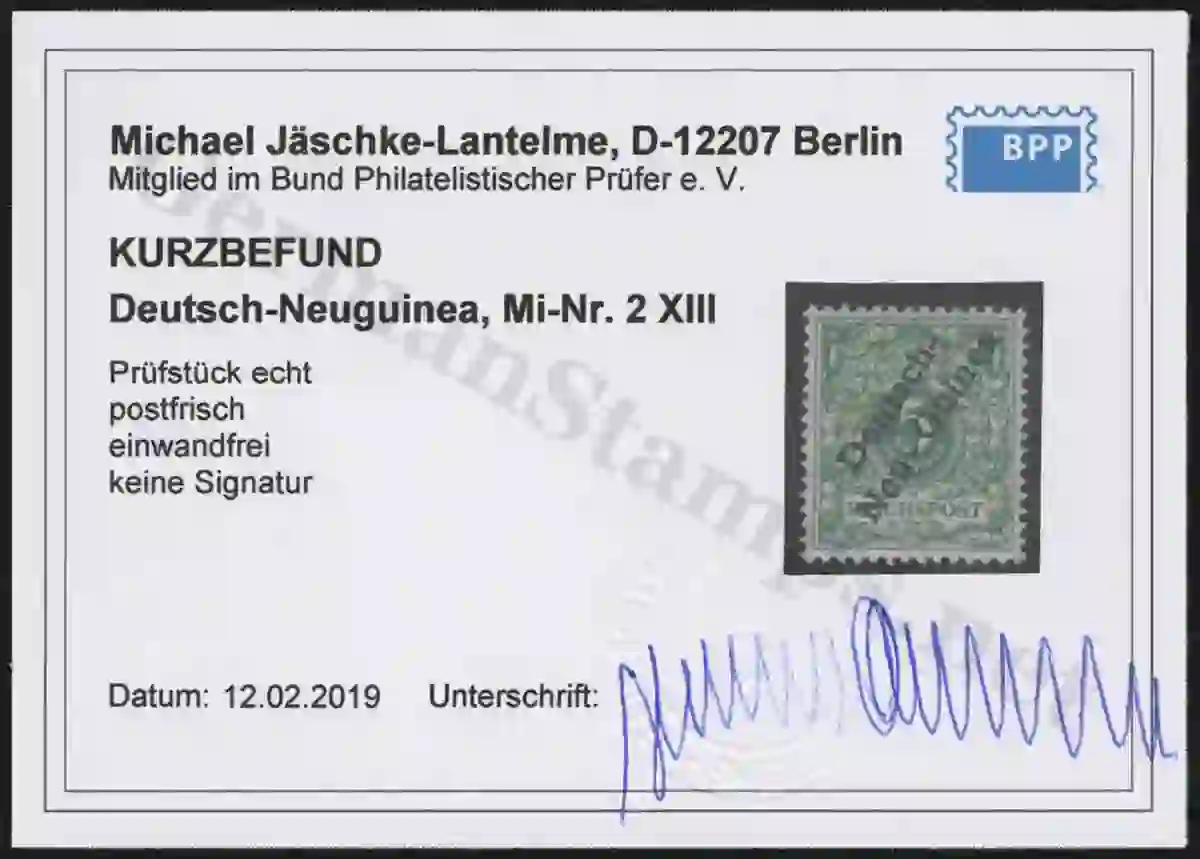
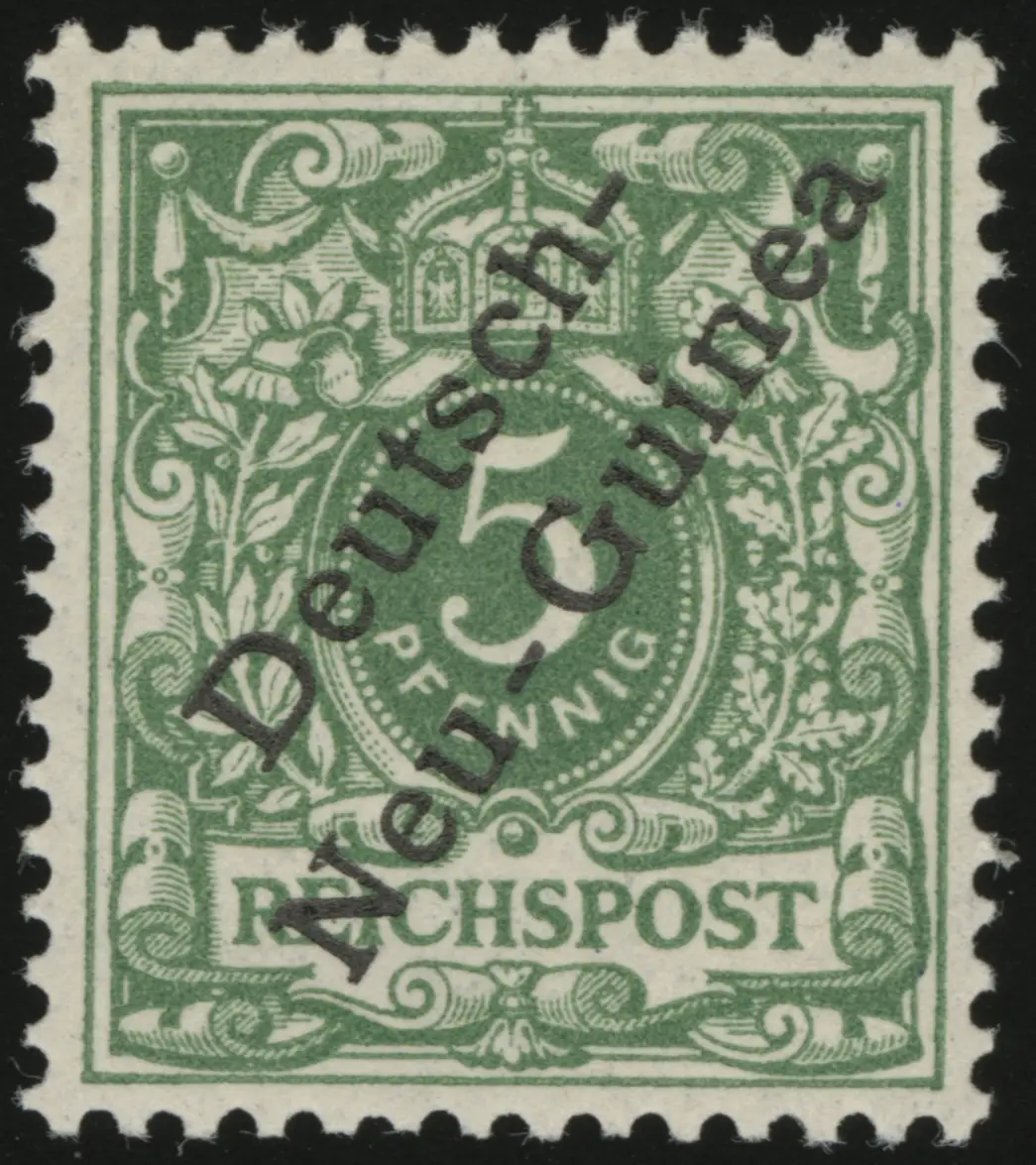 MiNr. 2
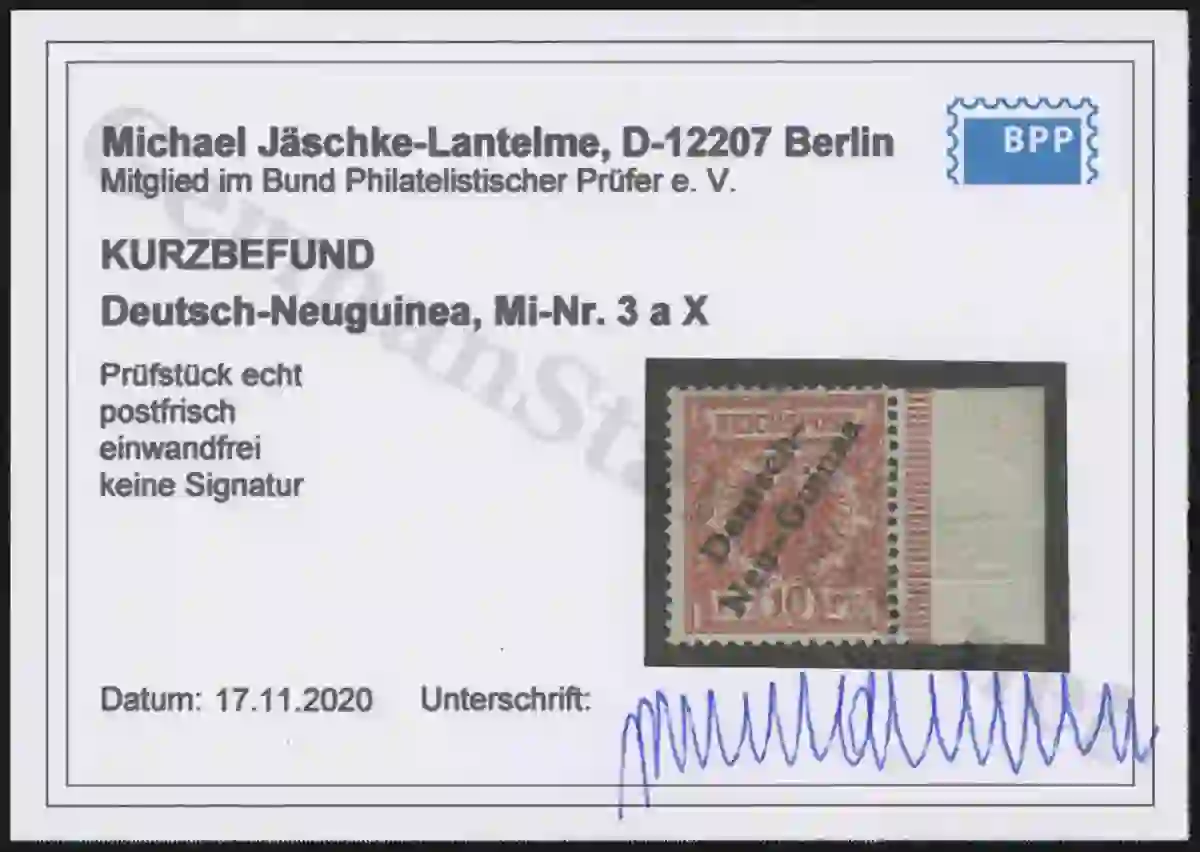
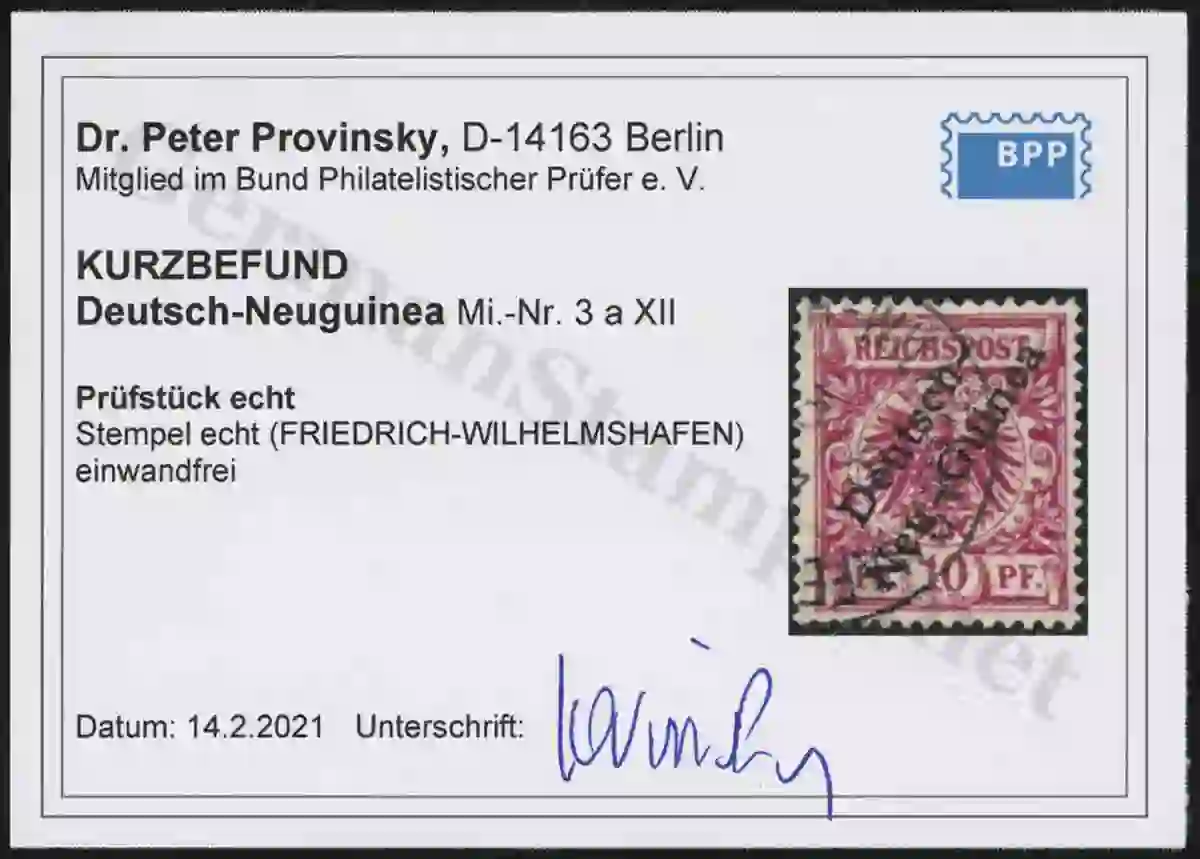
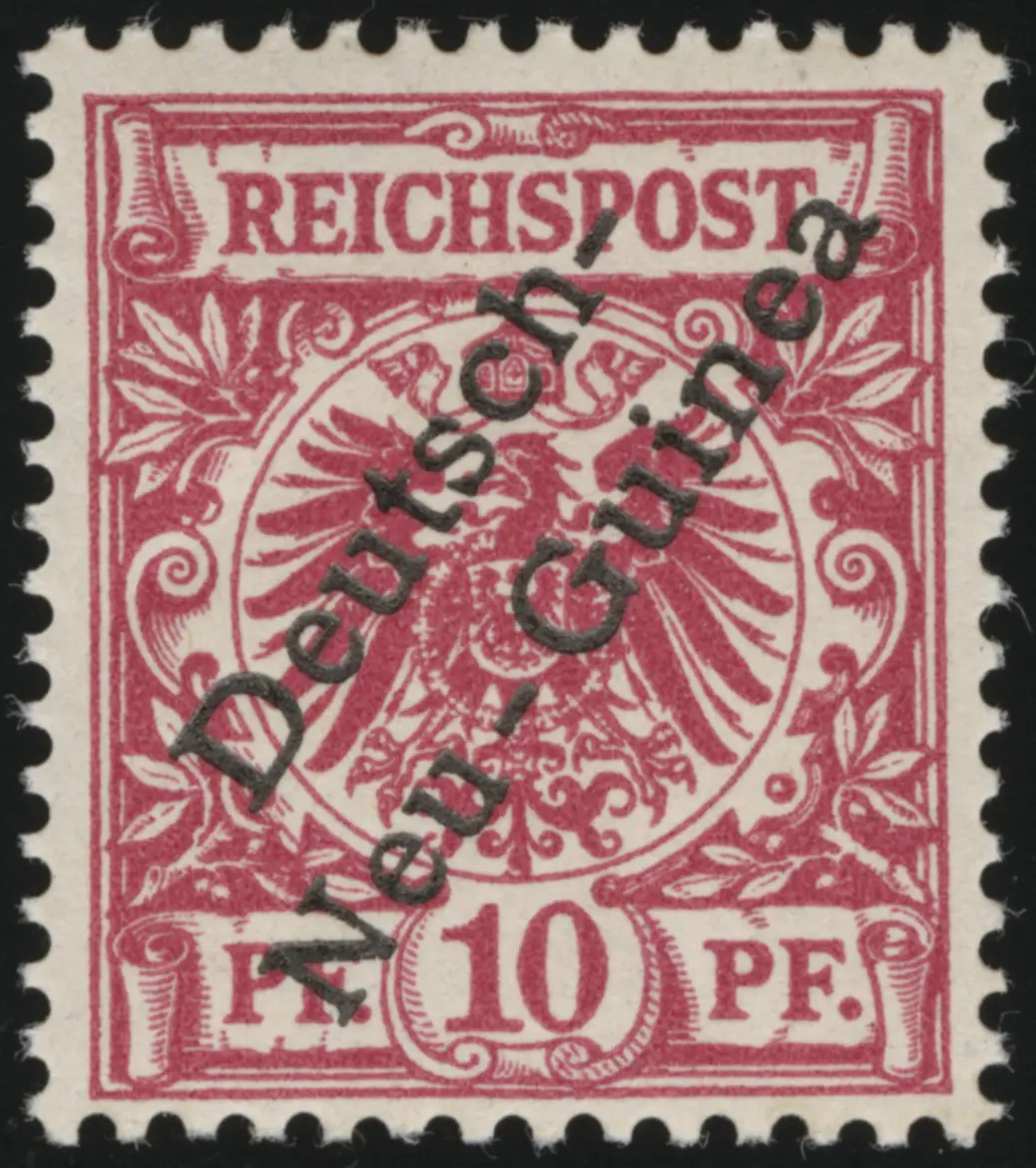 MiNr. 3 a
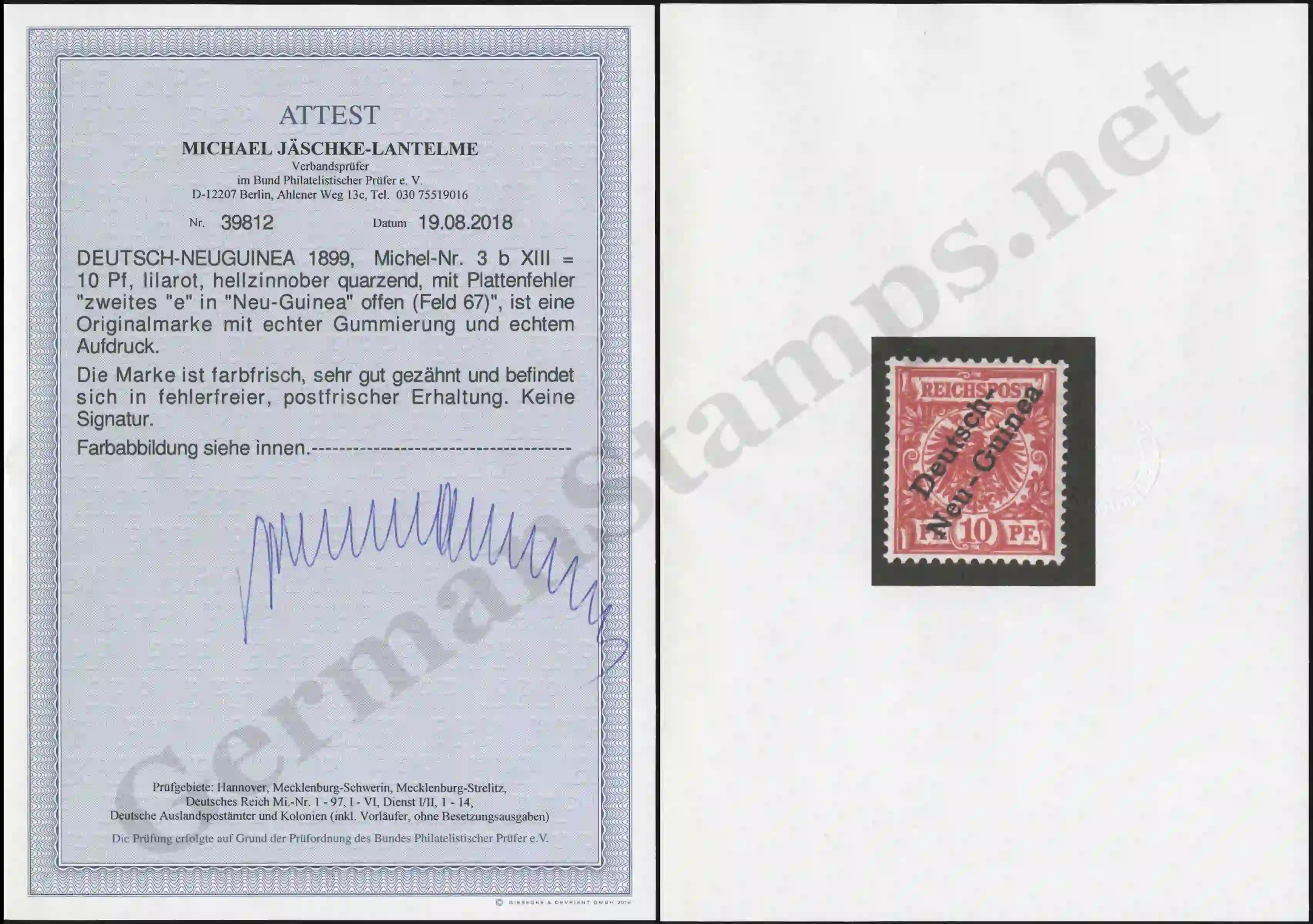
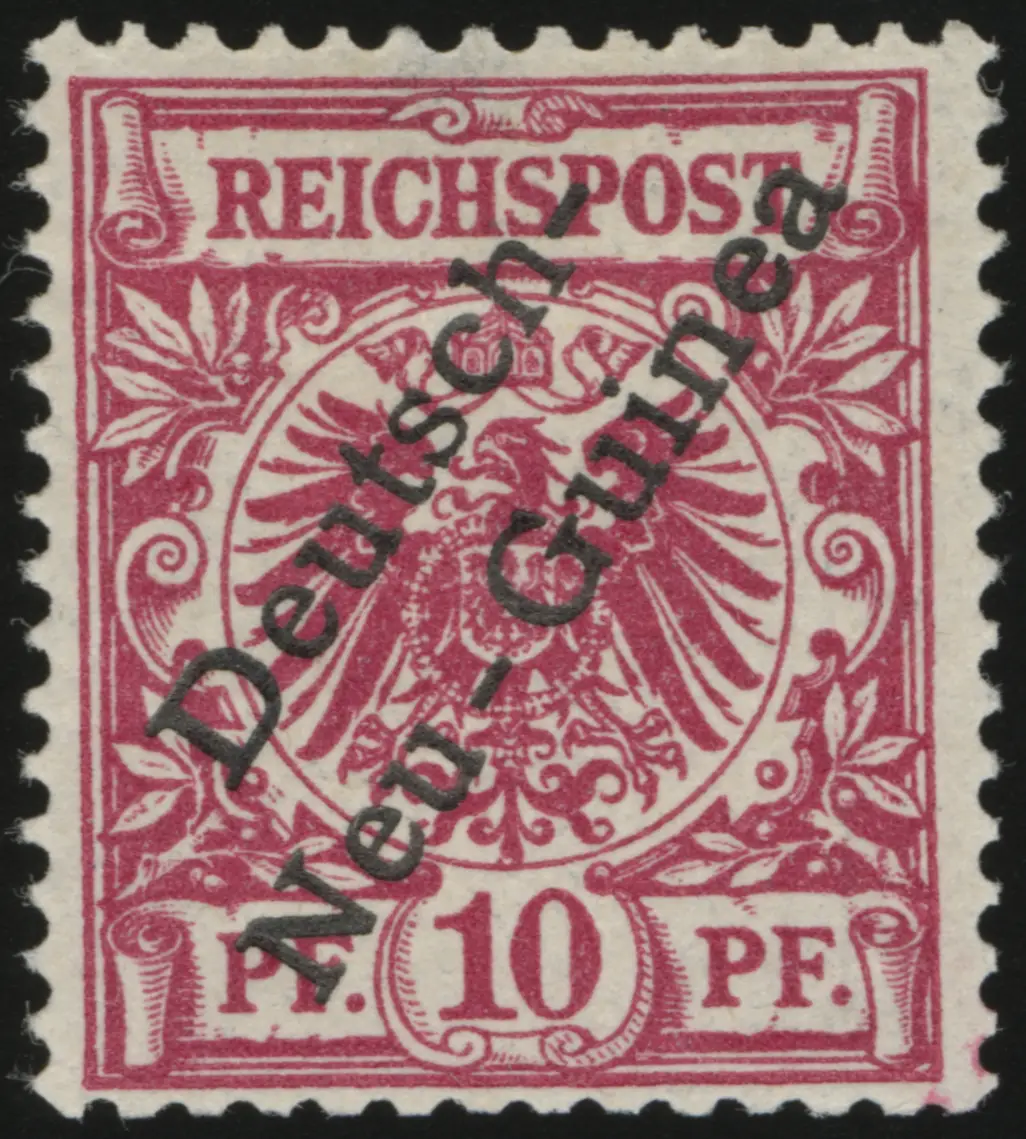 MiNr. 3 b
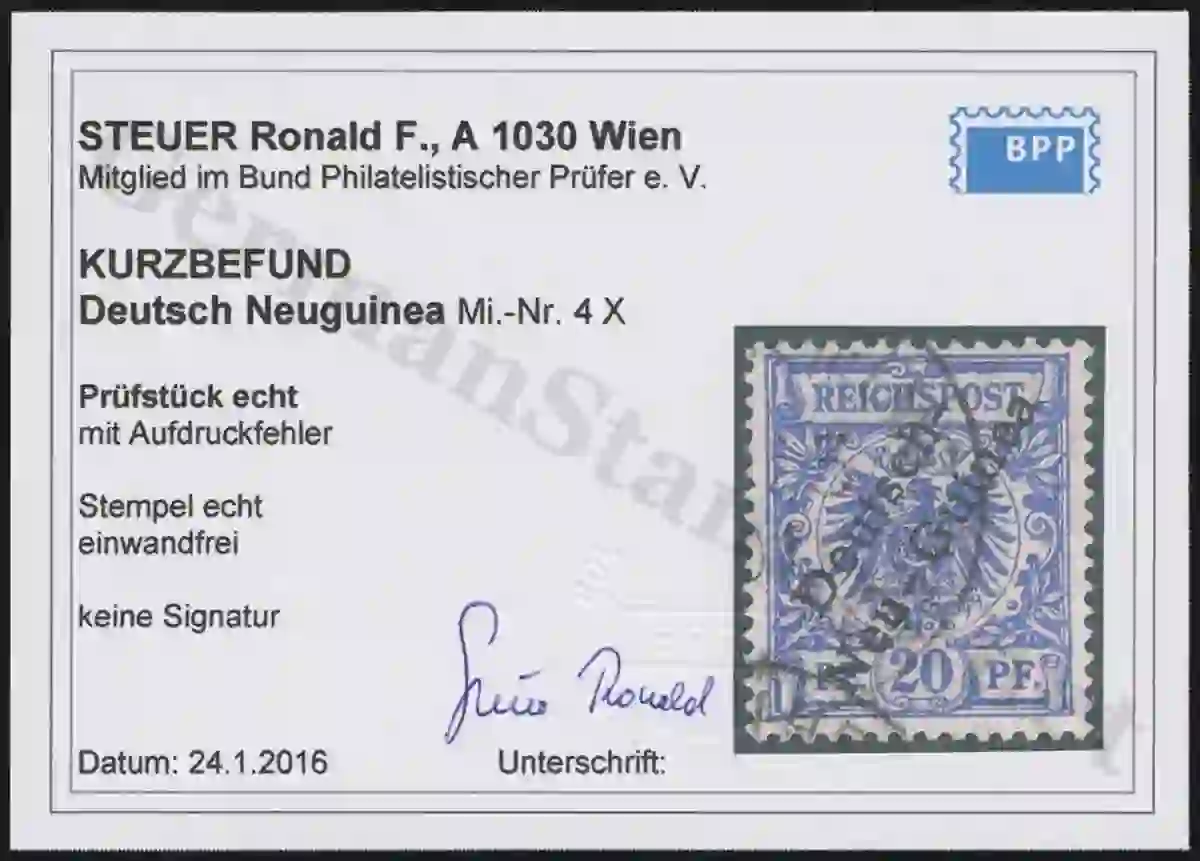
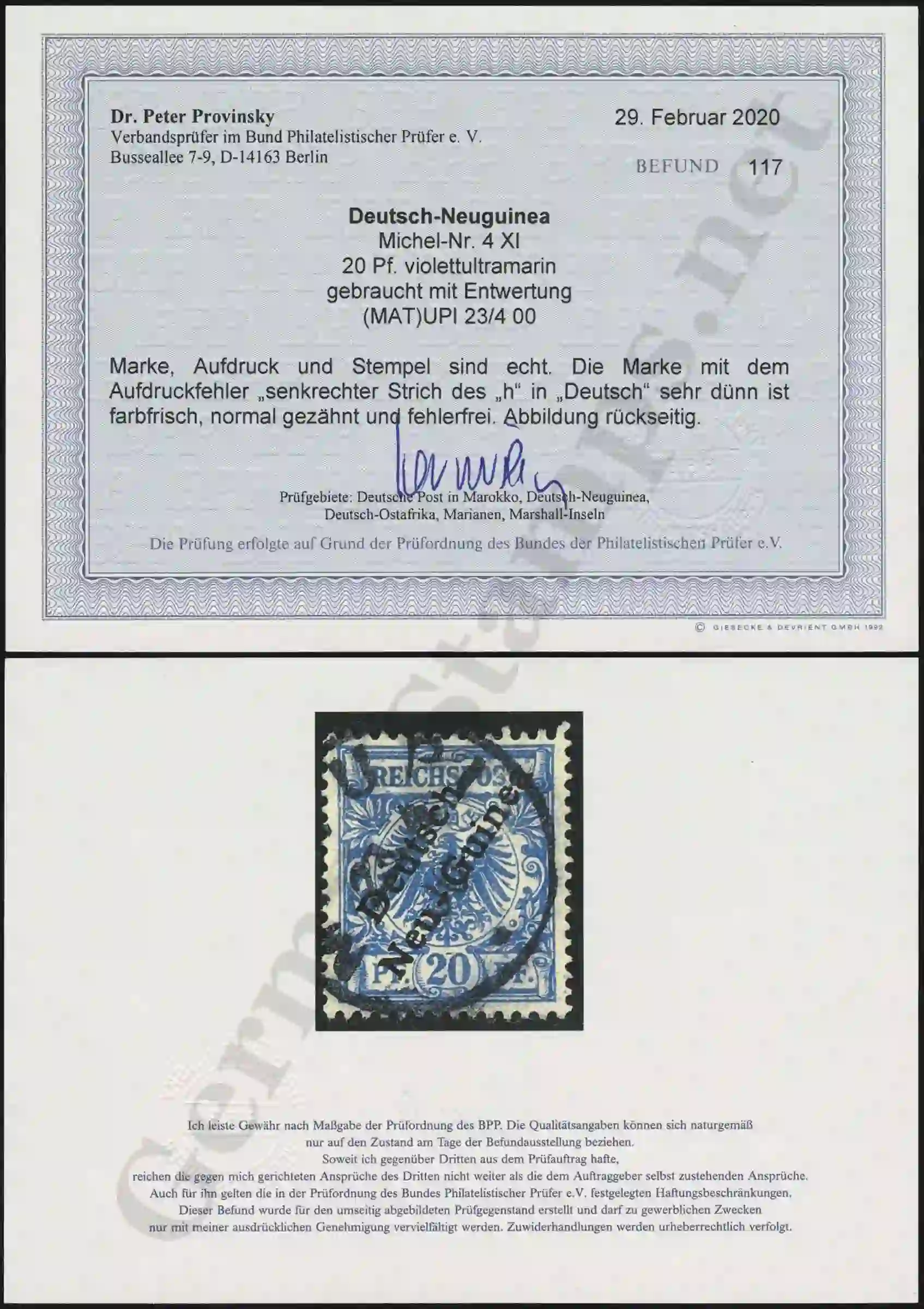
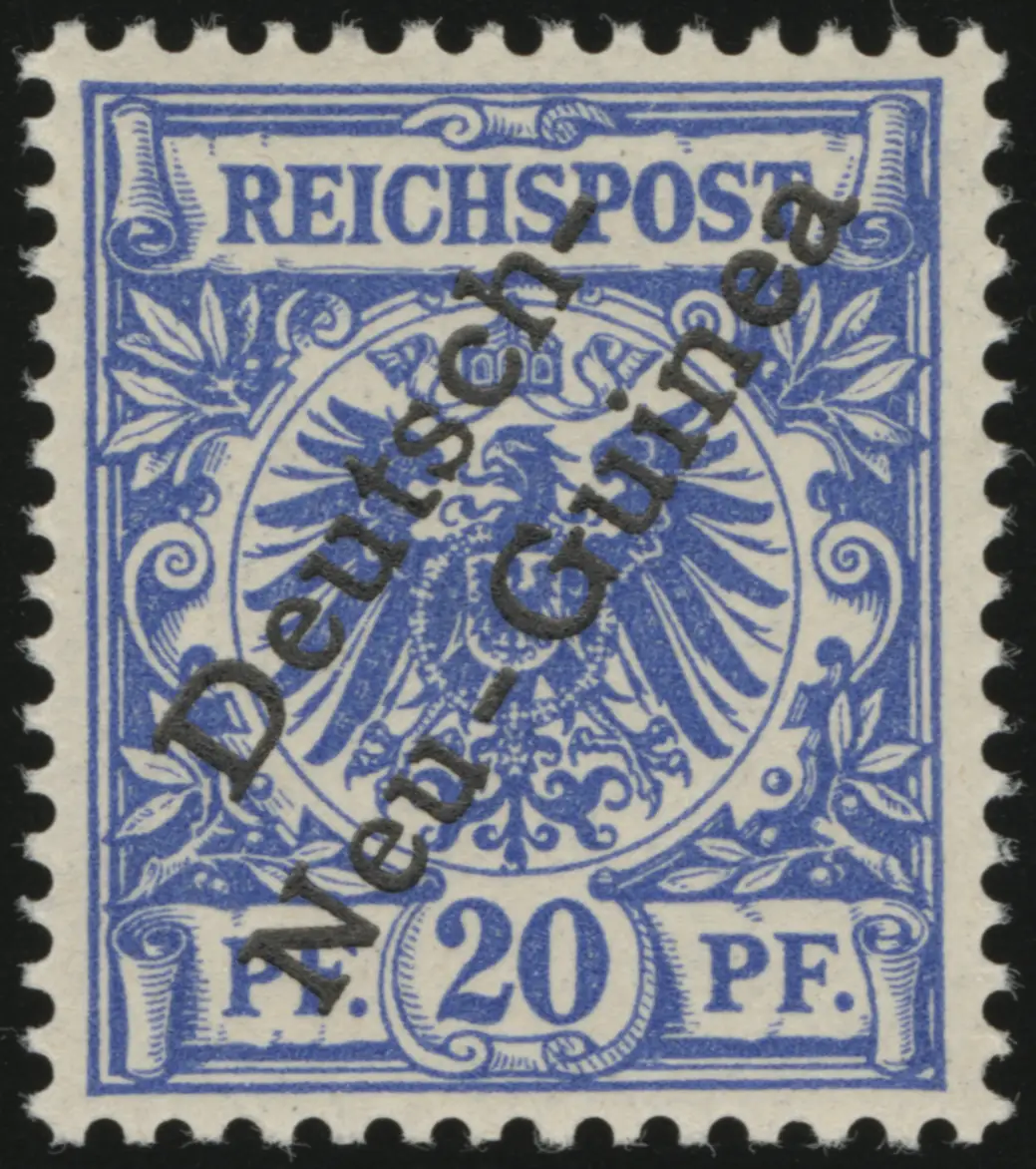 MiNr. 4
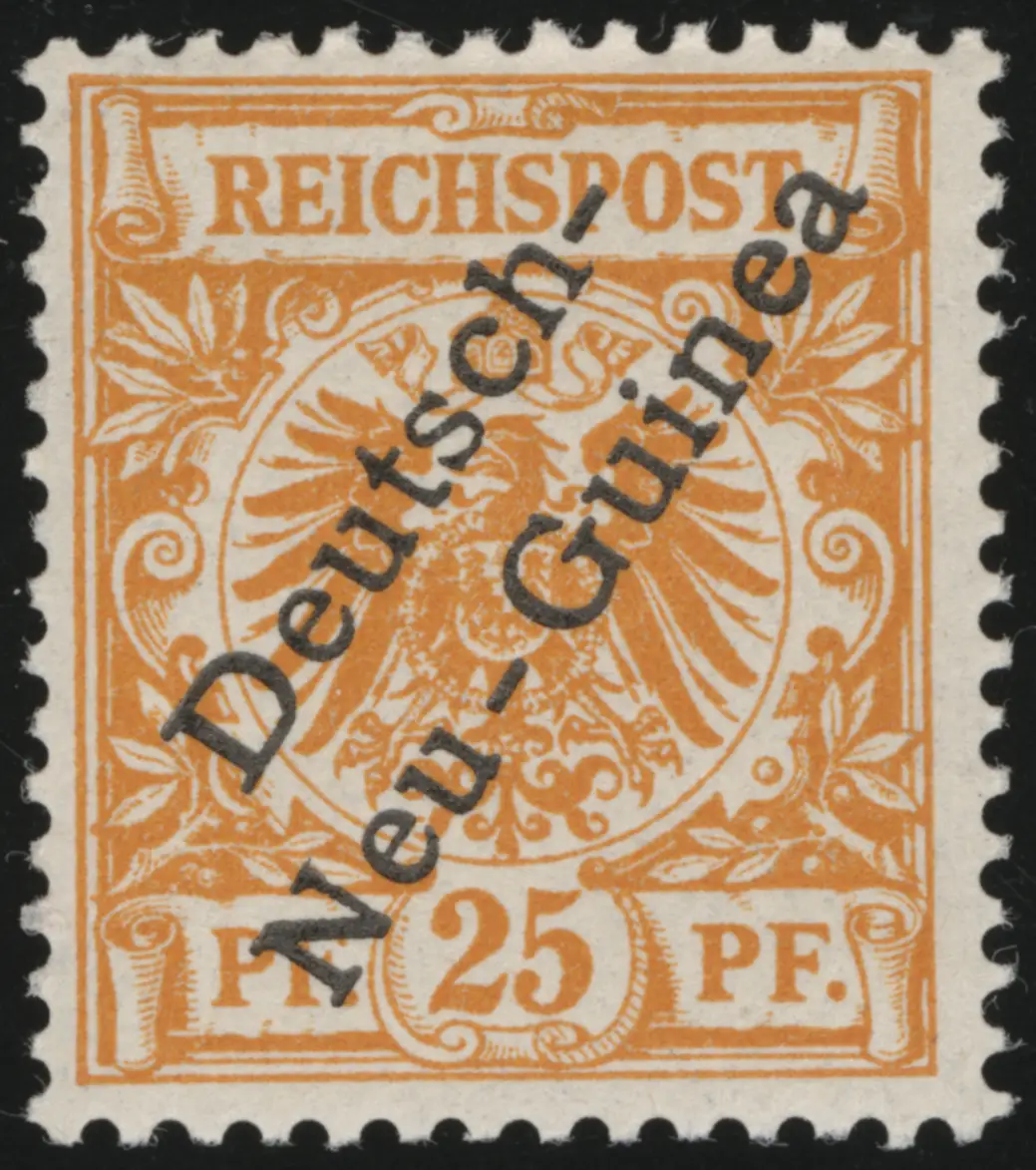 MiNr. 5 a
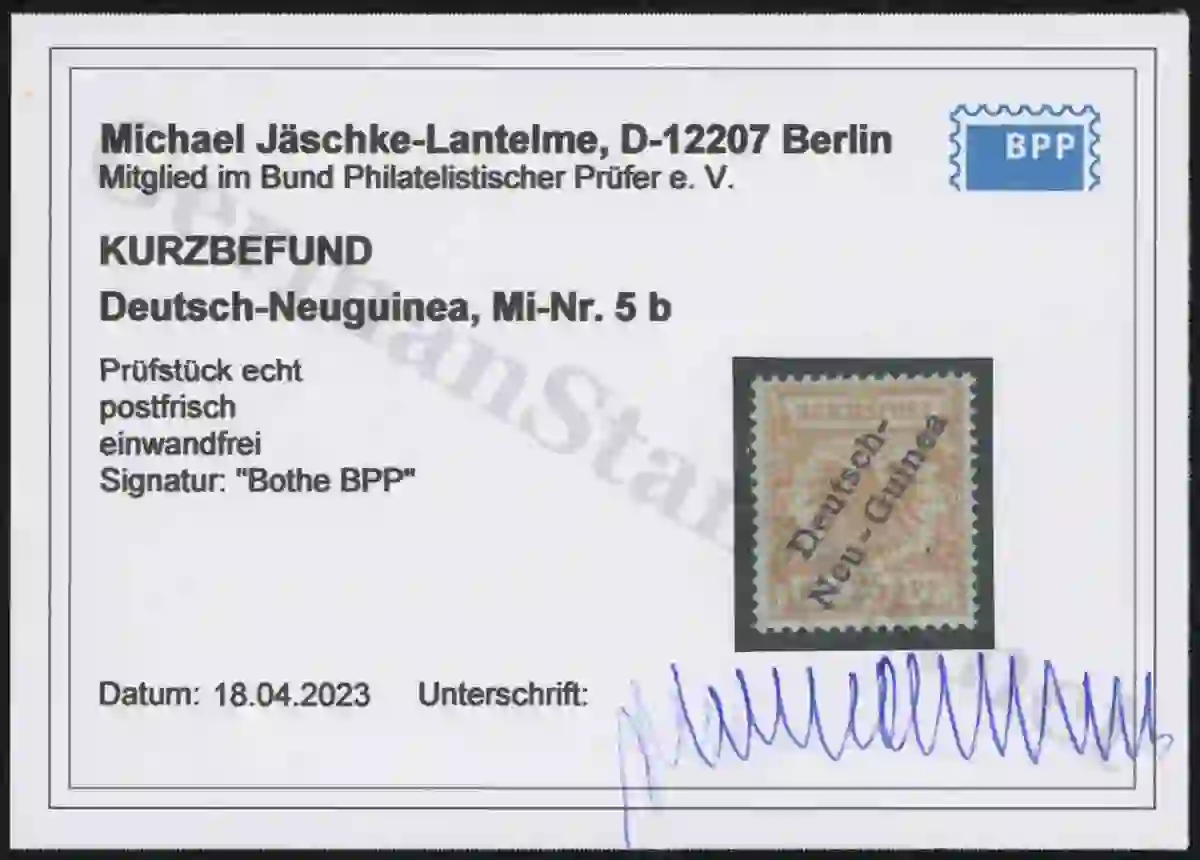
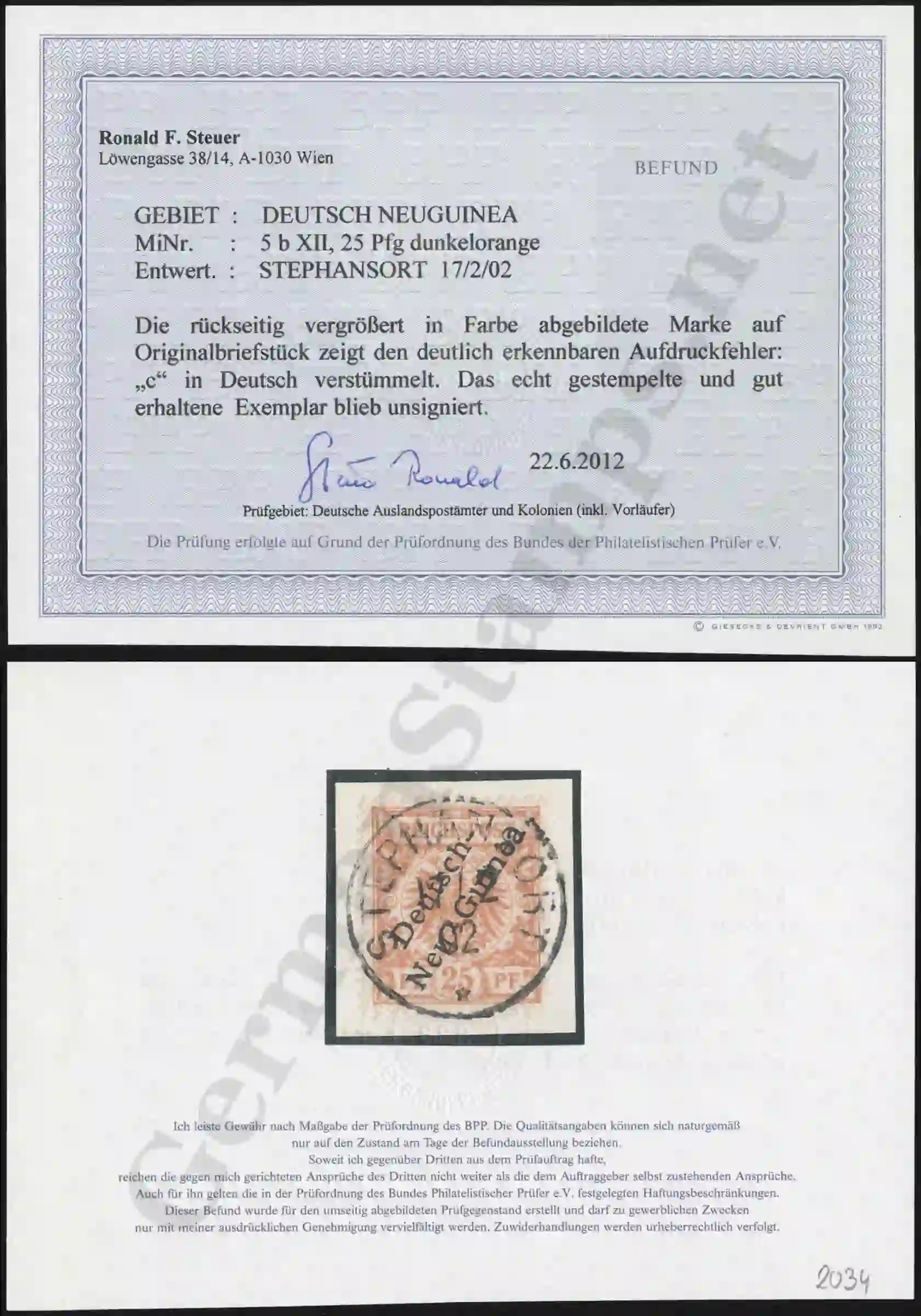
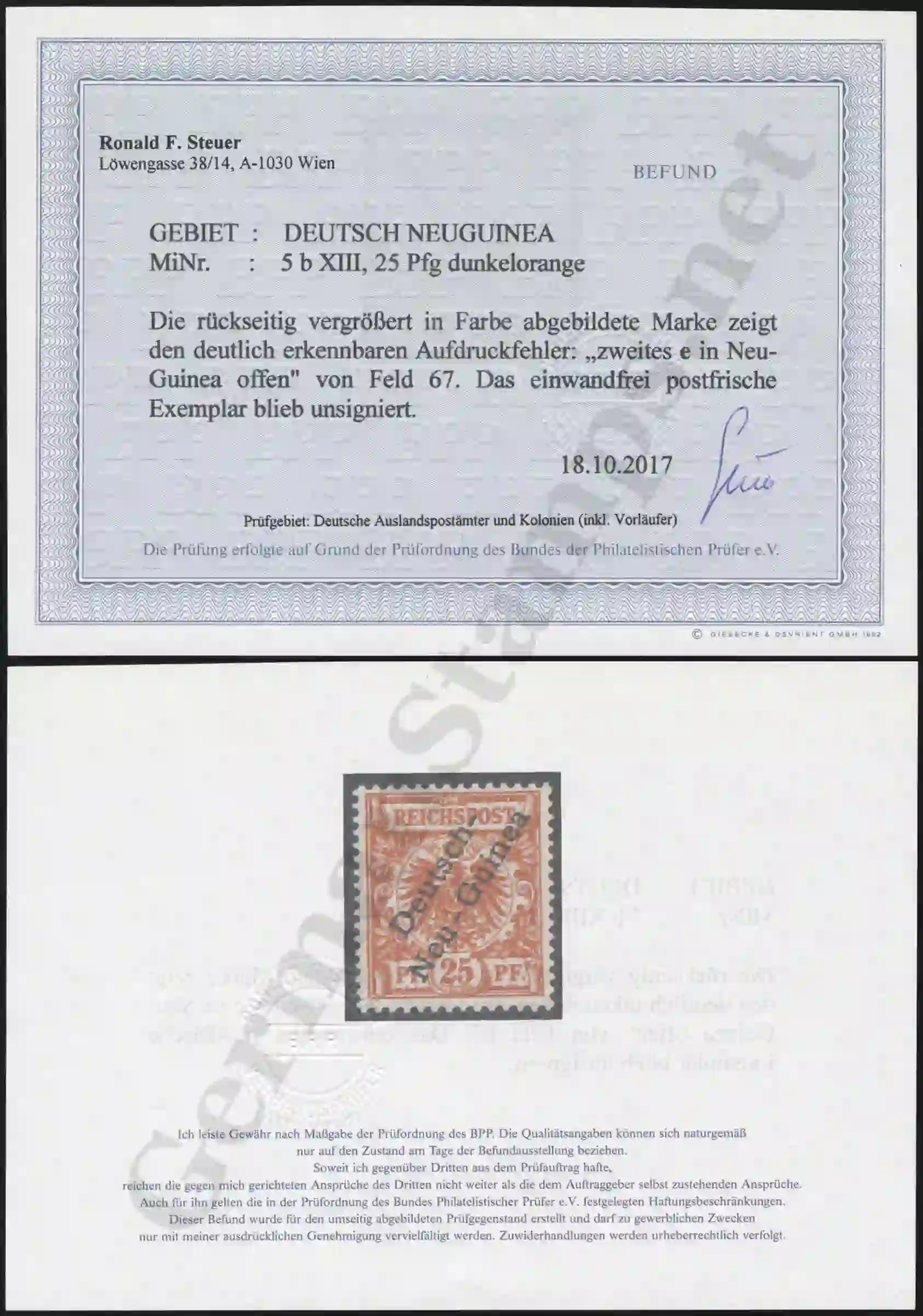
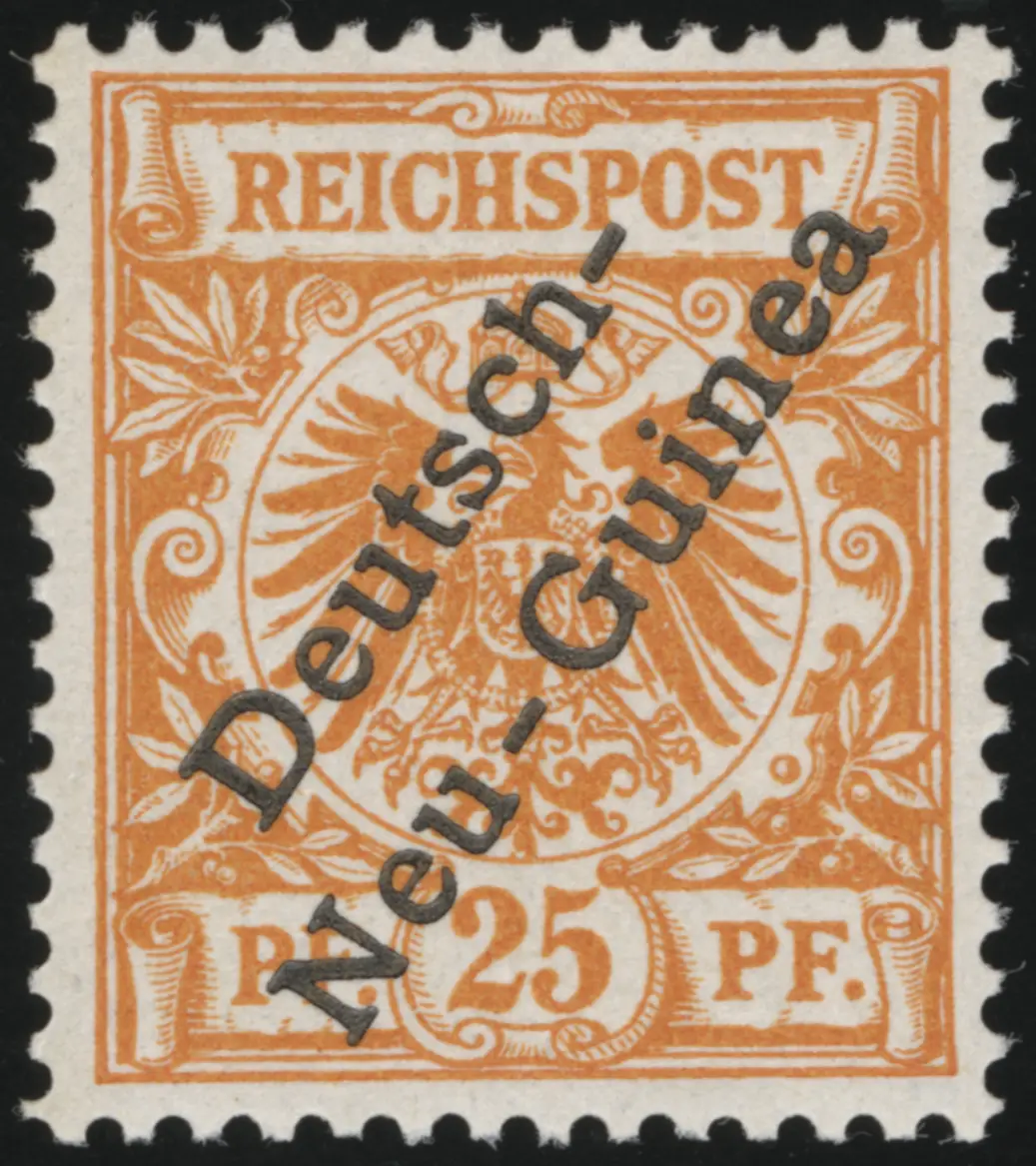 MiNr. 5 b
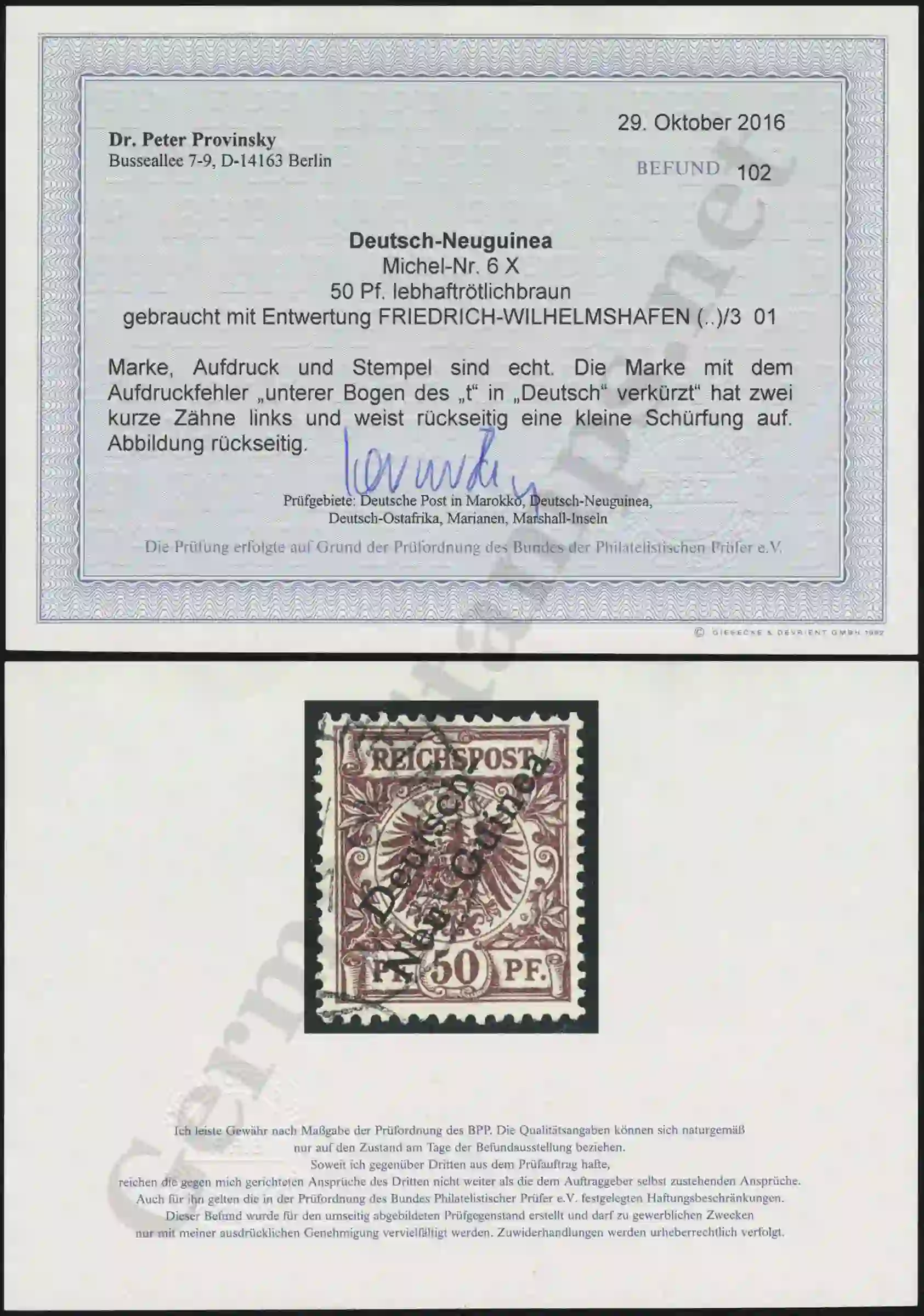
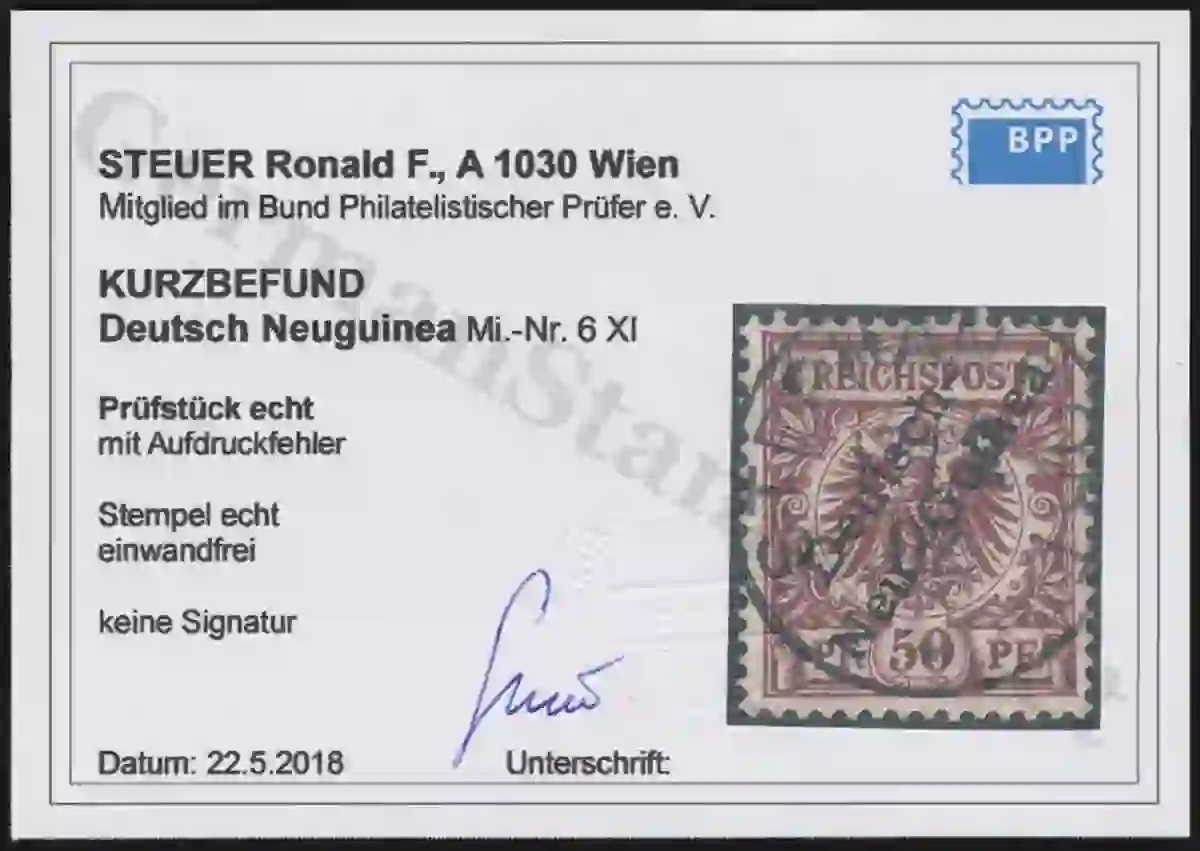
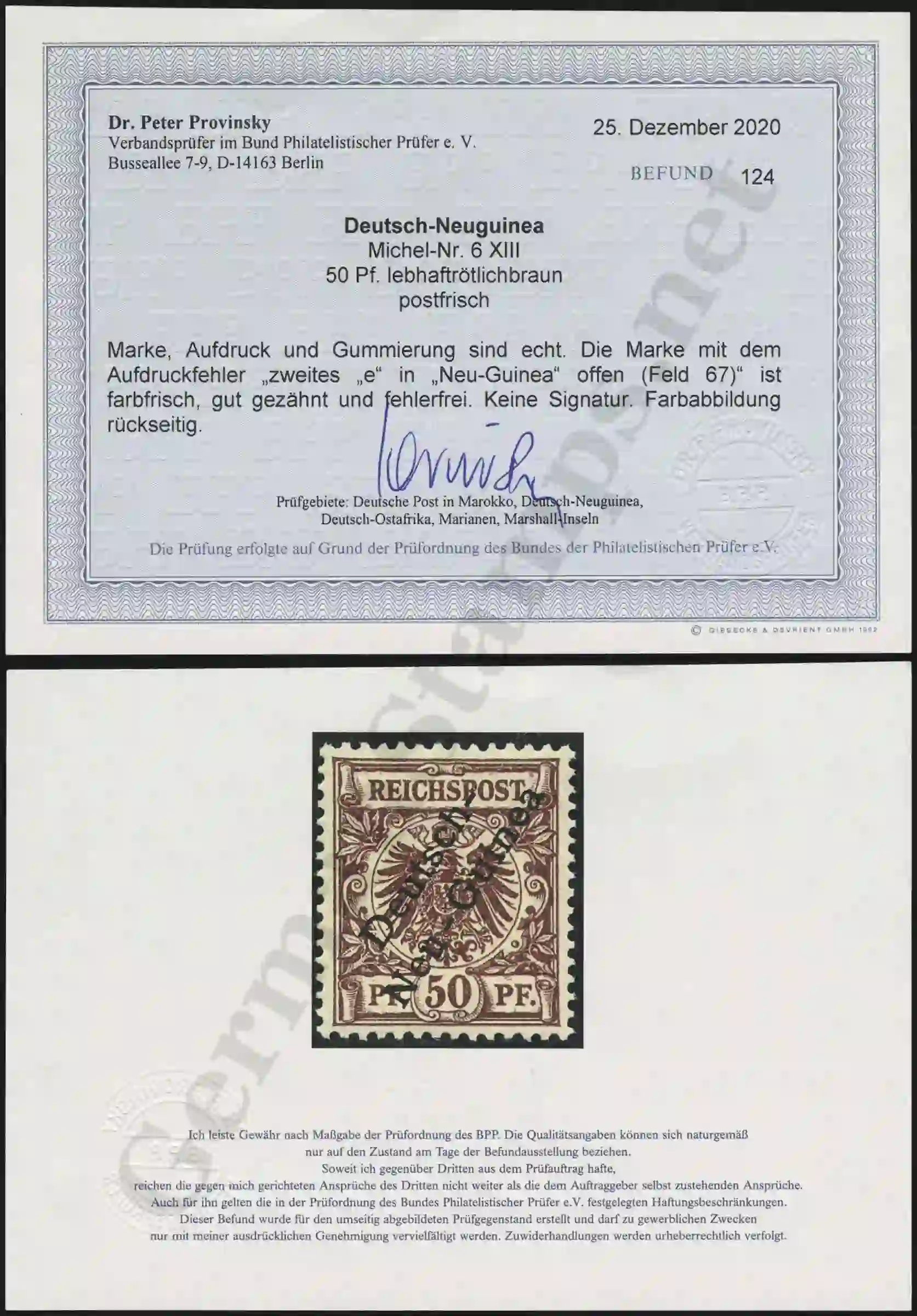
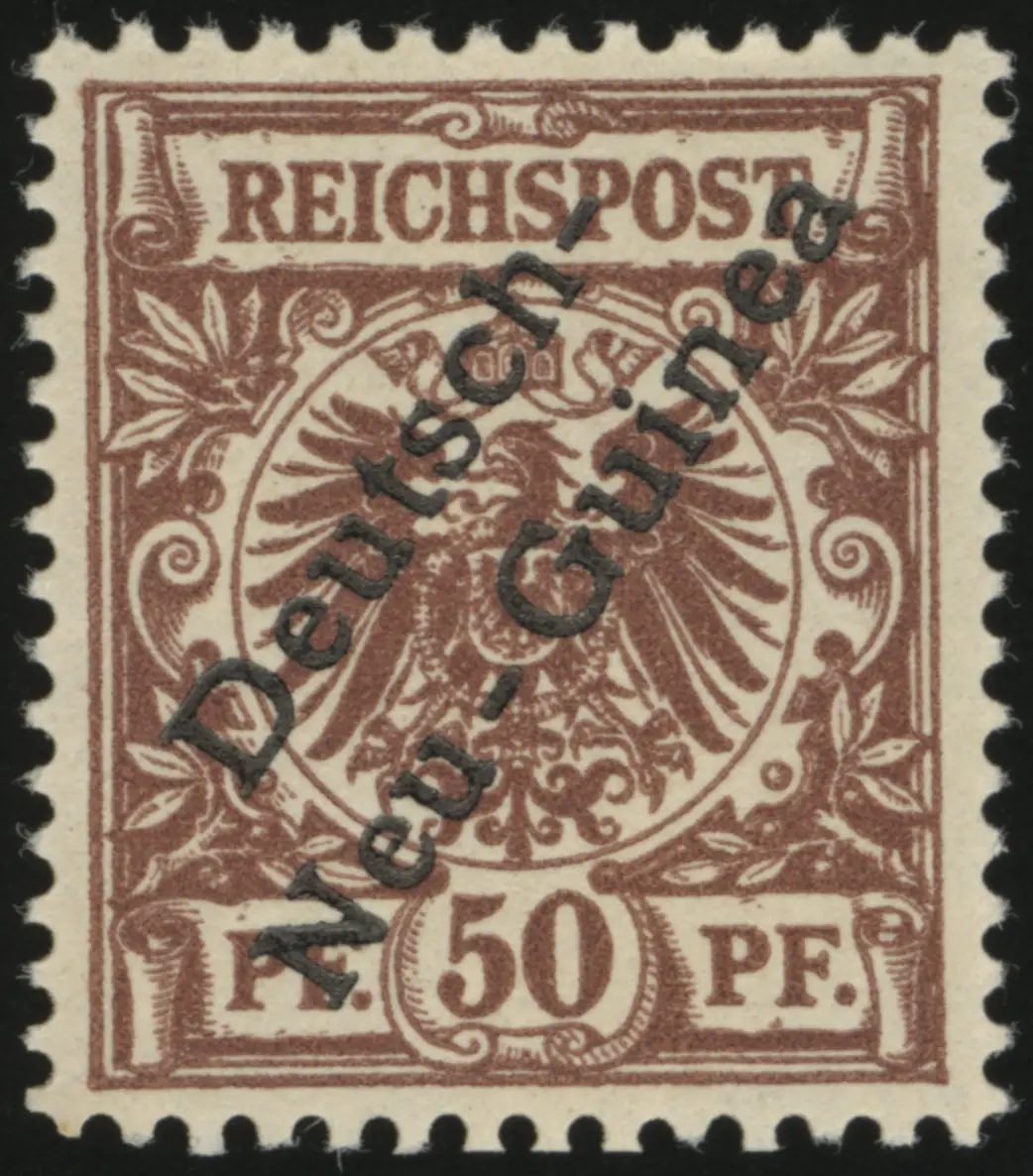 MiNr. 6
The first stamps issued for use in German New Guinea were overprints of German Krone / Adler issues.
They were first issued in September 1897. As with the Krone / Adler issues, multiple color variants exists due to the various printings.
The period of use for these stamps was short-lived, as they were replaced in December 1900 by the first Yacht issues.
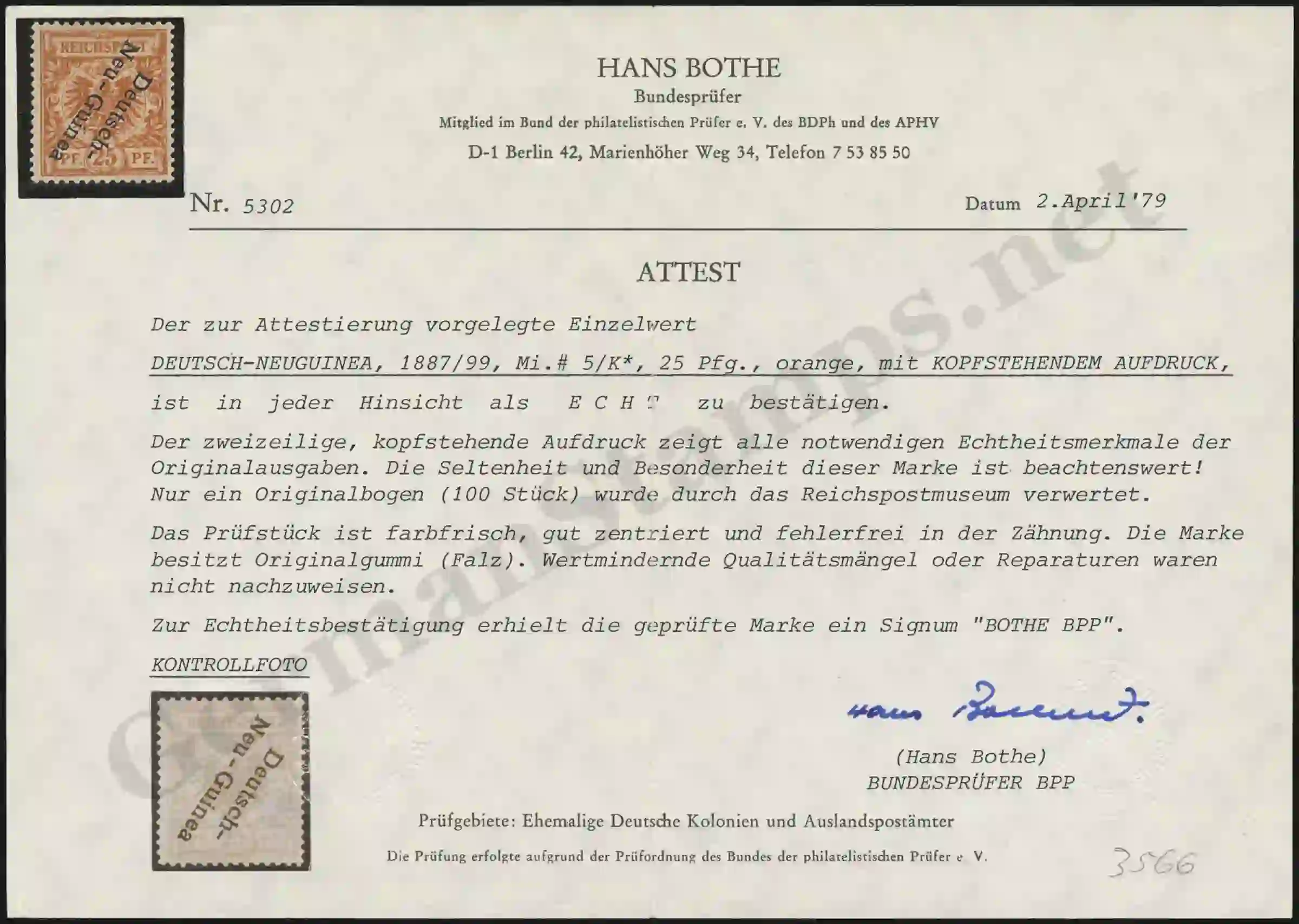
A single 10×10 sheet of MiNr. 5 b was printed with an inverted overprint.
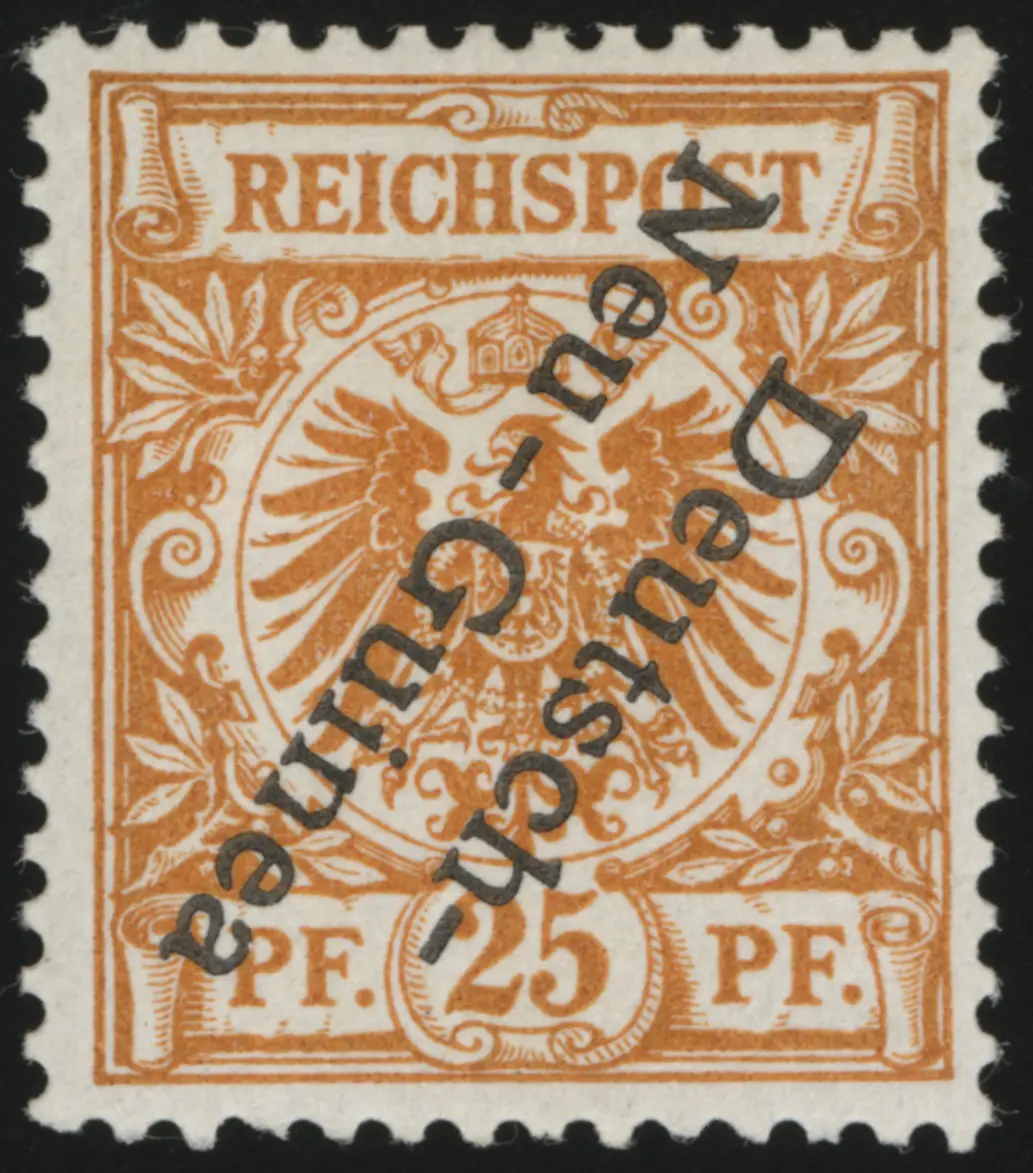 MiNr. 5 b K
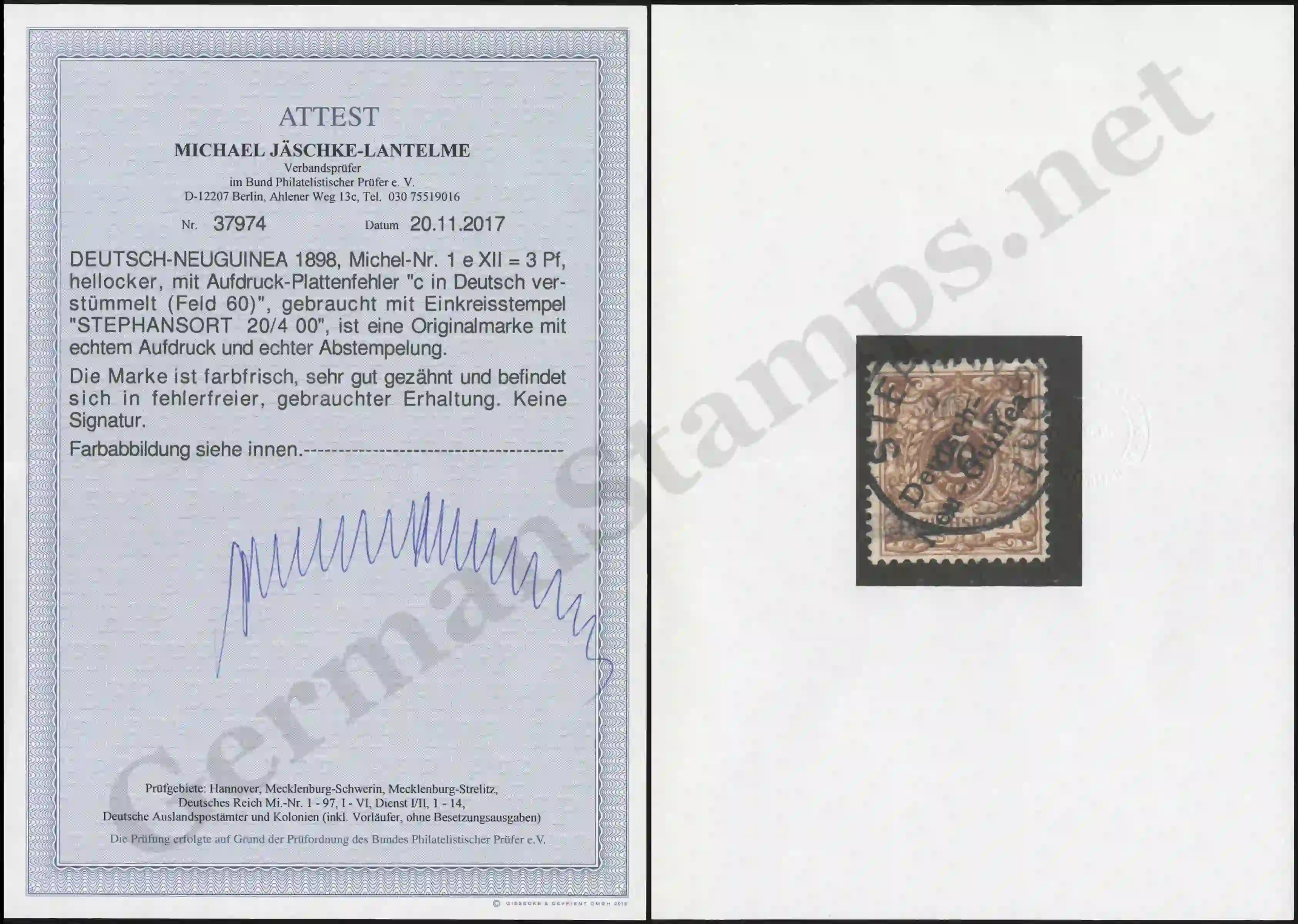
The 3 Pf and 25 Pf can be found with plate flaws on the underlying stamps.

Posn. 33, 38, 83, 88
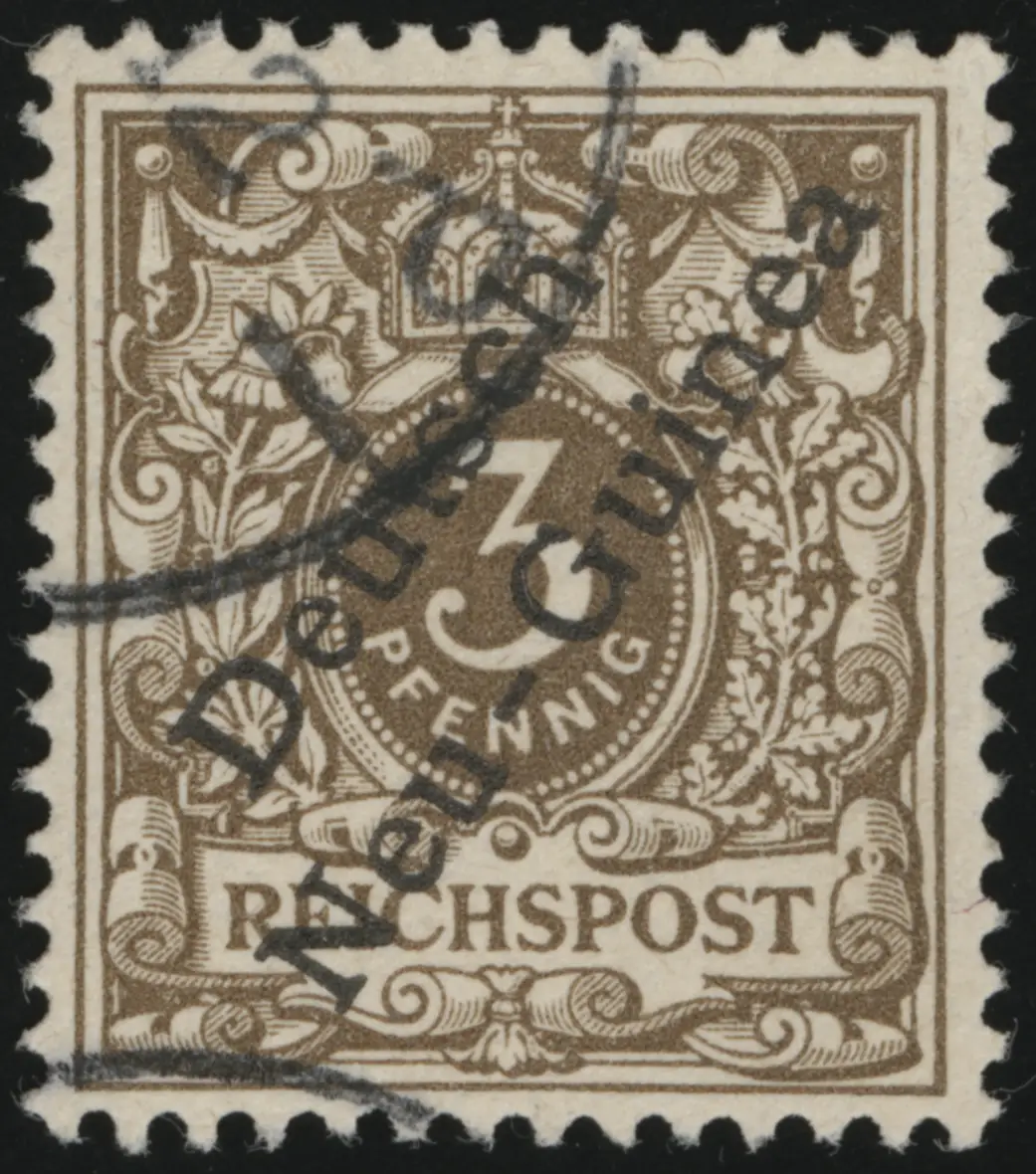 MiNr. 1 a I
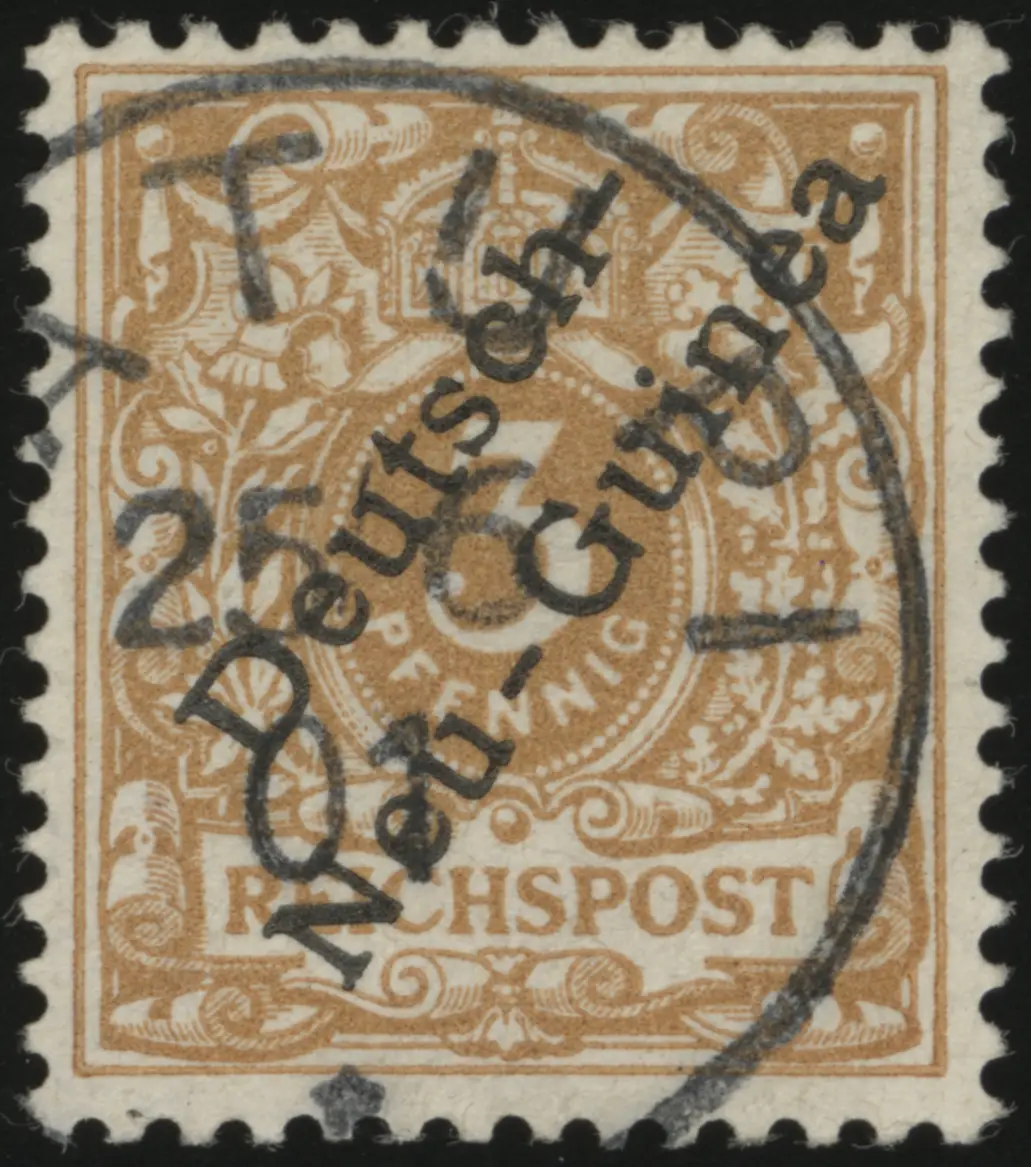 MiNr. 1 b I
 MiNr. 1 c I
 MiNr. 1 d I
 MiNr. 1 e I
 MiNr. 1 f I

Posn. 22, 27, 72, 77
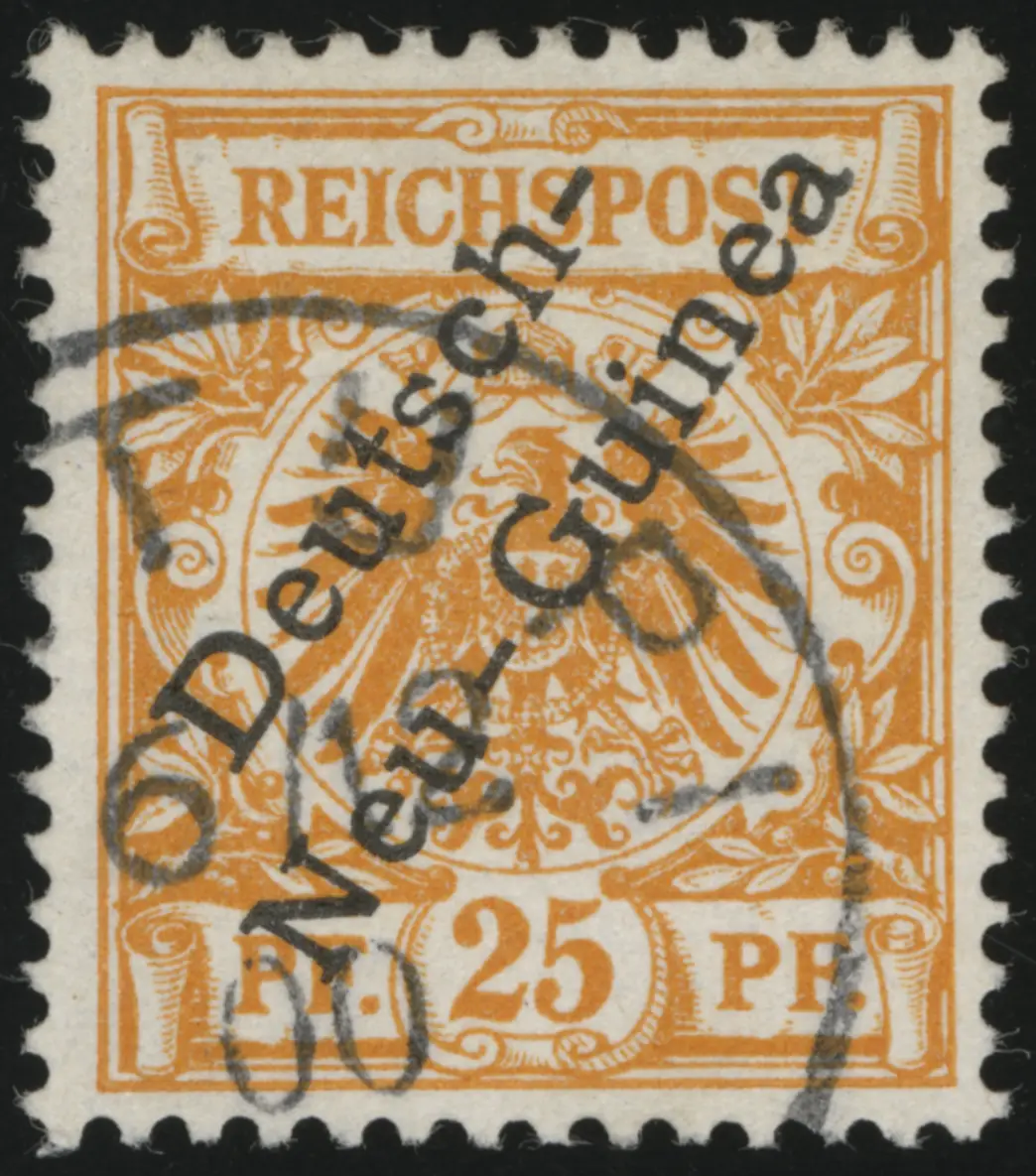 MiNr. 5 a II
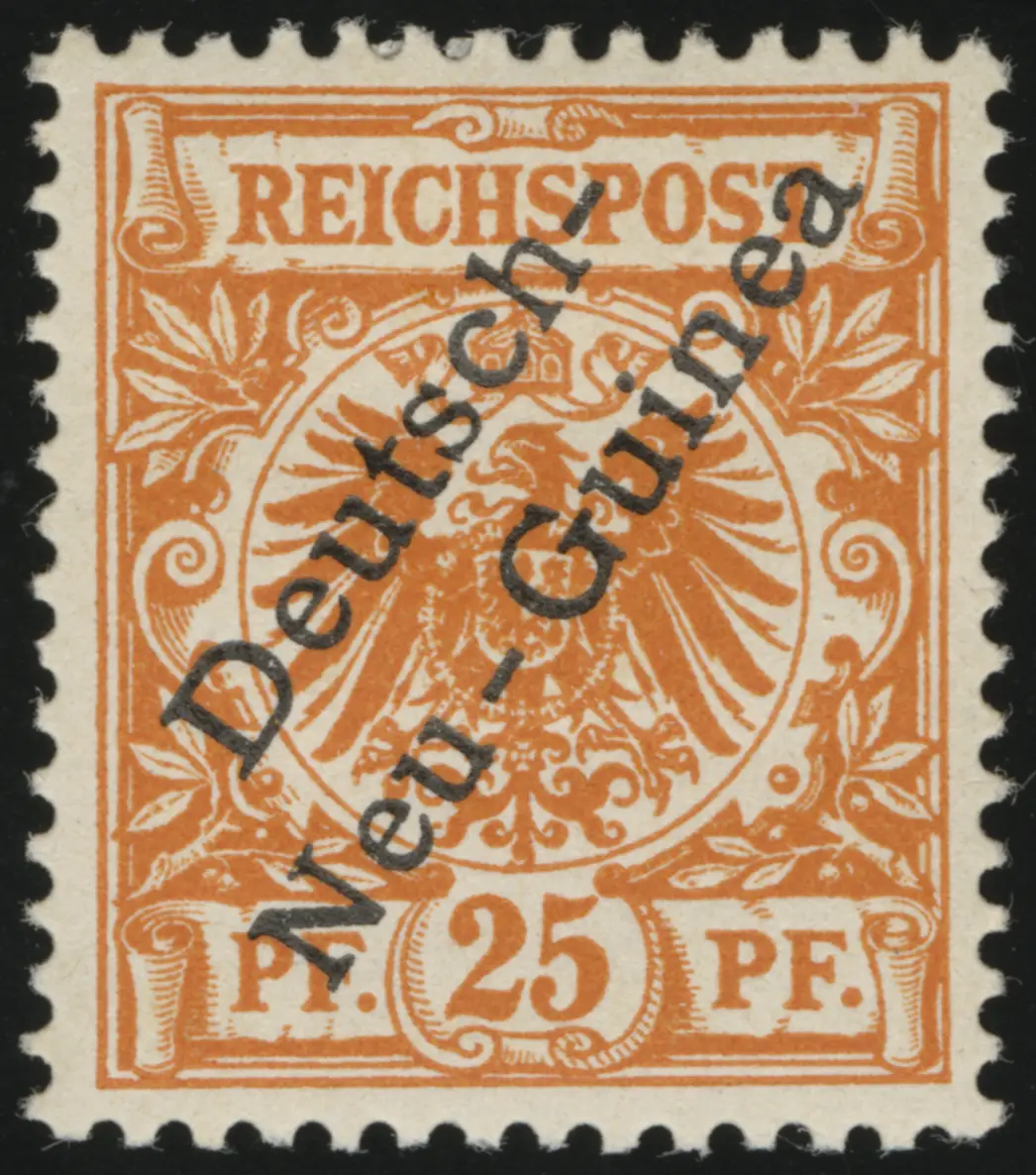 MiNr. 5 b II
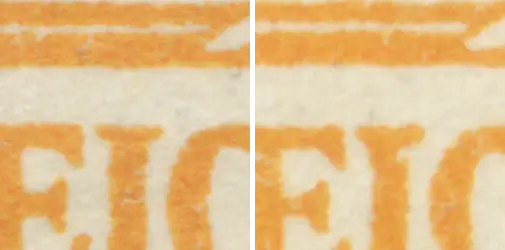
Posn. Unknown
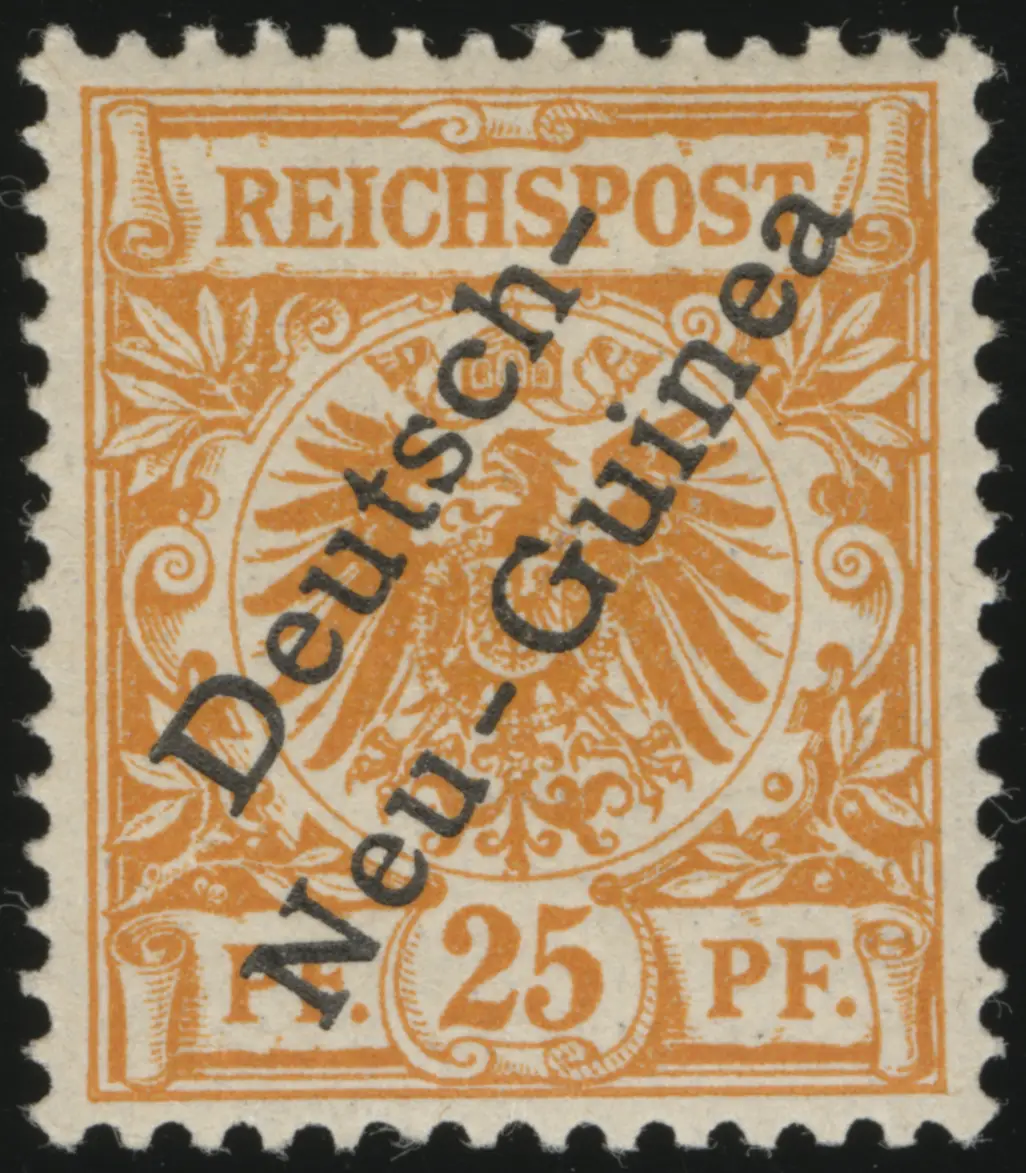 MiNr. 5 a III
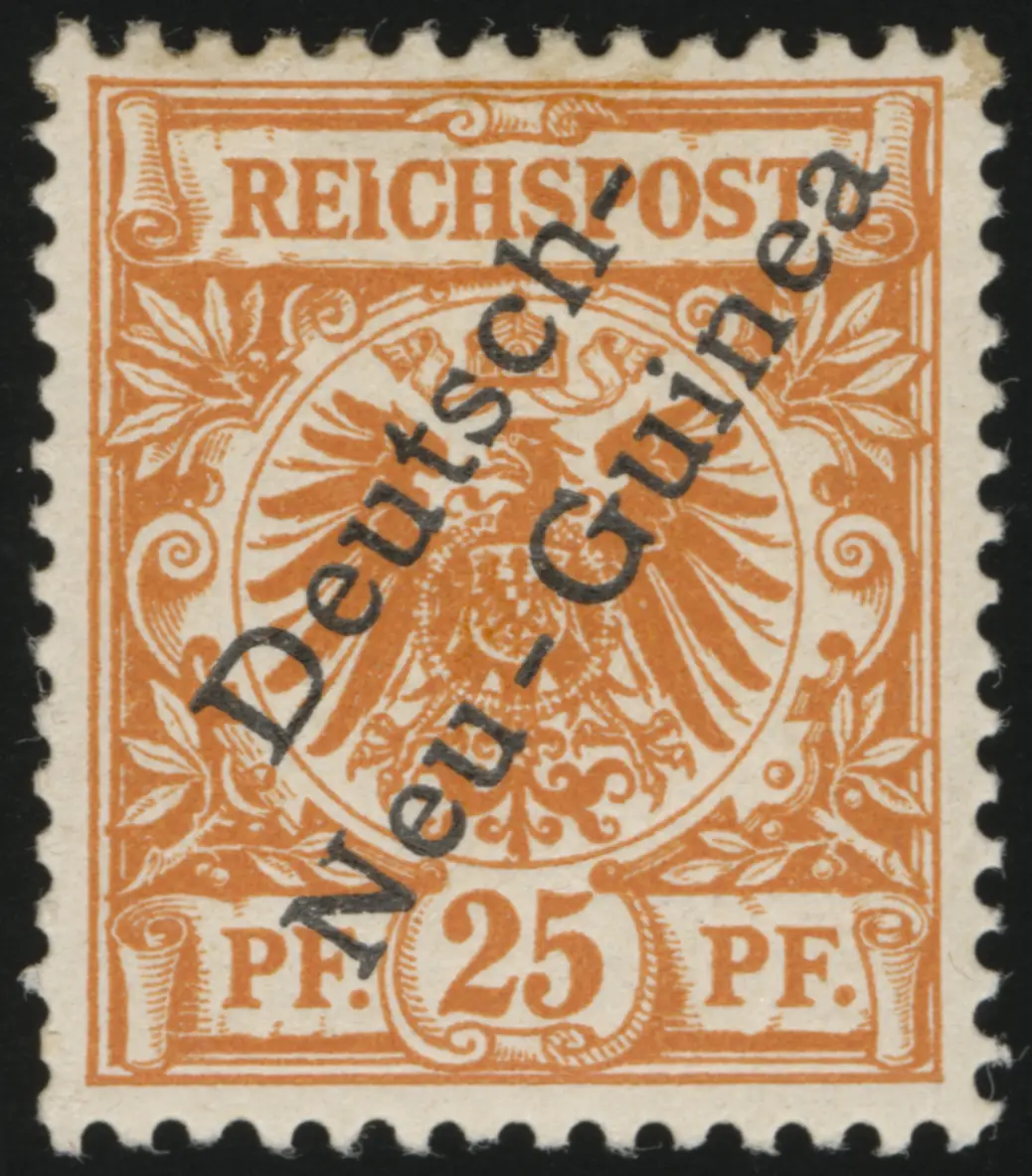 MiNr. 5 b III

Posn. Unknown
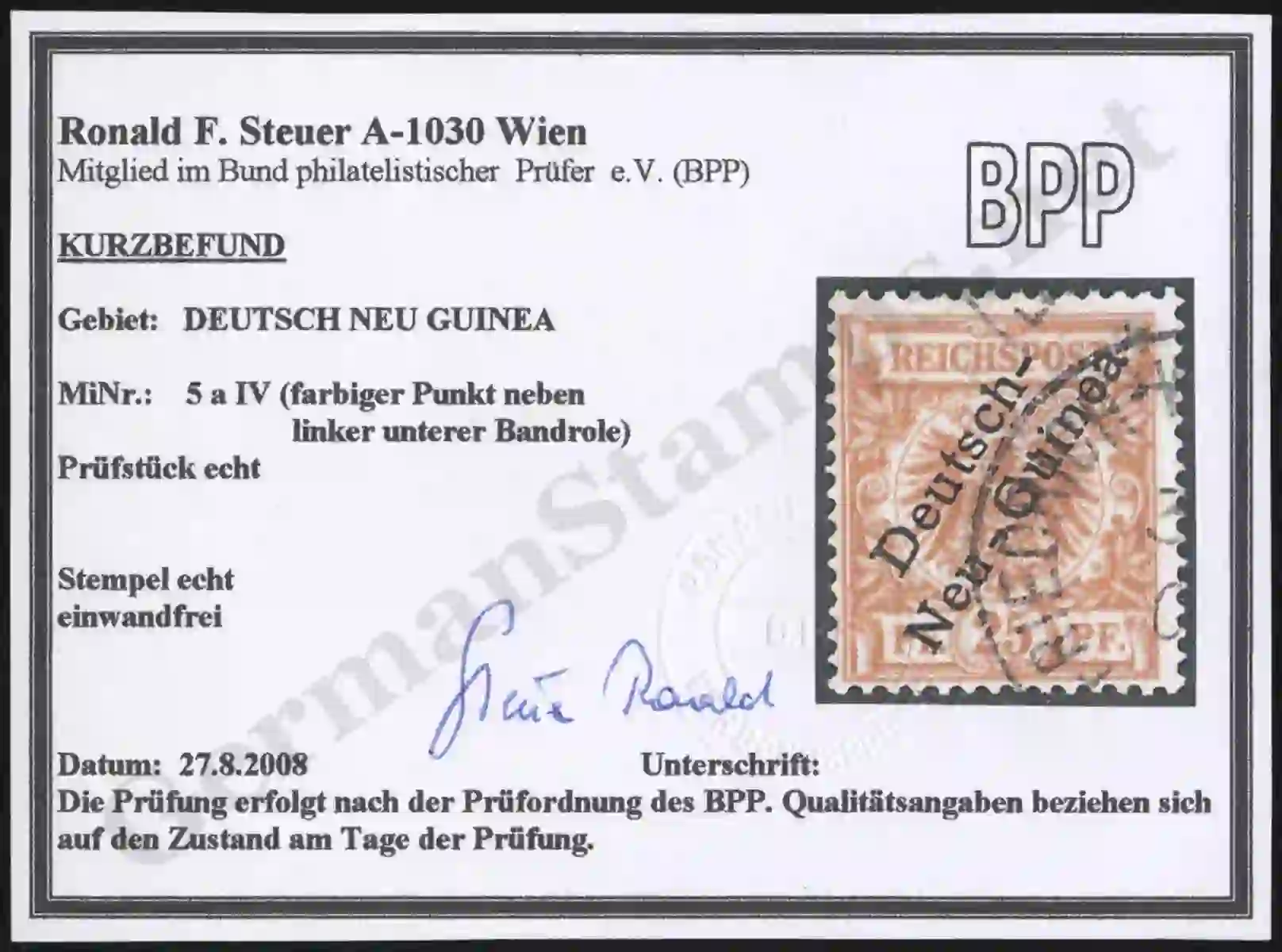
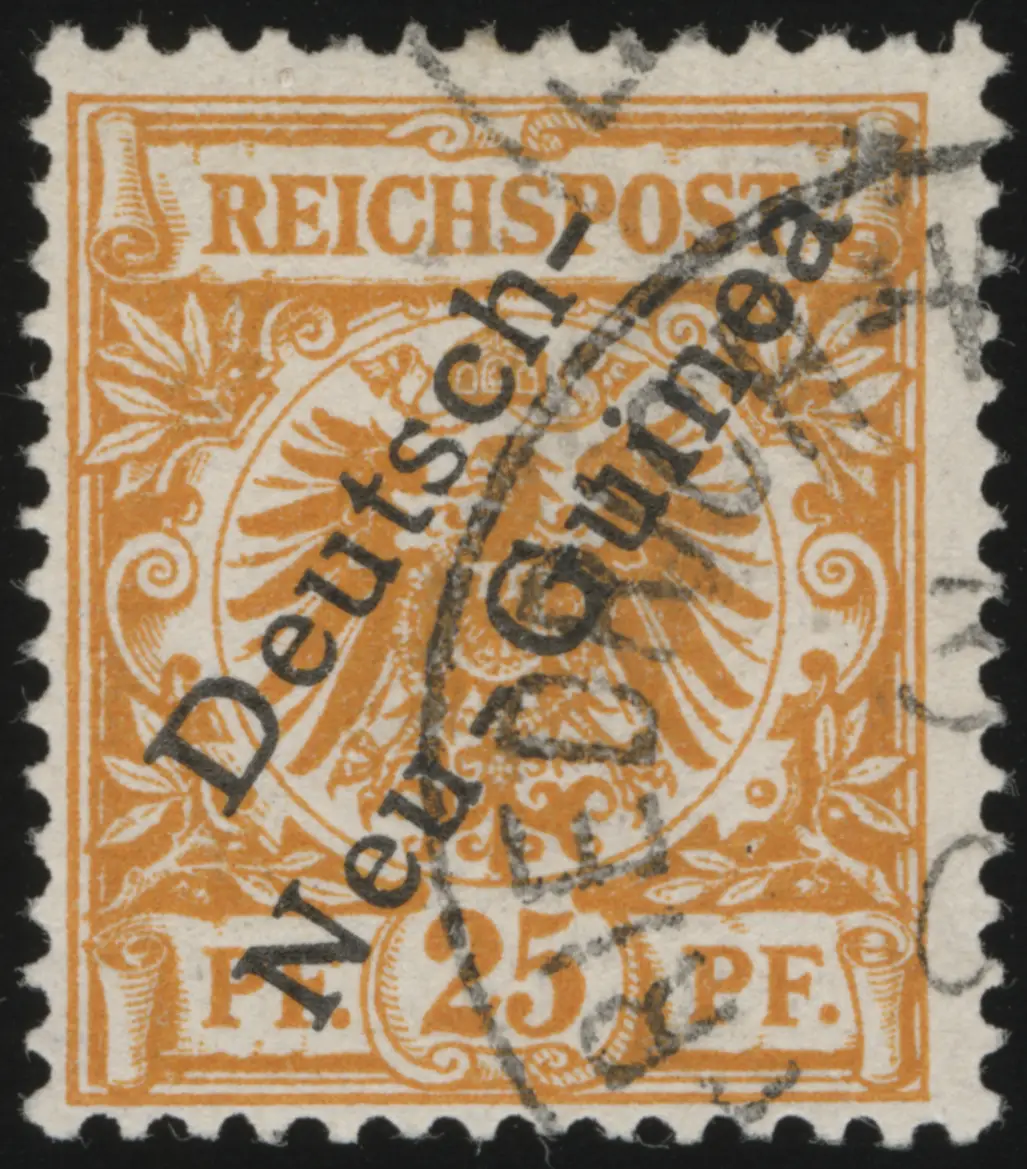 MiNr. 5 a IV
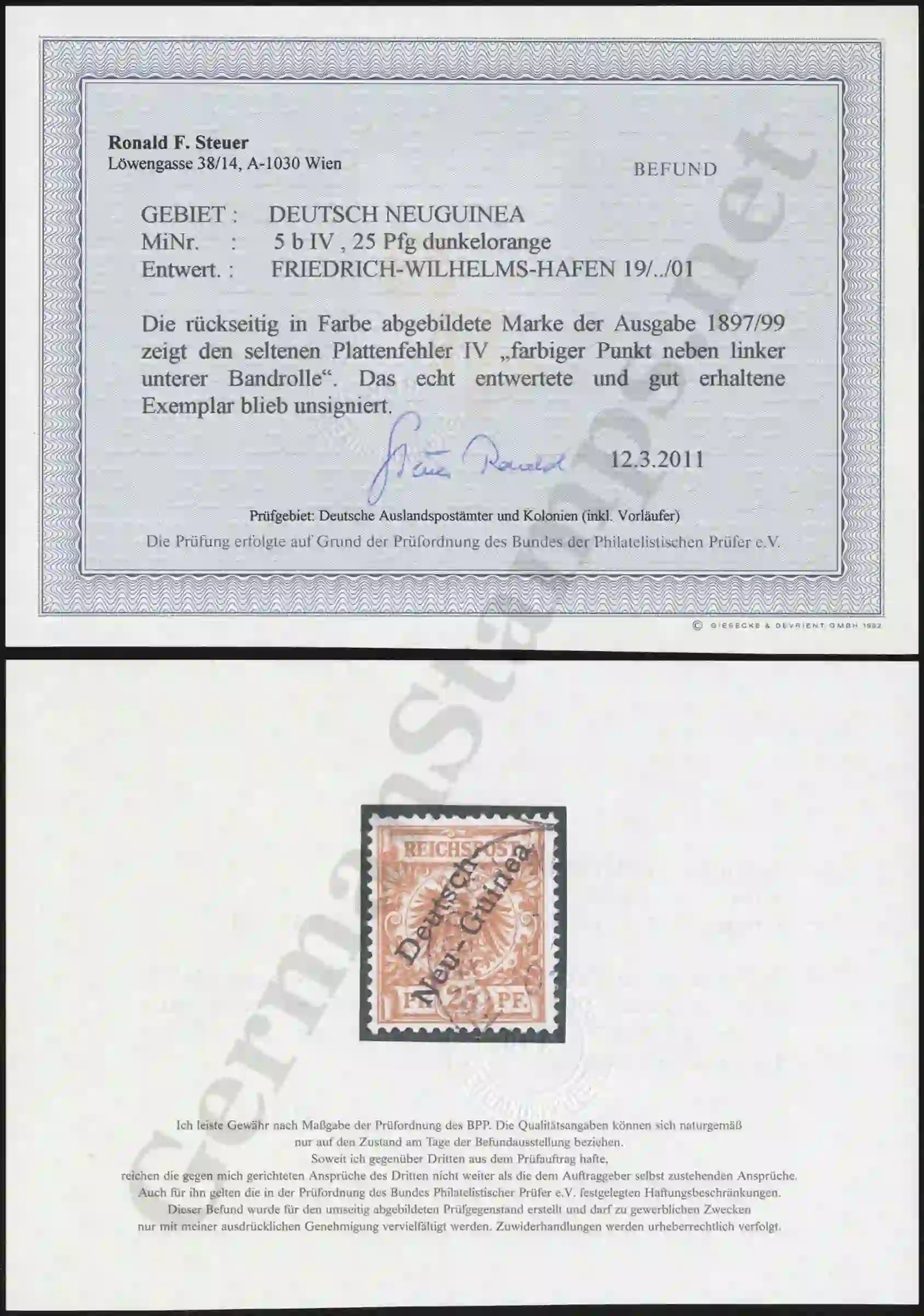
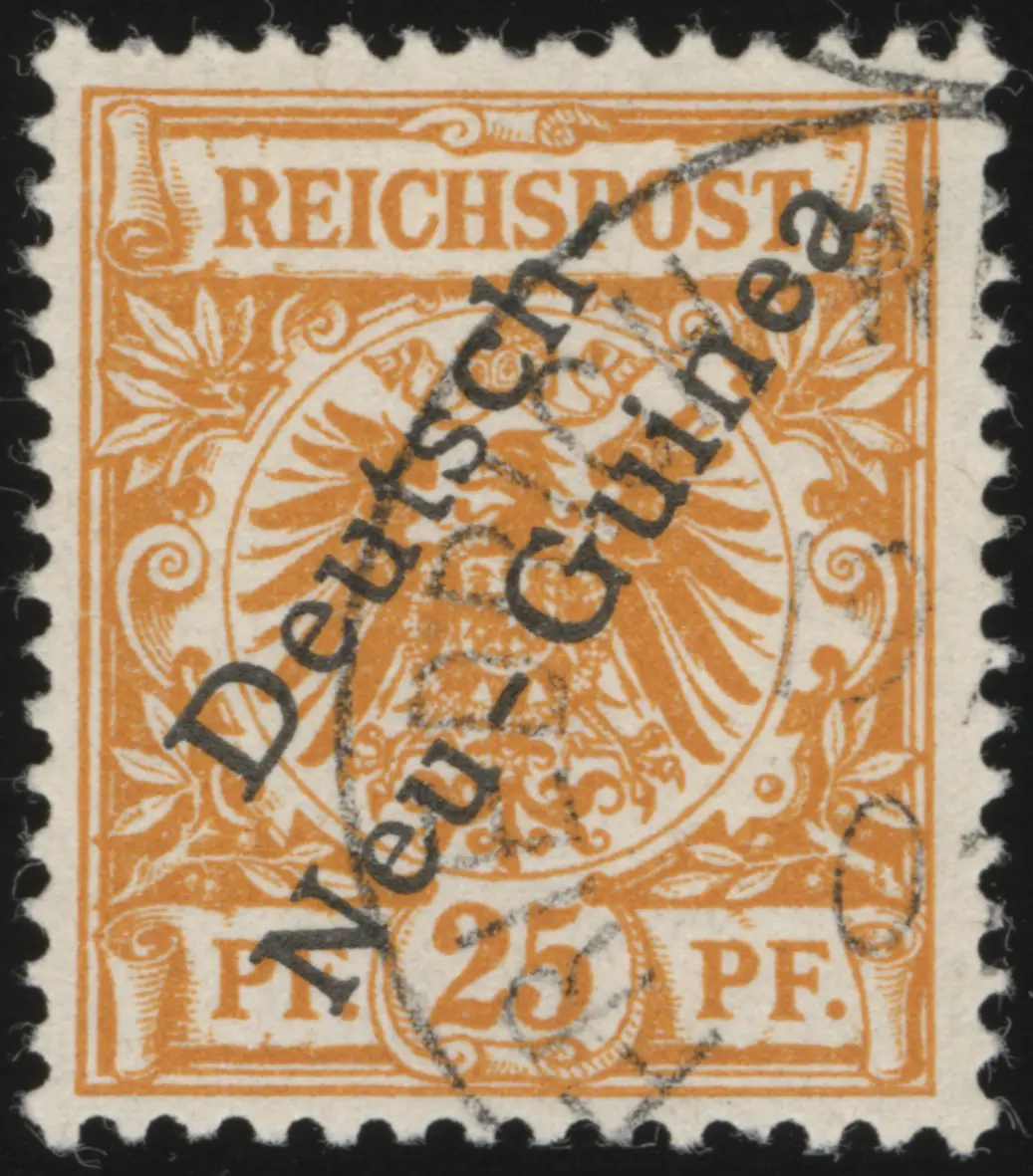 MiNr. 5 b IV
In addition, numerous overprint flaws exist across all values.

Posn. 10
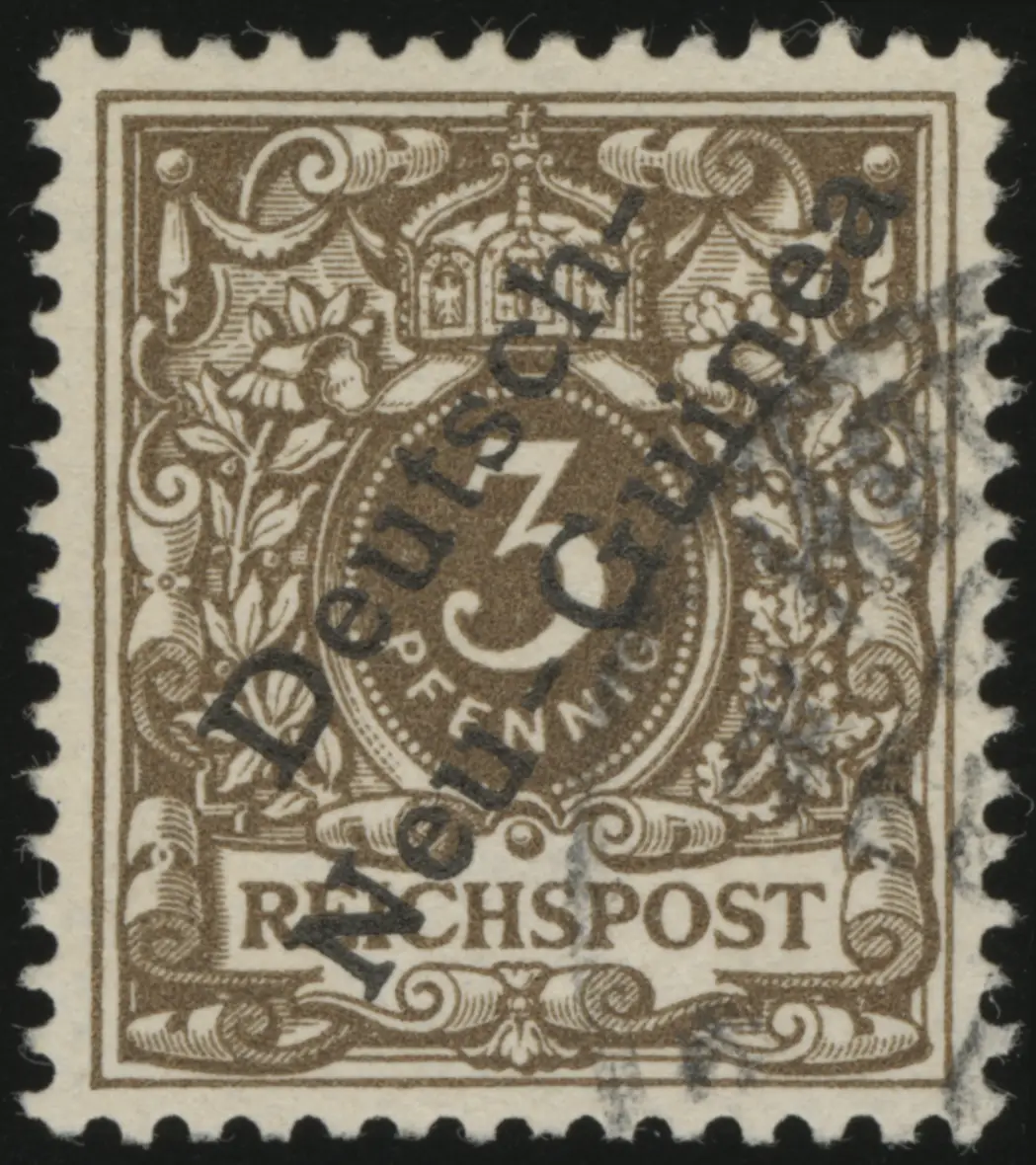 MiNr. 1 a X
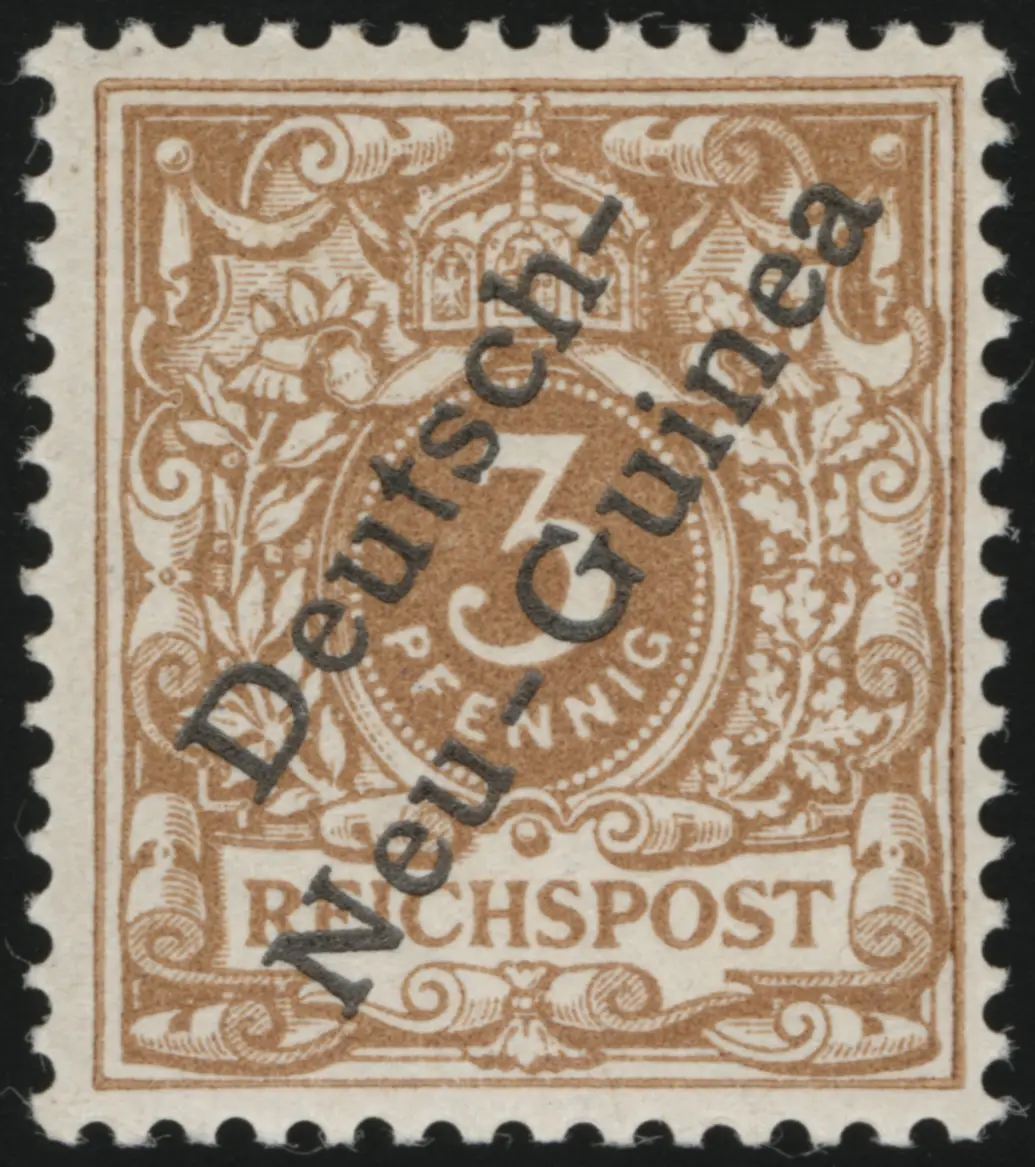 MiNr. 1 b X
 MiNr. 1 c X
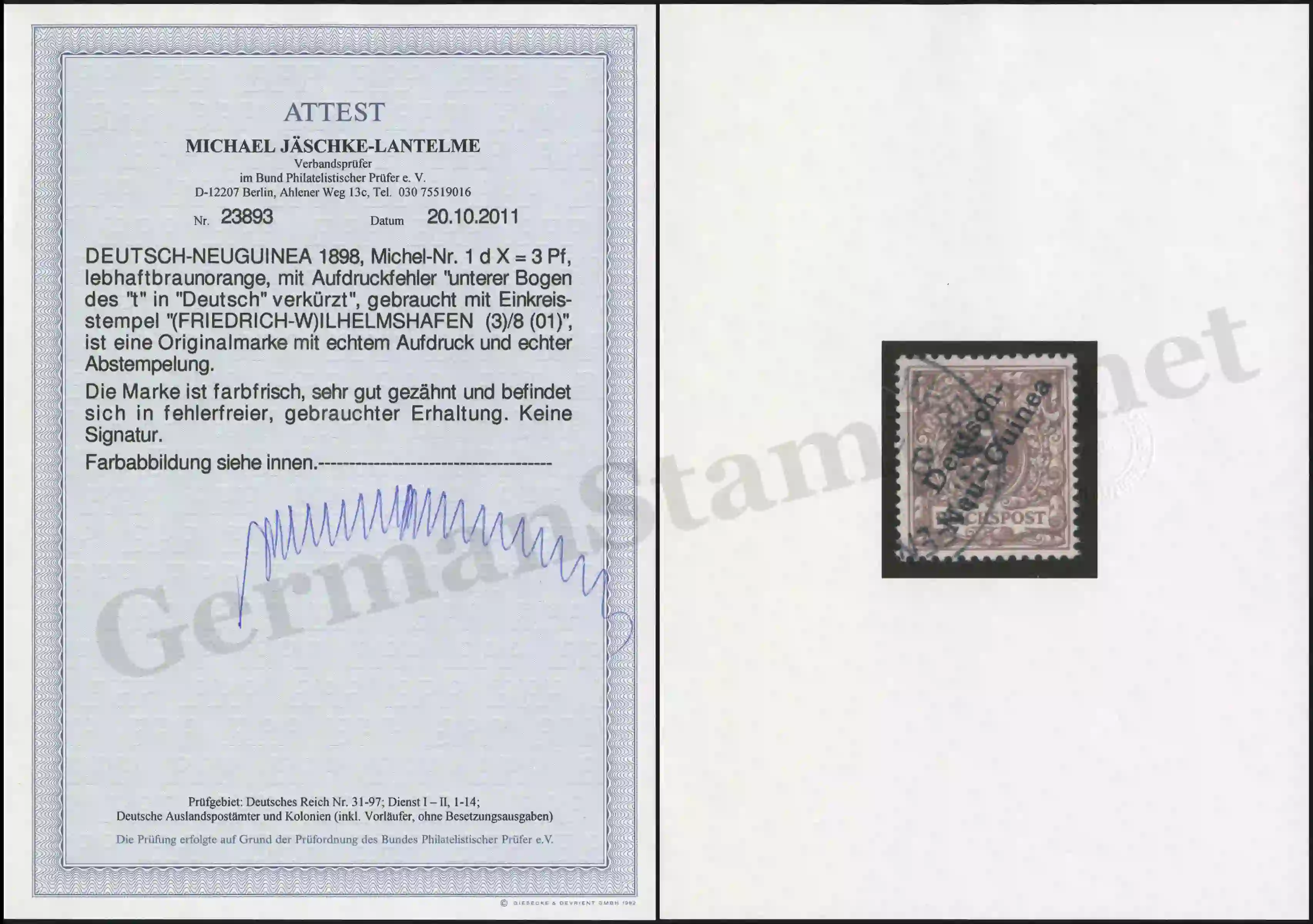
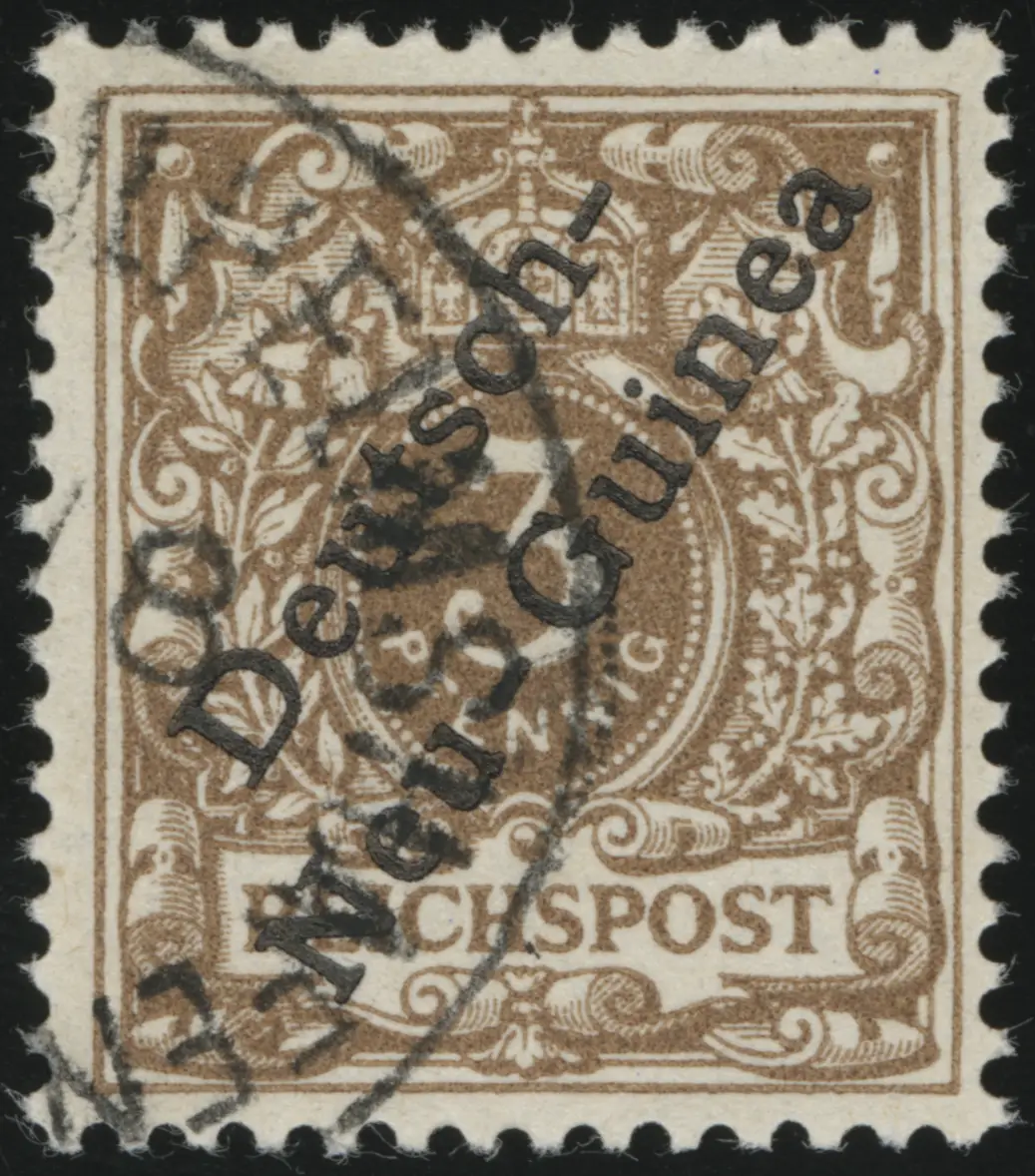 MiNr. 1 d X
 MiNr. 1 e X
 MiNr. 1 f X
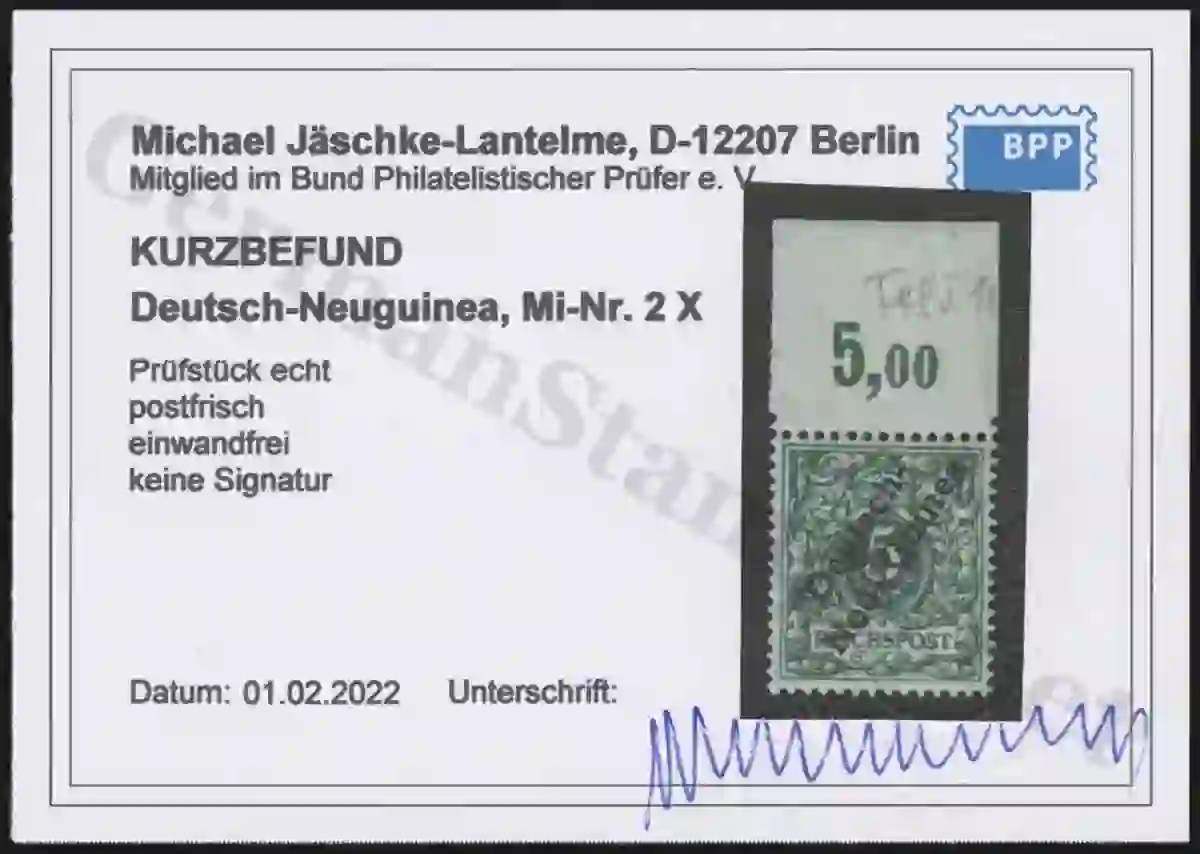
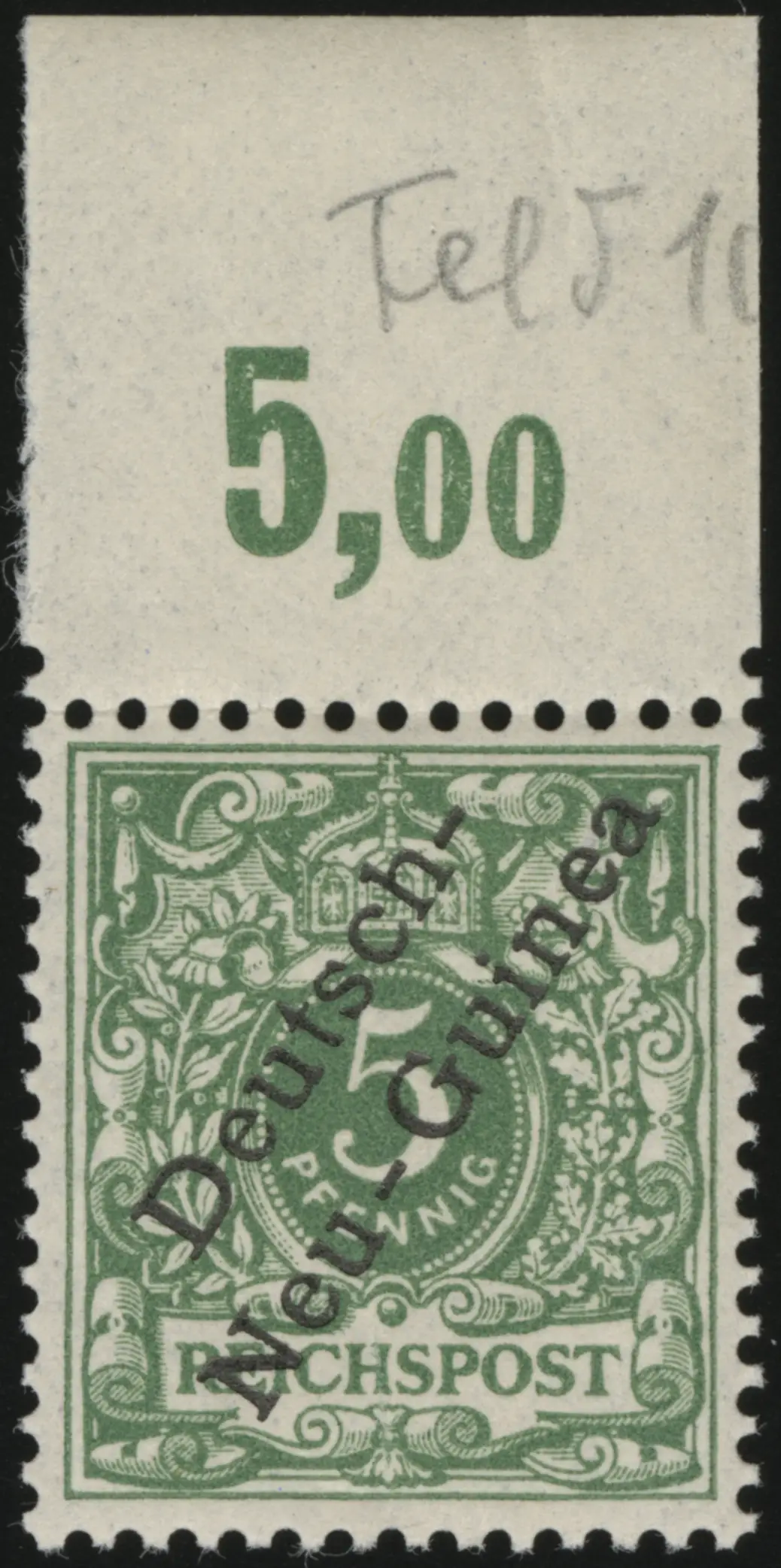 MiNr. 2 X
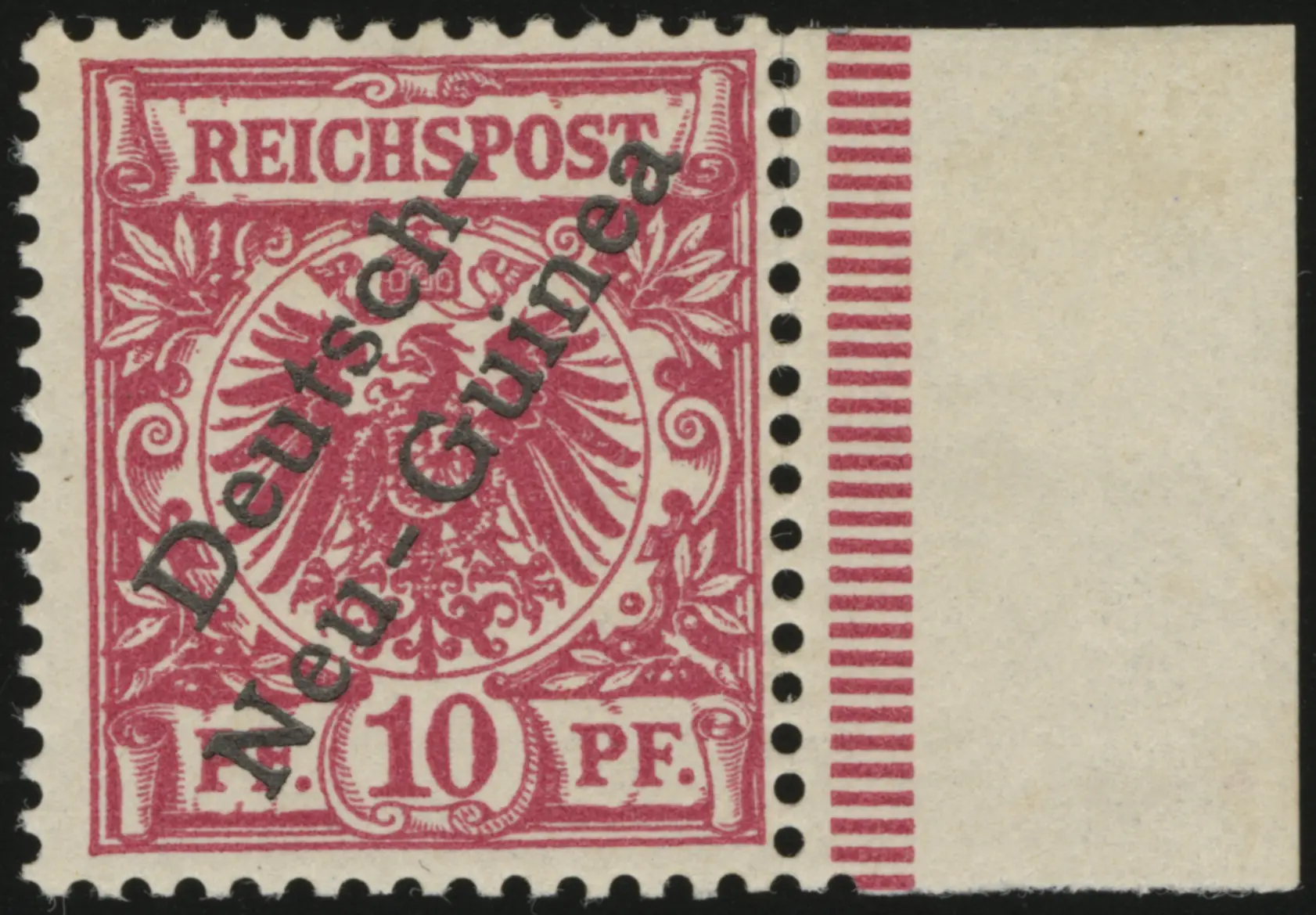 MiNr. 3 a X
 MiNr. 3 b X
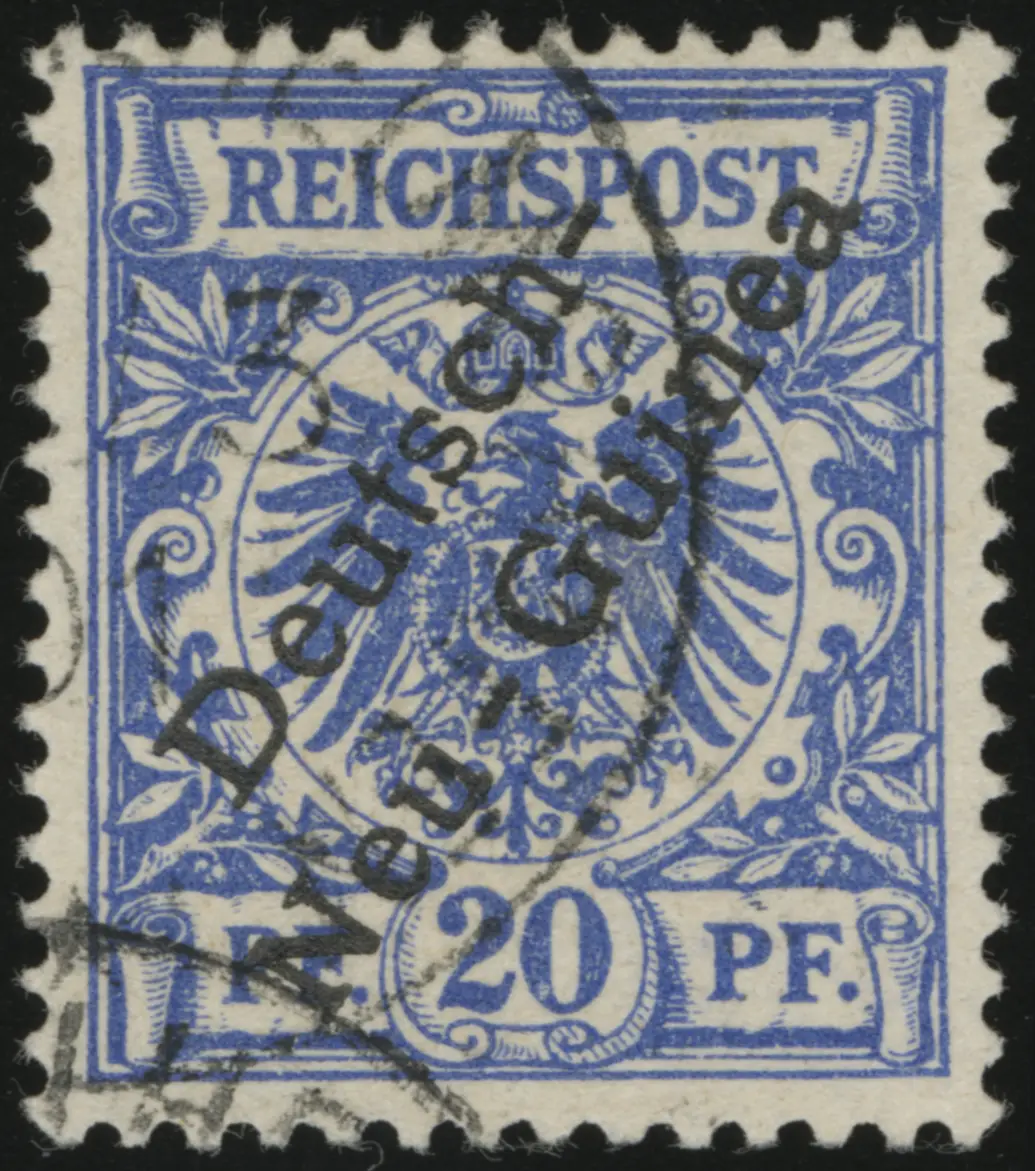 MiNr. 4 X
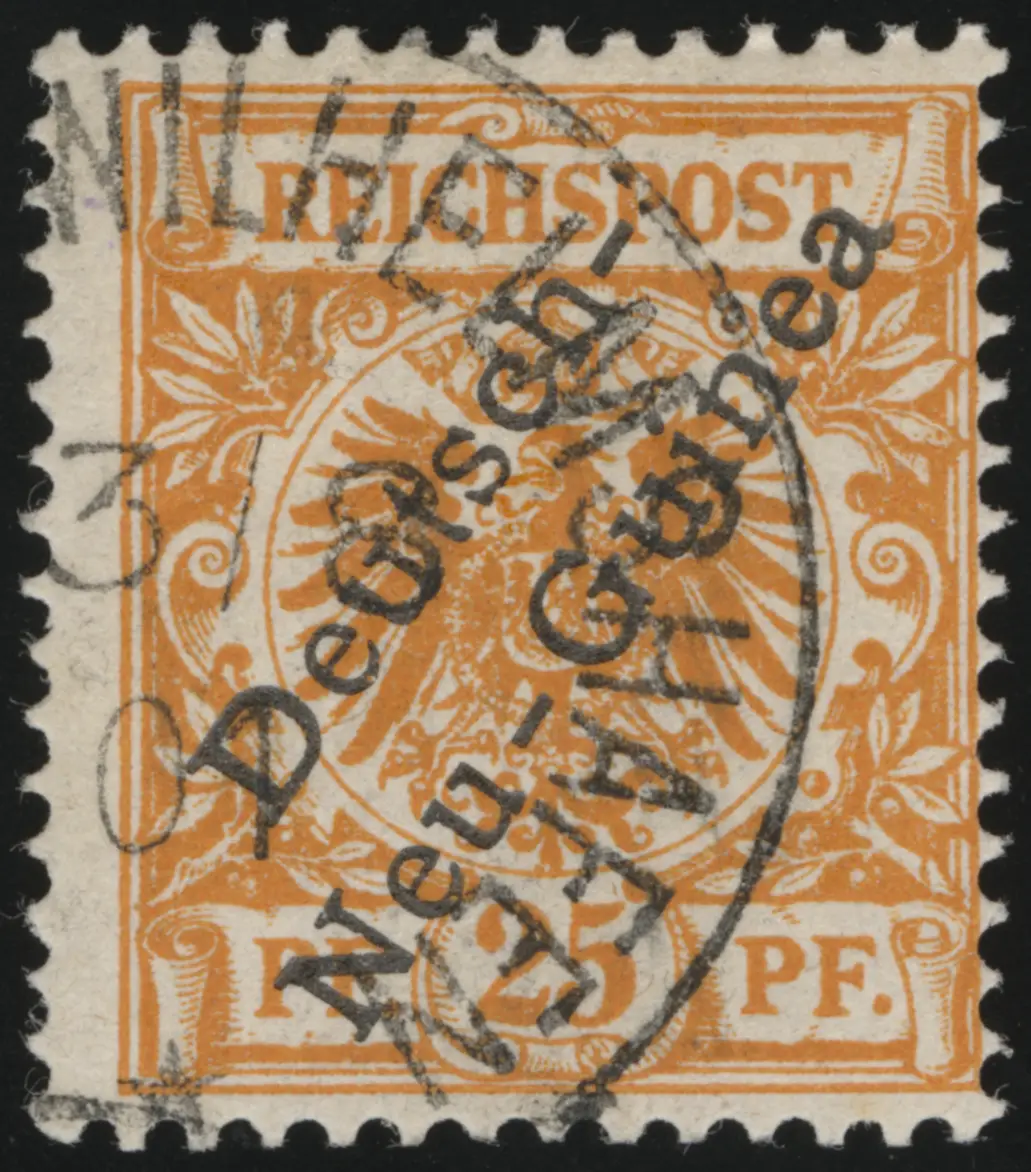 MiNr. 5 a X
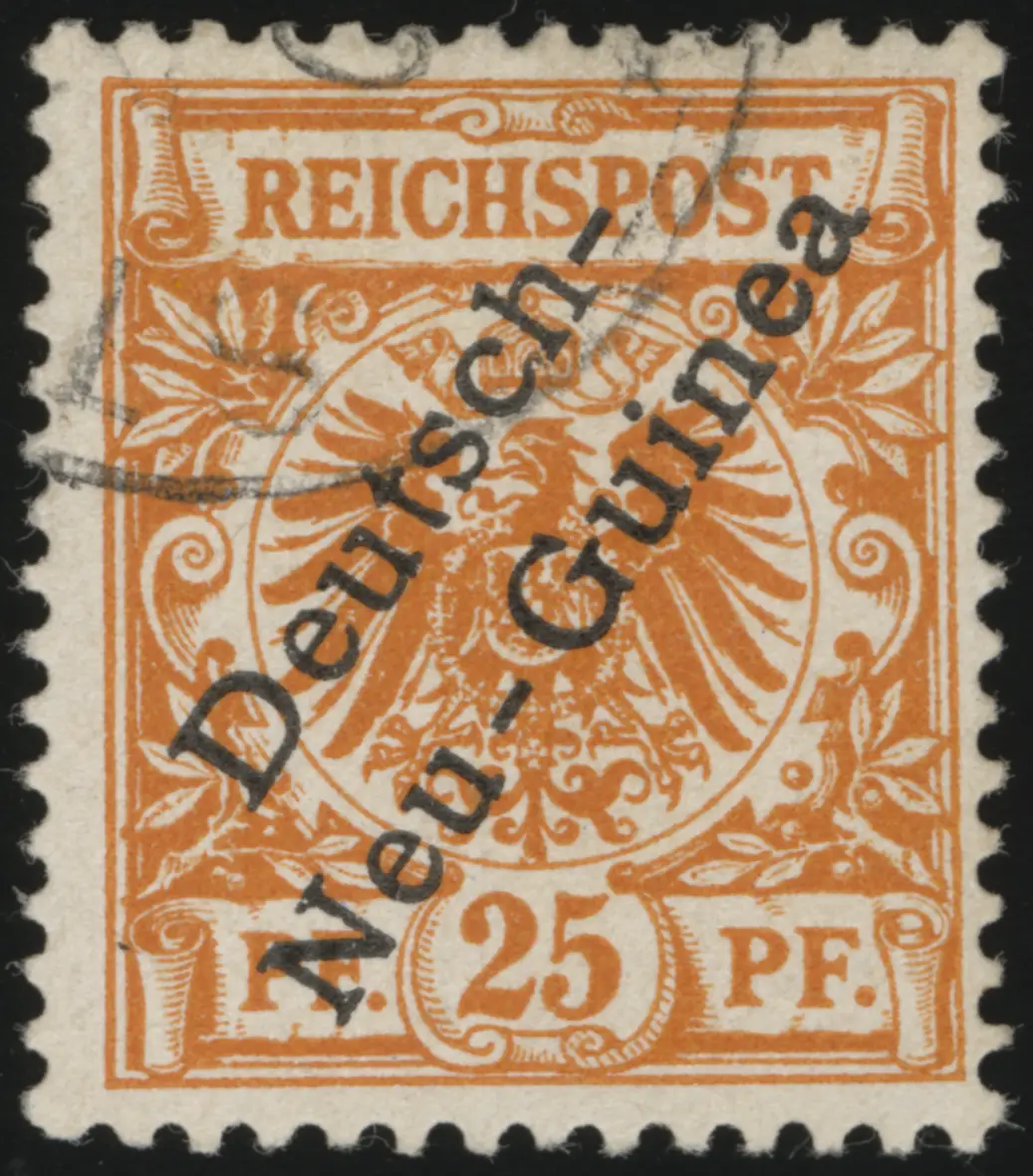 MiNr. 5 b X
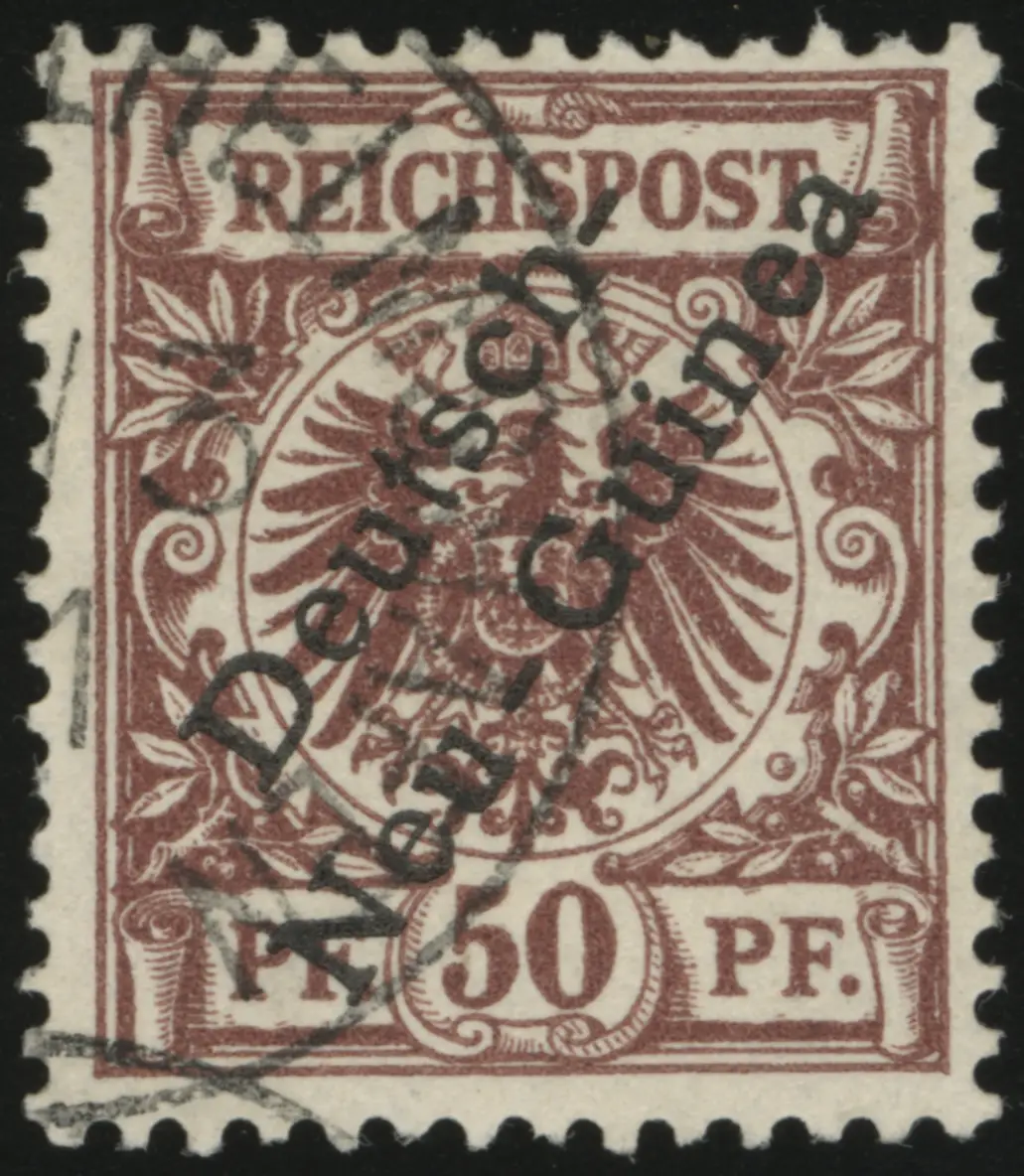 MiNr. 6 X
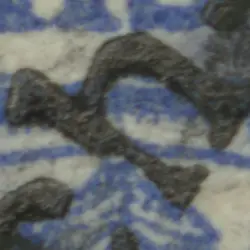
Posn. 58
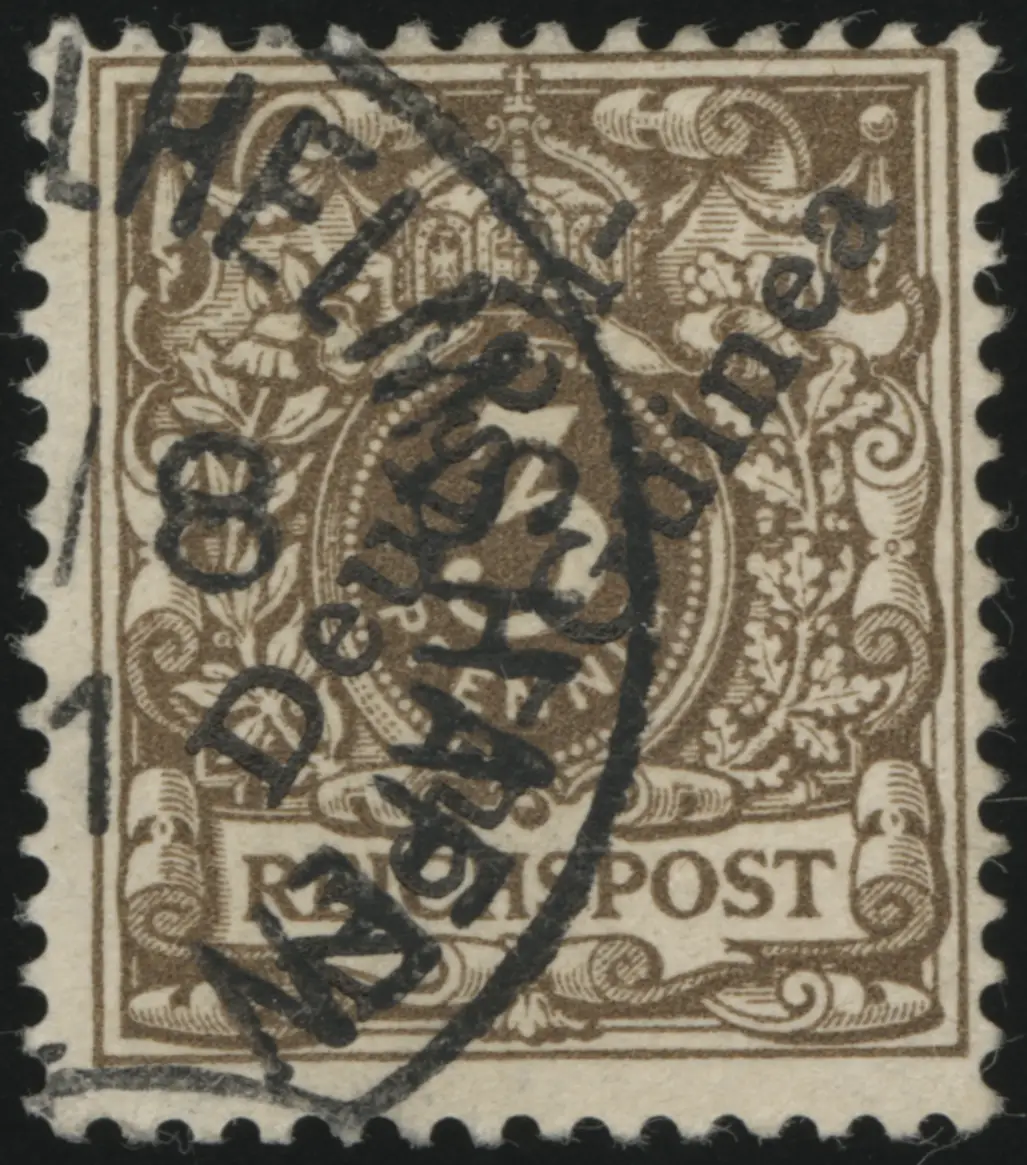 MiNr. 1 a XI
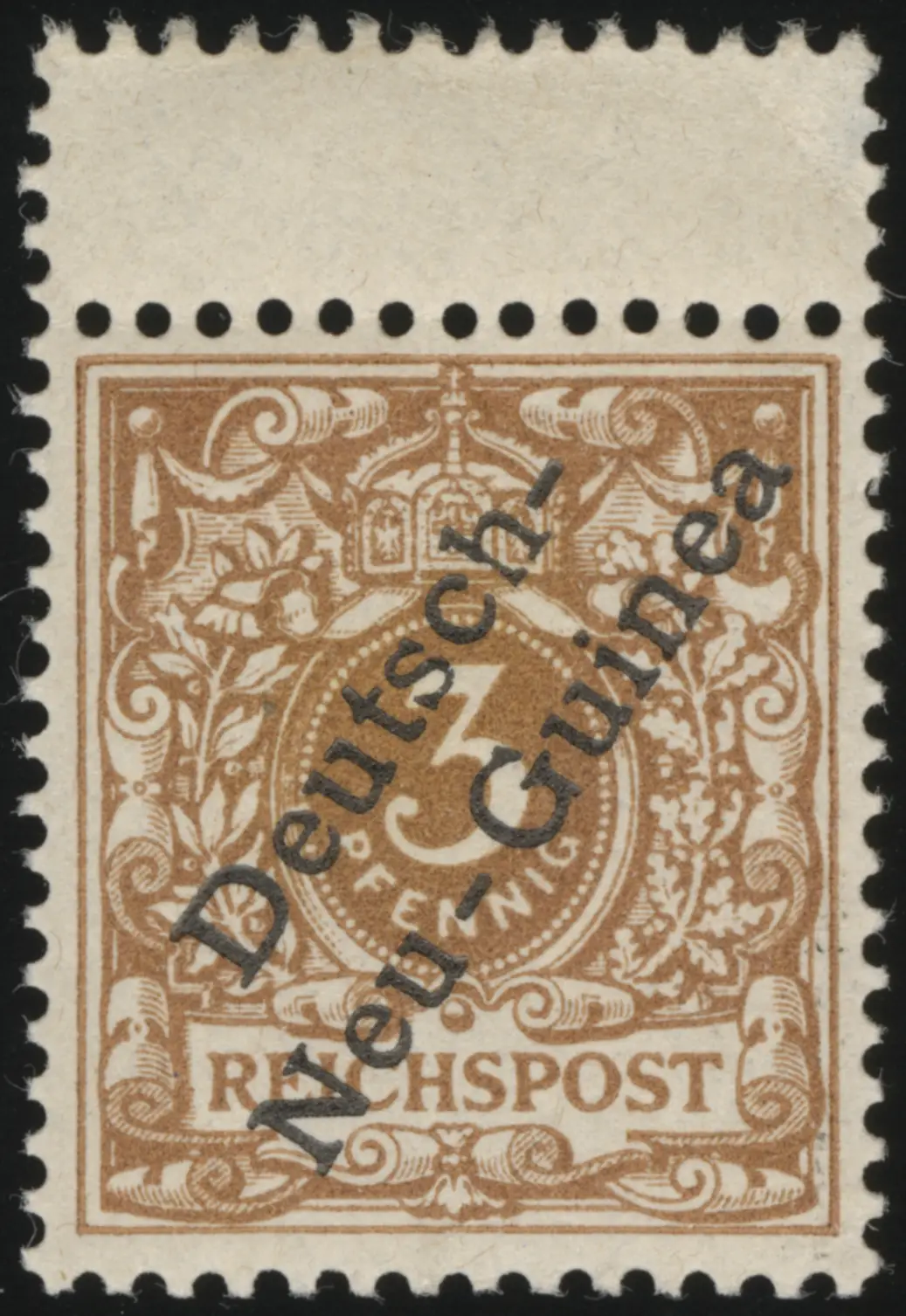 MiNr. 1 b XI
 MiNr. 1 c XI
 MiNr. 1 d XI
 MiNr. 1 e XI
 MiNr. 1 f XI
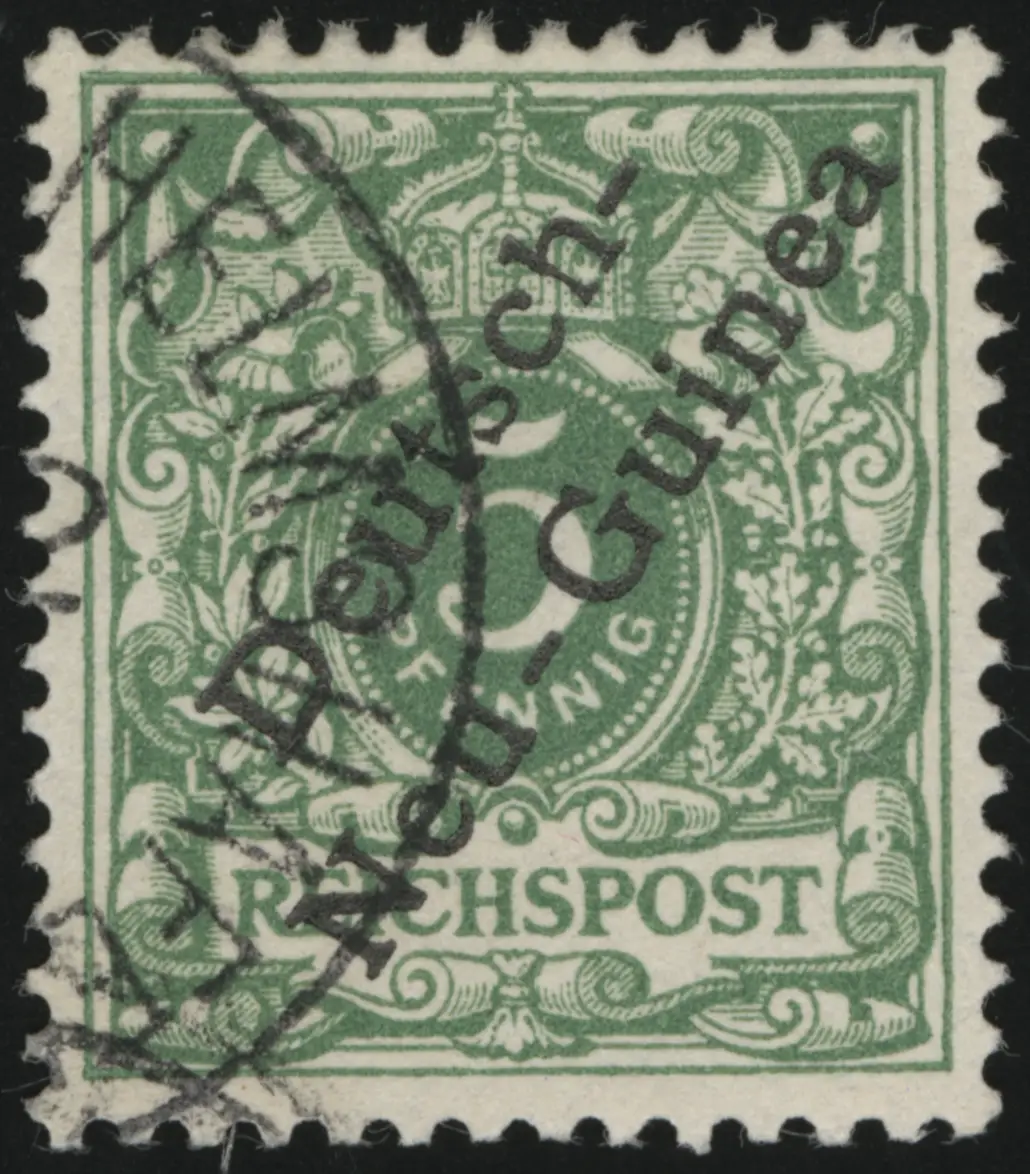 MiNr. 2 XI
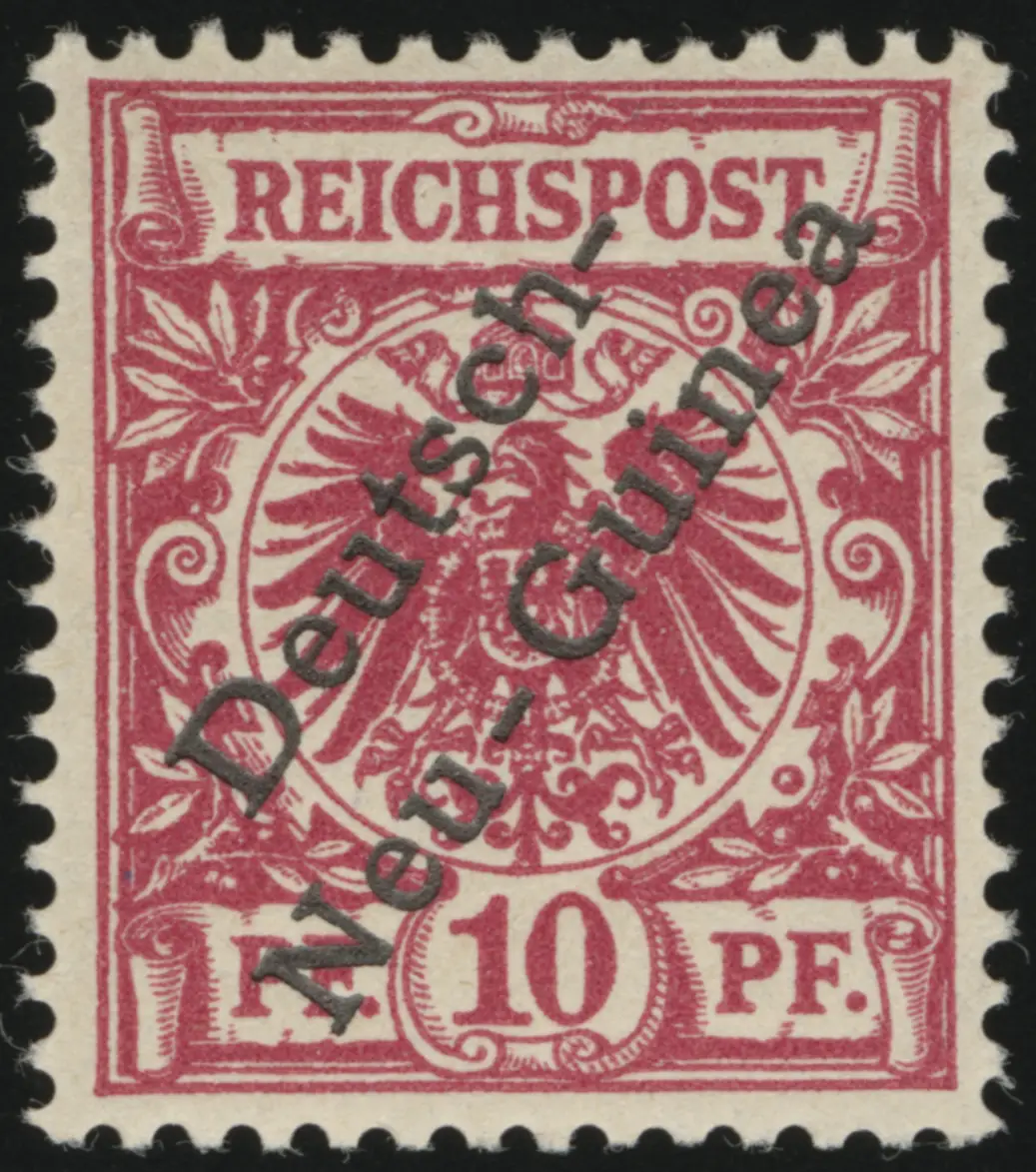 MiNr. 3 a XI
 MiNr. 3 b XI
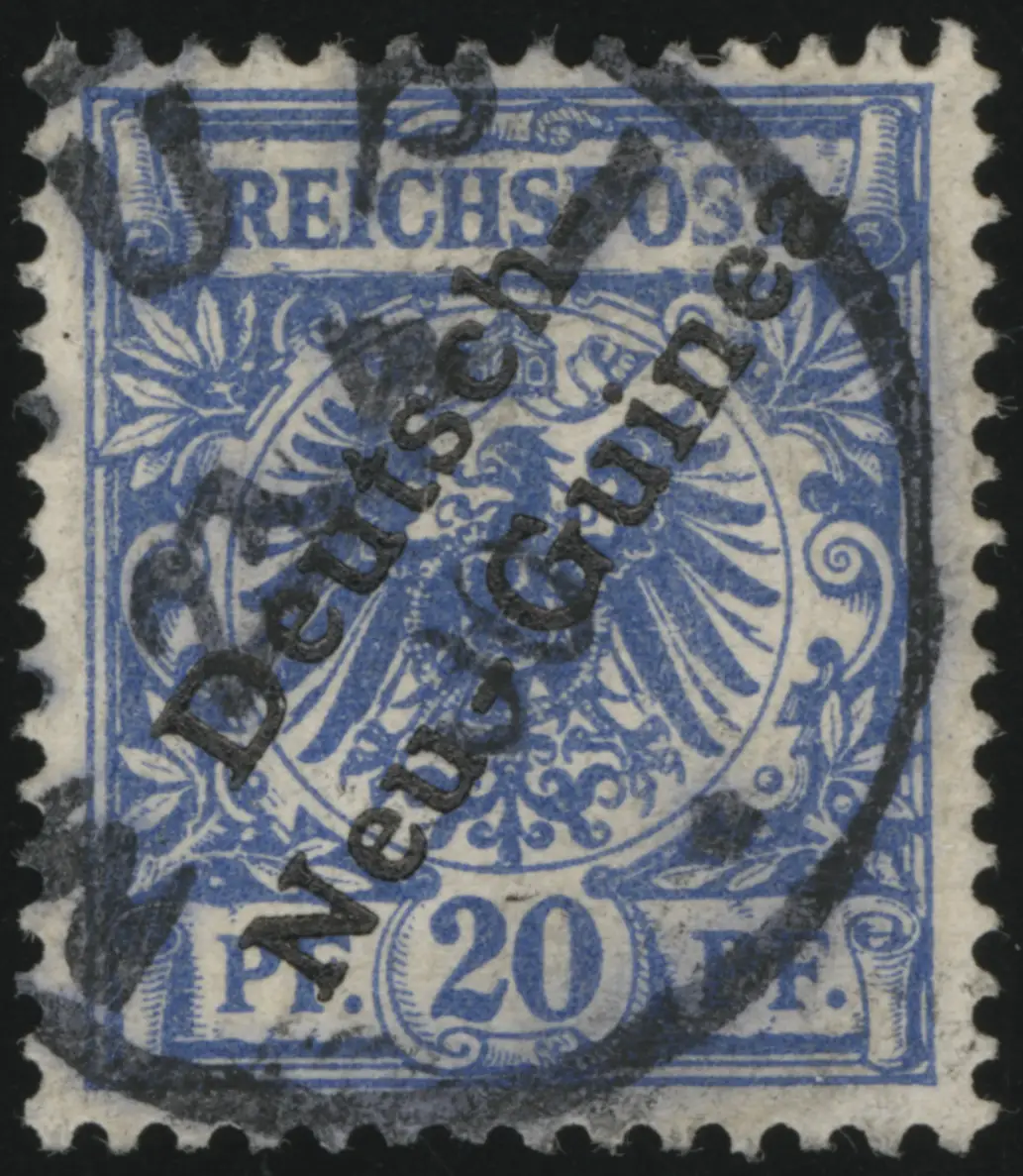 MiNr. 4 XI
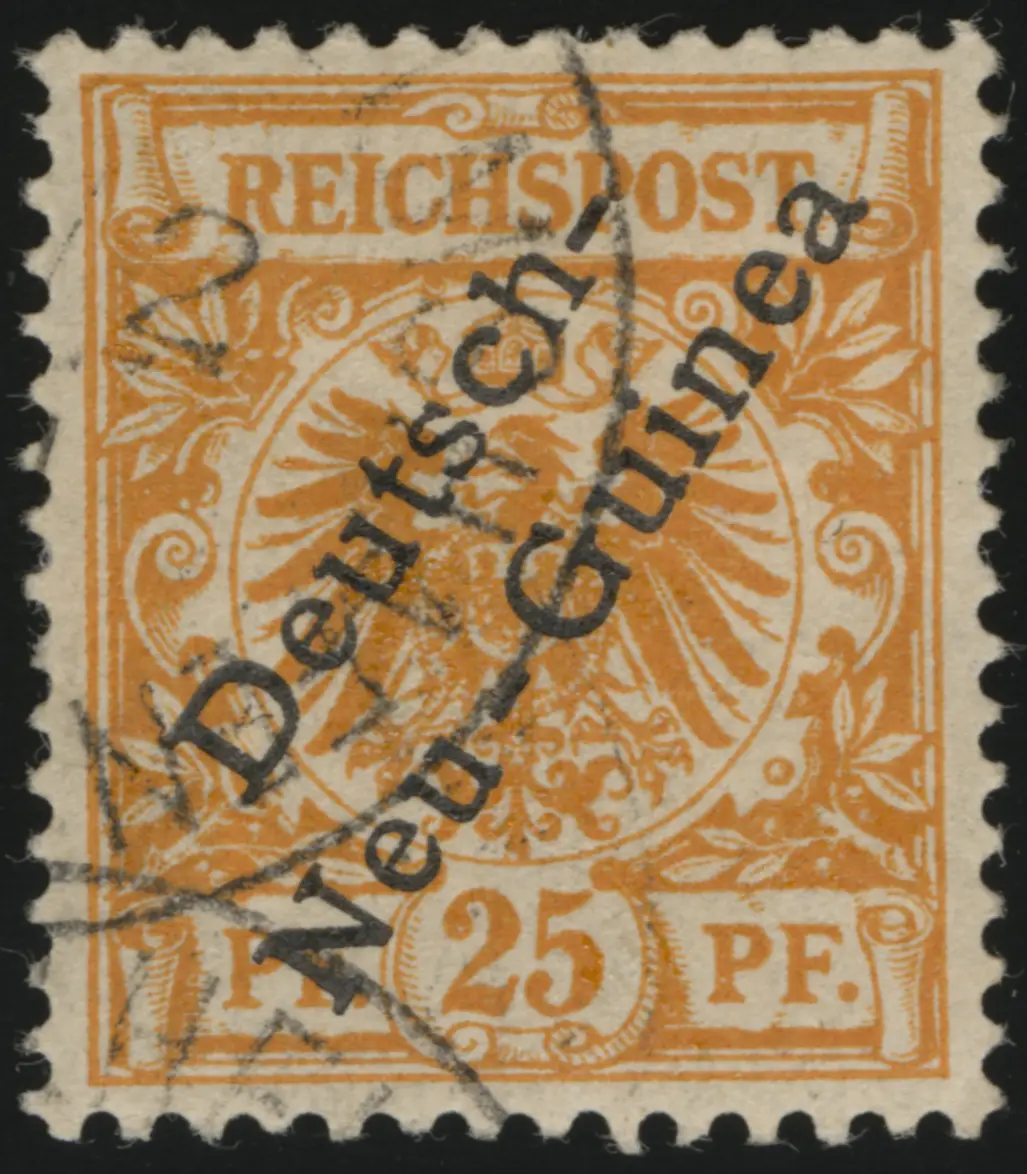 MiNr. 5 a XI
 MiNr. 5 b XI
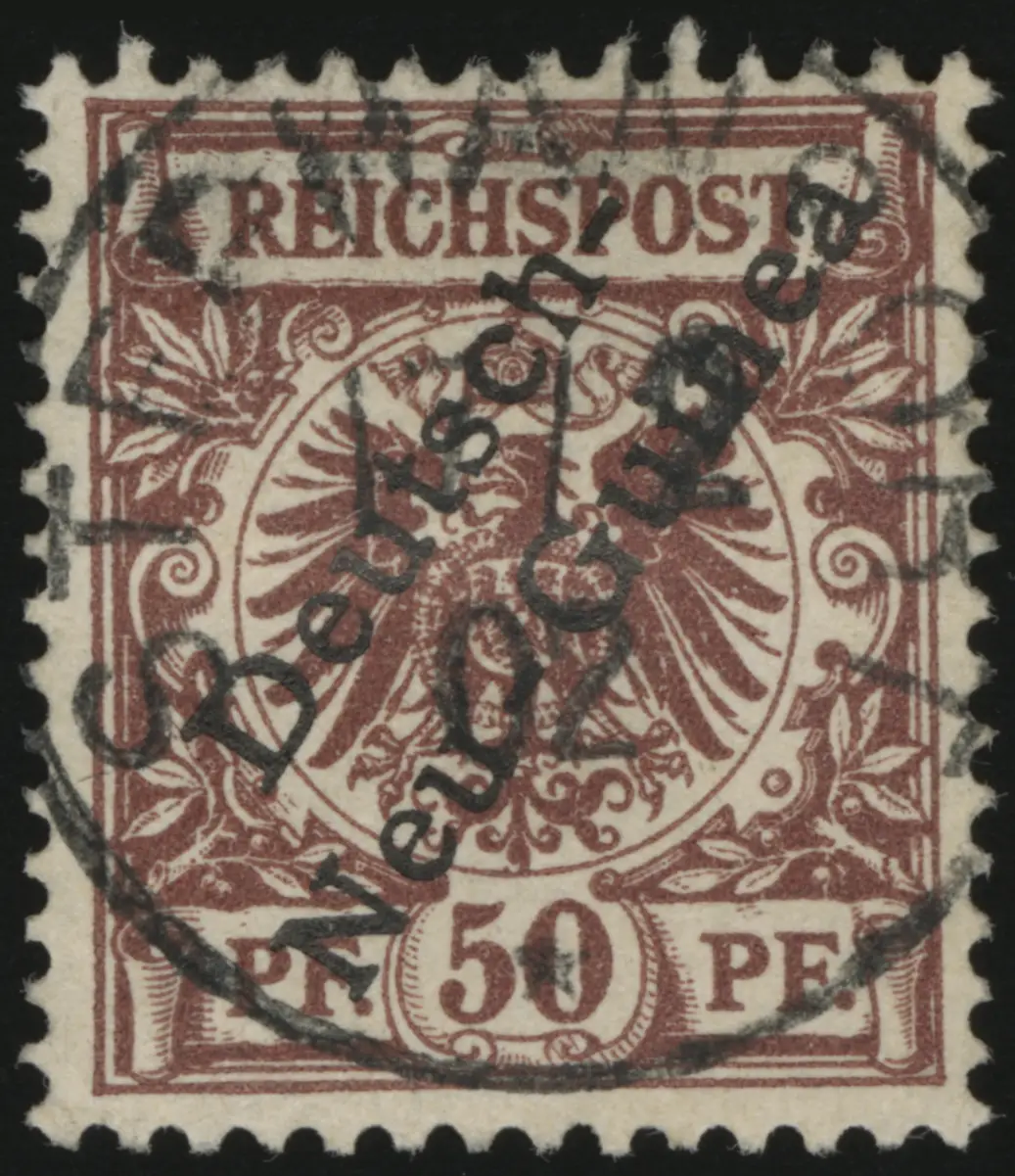 MiNr. 6 XI

Posn. 60
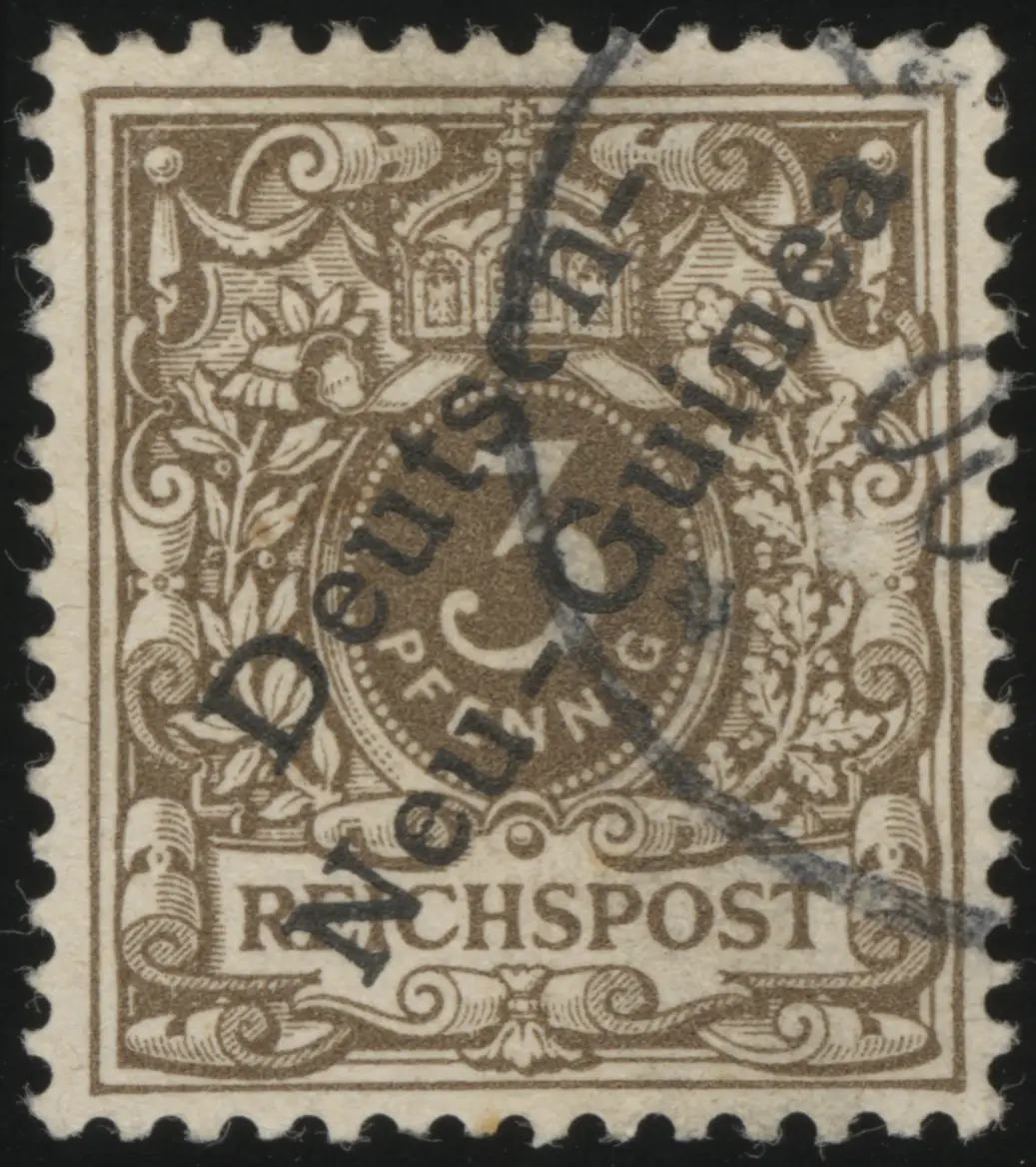 MiNr. 1 a XII
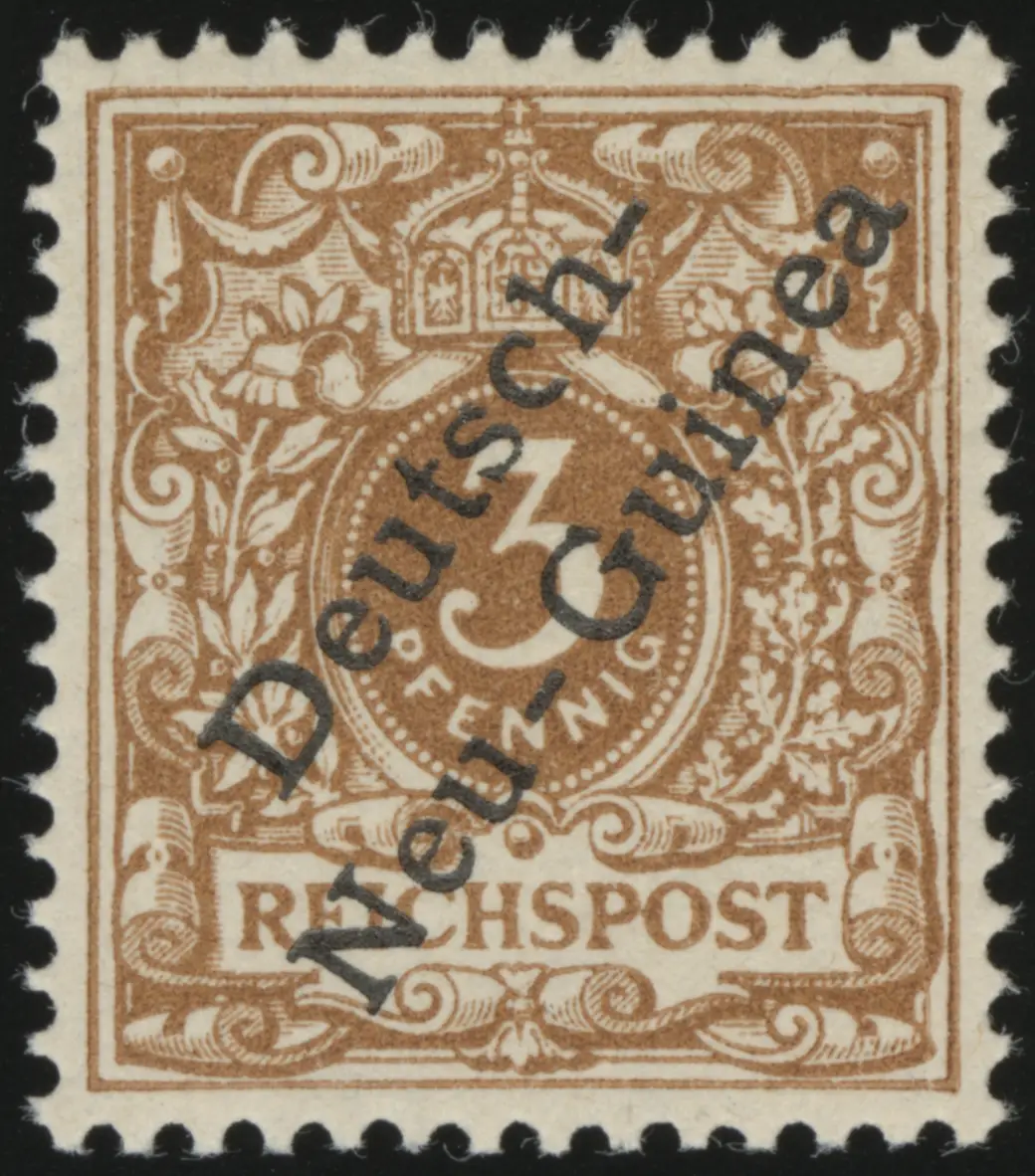 MiNr. 1 b XII
 MiNr. 1 c XII
 MiNr. 1 d XII
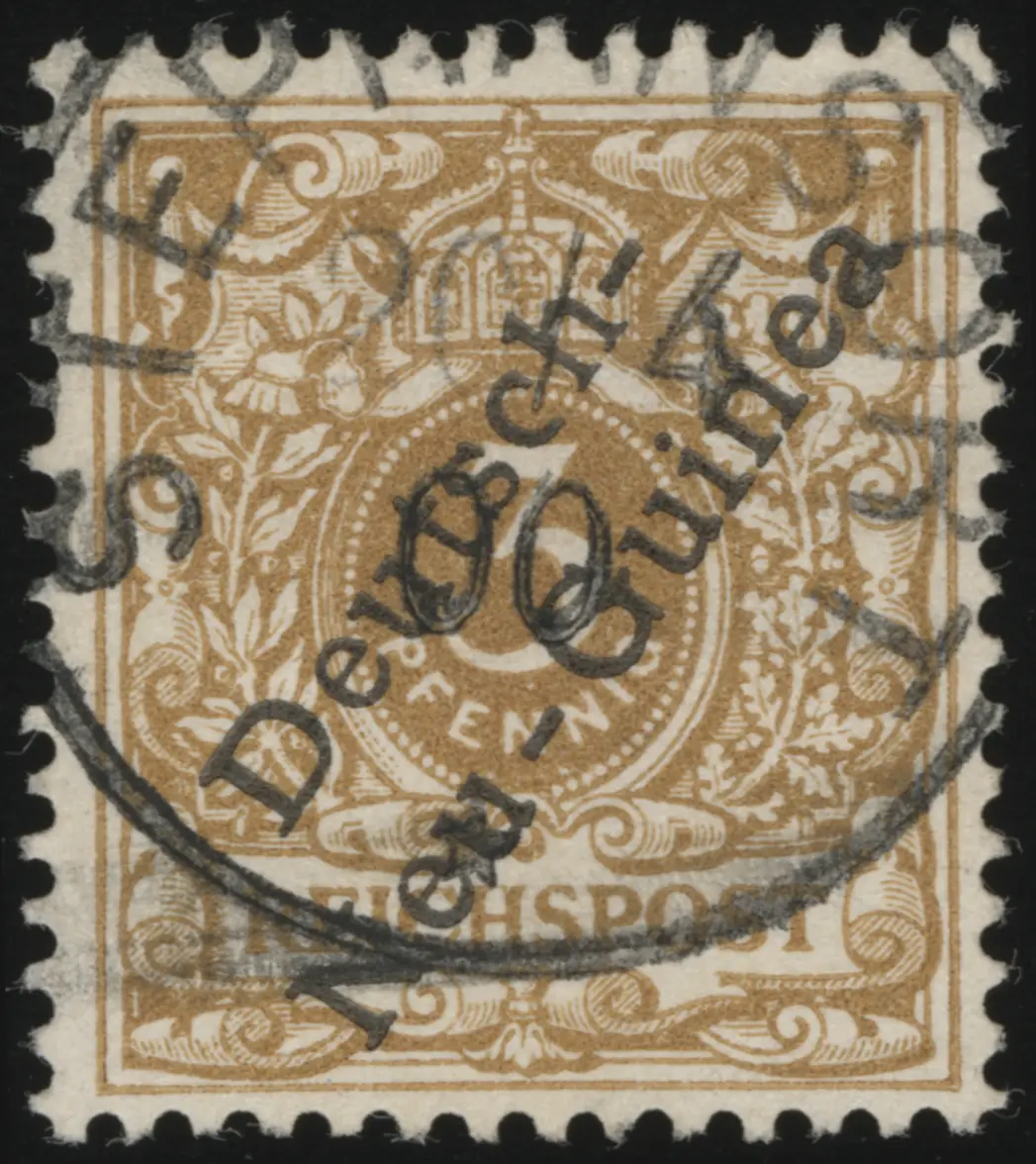 MiNr. 1 e XII
 MiNr. 1 f XII
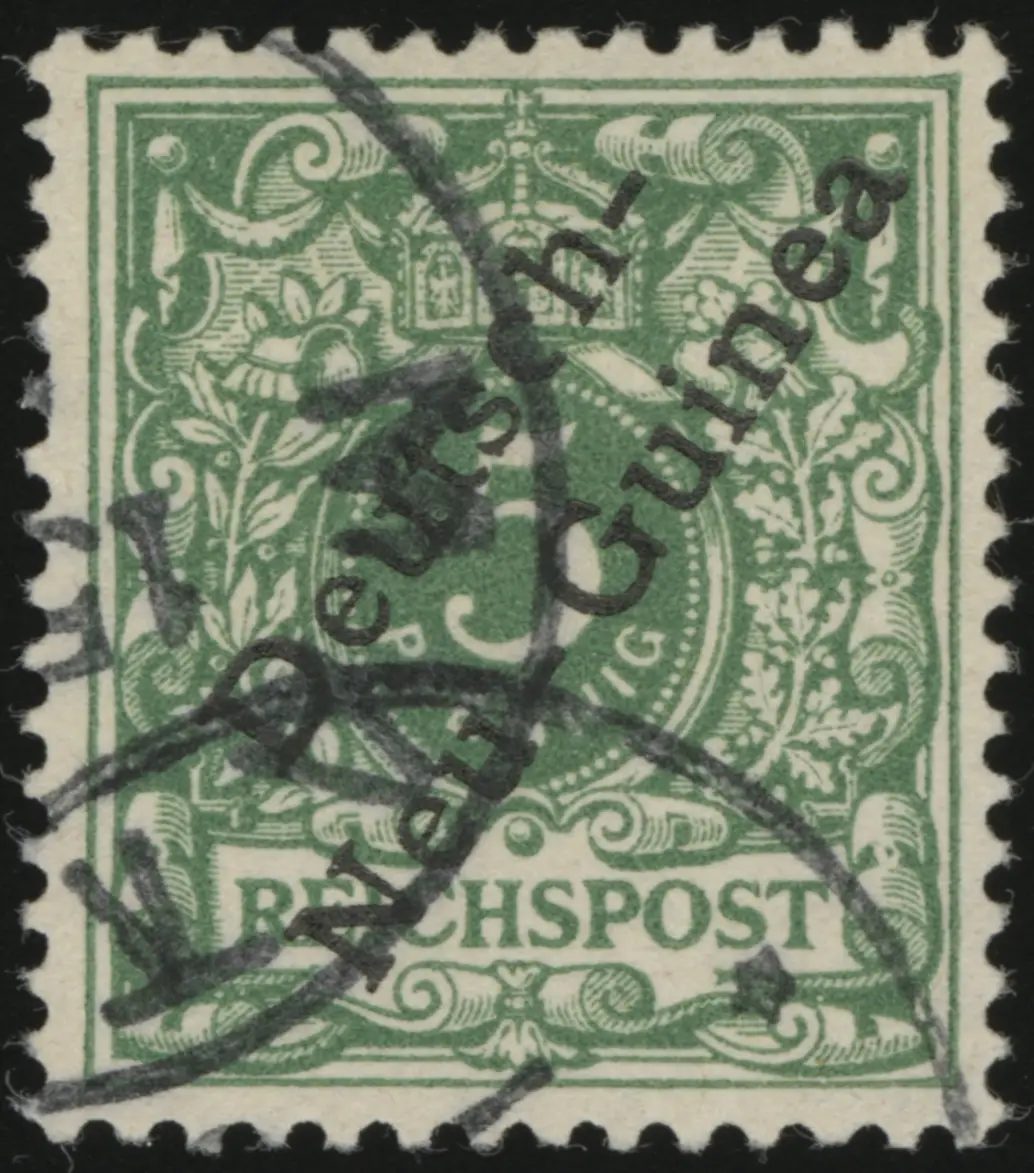 MiNr. 2 XII
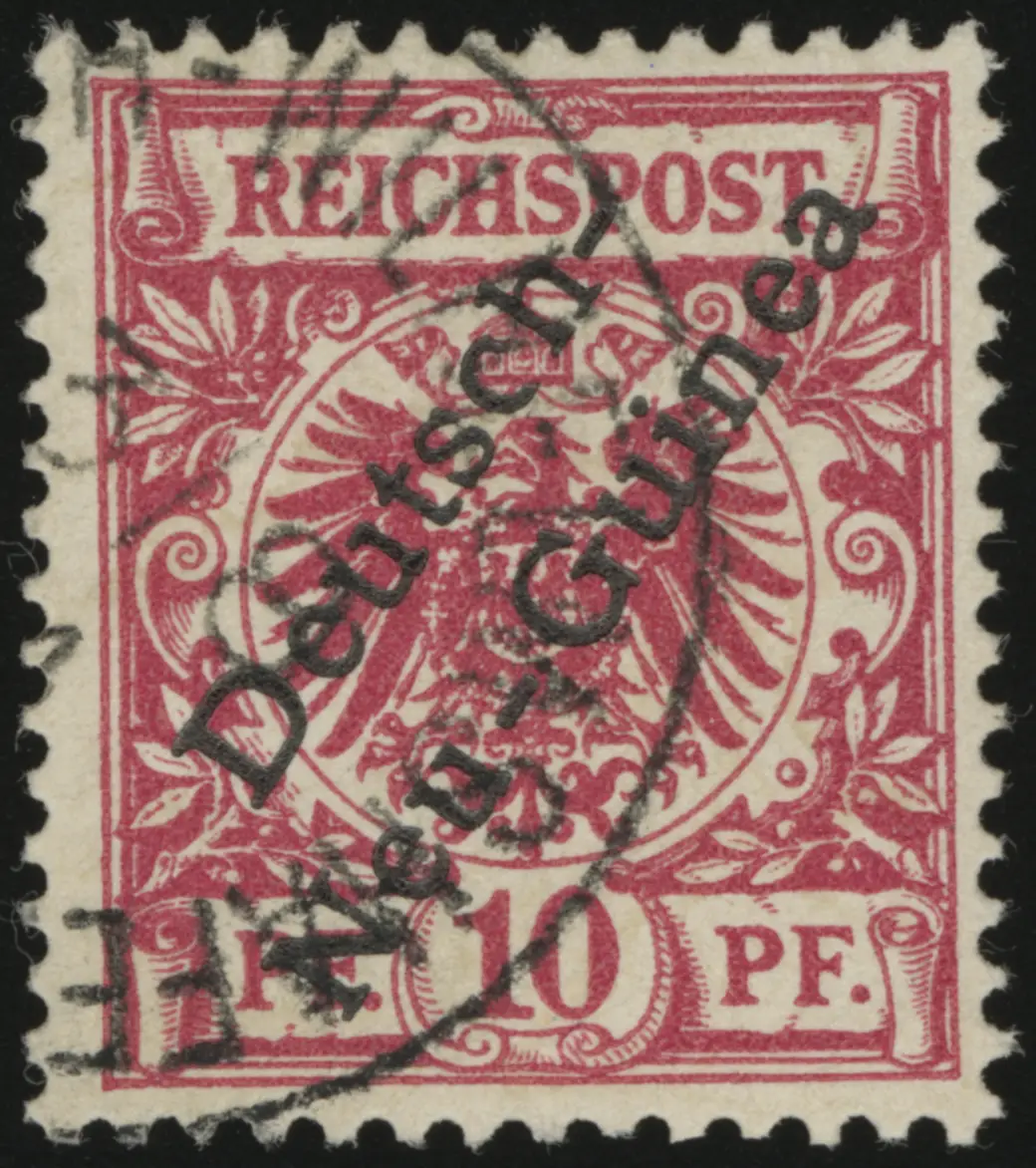 MiNr. 3 a XII
 MiNr. 3 b XII
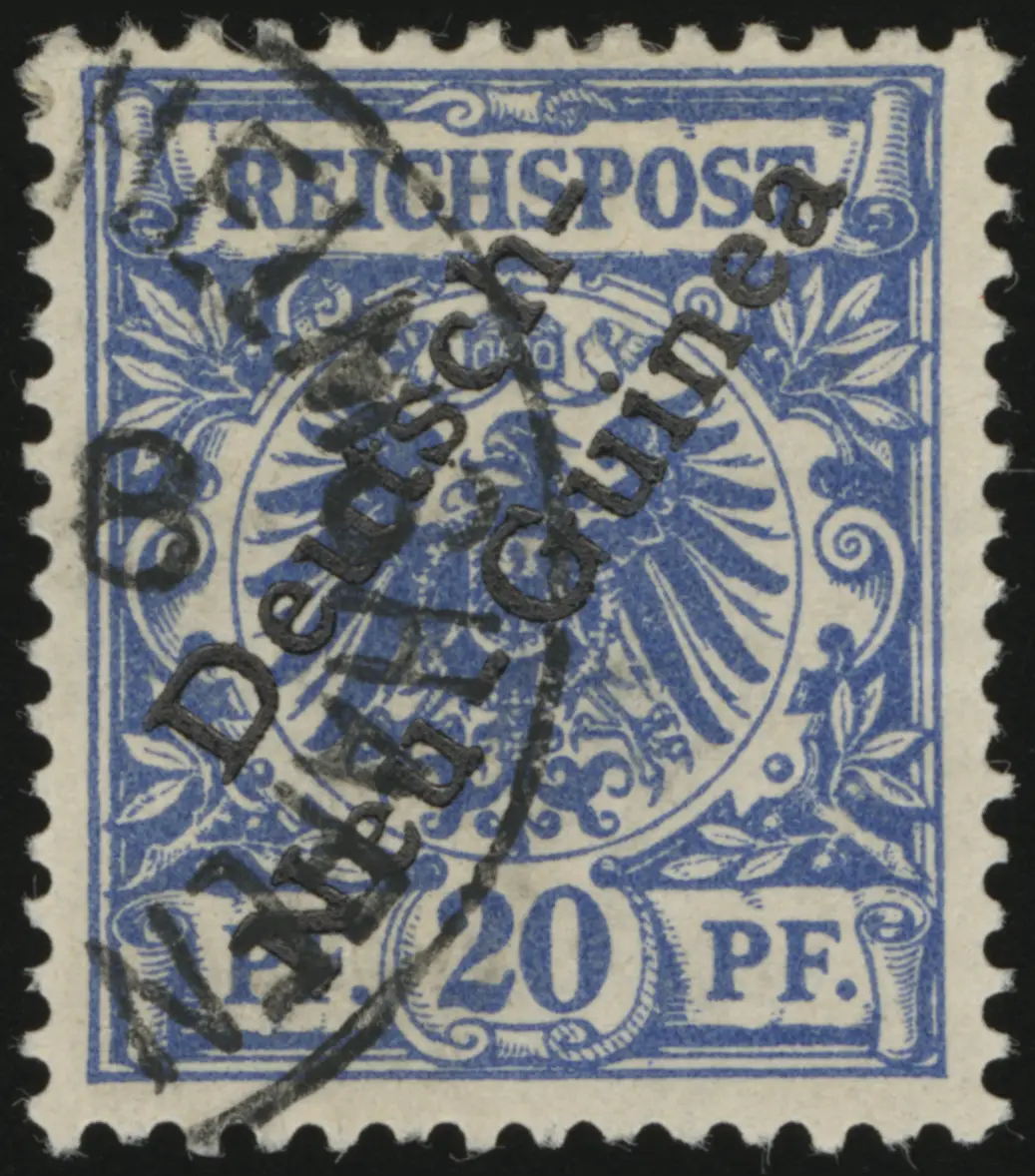 MiNr. 4 XII
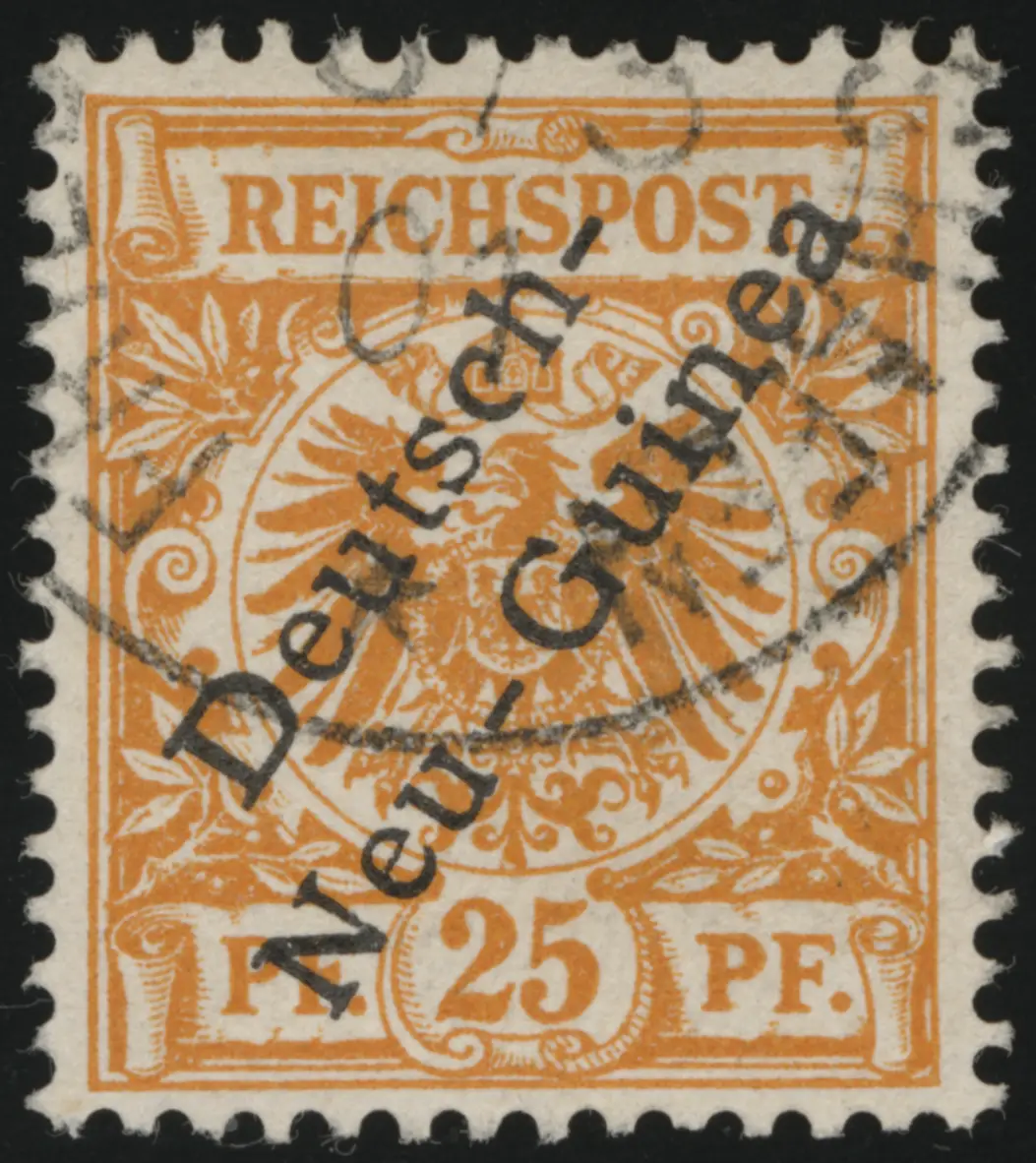 MiNr. 5 a XII
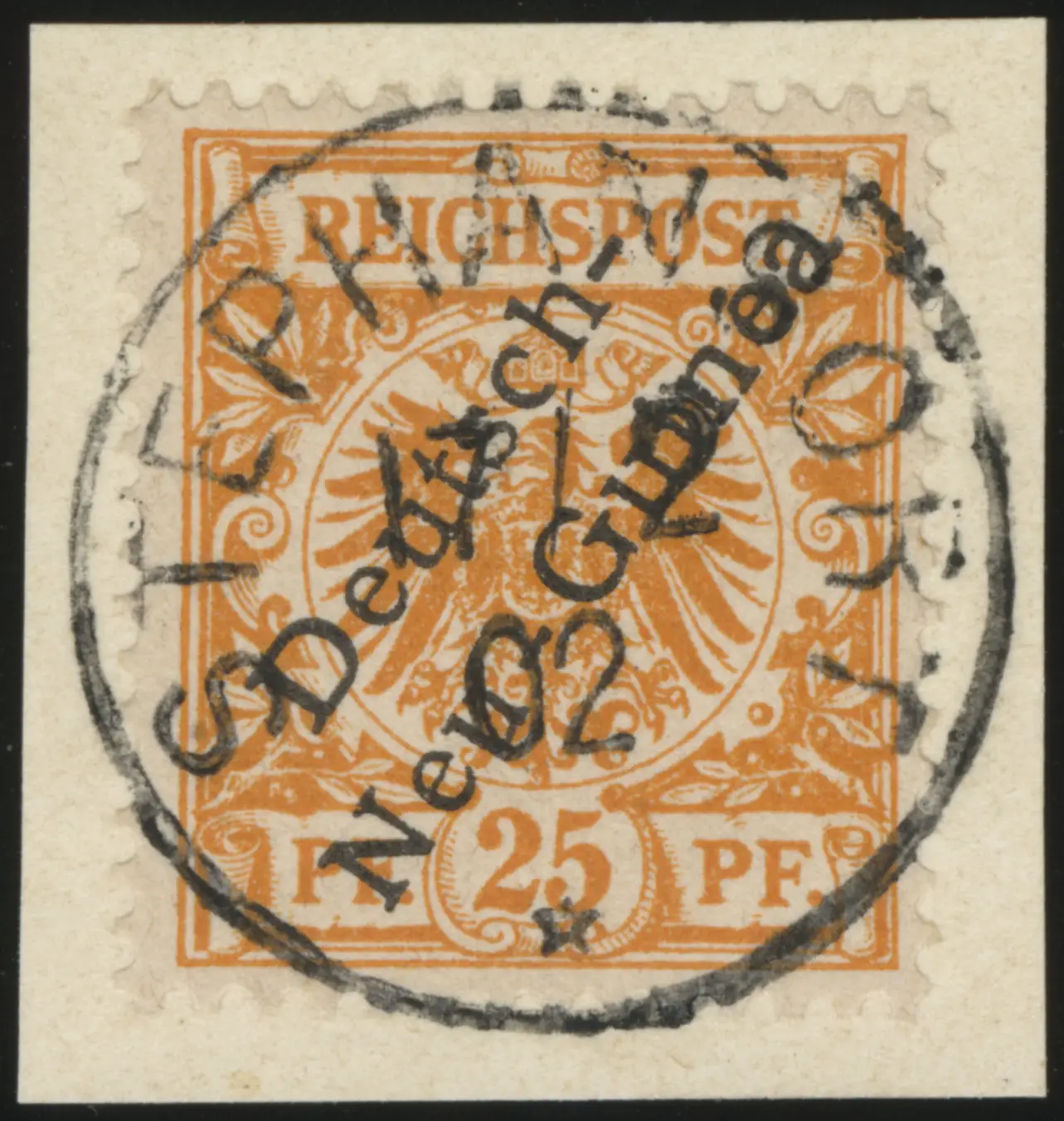 MiNr. 5 b XII
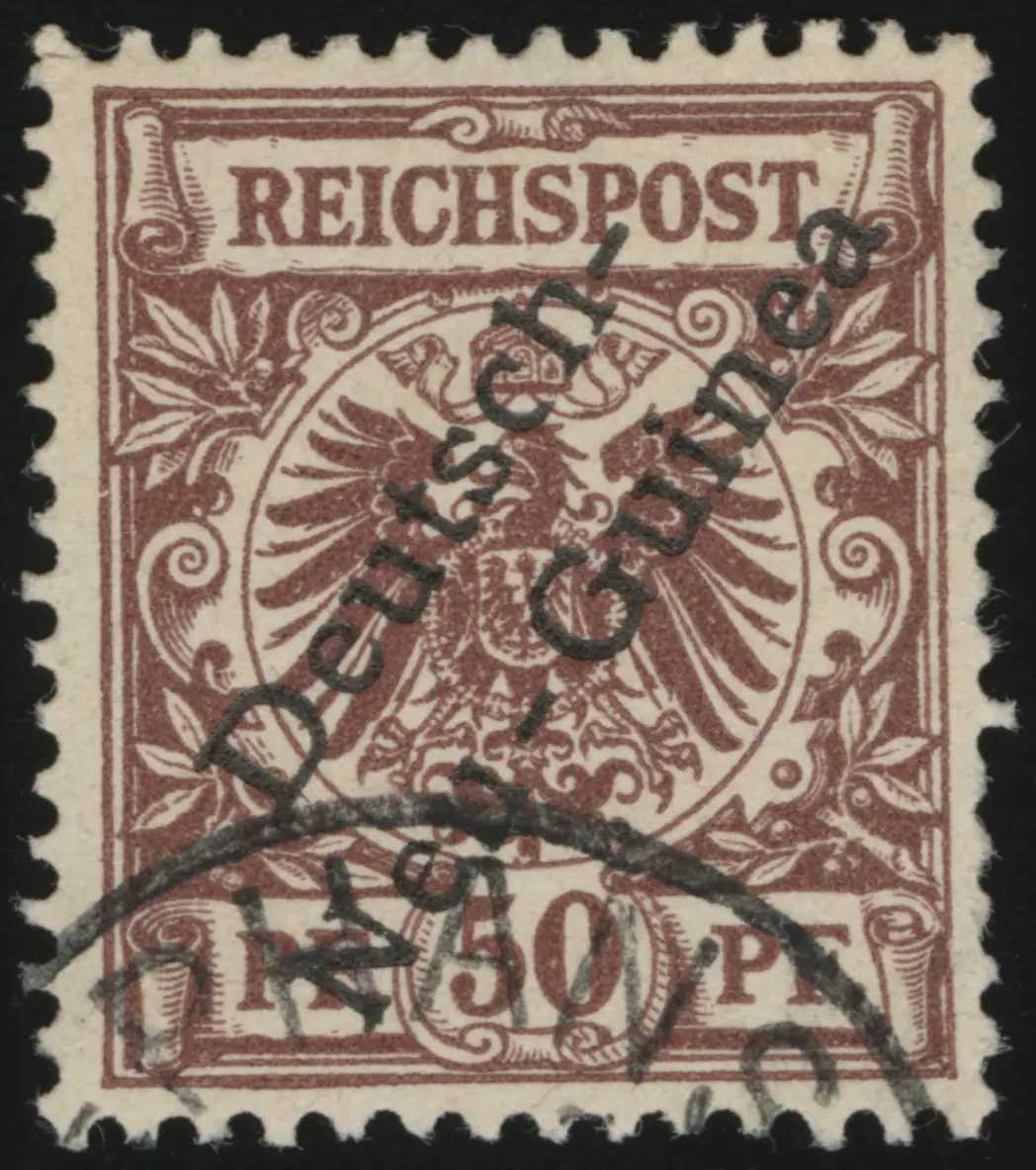 MiNr. 6 XII
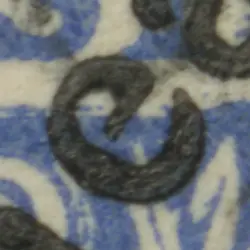
Posn. 67
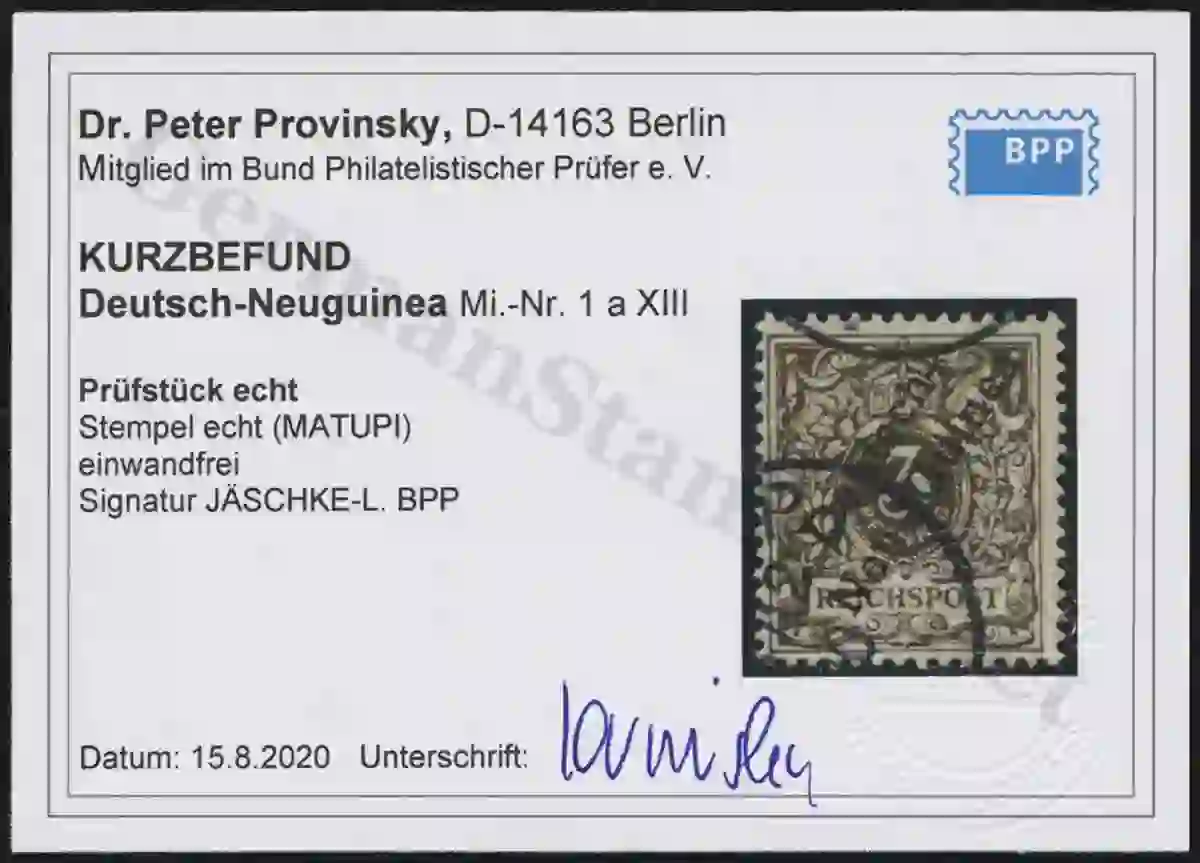
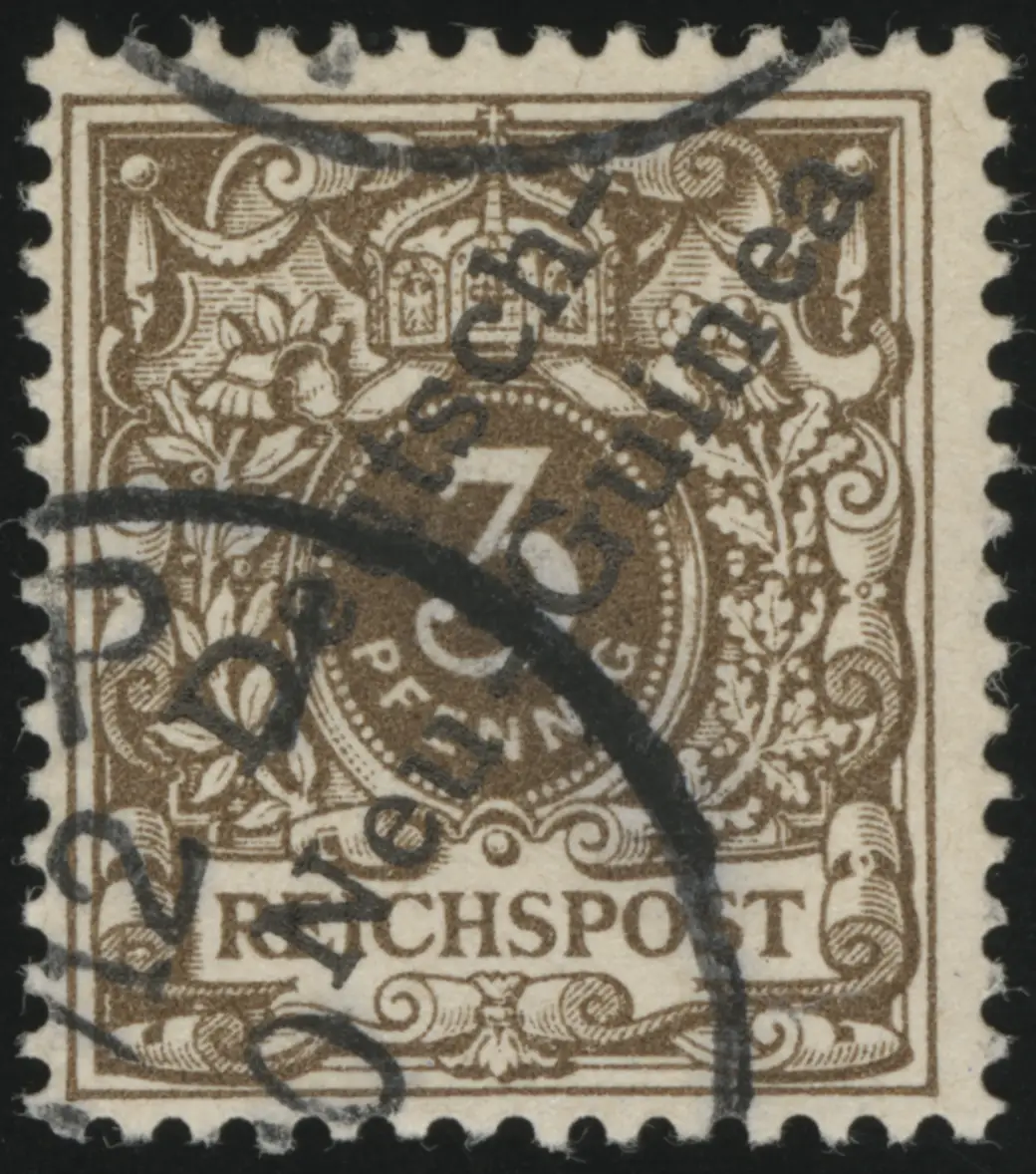 MiNr, 1 a XIII
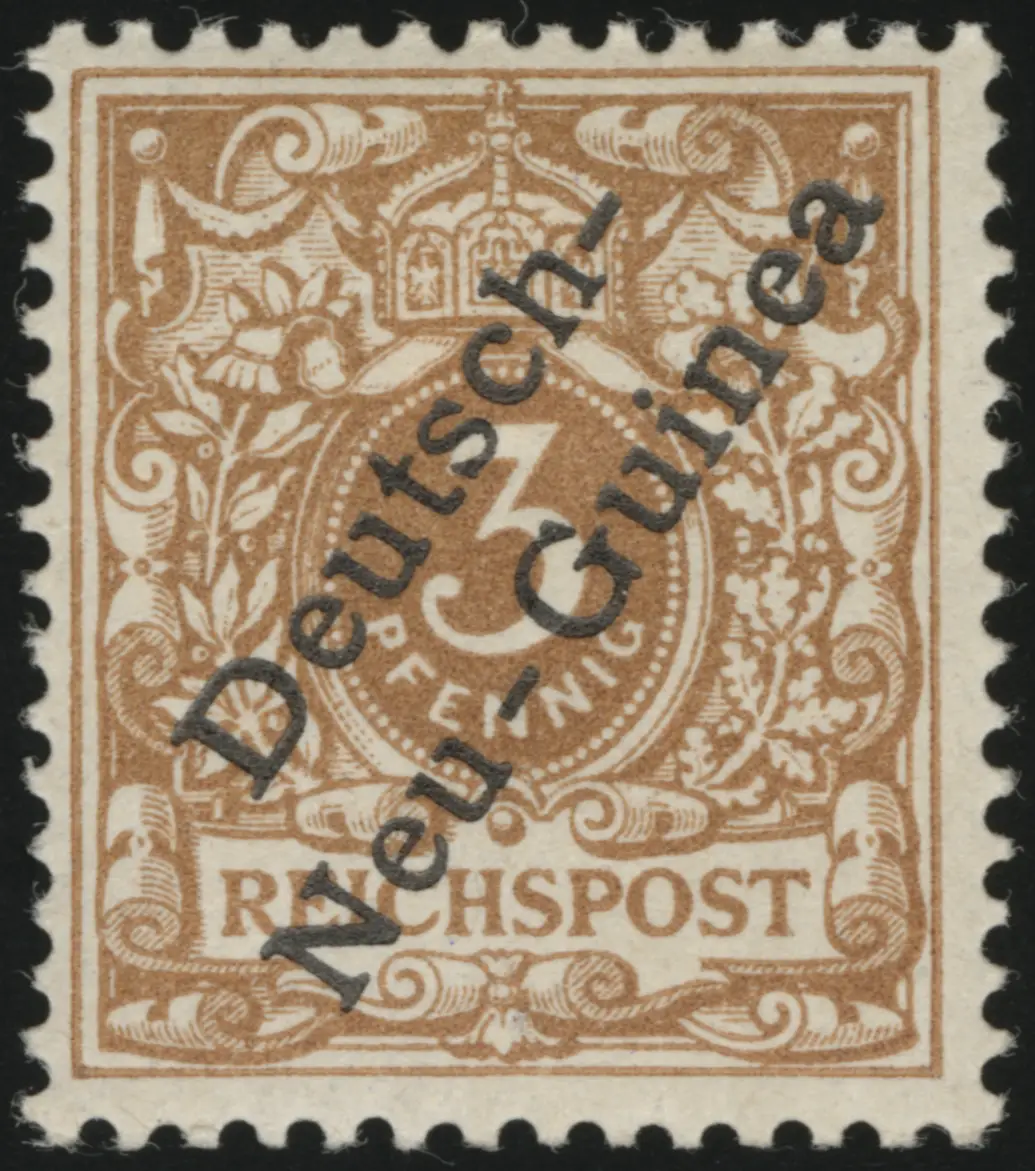 MiNr. 1 b XIII
 MiNr. 1 c XIII
 MiNr. 1 d XIII
 MiNr. 1 e XIII
 MiNr. 1 f XIII
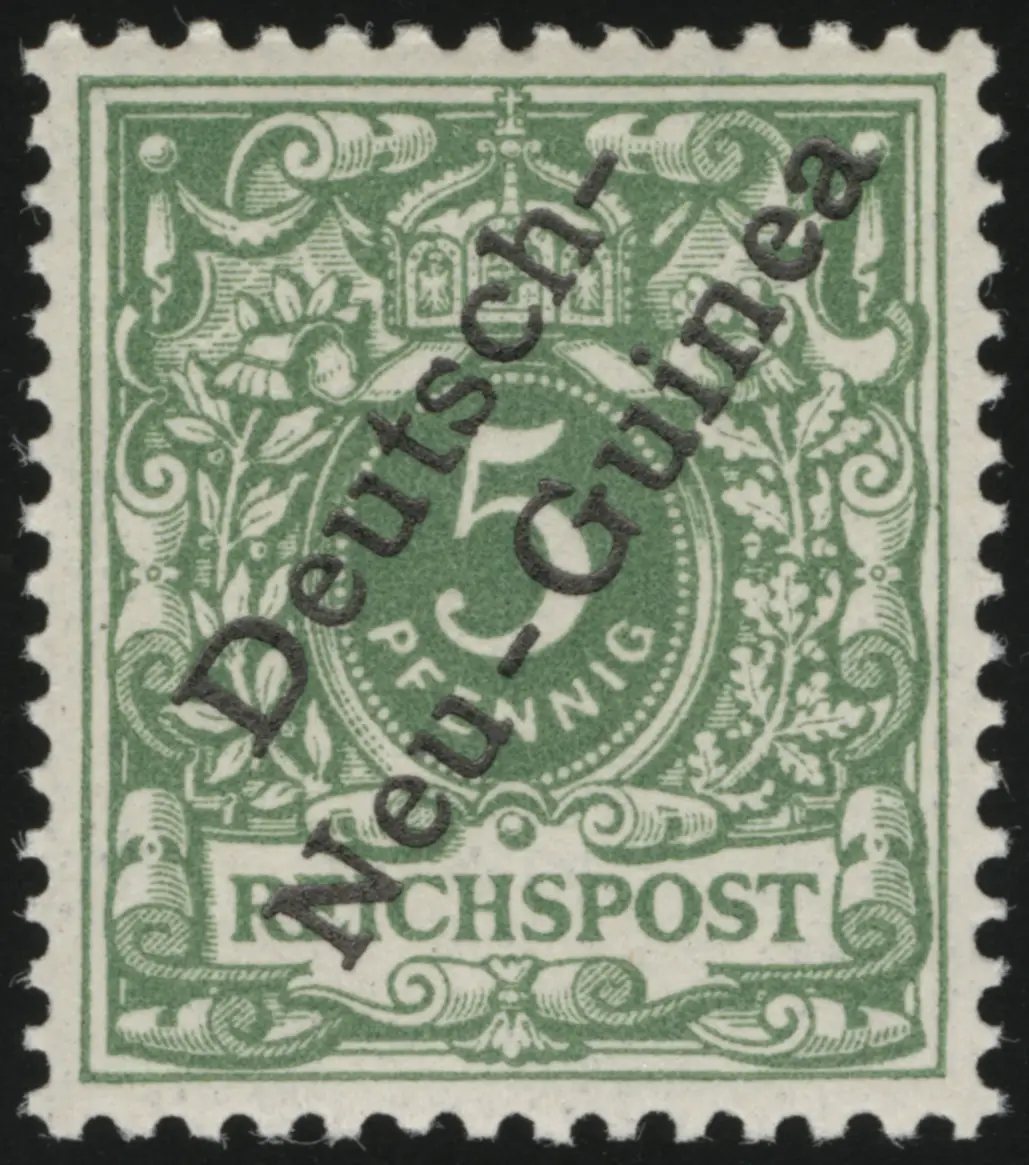 MiNr. 2 XIII
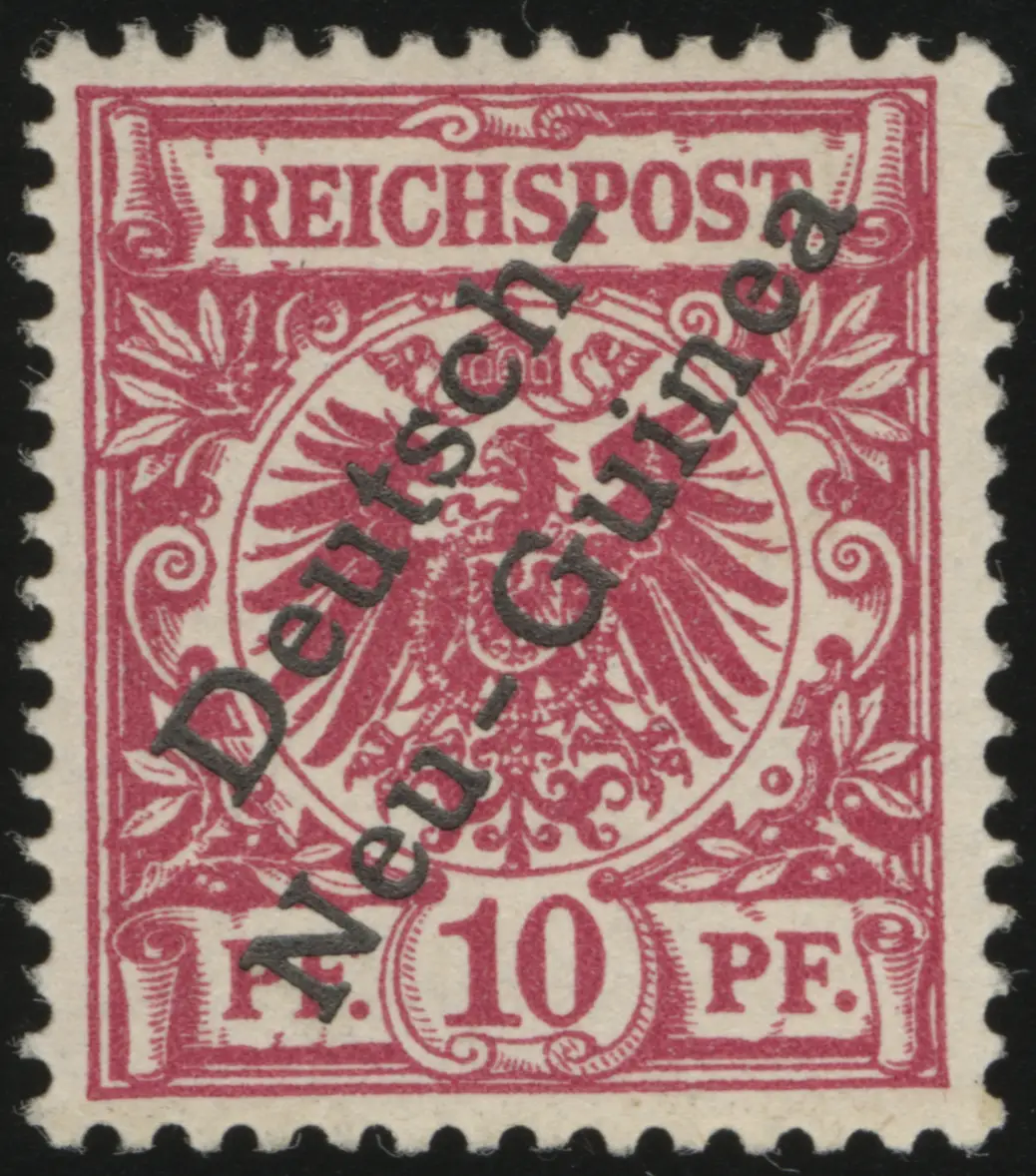 MiNr. 3 a XIII
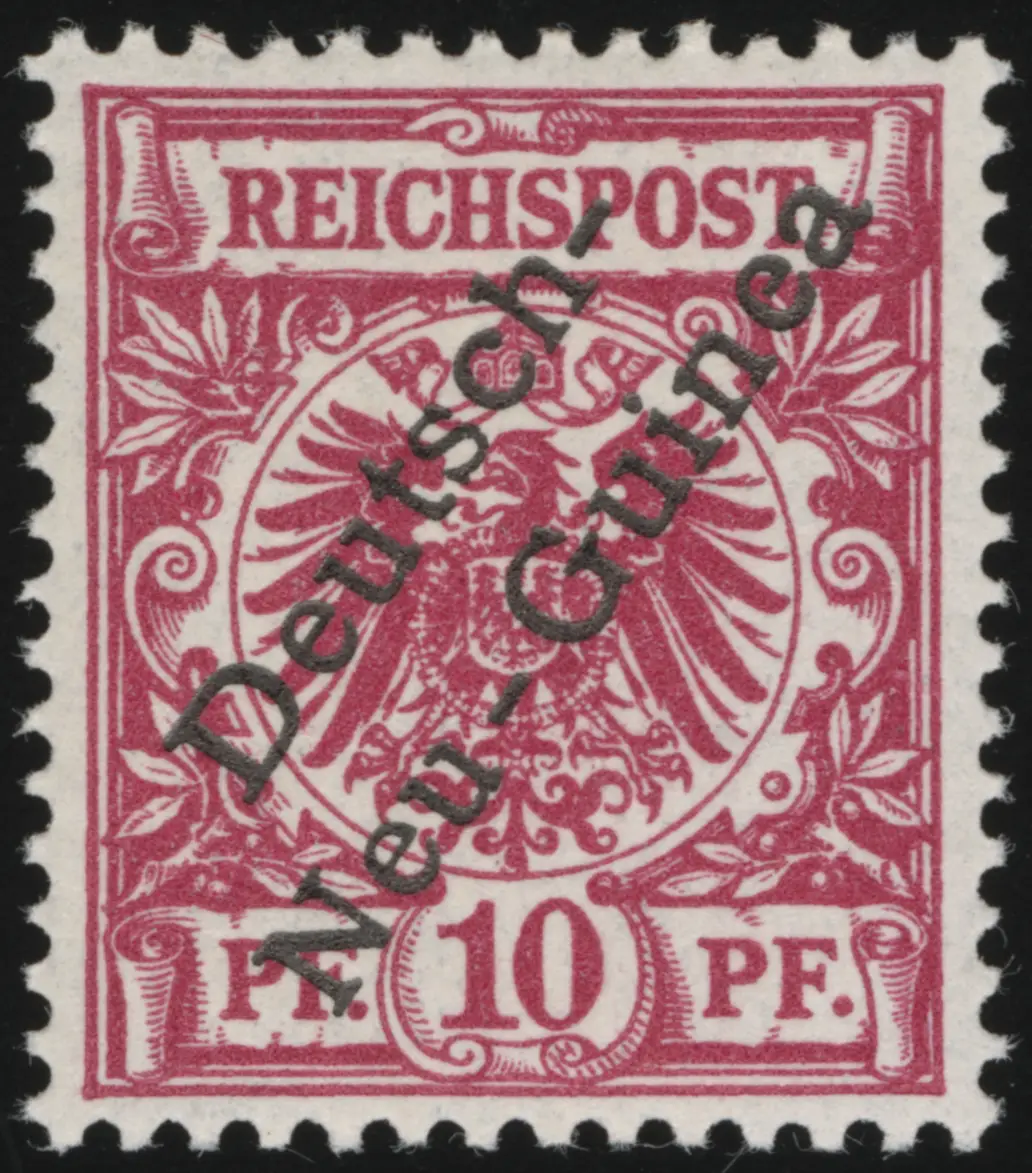 MiNr. 3 b XIII
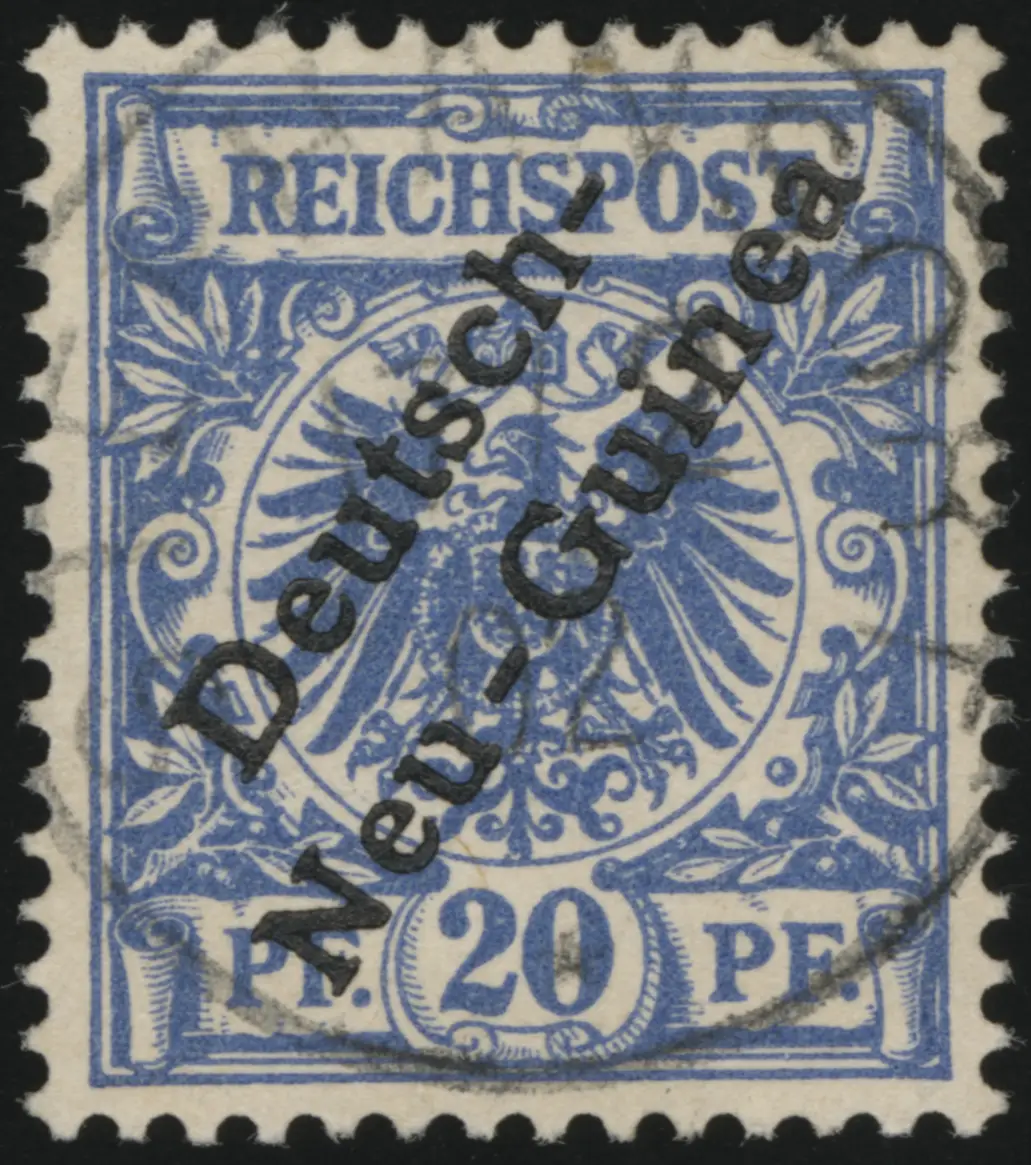 MiNr. 4 XIII
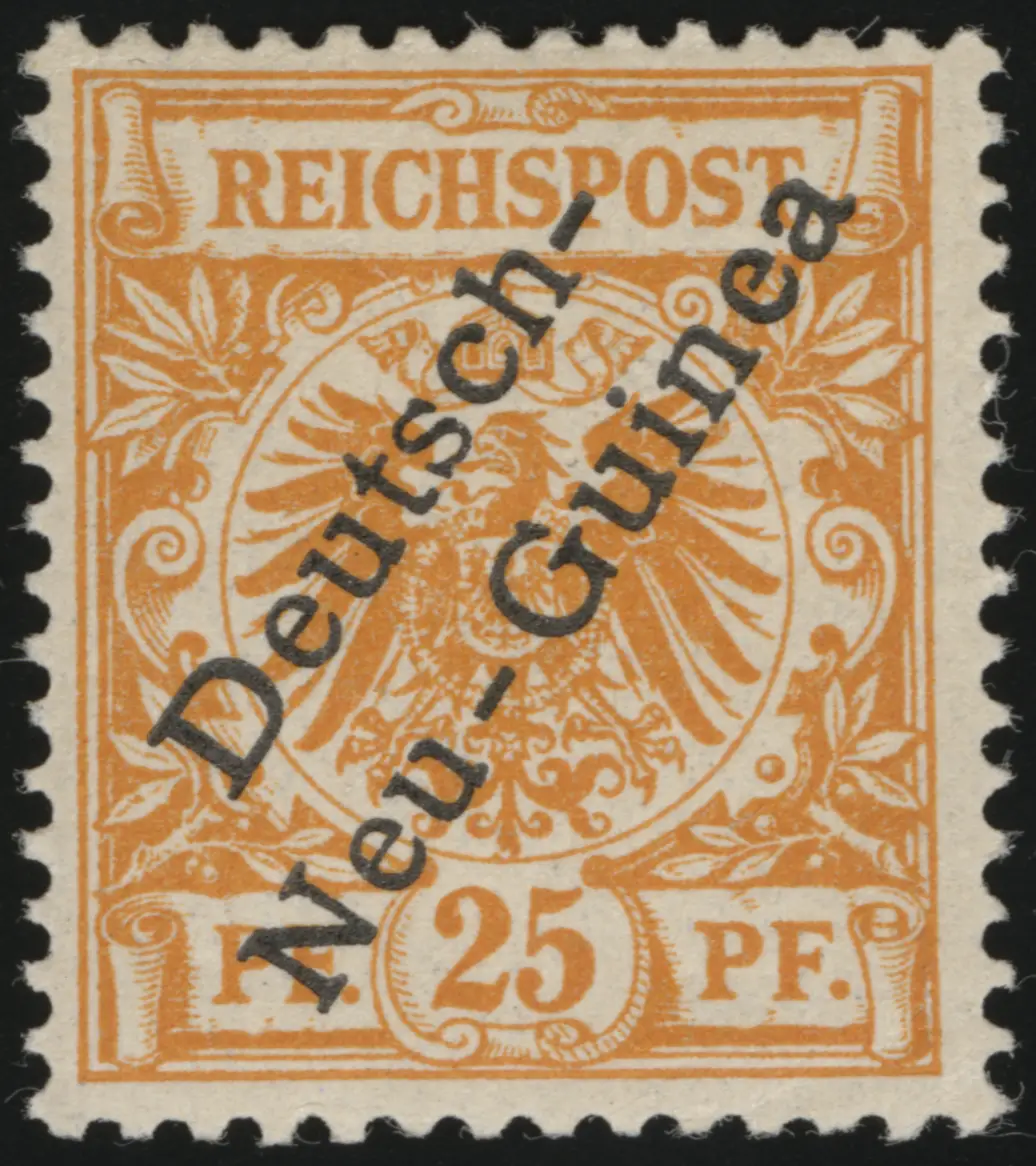 MiNr. 5 a XIII
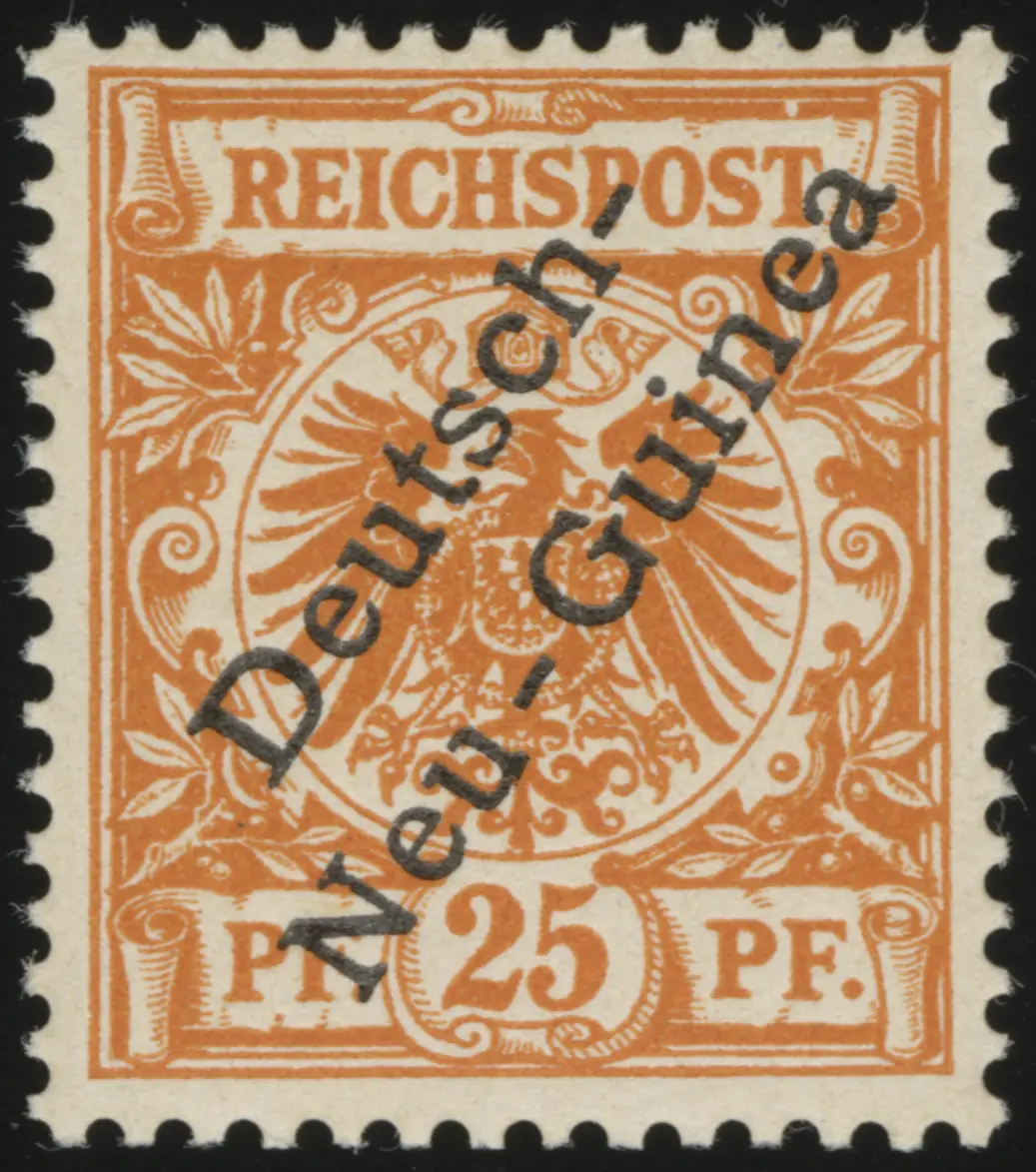 MiNr. 5 b XIII
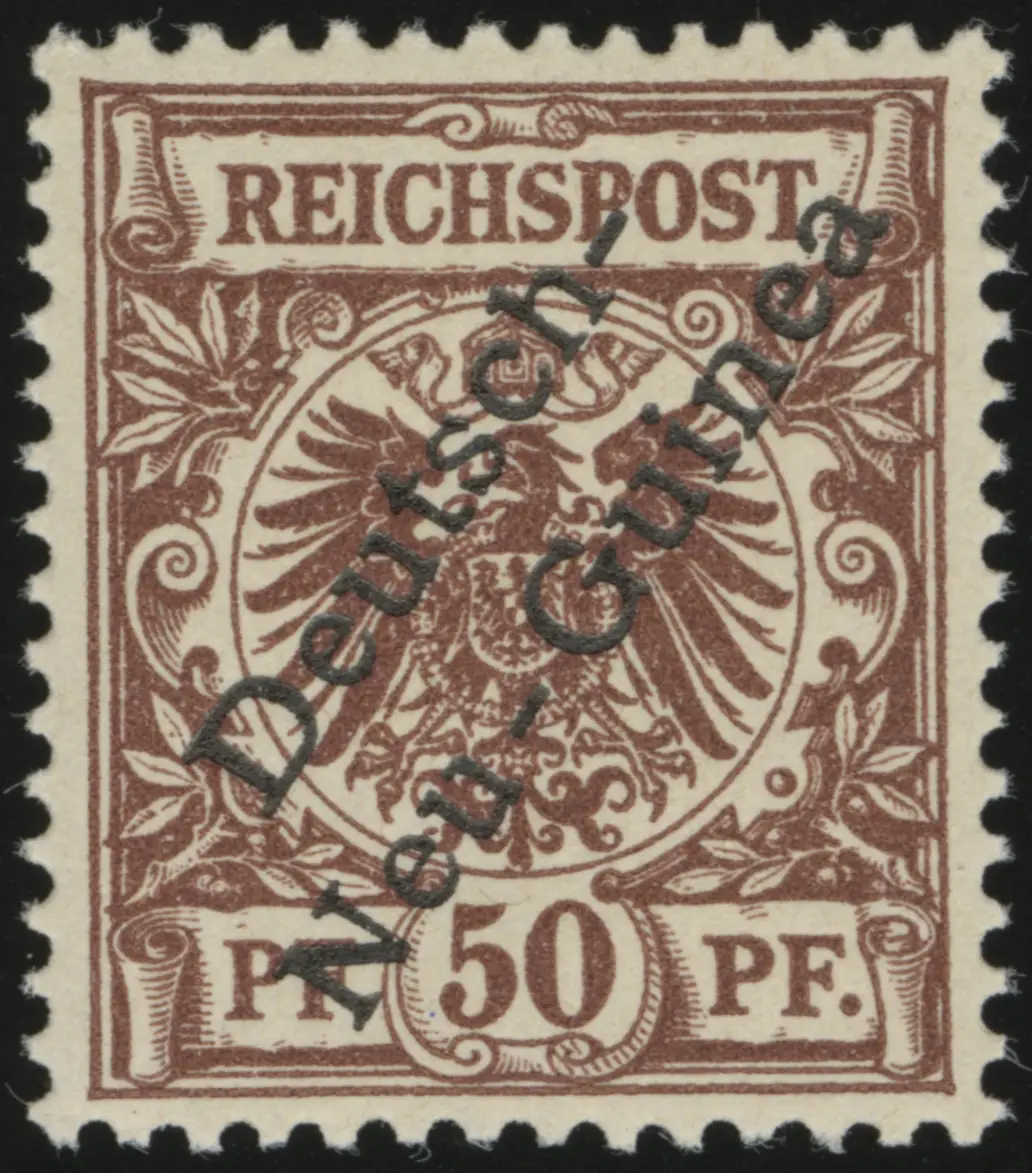 MiNr. 6 XIII
These stamps were printed in 10×10 sheets, with two sheets per printing pane, arranged vertically. As a result, gutter pairs (in German, Zwischtenstegpaare) exist containing stamps from the bottom row of the top sheet and the top row of the bottom sheet.
 MiNr. 1 a ZS
 MiNr. 1 b ZS
 MiNr. 1 c ZS
 MiNr. 1 e ZS
 MiNr. 2 ZS
 MiNr. 3 a ZS
 MiNr. 3 b ZS
 MiNr. 4 ZS
 MiNr. 5 a ZS
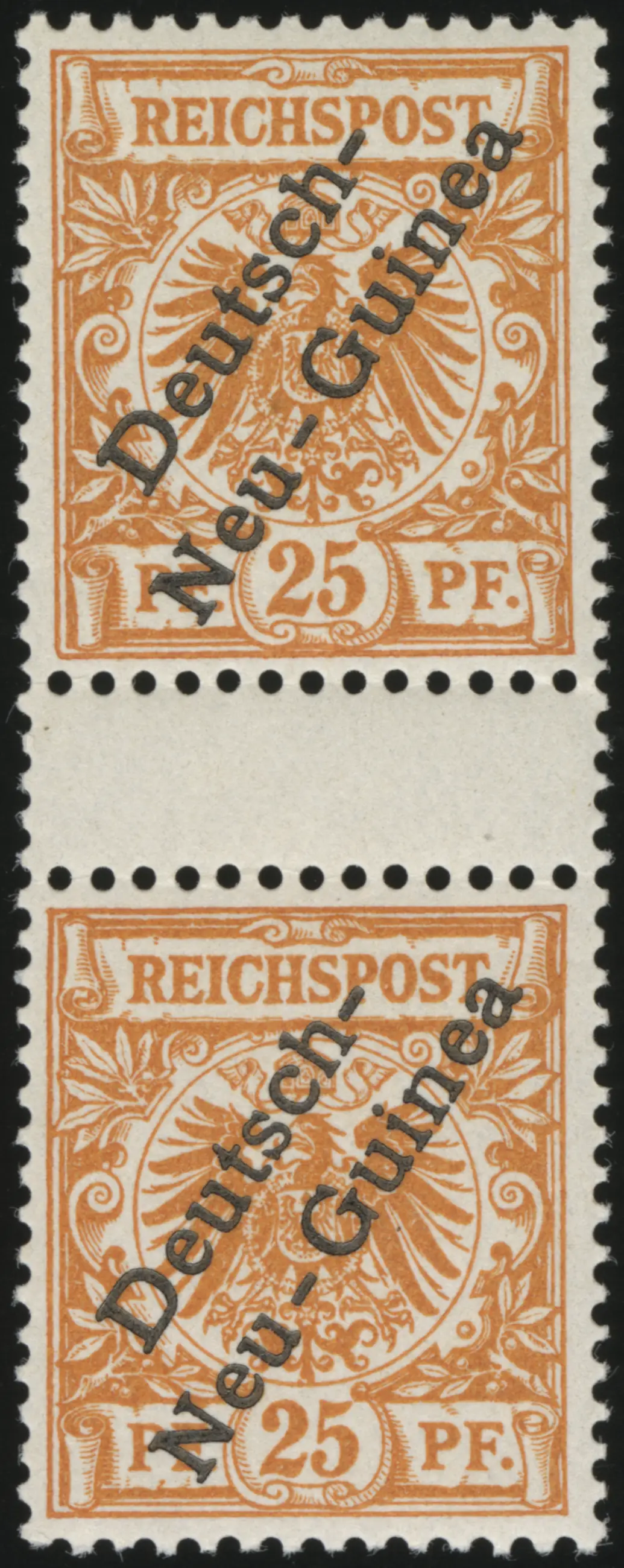 MiNr. 5 b ZS
 MiNr. 6 ZS
MiNr. 1 a
MiNr. 1 b
MiNr. 1 c
MiNr. 1 d
MiNr. 1 e
MiNr. 1 f
MiNr. 2
MiNr. 3 a
MiNr. 3 b
MiNr. 4
MiNr. 5 a
MiNr. 5 b
MiNr. 6
MiNr. 6 ZS
MiNr. 1 a
MiNr. 1 b
MiNr. 1 c
MiNr. 1 d
MiNr. 1 e
MiNr. 1 f
MiNr. 2
MiNr. 3 a
MiNr. 3 b
MiNr. 4
MiNr. 5 a
MiNr. 5 b
MiNr. 6
The first stamps issued for use in German New Guinea were overprints of German Krone / Adler issues.
They were first issued in September 1897. As with the Krone / Adler issues, multiple color variants exists due to the various printings.
The period of use for these stamps was short-lived, as they were replaced in December 1900 by the first Yacht issues.
A single 10×10 sheet of MiNr. 5 b was printed with an inverted overprint.
MiNr. 5 b K
The 3 Pf and 25 Pf can be found with plate flaws on the underlying stamps.
Posn. 33, 38, 83, 88
MiNr. 1 a I
MiNr. 1 b I
MiNr. 1 c I
MiNr. 1 d I
MiNr. 1 e I
MiNr. 1 f I
Posn. 22, 27, 72, 77
MiNr. 5 a II
MiNr. 5 b II
Posn. Unknown
MiNr. 5 a III
MiNr. 5 b III
Posn. Unknown
MiNr. 5 a IV
MiNr. 5 b IV
In addition, numerous overprint flaws exist across all values.
Posn. 10
MiNr. 1 a X
MiNr. 1 b X
MiNr. 1 c X
MiNr. 1 d X
MiNr. 1 e X
MiNr. 1 f X
MiNr. 2 X
MiNr. 3 a X
MiNr. 3 b X
MiNr. 4 X
MiNr. 5 a X
MiNr. 5 b X
MiNr. 6 X
Posn. 58
MiNr. 1 a XI
MiNr. 1 b XI
MiNr. 1 c XI
MiNr. 1 d XI
MiNr. 1 e XI
MiNr. 1 f XI
MiNr. 2 XI
MiNr. 3 a XI
MiNr. 3 b XI
MiNr. 4 XI
MiNr. 5 a XI
MiNr. 5 b XI
MiNr. 6 XI
Posn. 60
MiNr. 1 a XII
MiNr. 1 b XII
MiNr. 1 c XII
MiNr. 1 d XII
MiNr. 1 e XII
MiNr. 1 f XII
MiNr. 2 XII
MiNr. 3 a XII
MiNr. 3 b XII
MiNr. 4 XII
MiNr. 5 a XII
MiNr. 5 b XII
MiNr. 6 XII
Posn. 67
MiNr, 1 a XIII
MiNr. 1 b XIII
MiNr. 1 c XIII
MiNr. 1 d XIII
MiNr. 1 e XIII
MiNr. 1 f XIII
MiNr. 2 XIII
MiNr. 3 a XIII
MiNr. 3 b XIII
MiNr. 4 XIII
MiNr. 5 a XIII
MiNr. 5 b XIII
MiNr. 6 XIII
These stamps were printed in 10×10 sheets, with two sheets per printing pane, arranged vertically. As a result, gutter pairs (in German, Zwischtenstegpaare) exist containg stamps from the bottom row of the top sheet and the top row of the bottom sheet.
MiNr. 1 a ZS
MiNr. 1 b ZS
MiNr. 1 c ZS
MiNr. 1 e ZS
MiNr. 2 ZS
MiNr. 3 a ZS
MiNr. 3 b ZS
MiNr. 4 ZS
MiNr. 5 a ZS
MiNr. 5 b ZS
MiNr. 6 ZS