Set Date(s)
c. 1886 / c. 1904
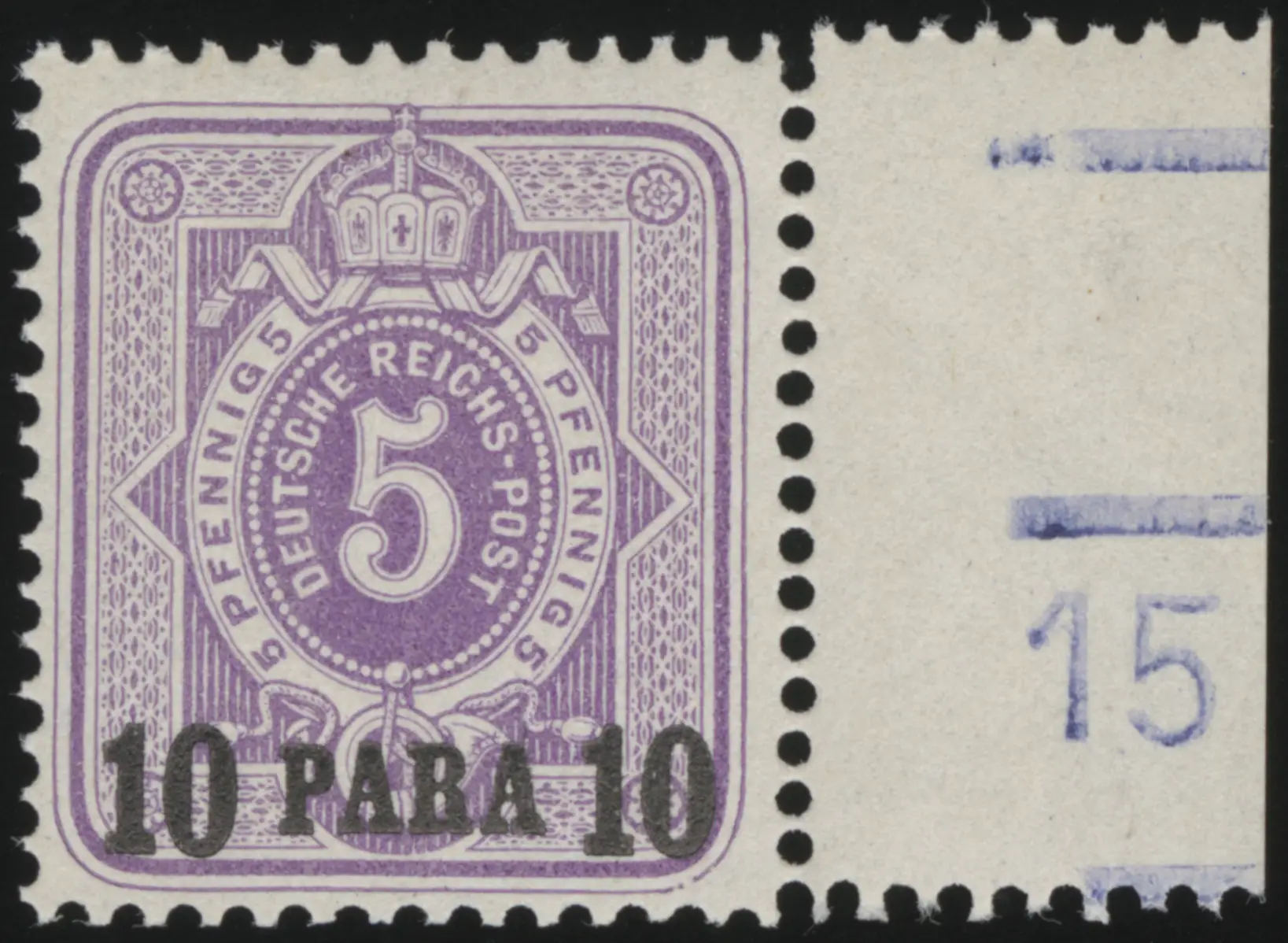 MiNr. 1 Na
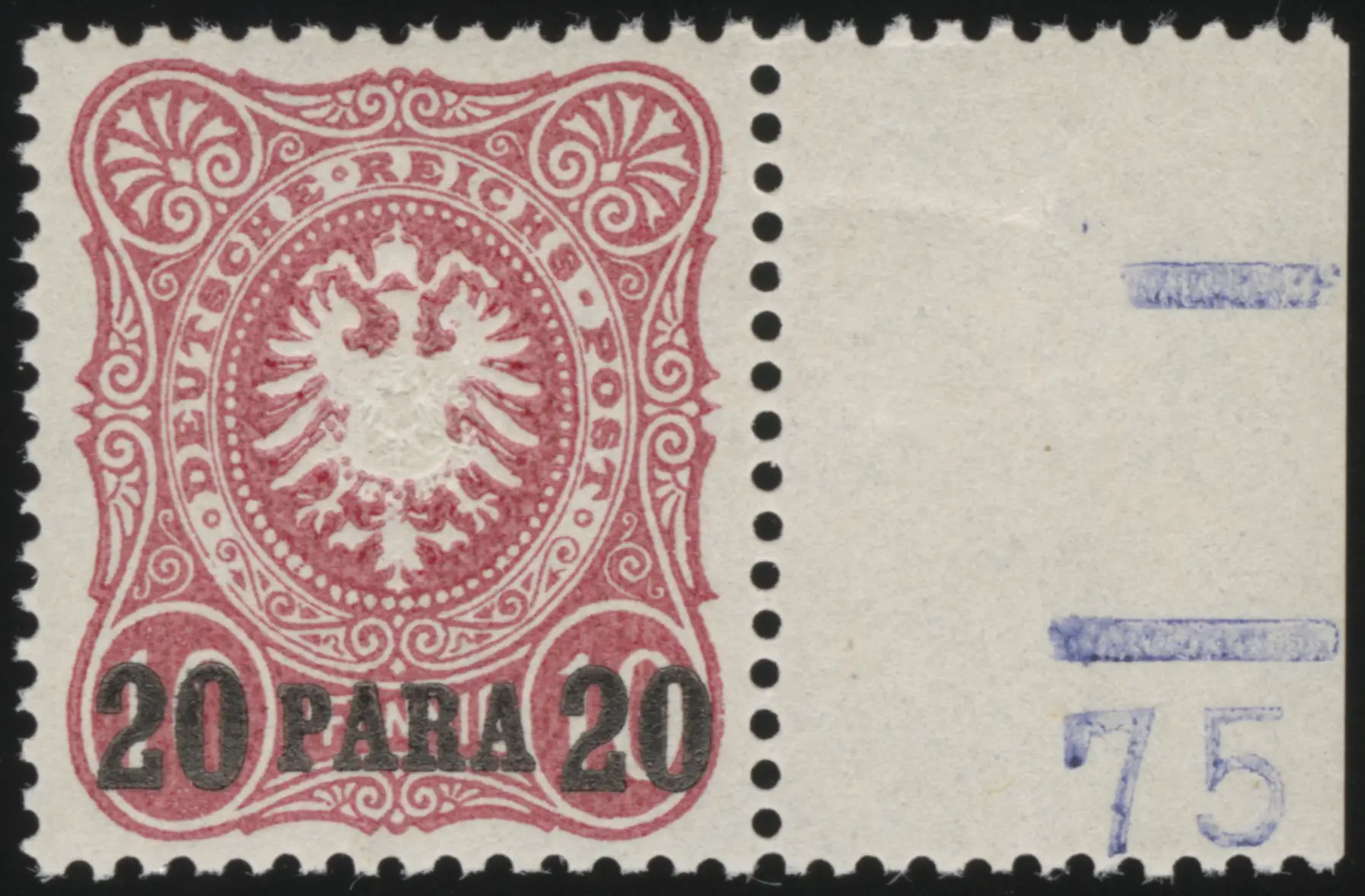 MiNr. 2 Na
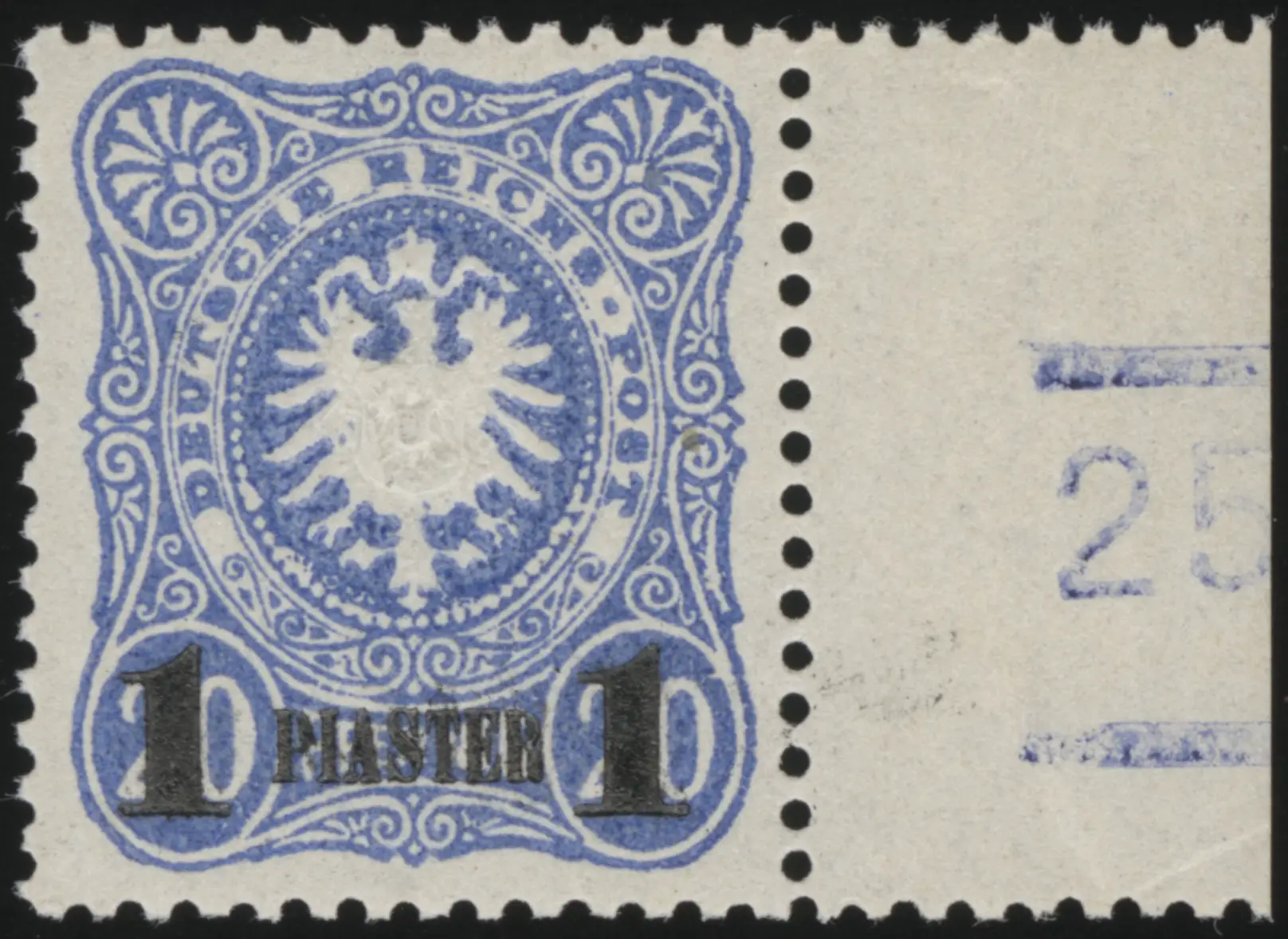 MiNr. 3 Na
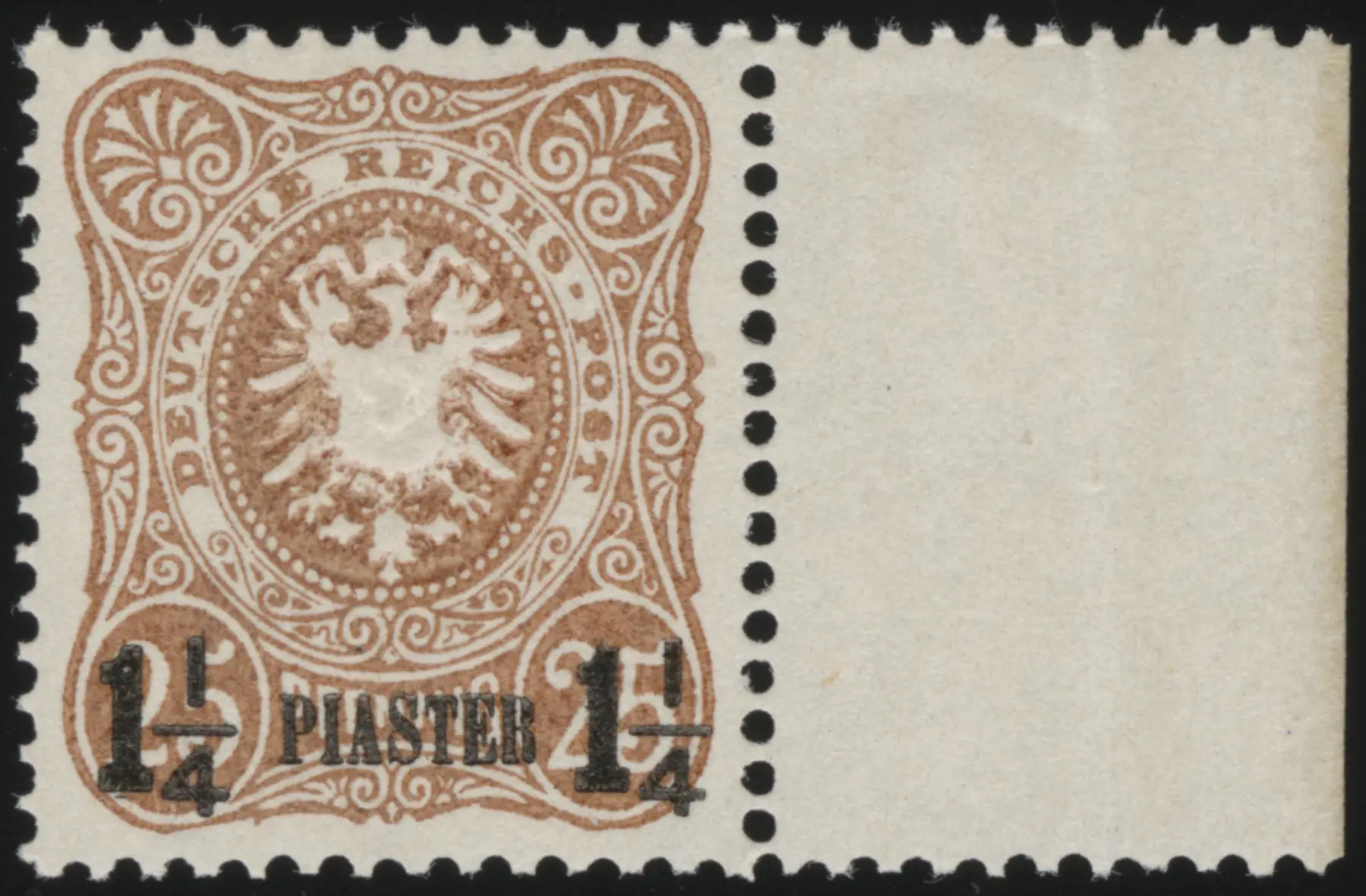 MiNr. 4 Na
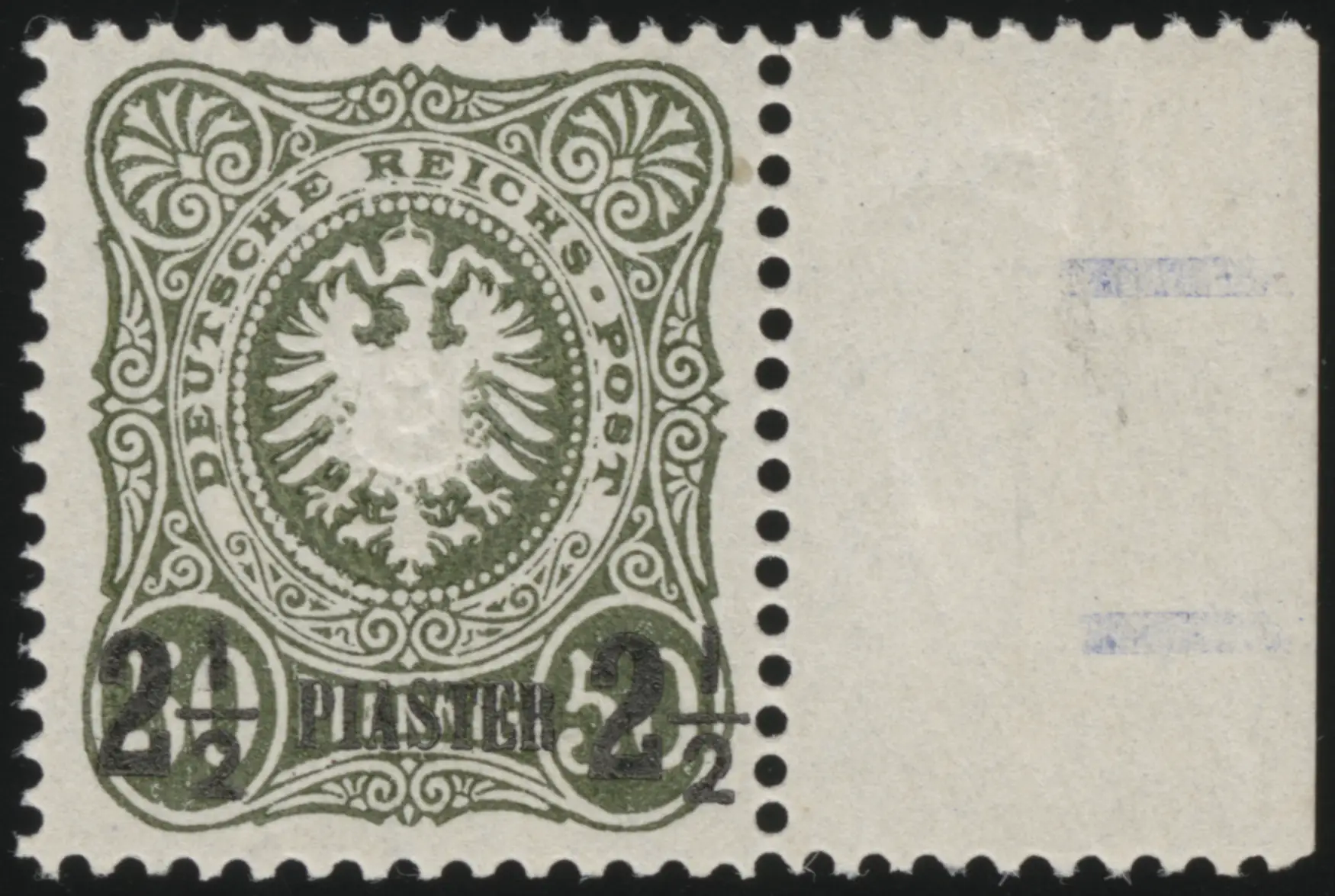 MiNr. 5 Na
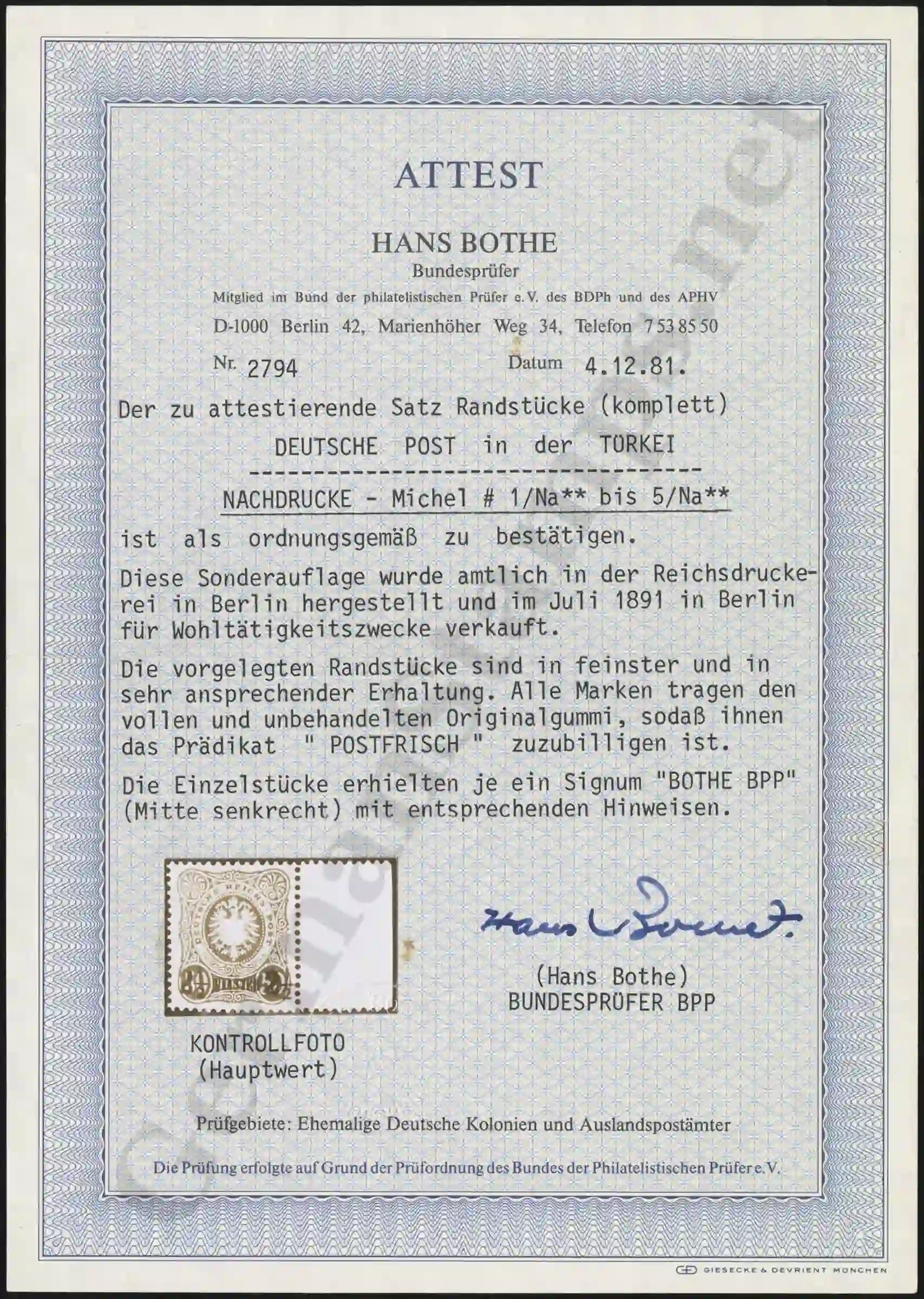
After the “Pfennig” Issue Overprints had been replaced by the Krone / Adler Overprints, the Reichspost Museum requested 10,000 sets of the earlier overprints for use as gifts and trading material. The Constantinople post office had insufficient remaining stock to meet this demand, so the Reichspost gave the Reich Printing Office examples of the original issues and an order for 10,000 copies of the three lower values, 9,000 copies of the 1 ¼ Piaster on 25 Pfennig, and 7,600 copies of the 2 ½ Piaster on 50 Pfennig.
Even though the same printing material was used, new plates had to be assembled. This resulted in variations that can be used to identify the reprints. In generally, the reprints have glossier overprints that are frequently thicker at the edges. The gum tends to be cracked and yellowish. All but the lowest value have an unclear design and splotchy color. The three largest values differ in overprint spacing from the originals.
Numerous plate flaws are known on the underlying stamps.
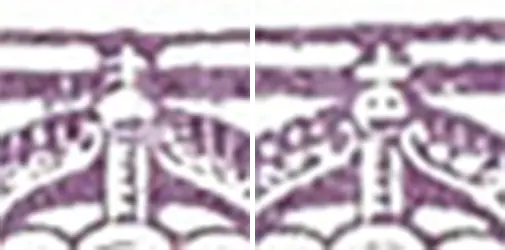
Posn. 3, 8, 53, 58
 MiNr. 1 Na III
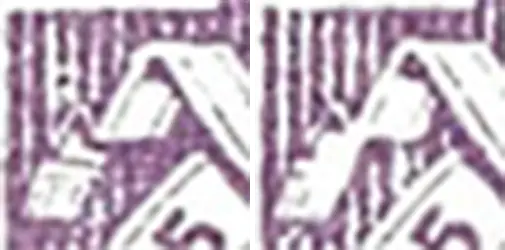
Posn. 1, 6, 51, 60
 MiNr. 1 Na VI
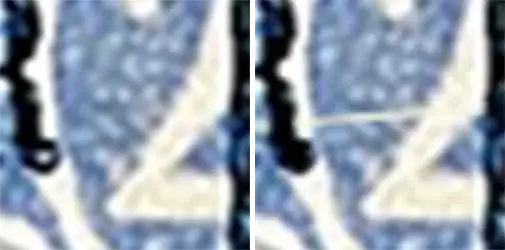
Posn. 41 & Unk. Others within Rows 4 or 9
 MiNr. 3 Na III
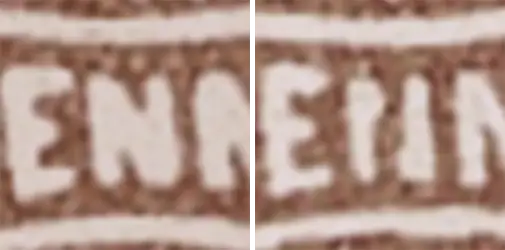
Various Posn.
 MiNr. 4 Na IV
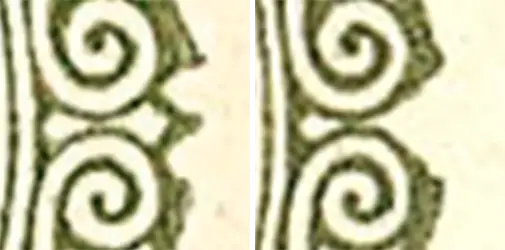
Posn. 2
 MiNr. 5 Na III
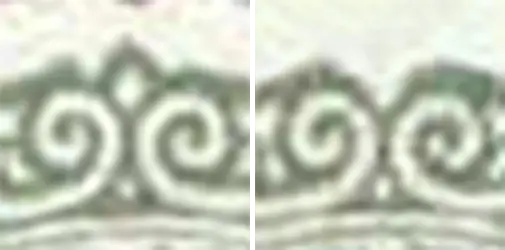
Posn. 83
 MiNr. 5 Na IV
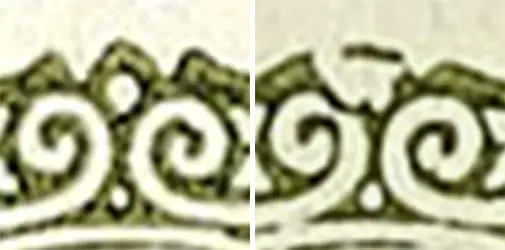
Posn. 91
 MiNr. 5 Na V
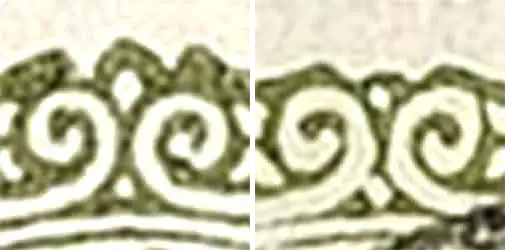
Posn. 43
 MiNr. 5 Na VI
These stamps were printed in 10×10 sheets, with two sheets per printing pane, arranged vertically. As a result, gutter pairs (in German, Zwischtenstegpaare) exist containing stamps from the bottom row of the top sheet and the top row of the bottom sheet.
 MiNr. 2 Na ZS
 MiNr. 3 Na ZS
 MiNr. 4 Na ZS
 MiNr. 5 Na ZS
 MiNr. 1 Na ZS
For a lengthy period of time in the 1870s-1880s, a language instructor named Georges Fouré lived with Graveur Schilling, an employee of the Reich Printing Office. As a result, Fouré was able to get materials to privately print a large number of postage stamps and postal stationery between approximately 1878 and 1886. Among these was a private reprint of the 1 Piaster on 20 Pfennig value of the “Pfennig” Overprints. Most of the copies differ slightly in color, being darker than the originals, and have an overprint that is more blue in color.
 MiNr. 3 Ne I
In the 1890s, Philipp Kosack opened a large stamp stop opposite the Royal Palace in Berlin and began a business relationship with the Reichspost Museum. Herr Kosack frequently gave the museum rare stamps from around the world on credit, with the museum eventually becoming over 200,000 Marks in debt to him. To repay a portion of the debt, the museum had the Reich Printing Office create numerous reprints for Herr Kosack, including a reprint of the 1 Piaster on 20 Pfennig value of the “Pfennig” Overprints.
 MiNr. 3 Ne II
These unofficial reprints were also printed in 10×10 sheets, with two sheets per printing pane, arranged vertically. As a result, gutter pairs (in German, Zwischtenstegpaare) exist containing stamps from the bottom row of the top sheet and the top row of the bottom sheet.
 MiNr. 3 Ne I ZS
 MiNr. 3 Ne II ZS
MiNr. 1 Na
MiNr. 2 Na
MiNr. 3 Na
MiNr. 4 Na
MiNr. 5 Na
MiNr. 3 Ne II ZS
MiNr. 1 Na
MiNr. 2 Na
MiNr. 3 Na
MiNr. 4 Na
MiNr. 5 Na
After the “Pfennig” Issue Overprints had been replaced by the Krone / Adler Overprints, the Reichspost Museum requested 10,000 sets of the earlier overprints for use as gifts and trading material. The Constantinople post office had insufficient remaining stock to meet this demand, so the Reichspost gave the Reich Printing Office examples of the original issues and an order for 10,000 copies of the three lower values, 9,000 copies of the 1 ¼ Piaster on 25 Pfennig, and 7,600 copies of the 2 ½ Piaster on 50 Pfennig.
Even though the same printing material was used, new plates had to be assembled. This resulted in variations that can be used to identify the reprints. In generally, the reprints have glossier overprints that are frequently thicker at the edges. The gum tends to be cracked and yellowish. All but the lowest value have an unclear design and splotchy color. The three largest values differ in overprint spacing from the originals.
Numerous plate flaws are known on the underlying stamps.
Posn. 3, 8, 53, 58
MiNr. 1 Na III
Posn. 1, 6, 51, 60
MiNr. 1 Na VI
Posn. 41 & Unk. Others within Rows 4 or 9
MiNr. 3 Na III
Various Posn.
MiNr. 4 Na IV
Posn. 2
MiNr. 5 Na III
Posn. 83
MiNr. 5 Na IV
Posn. 91
MiNr. 5 Na V
Posn. 43
MiNr. 5 Na VI
These stamps were printed in 10×10 sheets, with two sheets per printing pane, arranged vertically. As a result, gutter pairs (in German, Zwischtenstegpaare) exist containing stamps from the bottom row of the top sheet and the top row of the bottom sheet.
MiNr. 2 Na ZS
MiNr. 3 Na ZS
MiNr. 4 Na ZS
MiNr. 5 Na ZS
MiNr. 1 Na ZS
For a lengthy period of time in the 1870s-1880s, a language instructor named Georges Fouré lived with Graveur Schilling, an employee of the Reich Printing Office. As a result, Fouré was able to get materials to privately print a large number of postage stamps and postal stationery between approximately 1878 and 1886. Among these was a private reprint of the 1 Piaster on 20 Pfennig value of the “Pfennig” Overprints. Most of the copies differ slightly in color, being darker than the originals, and have an overprint that is more blue in color.
MiNr. 3 Ne I
In the 1890s, Philipp Kosack opened a large stamp stop opposite the Royal Palace in Berlin and began a business relationship with the Reichspost Museum. Herr Kosack frequently gave the museum rare stamps from around the world on credit, with the museum eventually becoming over 200,000 Marks in debt to him. To repay a portion of the debt, the museum had the Reich Printing Office create numerous reprints for Herr Kosack, including a reprint of the 1 Piaster on 20 Pfennig value of the “Pfennig” Overprints.
MiNr. 3 Ne II
These unofficial reprints were also printed in 10×10 sheets, with two sheets per printing pane, arranged vertically. As a result, gutter pairs (in German, Zwischtenstegpaare) exist containing stamps from the bottom row of the top sheet and the top row of the bottom sheet.
MiNr. 3 Ne I ZS
MiNr. 3 Ne II ZS