
Set Date(s)
April 1903
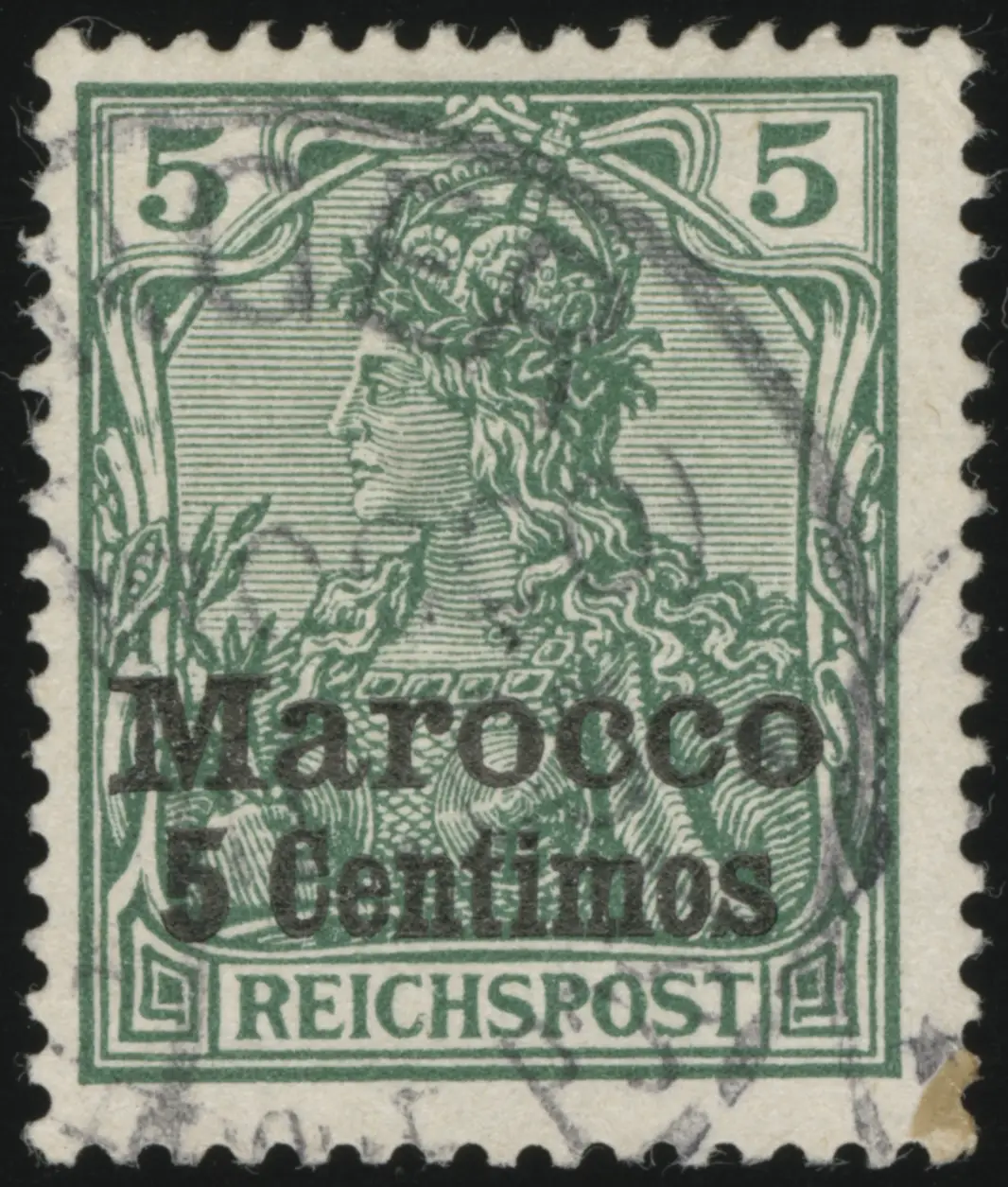 MiNr. 8 II
 MiNr. 16 II
 MiNr. 17 II/I
 MiNr. 17 II/II
 MiNr. 18 II/I
 MiNr. 18 II/II
 MiNr. 19 II
In April 1903, Germany issued this set of overprints which is a slight variation on the 1900 Germania overprints.
The 1903 overprint is known as the "bold" overprint. It features a "t" that is more pointed at the top; a thicker "M" with less distinct serifs on top; and the top of the "a" in "Marocco" is at a slight angle. Additionally, there is slightly less spacing between the "r" and "o" in "Marocco".
The values of this set are denoted with an “II” suffix in Michel. This is to differentiate them from the very similar 1900 Overprint Issues (Michel suffix “I”), which have a slightly different overprint.

The values overprinted on 2 Mark and 3 Mark stamps exist in two types due to variations in the original Germanias.
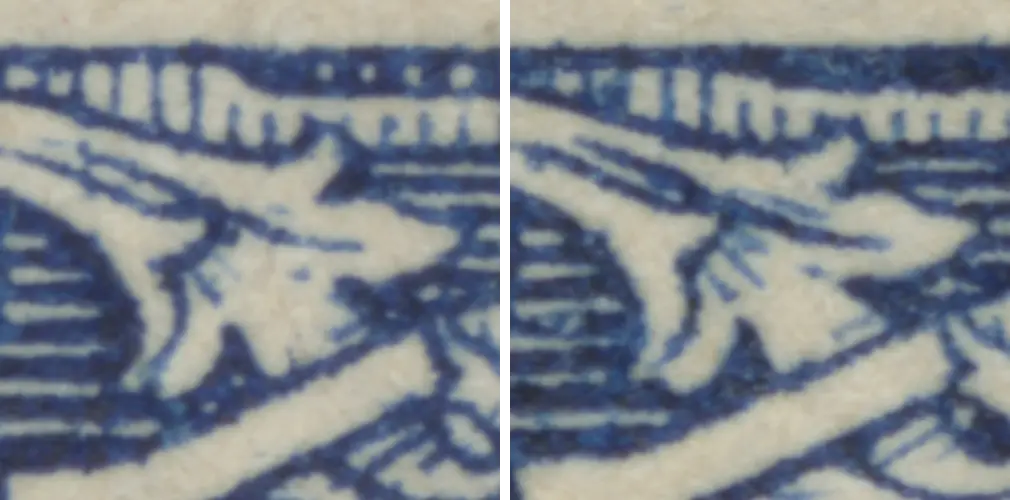
Few lines in bloom
More lines in bloom
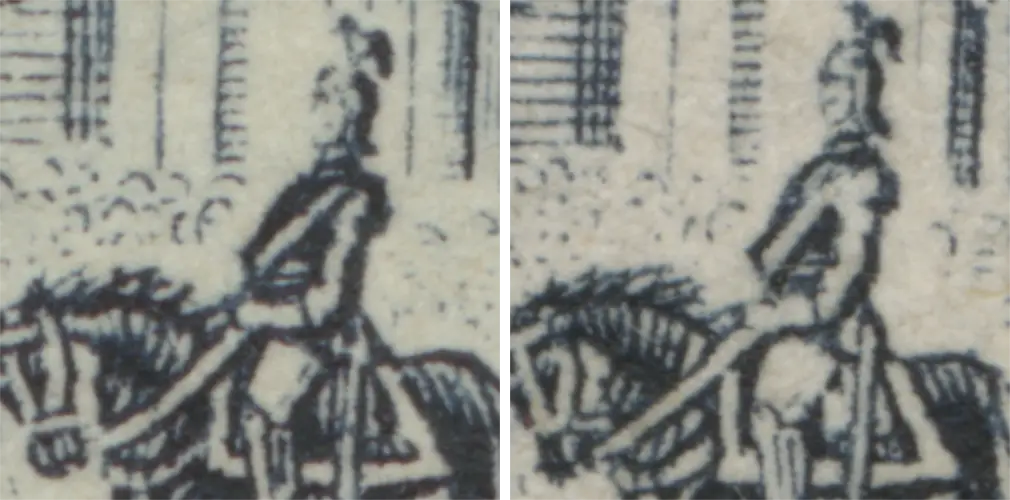
Sagging reins
Rider bent backward
Breast armor extends lower
Straight reins
Rider more upright
Breast armor not as low
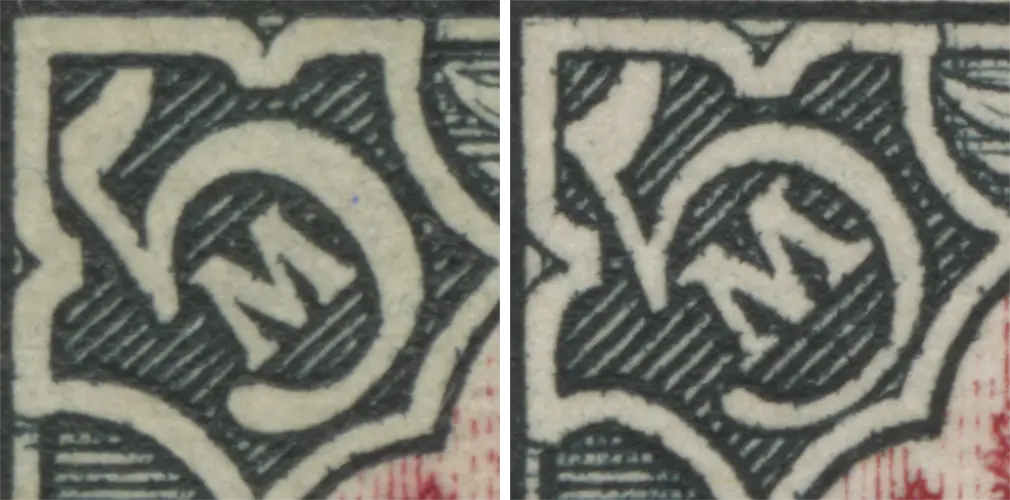
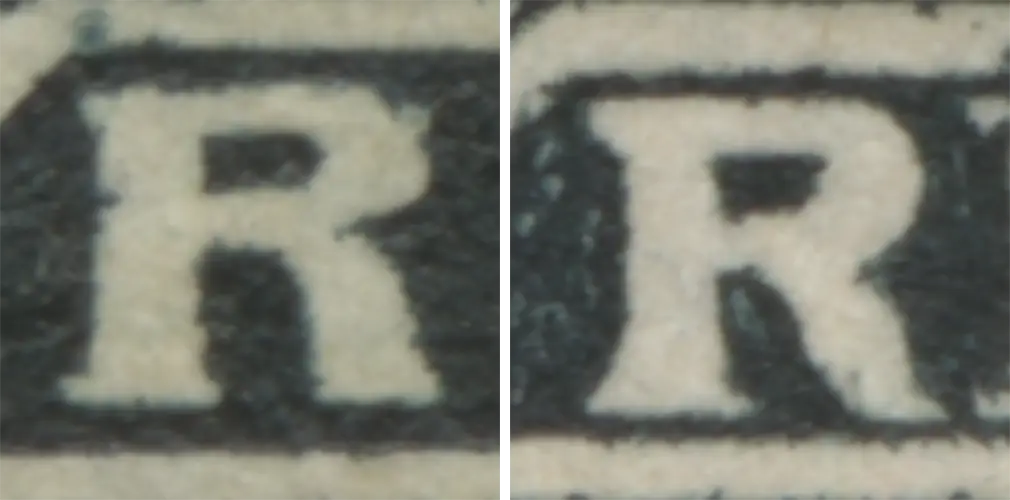
The value overprinted on 5 Mark stamps exists only on Type II 5 Mark stamps.
Fatter “5”
No ear visible
“R” without serifs
Thinner “5”
Ear visible
“R” with serifs
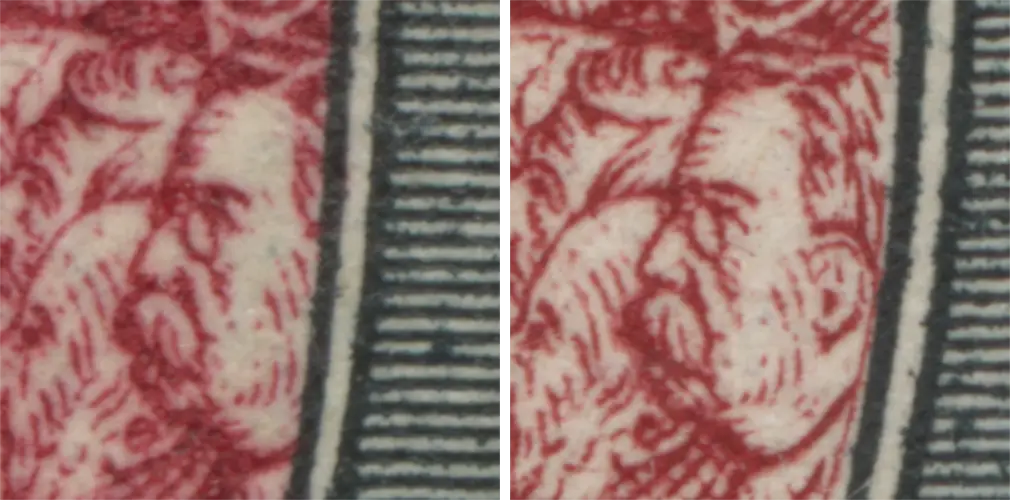
The 2 Mark and 3 Mark Germania stamps were printed in sheets containing a mixture of Types I and II. As a result, vertical mixed pairs can be found with Type I over Type II or Type II over Type I.
 MiNr. 17 II/I / MiNr. 17 II/II Vert. Pair
 MiNr. 18 II/I / MiNr. 18 II/II Vert. Pair
 MiNr. 18 II/II / MiNr. 18 II/I Vert. Pair
The values printed on 5 Mark stamps can be found with plate flaws on the underlying Germania stamps.
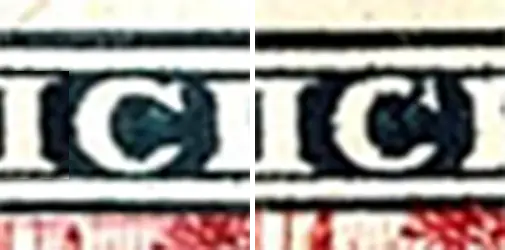
Posn. 10
 MiNr. 19 II PF I
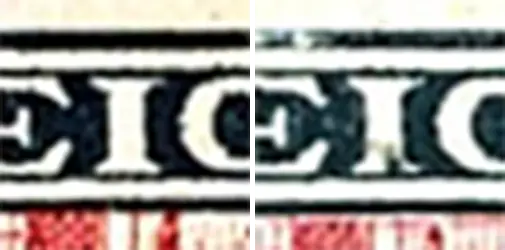
Posn. 20
 MiNr. 19 II PF II

Posn. 18
 MiNr. 19 II PF III
All of the denominations in the Germania set were overprinted using the new, “bolder” type, but only five values were issued for use. The remaining denominations were not issued, and were eventually released to the collecting market via auction in 1923. Sold at the auction were 171 copies each of MiNr. 7 II, 10 II-15 II, and 46 copies of MiNr. 9 II.
 MiNr. 7 II
 MiNr. 9 II
 MiNr. 10 II
 MiNr. 11 II
 MiNr. 12 II
 MiNr. 13 II
 MiNr. 14 II
 MiNr. 15 II
MiNr. 8 II
MiNr. 16 II
MiNr. 17 II/I
MiNr. 17 II/II
MiNr. 18 II/I
MiNr. 18 II/II
MiNr. 19 II
MiNr. 15 II
MiNr. 8 II
MiNr. 16 II
MiNr. 17 II/I
MiNr. 17 II/II
MiNr. 18 II/I
MiNr. 18 II/II
MiNr. 19 II
In April 1903, Germany issued this set of overprints which is a slight variation on the 1900 Germania overprints.
The 1903 overprint is known as the "bold" overprint. It features a "t" that is more pointed at the top; a thicker "M" with less distinct serifs on top; and the top of the "a" in "Marocco" is at a slight angle. Additionally, there is slightly less spacing between the "r" and "o" in "Marocco".
The values of this set are denoted with an “II” suffix in Michel. This is to differentiate them from the very similar 1900 Overprint Issues (Michel suffix “I”), which have a slightly different overprint.
The values overprinted on 2 Mark and 3 Mark stamps exist in two types due to variations in the original Germanias.
Few lines in bloom
More lines in bloom
Sagging reins
Rider bent backward
Breast armor extends lower
Straight reins
Rider more upright
Breast armor not as low
The value overprinted on 5 Mark stamps exists only on Type II 5 Mark stamps.
Fatter “5”
No ear visible
“R” without serifs
Thinner “5”
Ear visible
“R” with serifs
The 2 Mark and 3 Mark Germania stamps were printed in sheets containing a mixture of Types I and II. As a result, vertical mixed pairs can be found with Type I over Type II or Type II over Type I.
MiNr. 17 II/I / MiNr. 17 II/II Vert. Pair
MiNr. 18 II/I / MiNr. 18 II/II Vert. Pair
MiNr. 18 II/II / MiNr. 18 II/I Vert. Pair
The values printed on 5 Mark stamps can be found with plate flaws on the underlying Germania stamps.
Posn. 10
MiNr. 19 II PF I
Posn. 20
MiNr. 19 II PF II
Posn. 18
MiNr. 19 II PF III
All of the denominations in the Germania set were overprinted using the new, “bolder” type, but only five values were issued for use. The remaining denominations were not issued, and were eventually released to the collecting market via auction in 1923. Sold at the auction were 171 copies each of MiNr. 7 II, 10 II-15 II, and 46 copies of MiNr. 9 II.
MiNr. 7 II
MiNr. 9 II
MiNr. 10 II
MiNr. 11 II
MiNr. 12 II
MiNr. 13 II
MiNr. 14 II
MiNr. 15 II


