Set Date(s)
24 November 1900 / January 1901
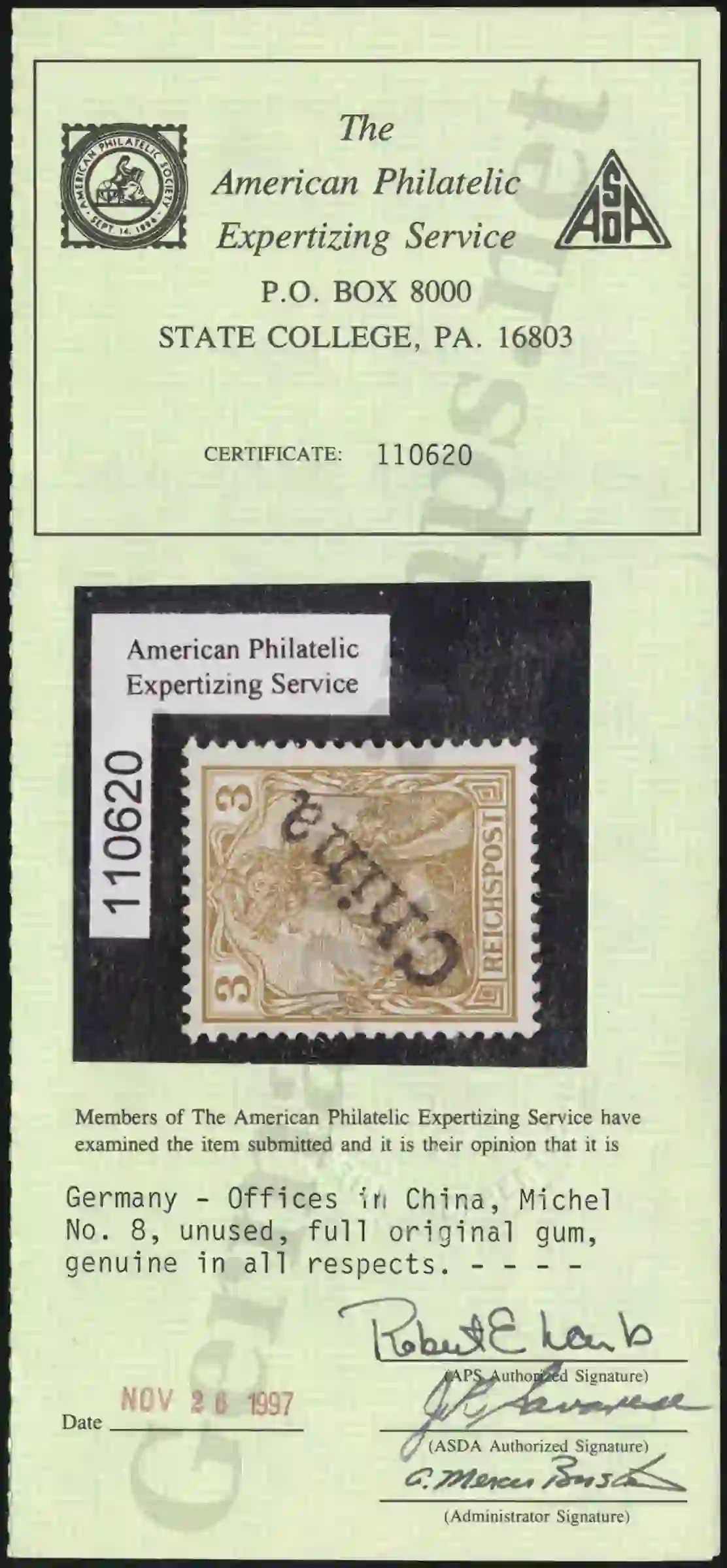
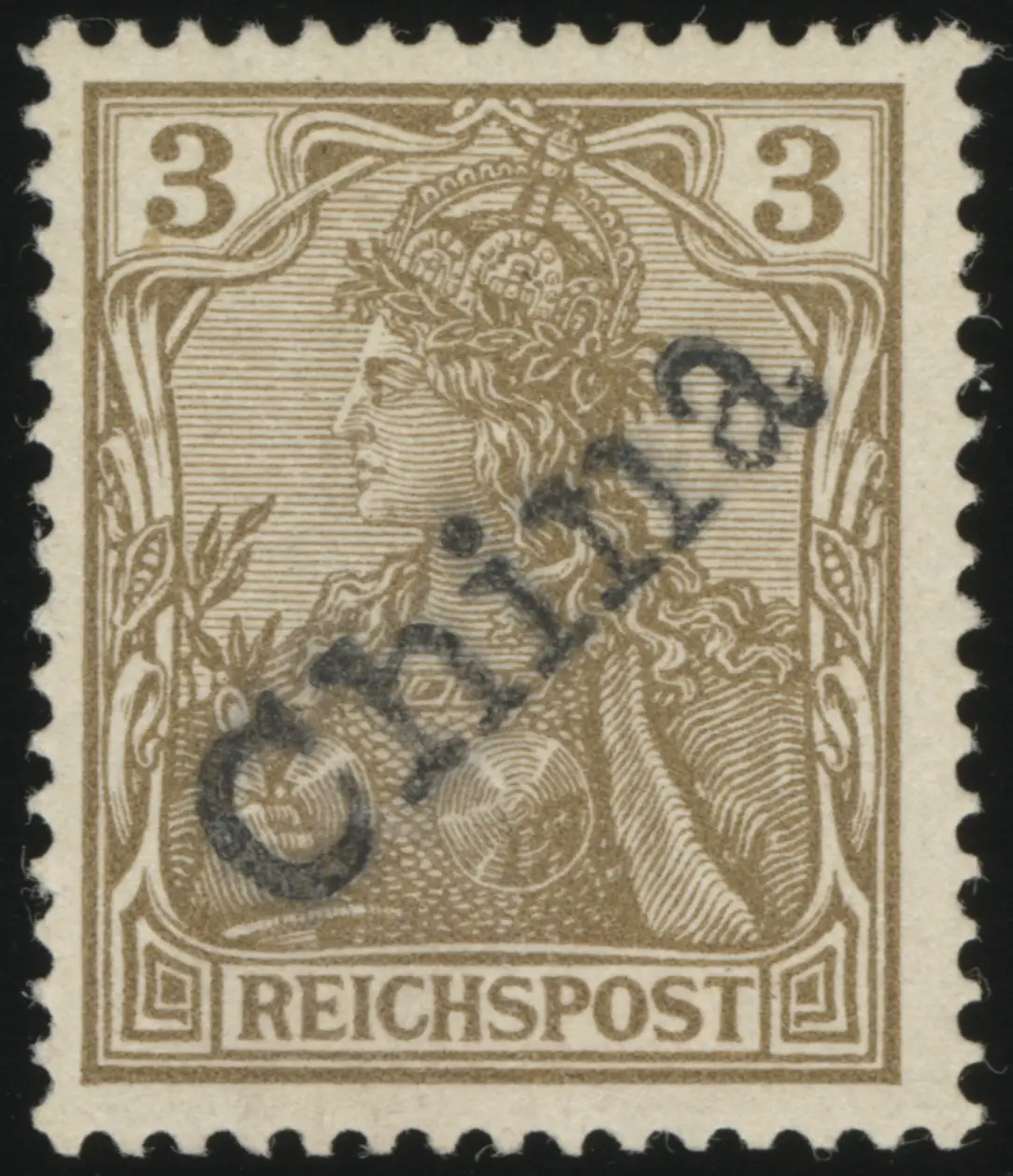 MiNr. 8
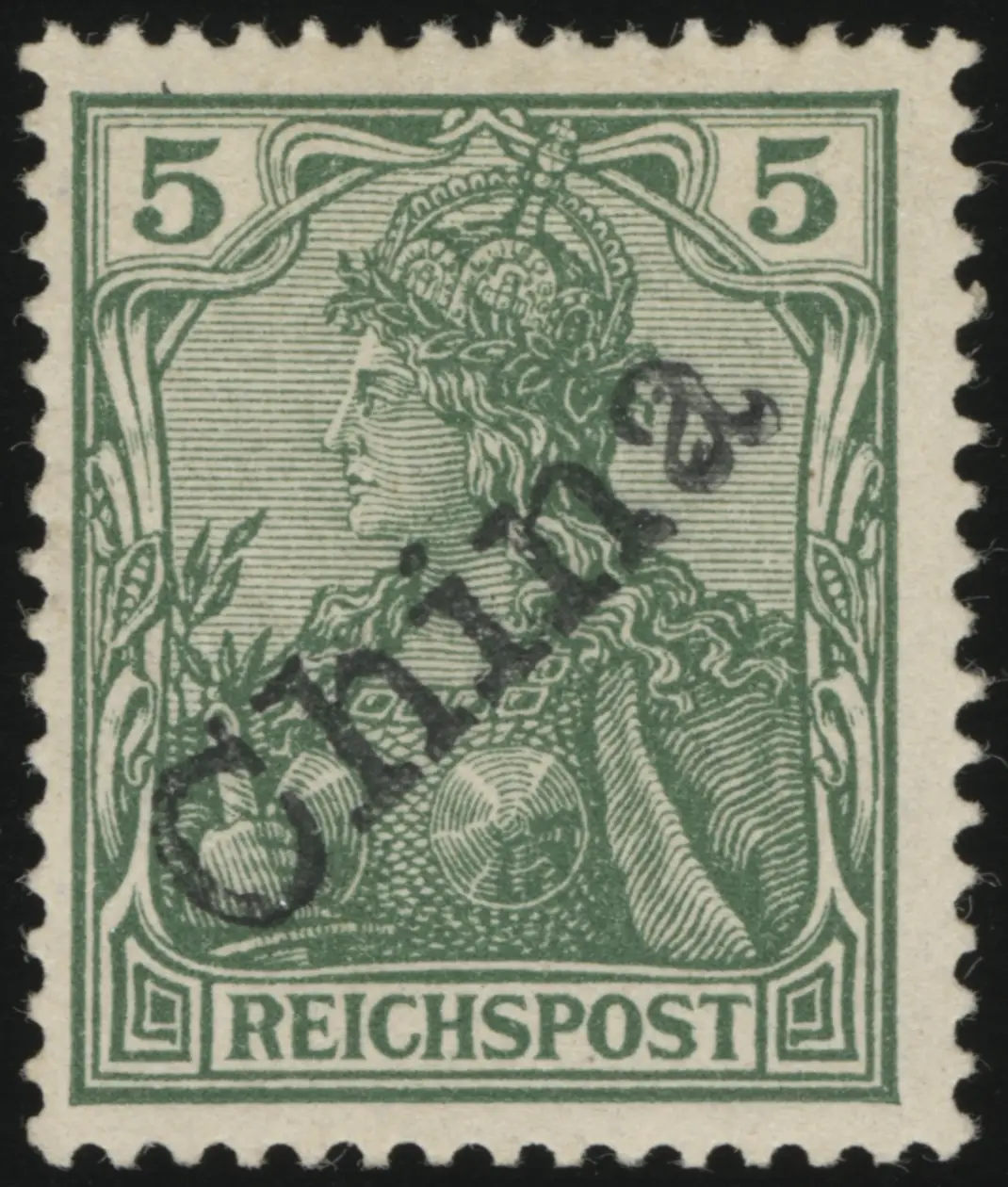 MiNr. 9
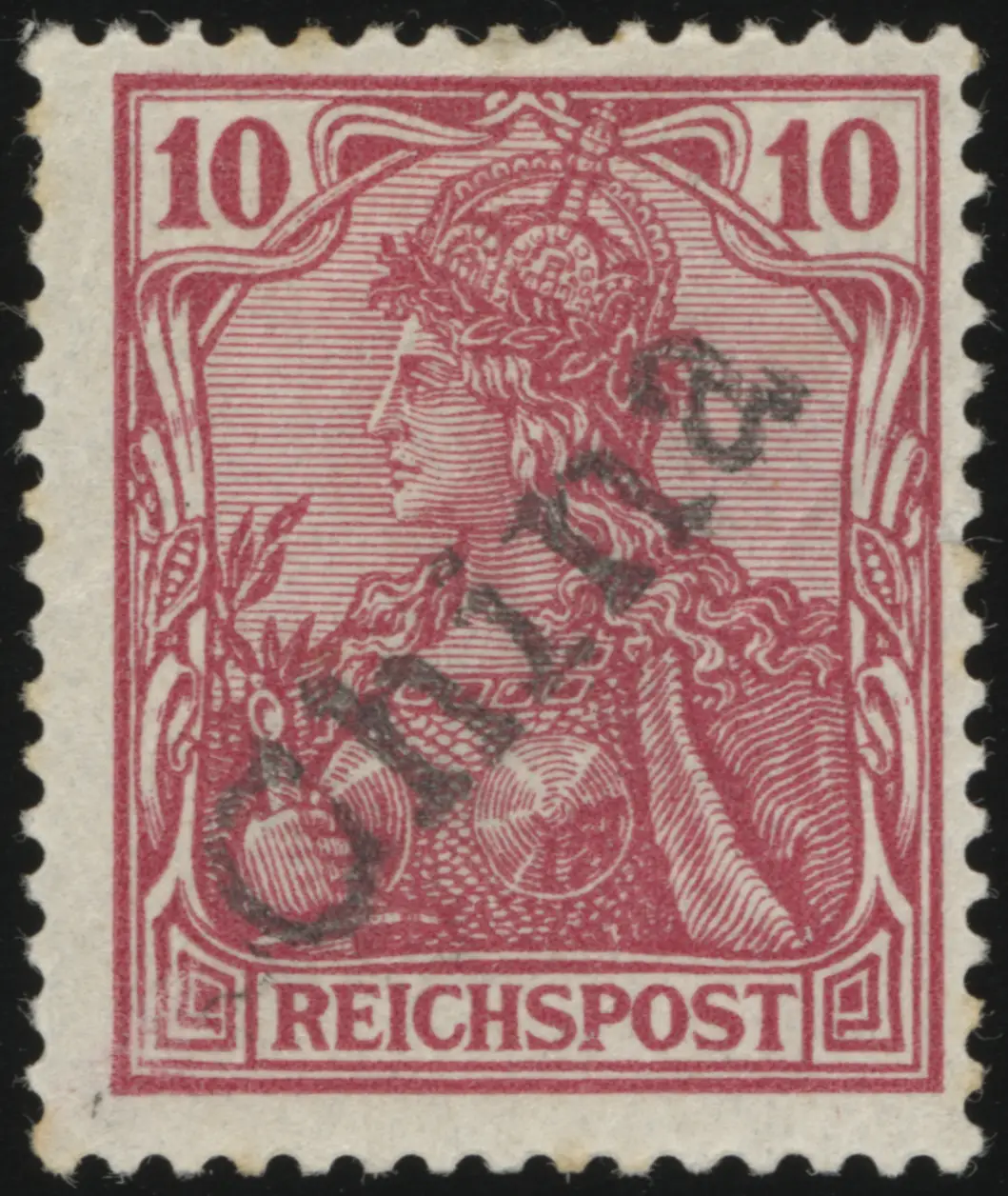 MiNr. 10
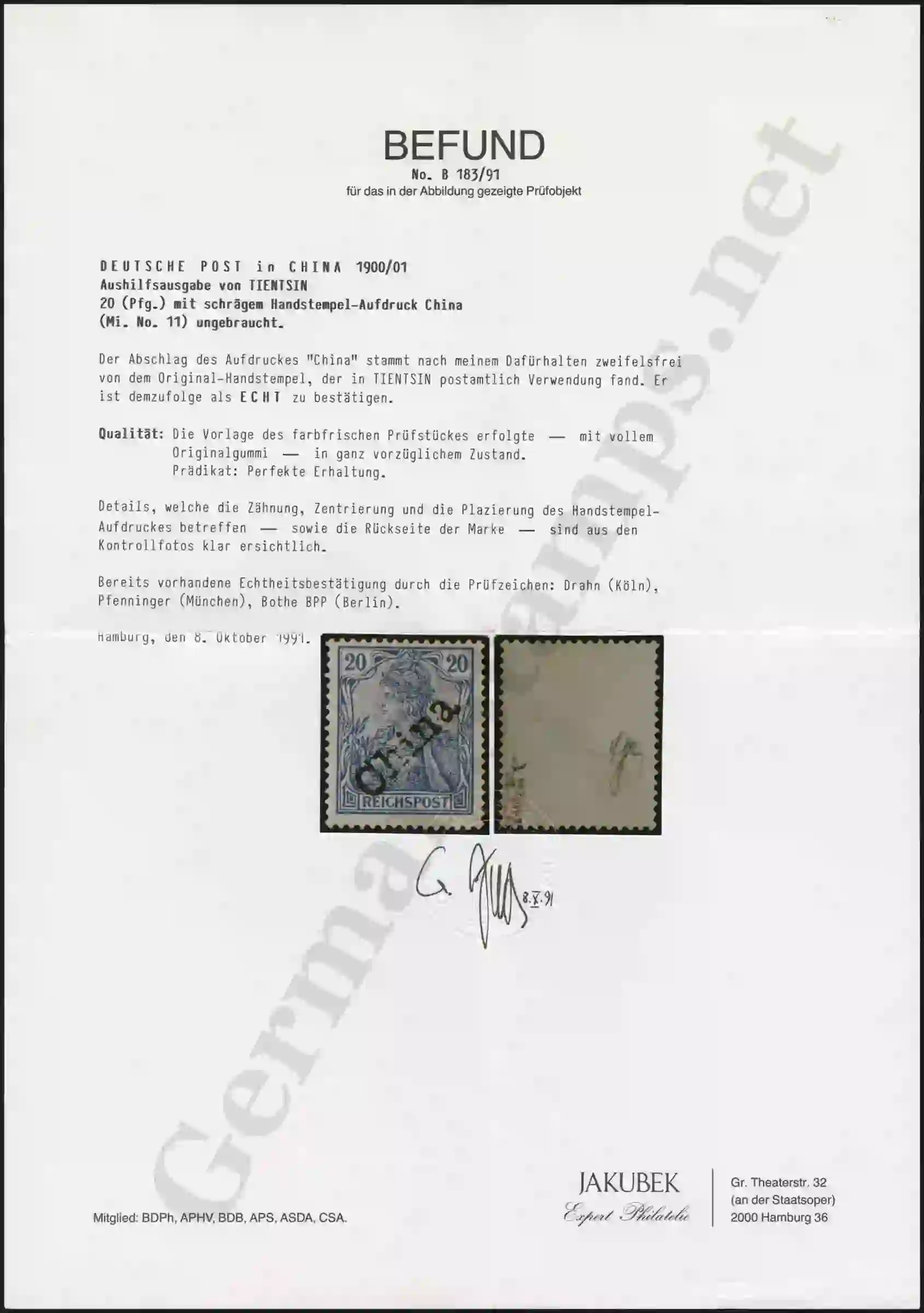
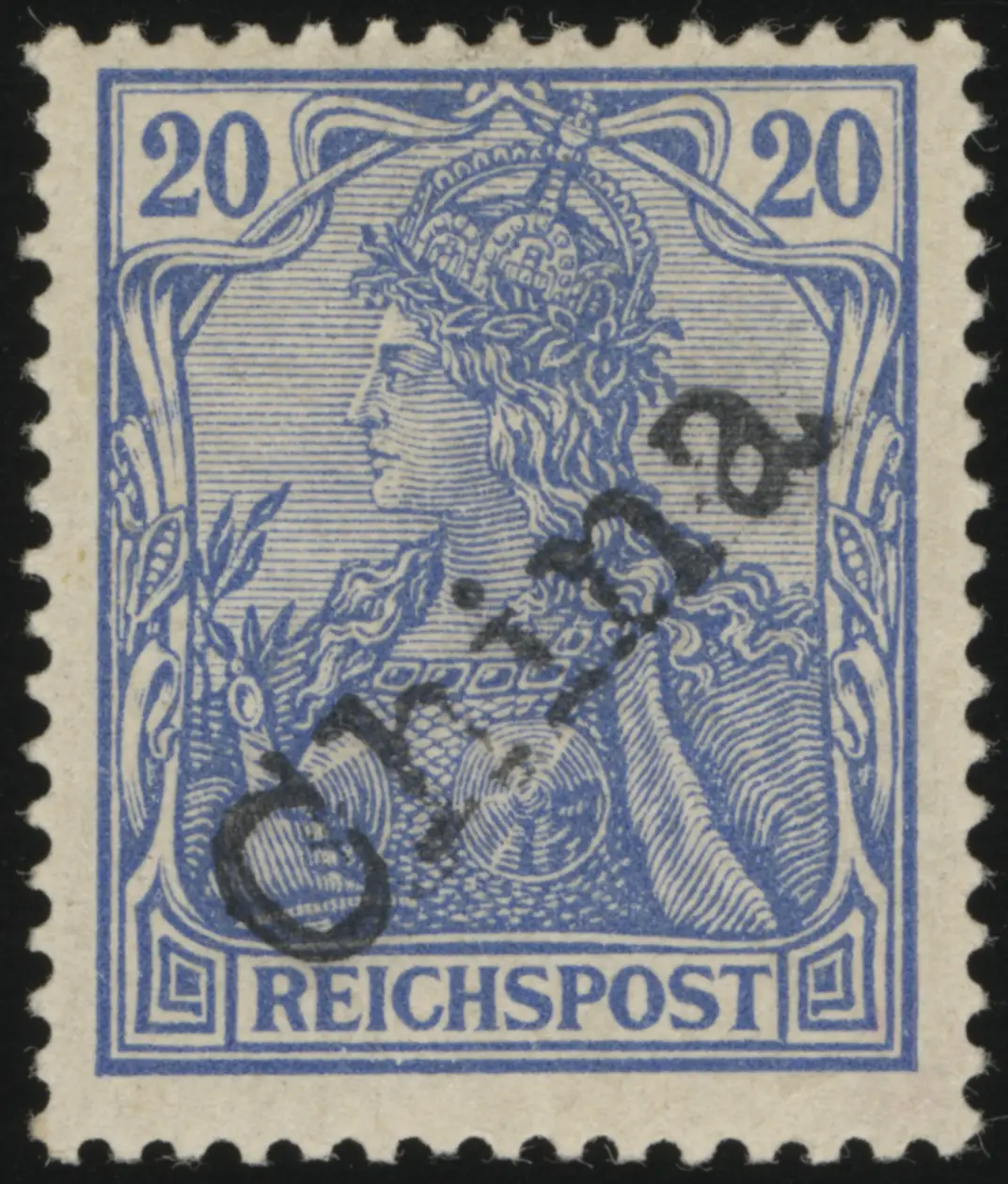 MiNr. 11
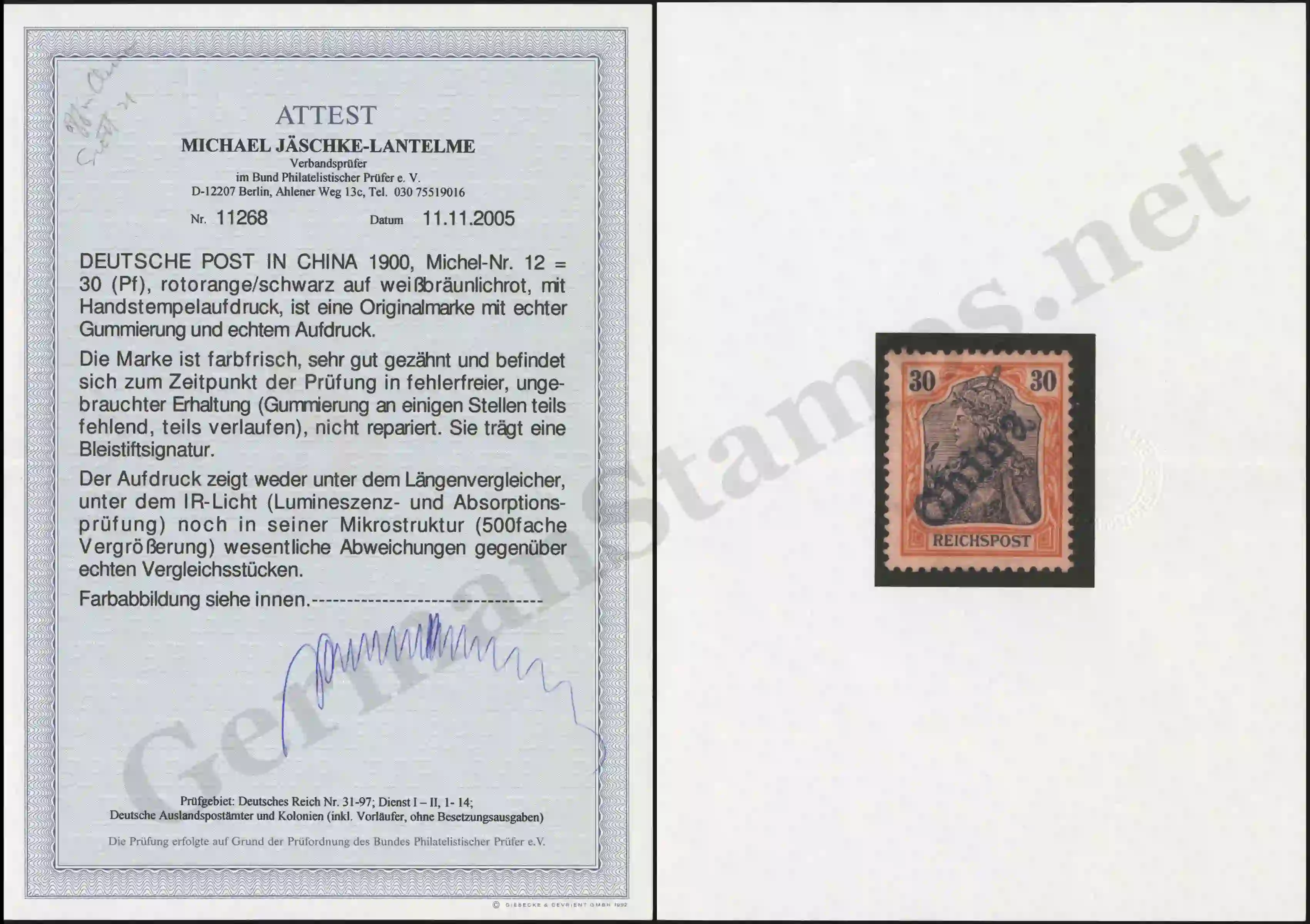
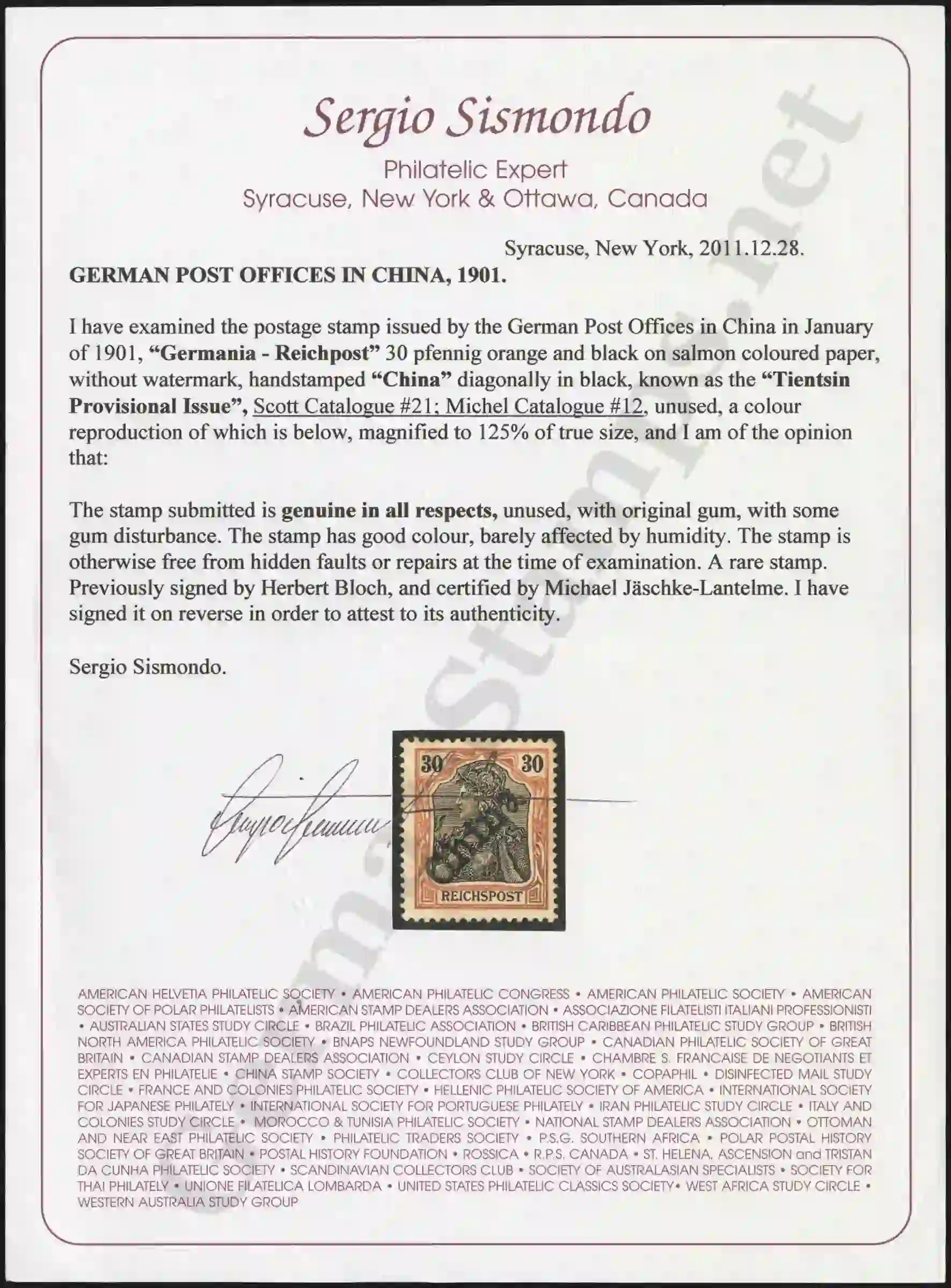
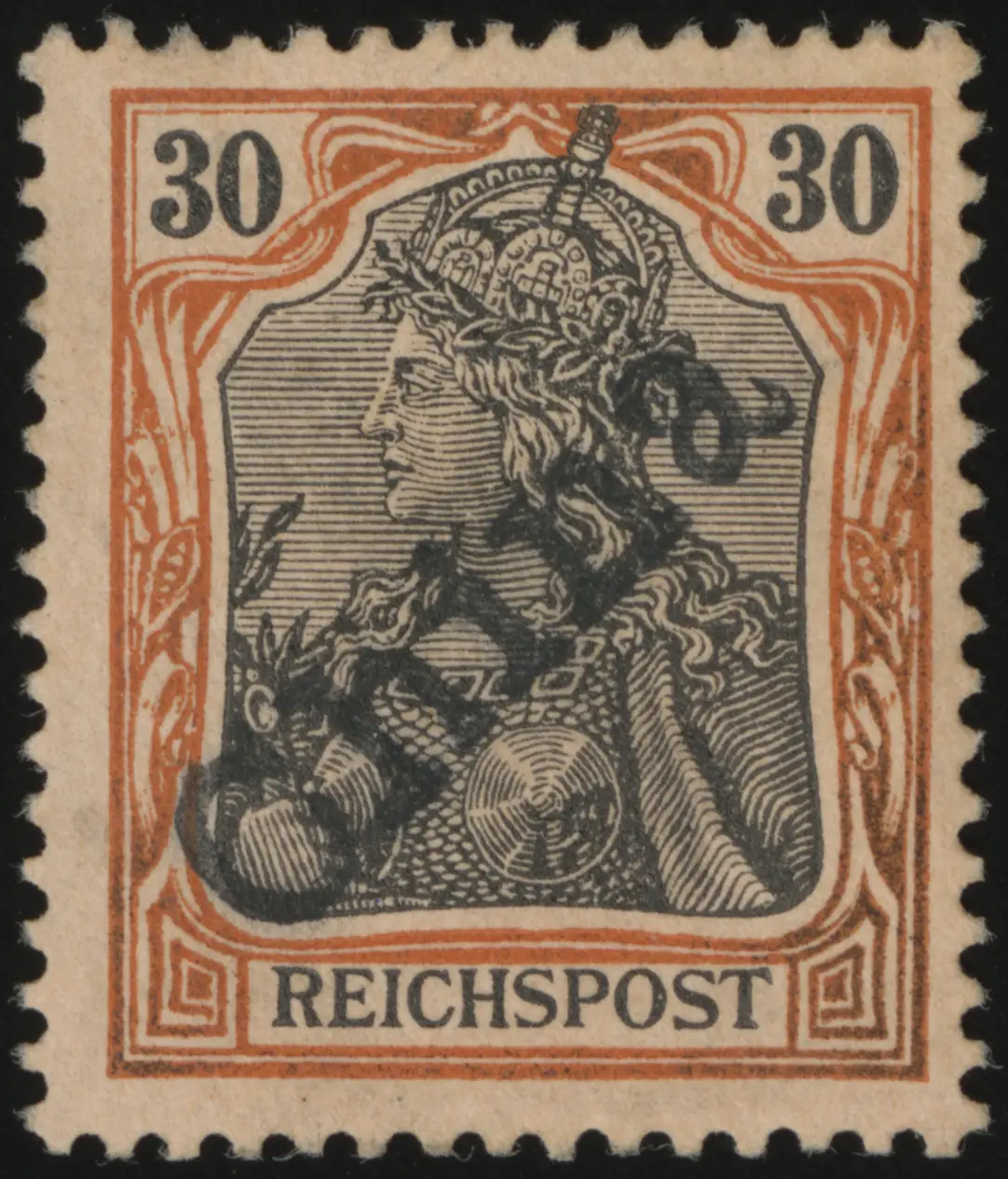 MiNr. 12
 MiNr. 13
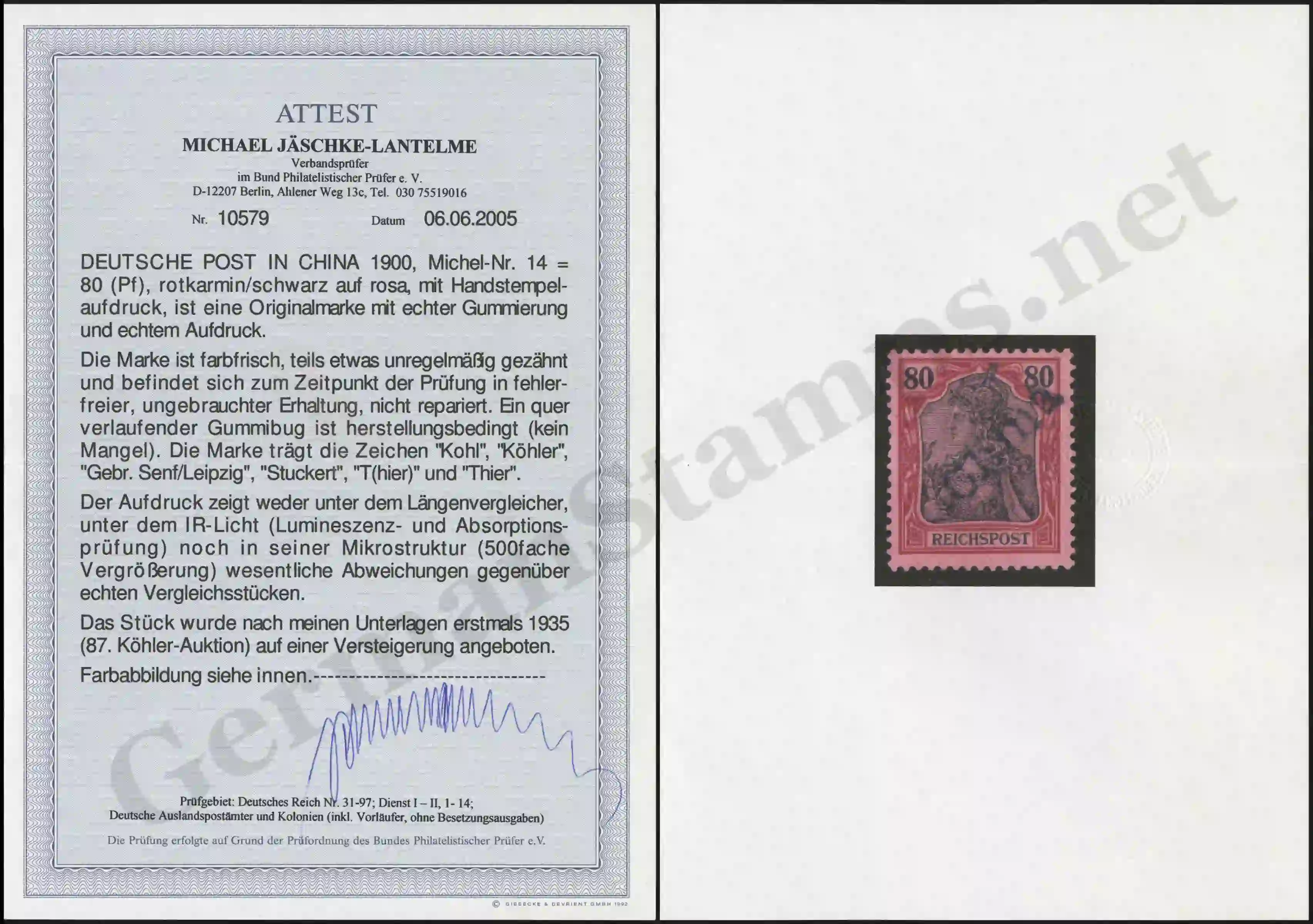
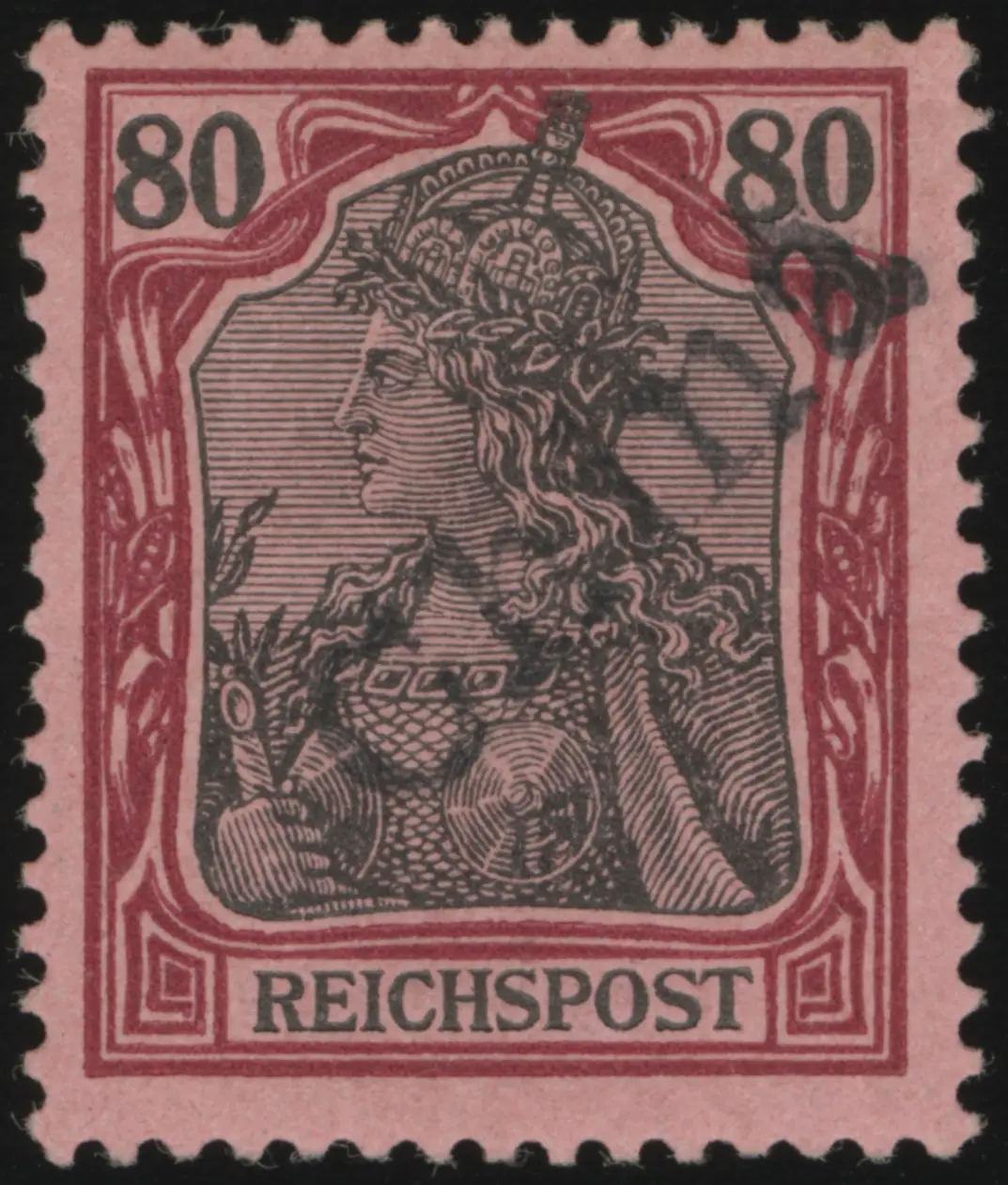 MiNr. 14
During the Boxer Rebellion, there was a great shortage of postage at the German post offices in China. To remedy this shortage, German and Kiautschou postage was used in a variety of provisional forms. Among these were the Tientsin Provisionals.
Upon the deployment of large numbers of German forces to China, a large quantity of Germania postage had been sent to the German feldpost service in China. Due to the shortage of postage at the civilian post offices, a quantity of 3- to 80-Pfennig Germania issues were given to the post office in Tientsin.
The currency in use in China had a rate of exchange at the German postal offices of 2.50 Mark/Dollar, while on the free market the exchange rate was 2 Mark/Dollar. Therefore, private persons could buy unoverprinted stamps and realize a 25% profit by returning them to Germany. To guard against this, the Tientsin postmaster ordered that these stamps be overprinted with the word “China” before being sold at the counter.
The overprints were valid until 31 December 1902.
All values of the set can be found with double overprint.
 MiNr. 8 DD
 MiNr. 9 DD
 MiNr. 10 DD
 MiNr. 11 DD
 MiNr. 12 DD
 MiNr. 13 DD
 MiNr. 14 DD
The 5 Pf and 50 Pf values are known with overprint sloping from top left to bottom right, instead of from bottom left to top right.
 MiNr. 9 S
 MiNr. 13 S
All values of the set except the 3 Pf value can be found with inverted overprint.
 MiNr. 9 K
 MiNr. 10 K
 MiNr. 11 K
 MiNr. 12 K
 MiNr. 13 K
 MiNr. 14 K
The 30 Pf and 80 Pf values can be found with plate flaws on the underlying stamps.

Posn. Unknown
 MiNr. 12 XIII
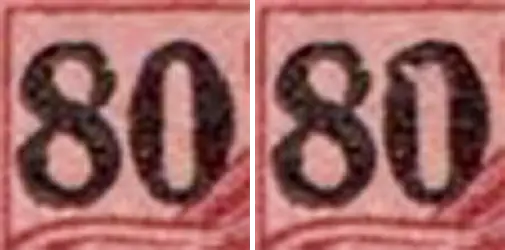
Posn. Unknown
 MiNr. 14 IV
At varying times after the introduction of the Tientsin Provisionals, four additional values were overprinted by the Tientsin Post Office using the original handstamp. The exact details of their creation are varied and uncertain. These are among the rarest issues in German colonial philately.
The 25 Pfennig value is believed to have been produced as late as 1904 or 1905. A total of five copies are known, all unused – one single and a block of four that was broken-up for sale no later than 1925. It is believed that they were produced years after the other values as samples for the Reich Post Office or as a favor to a dealer to whom the Reich Post Office owed a large sum of money.
The 40 Pfennig value was created around the time of the original issues, though the reason for doing so is unknown. Unlike the other values, legitimately used copies of the 40 Pfennig exist with date-appropriate postmarks. Though the exact number created is unknown, current estimates place the total at 30-60 copies.
The 2- and 3 Mark values were created following a request by Leutnant Erich von Salzmann, a German artillery officer stationed in China. Lt. Salzmann’s father, Generalleutnant Paul von Salzmann, was a prominent stamp collector of the time. Two copies of each of the 2- and 3 Mark values are known – one mint copy of each, and one copy of each favor canceled at K.D. Feldpoststation No. 2 on 28 February 1901.
 MiNr. I
 MiNr. II
 MiNr. III
 MiNr. IV
MiNr. 8
MiNr. 9
MiNr. 10
MiNr. 11
MiNr. 12
MiNr. 13
MiNr. 14
MiNr. IV
MiNr. 8
MiNr. 9
MiNr. 10
MiNr. 11
MiNr. 12
MiNr. 13
MiNr. 14
During the Boxer Rebellion, there was a great shortage of postage at the German post offices in China. To remedy this shortage, German and Kiautschou postage was used in a variety of provisional forms. Among these were the Tientsin Provisionals.
Upon the deployment of large numbers of German forces to China, a large quantity of Germania postage had been sent to the German feldpost service in China. Due to the shortage of postage at the civilian post offices, a quantity of 3- to 80-Pfennig Germania issues were given to the post office in Tientsin.
The currency in use in China had a rate of exchange at the German postal offices of 2.50 Mark/Dollar, while on the free market the exchange rate was 2 Mark/Dollar. Therefore, private persons could buy unoverprinted stamps and realize a 25% profit by returning them to Germany. To guard against this, the Tientsin postmaster ordered that these stamps be overprinted with the word “China” before being sold at the counter.
The overprints were valid until 31 December 1902.
All values of the set can be found with double overprint.
MiNr. 8 DD
MiNr. 9 DD
MiNr. 10 DD
MiNr. 11 DD
MiNr. 12 DD
MiNr. 13 DD
MiNr. 14 DD
The 5 Pf and 50 Pf values are known with overprint sloping from top left to bottom right, instead of from bottom left to top right.
MiNr. 9 S
MiNr. 13 S
All values of the set except the 3 Pf value can be found with inverted overprint.
MiNr. 9 K
MiNr. 10 K
MiNr. 11 K
MiNr. 12 K
MiNr. 13 K
MiNr. 14 K
The 30 Pf and 80 Pf values can be found with plate flaws on the underlying stamps.
Posn. Unknown
MiNr. 12 XIII
Posn. Unknown
MiNr. 14 IV
At varying times after the introduction of the Tientsin Provisionals, four additional values were overprinted by the Tientsin Post Office using the original handstamp. The exact details of their creation are varied and uncertain. These are among the rarest issues in German colonial philately.
The 25 Pfennig value is believed to have been produced as late as 1904 or 1905. A total of five copies are known, all unused – one single and a block of four that was broken-up for sale no later than 1925. It is believed that they were produced years after the other values as samples for the Reich Post Office or as a favor to a dealer to whom the Reich Post Office owed a large sum of money.
The 40 Pfennig value was created around the time of the original issues, though the reason for doing so is unknown. Unlike the other values, legitimately used copies of the 40 Pfennig exist with date-appropriate postmarks. Though the exact number created is unknown, current estimates place the total at 30-60 copies.
The 2- and 3 Mark values were created following a request by Leutnant Erich von Salzmann, a German artillery officer stationed in China. Lt. Salzmann’s father, Generalleutnant Paul von Salzmann, was a prominent stamp collector of the time. Two copies of each of the 2- and 3 Mark values are known – one mint copy of each, and one copy of each favor canceled at K.D. Feldpoststation No. 2 on 28 February 1901.
MiNr. I
MiNr. II
MiNr. III
MiNr. IV