Set Date(s)
1 September 1900 / 1902
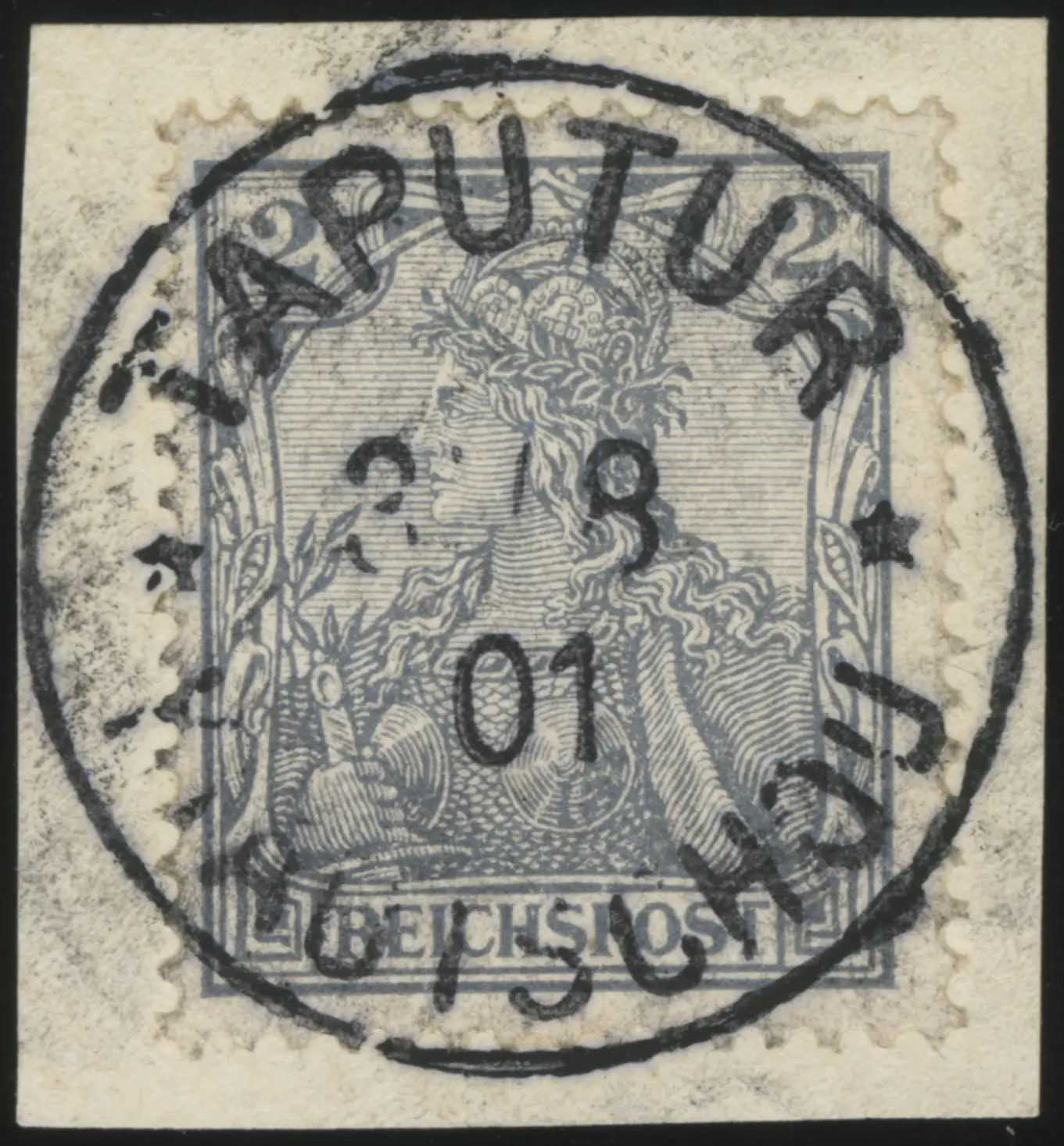 MiNr. P V z
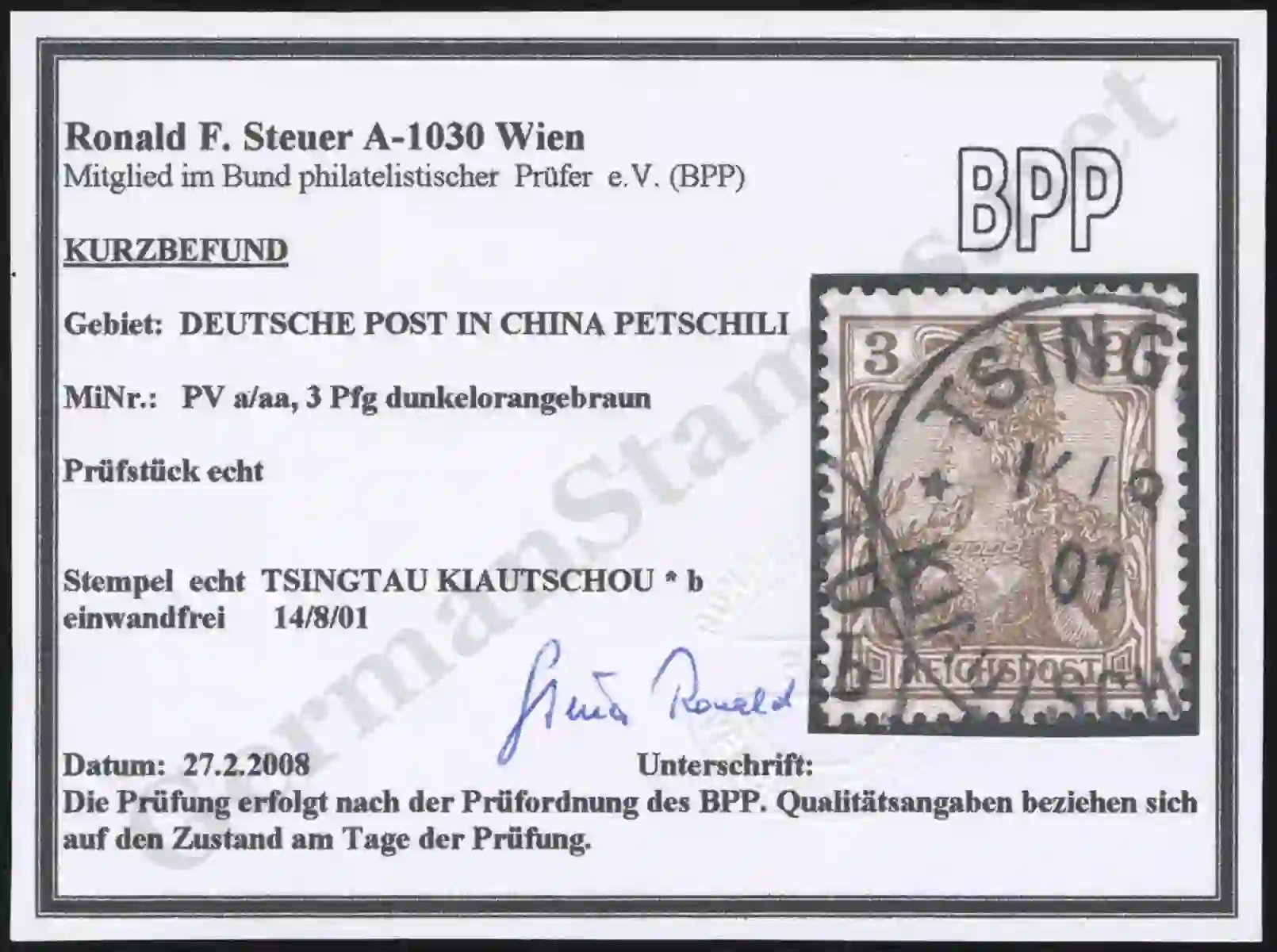
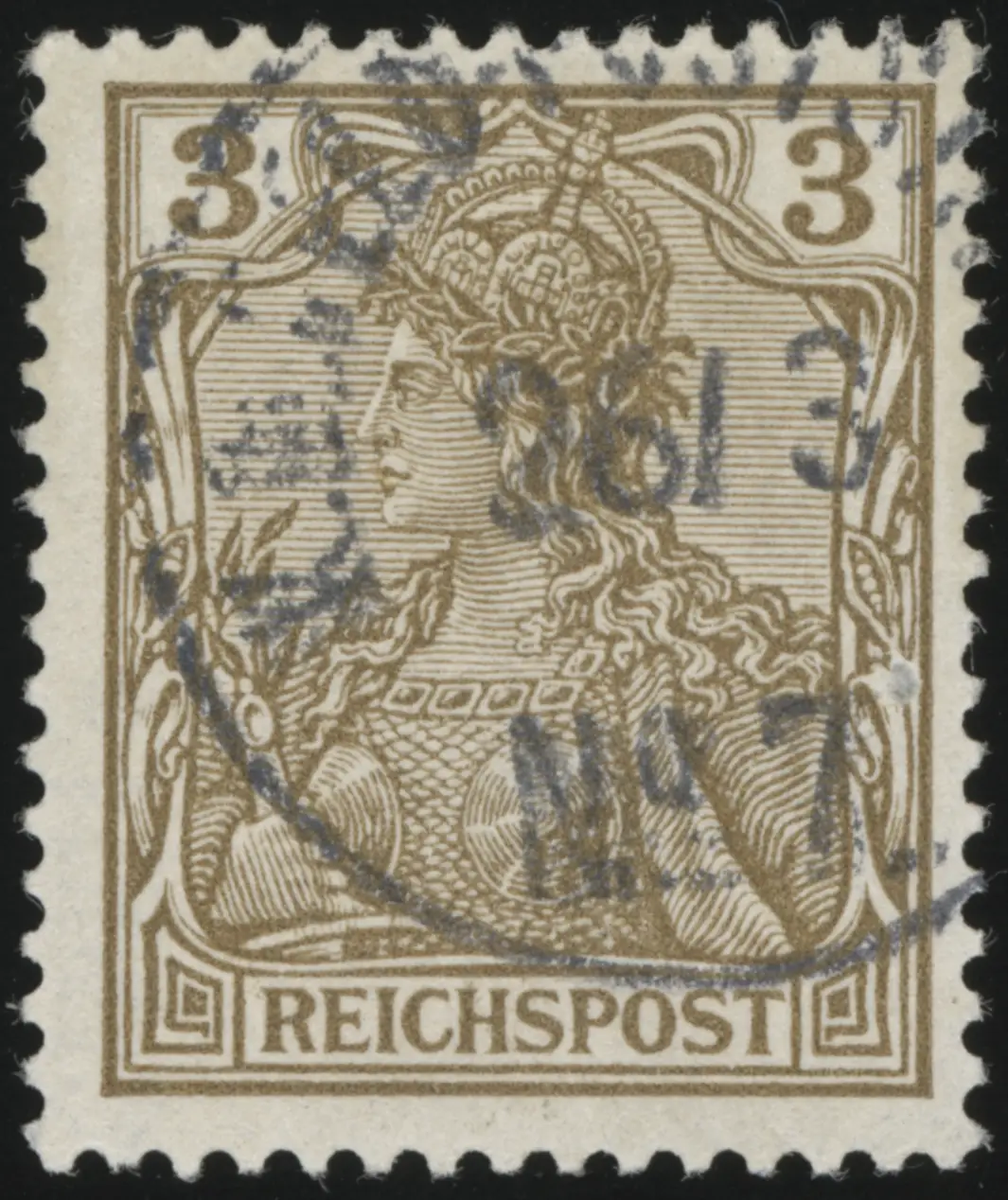 MiNr. P V a
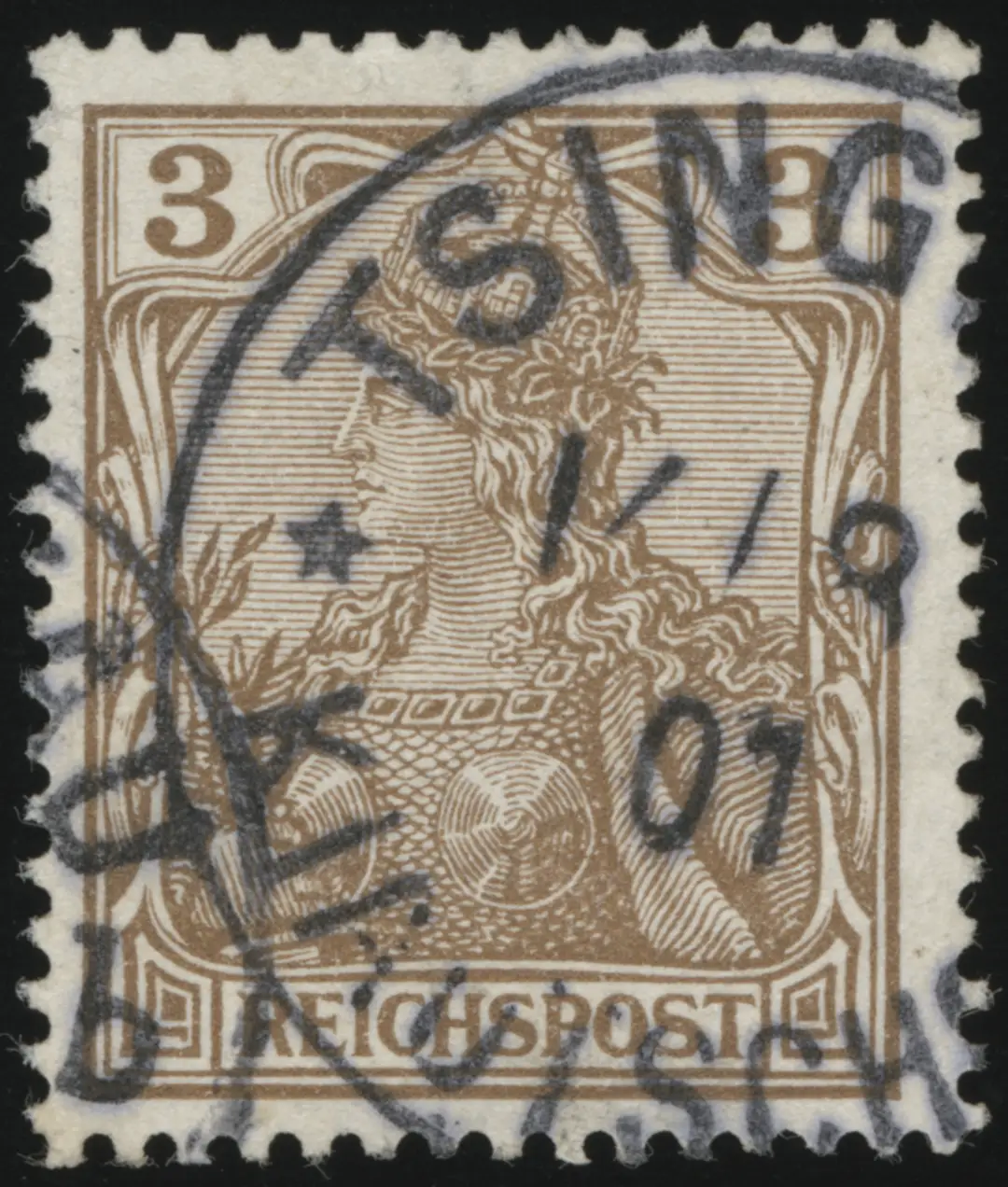 MiNr. P V aa
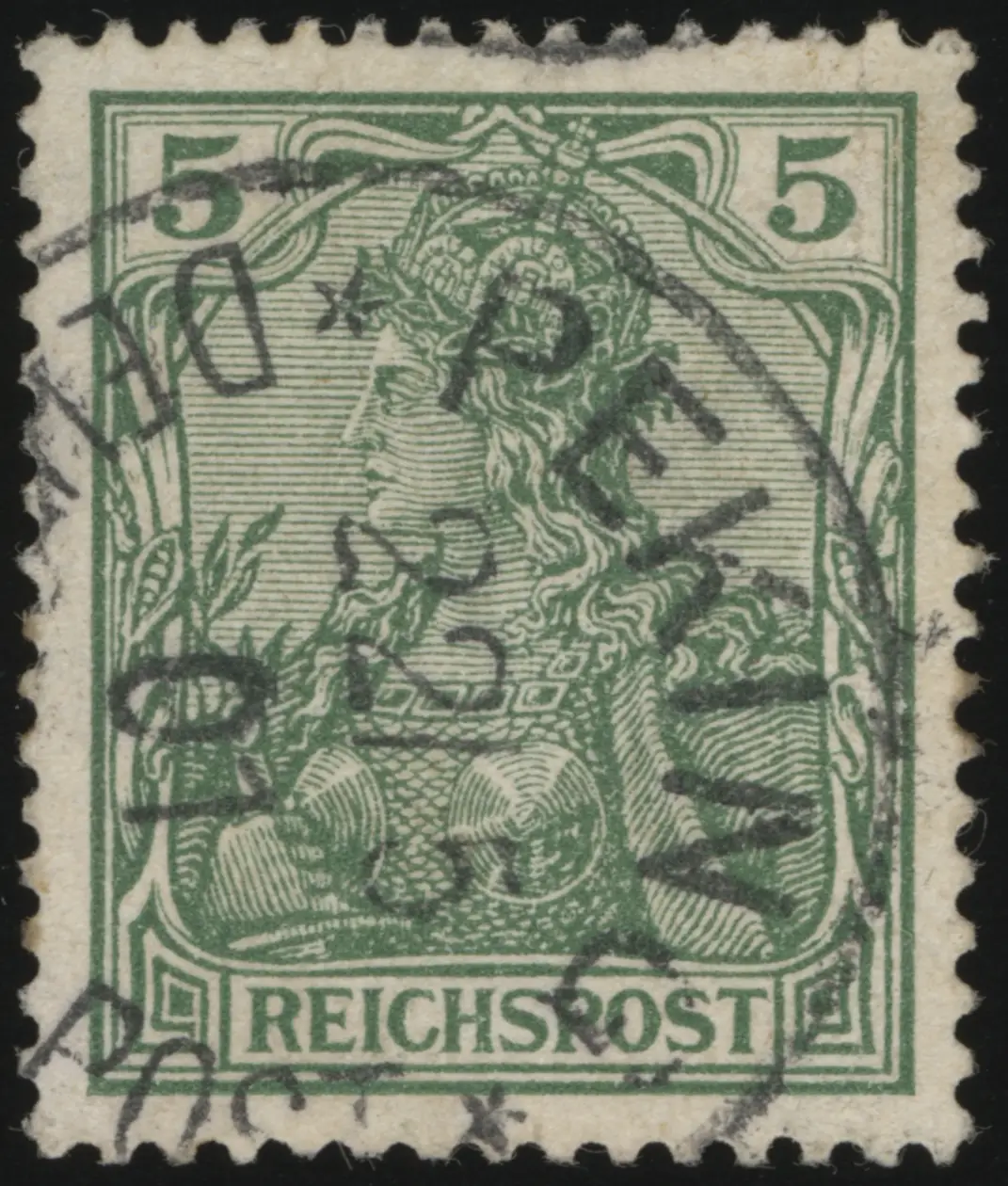 MiNr. P V b
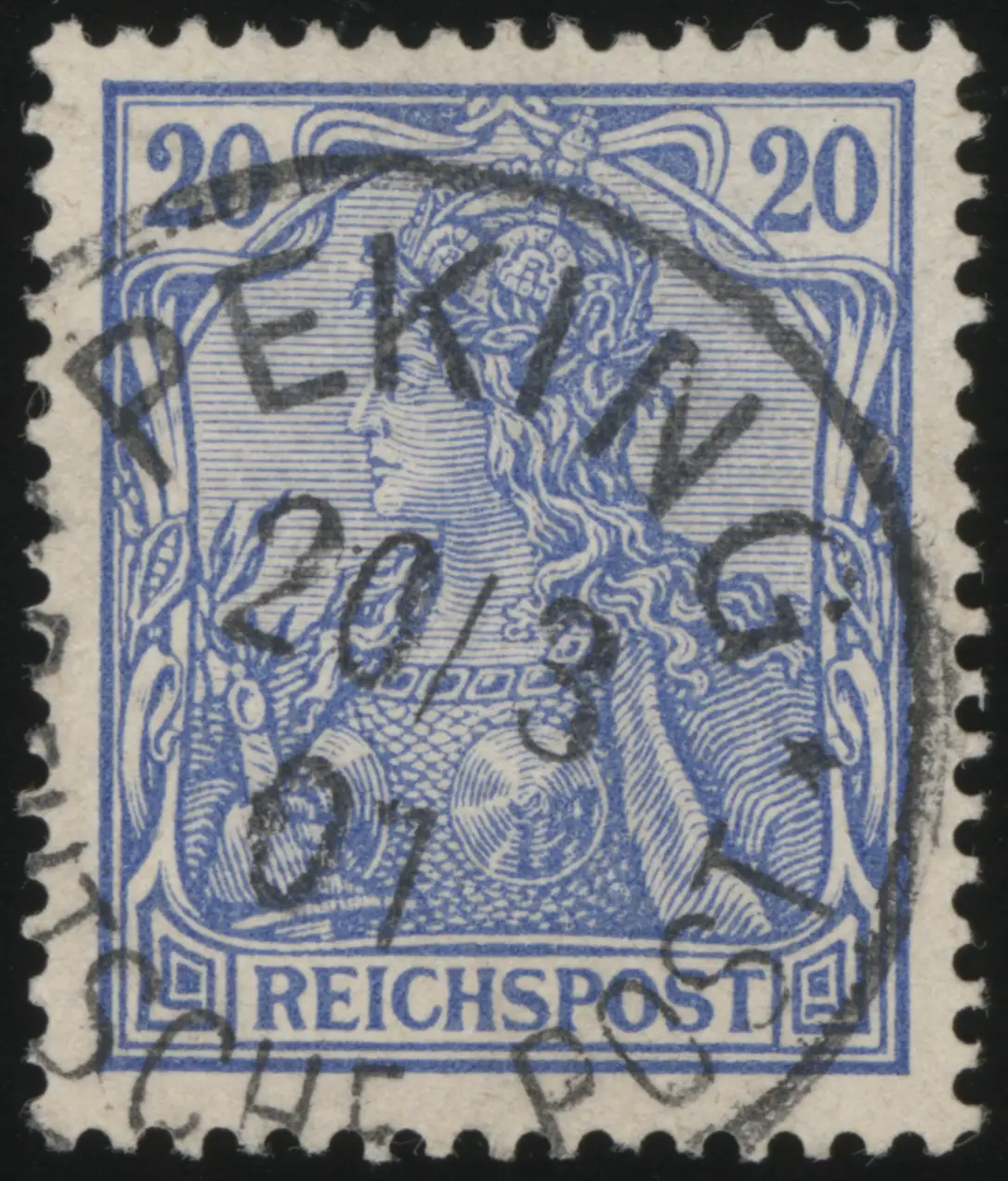 MiNr. P V d
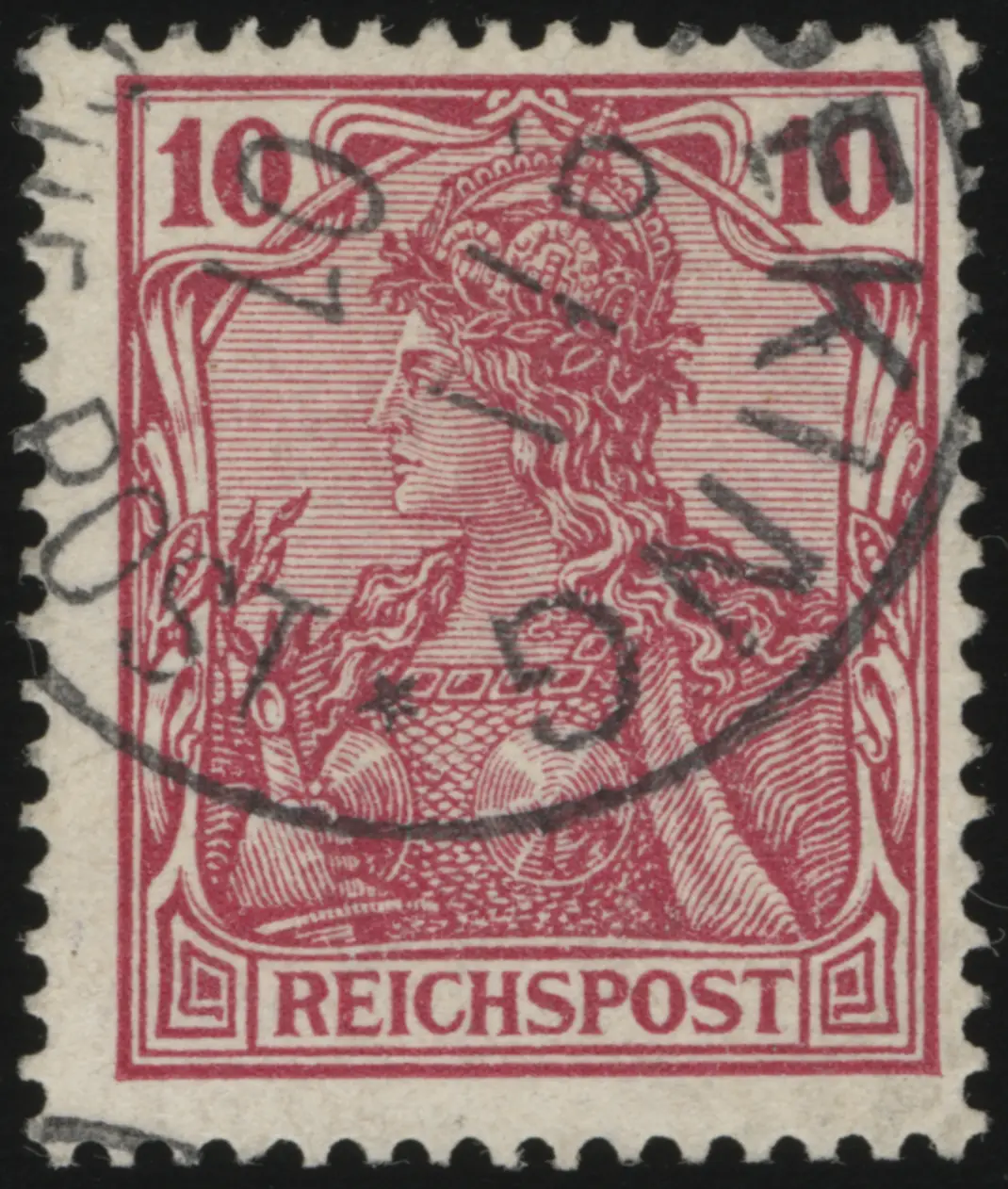 MiNr. P V c
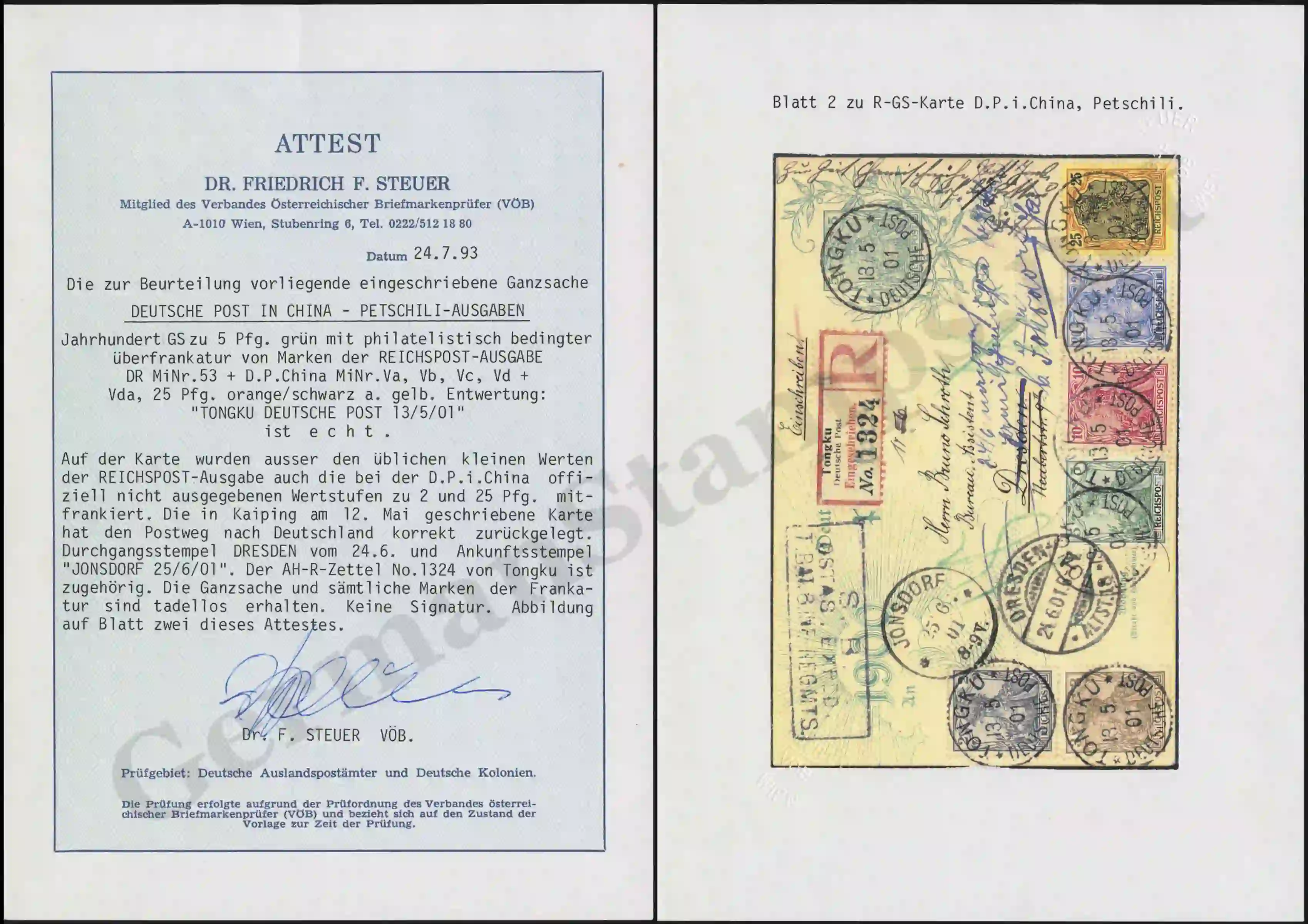
 Postcard MiNr. AP 50 with stamps MiNr. P V z, P V a, P V b, P V c, P V d, P V da (front)
 Postcard MiNr. AP 50 with stamps MiNr. P V z, P V a, P V b, P V c, P V d, P V da (rear)
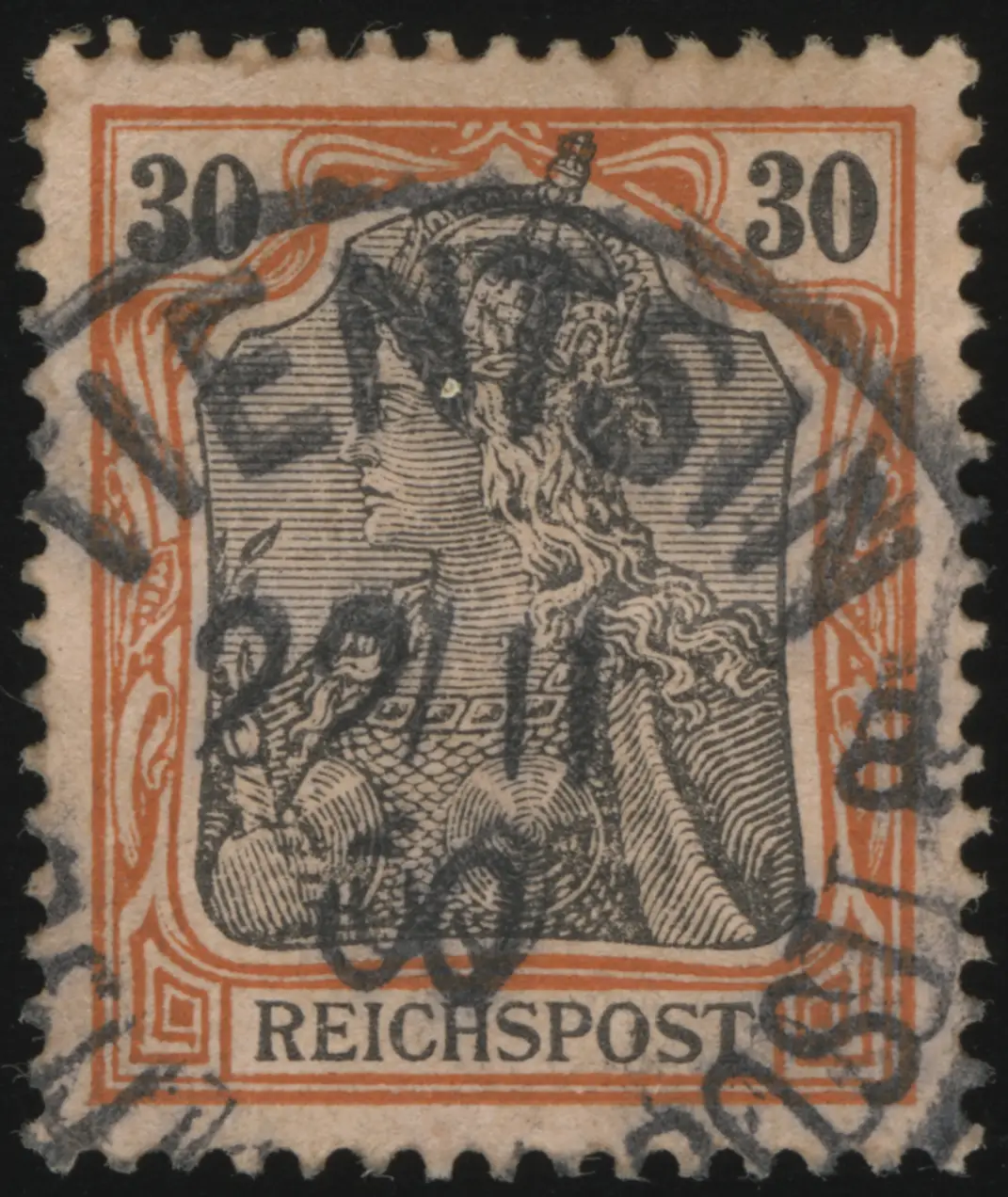 MiNr. P V e
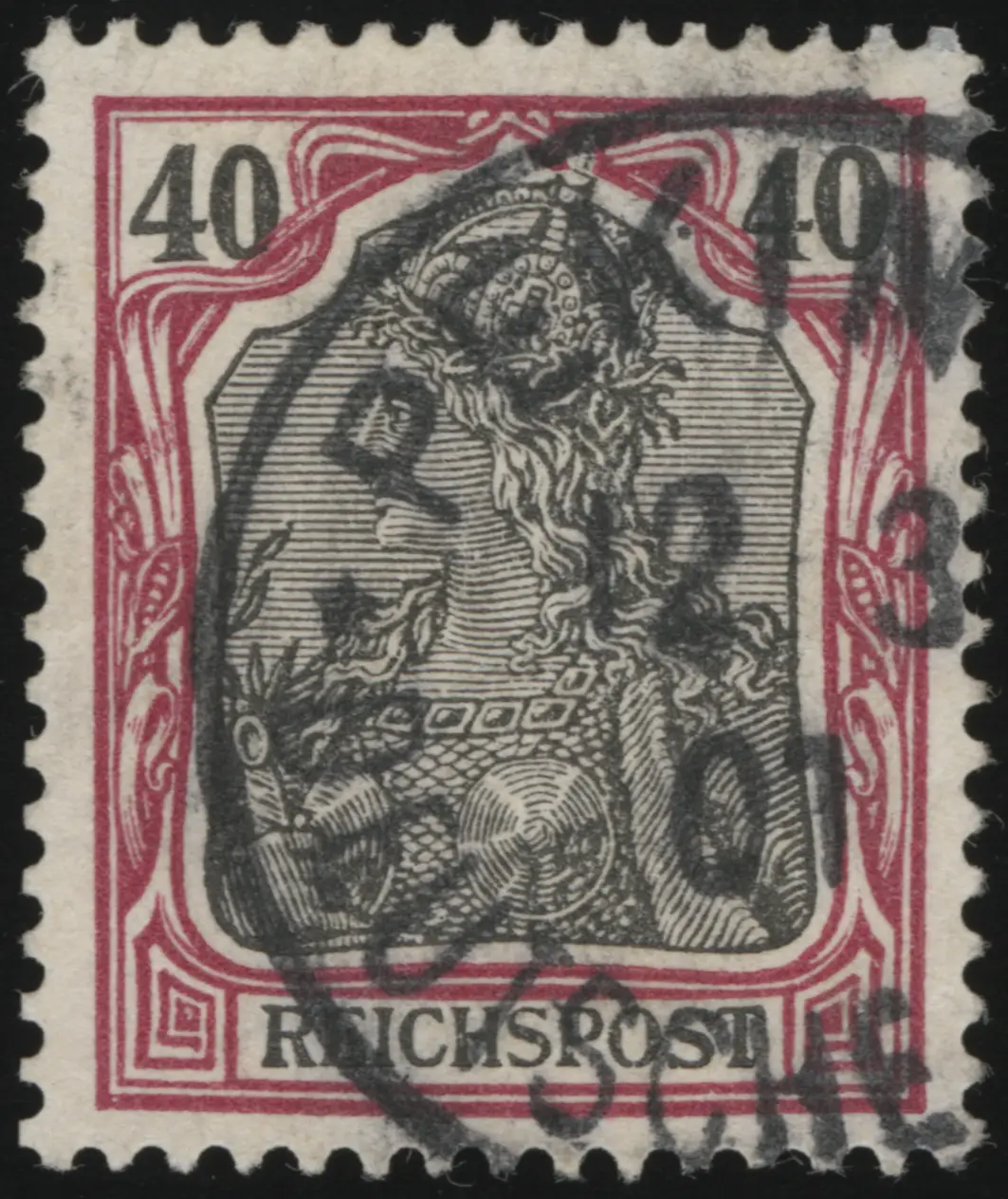 MiNr. P V f
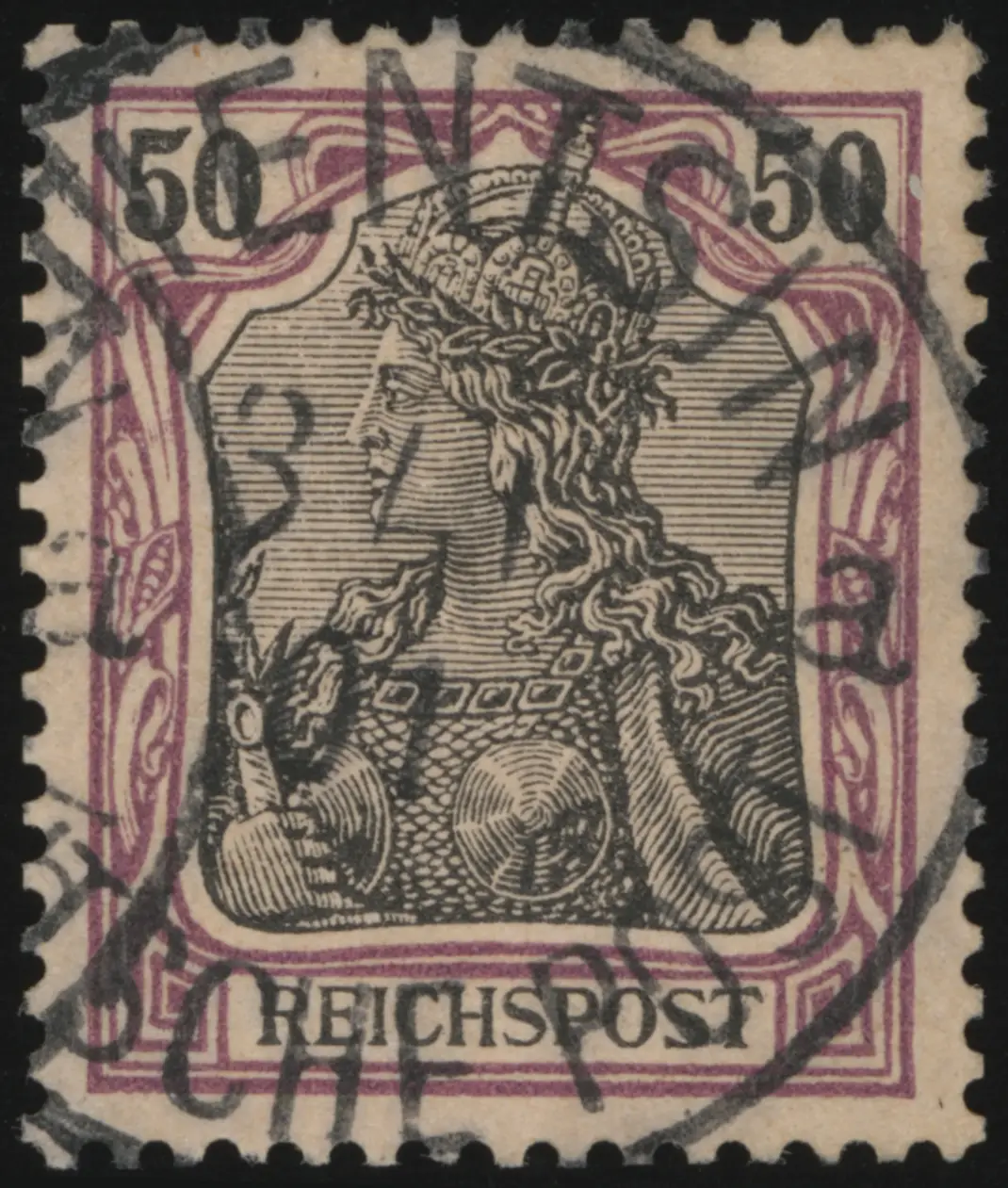 MiNr. P V g
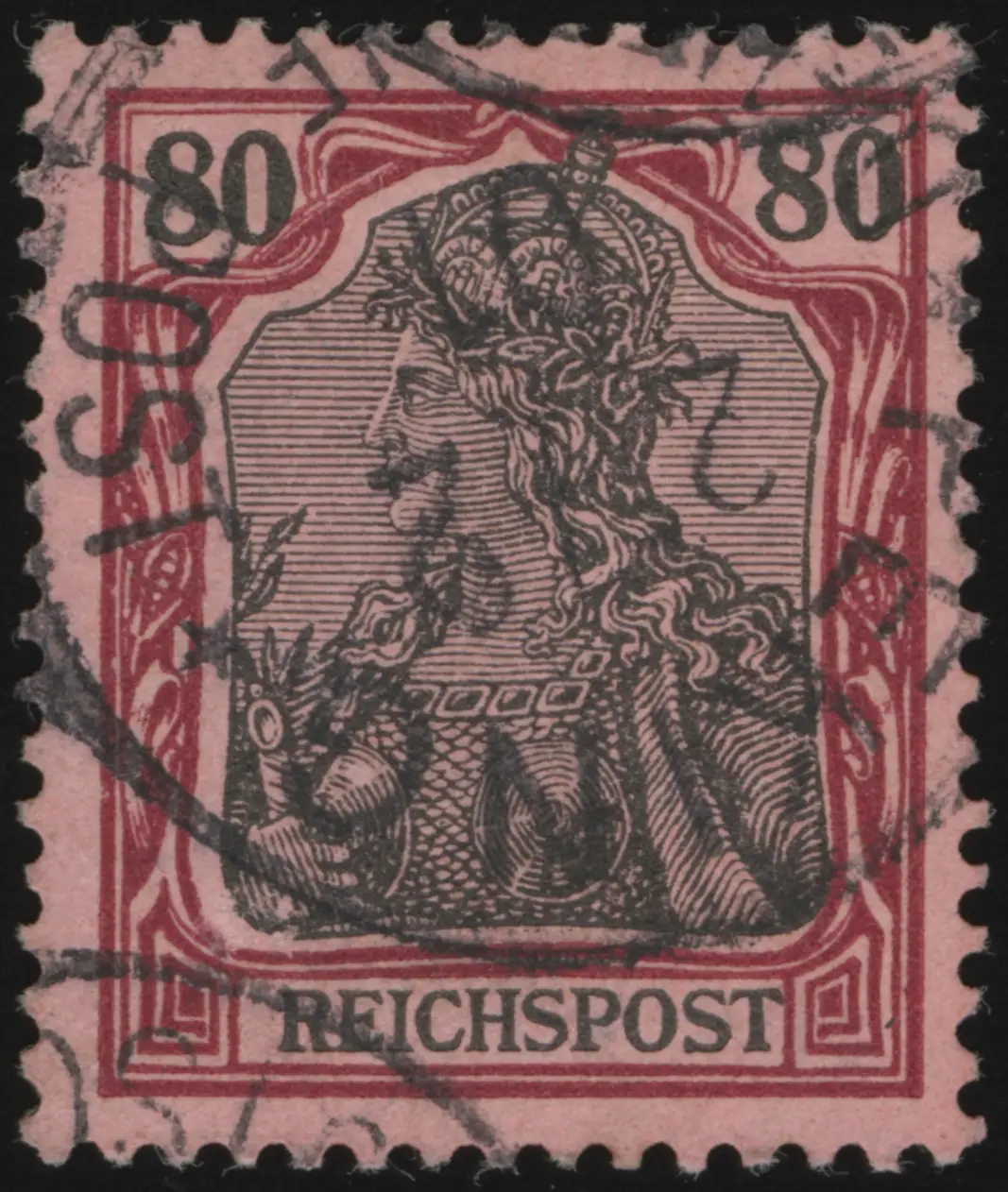 MiNr. P V h
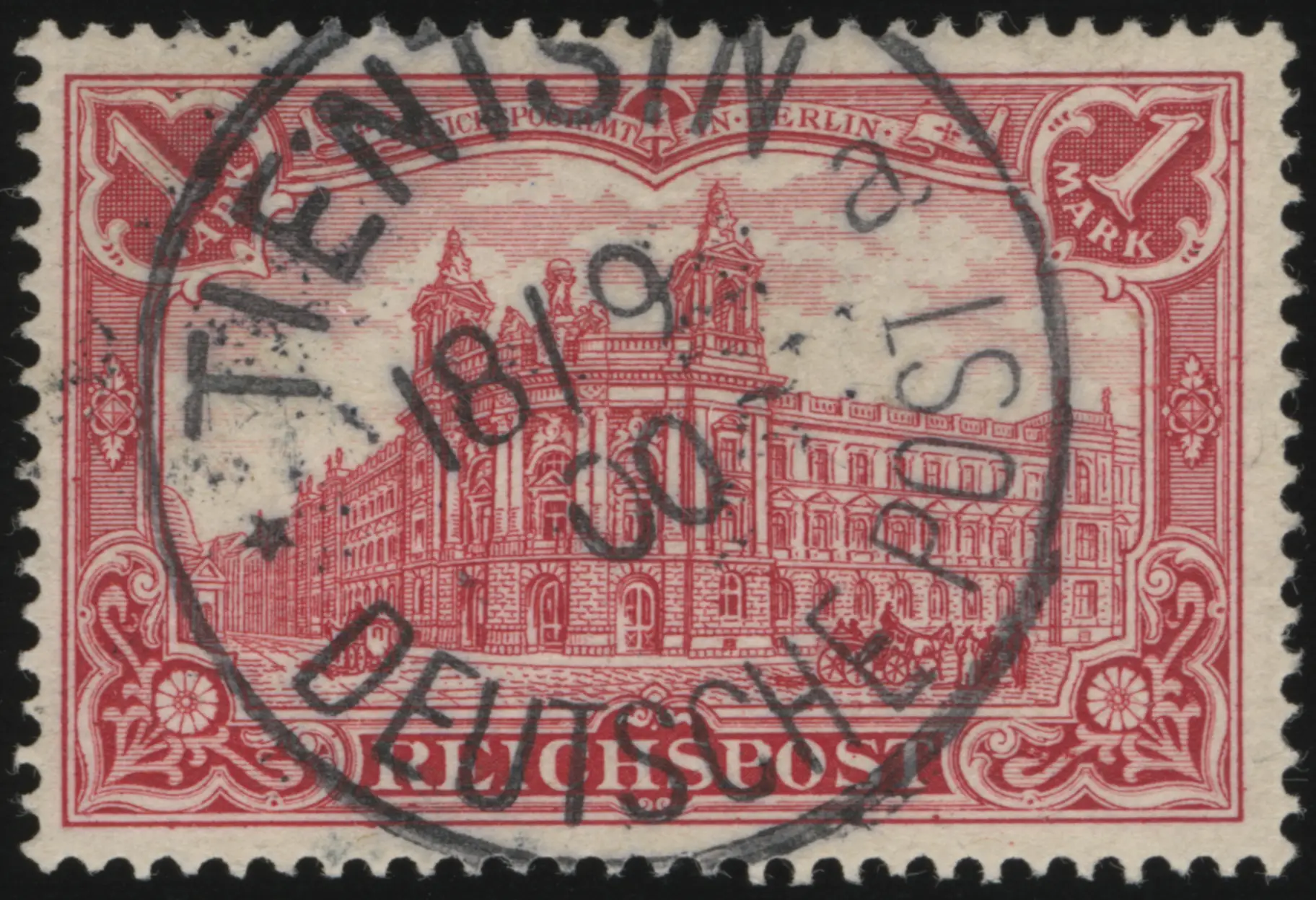 MiNr. P V i
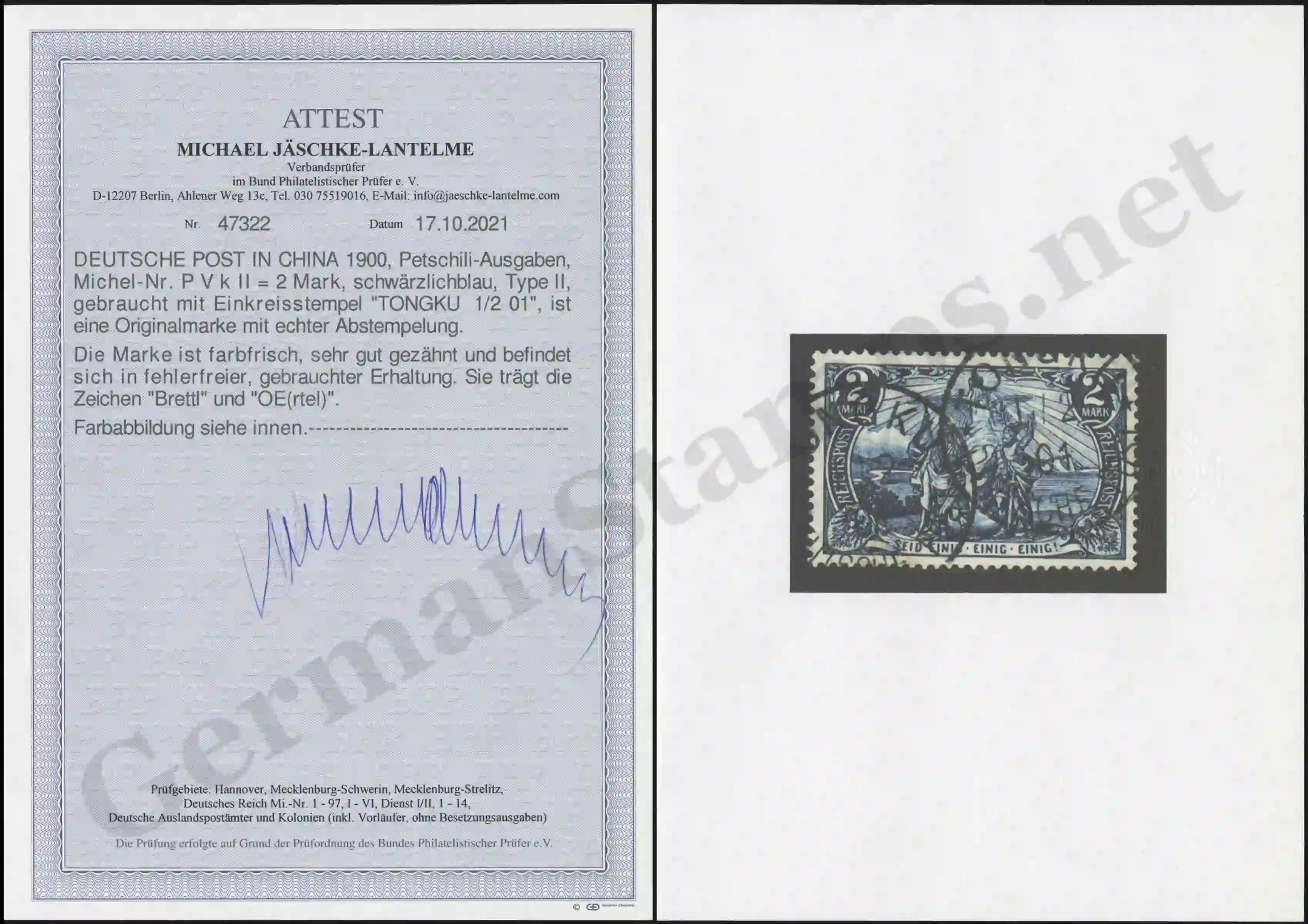
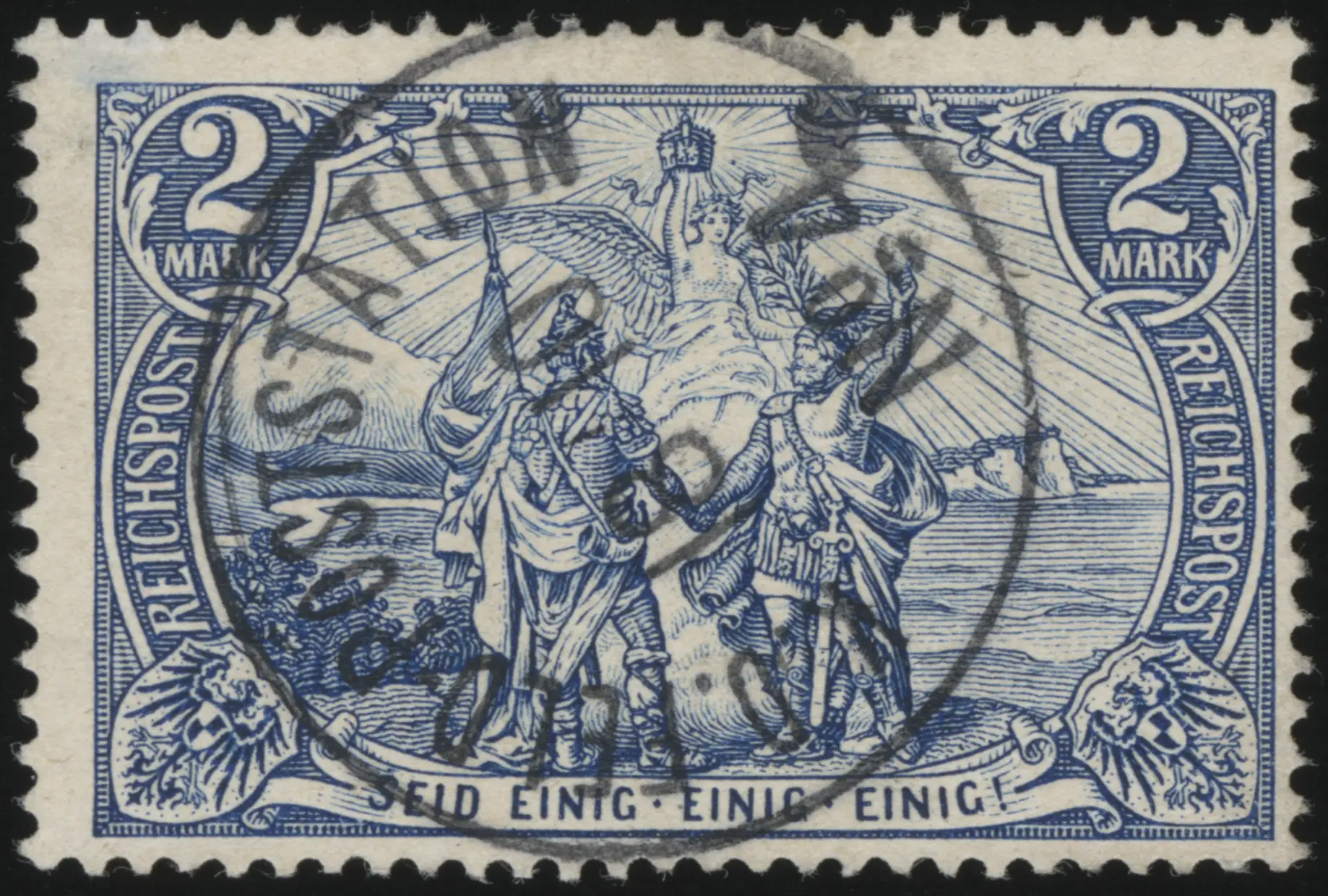 MiNr. P V k I
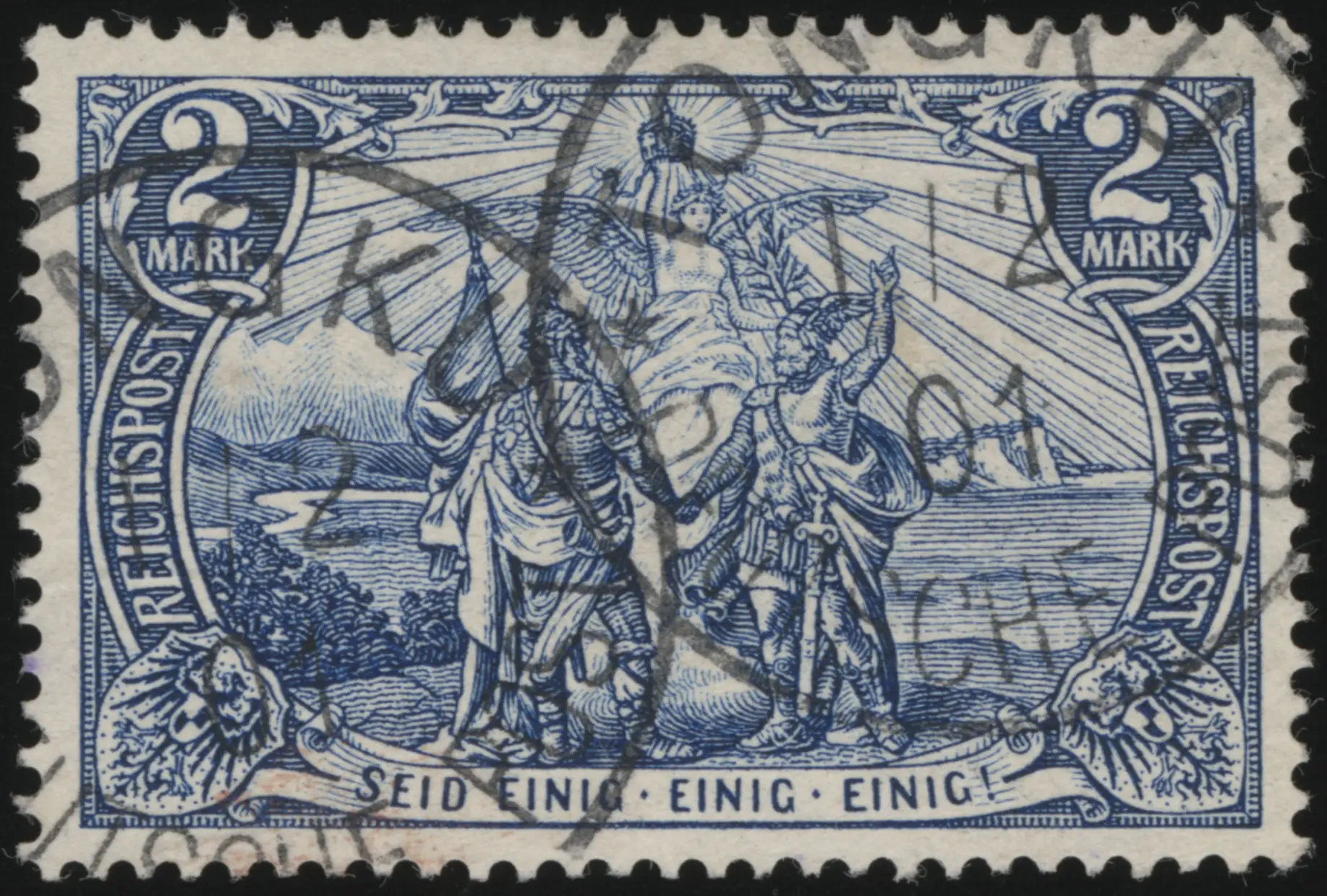 MiNr. P V k II
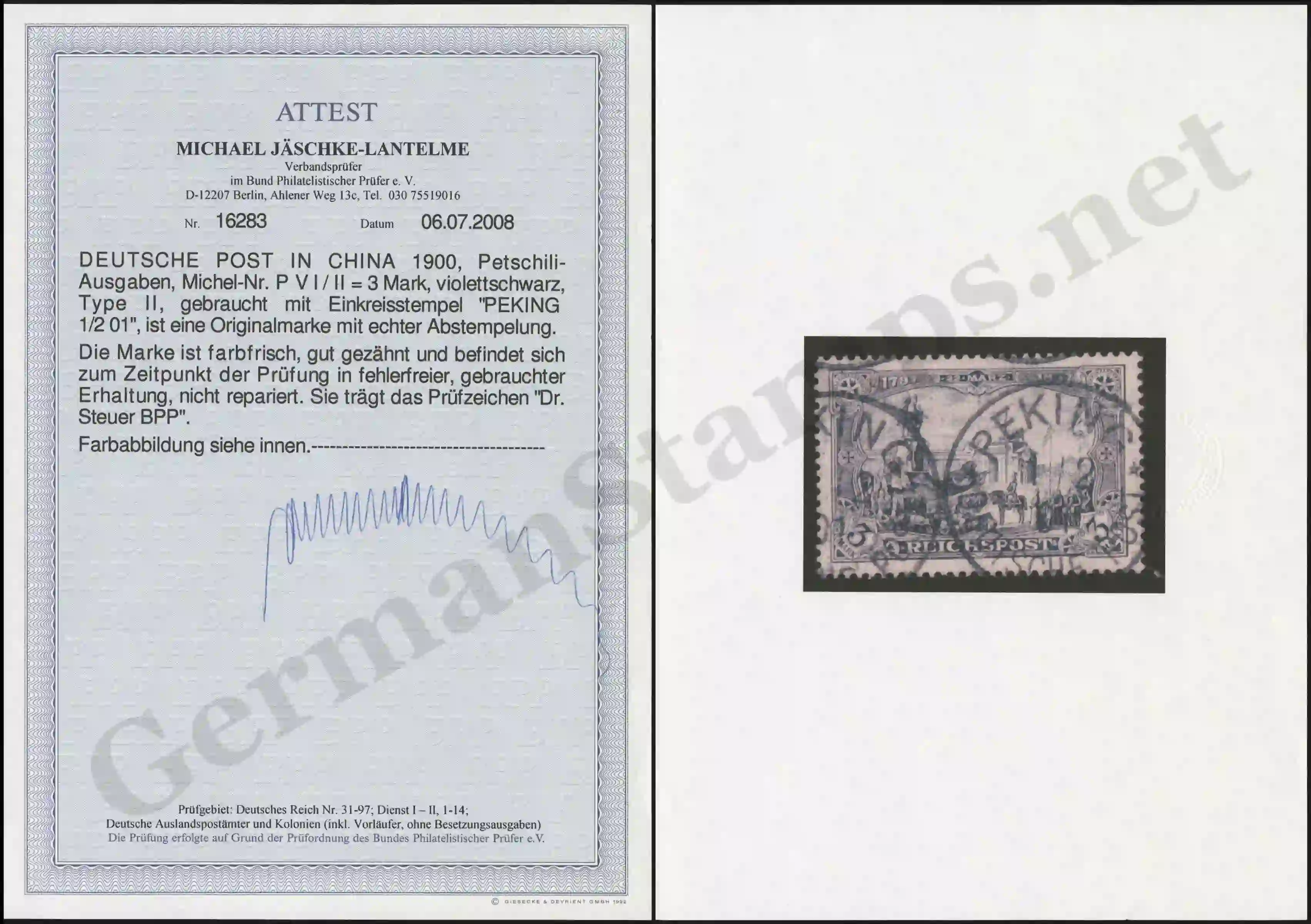
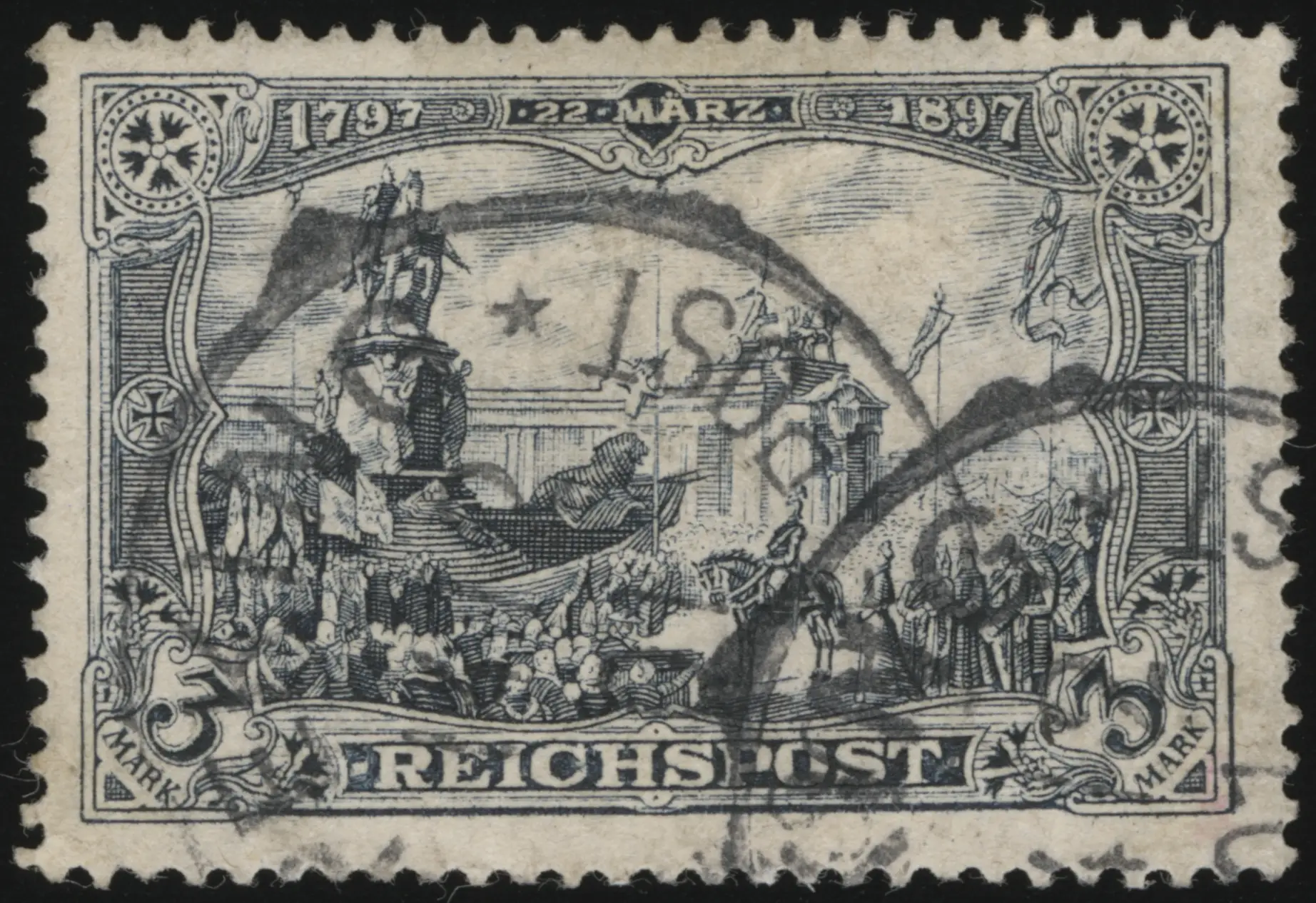 MiNr. P V l I
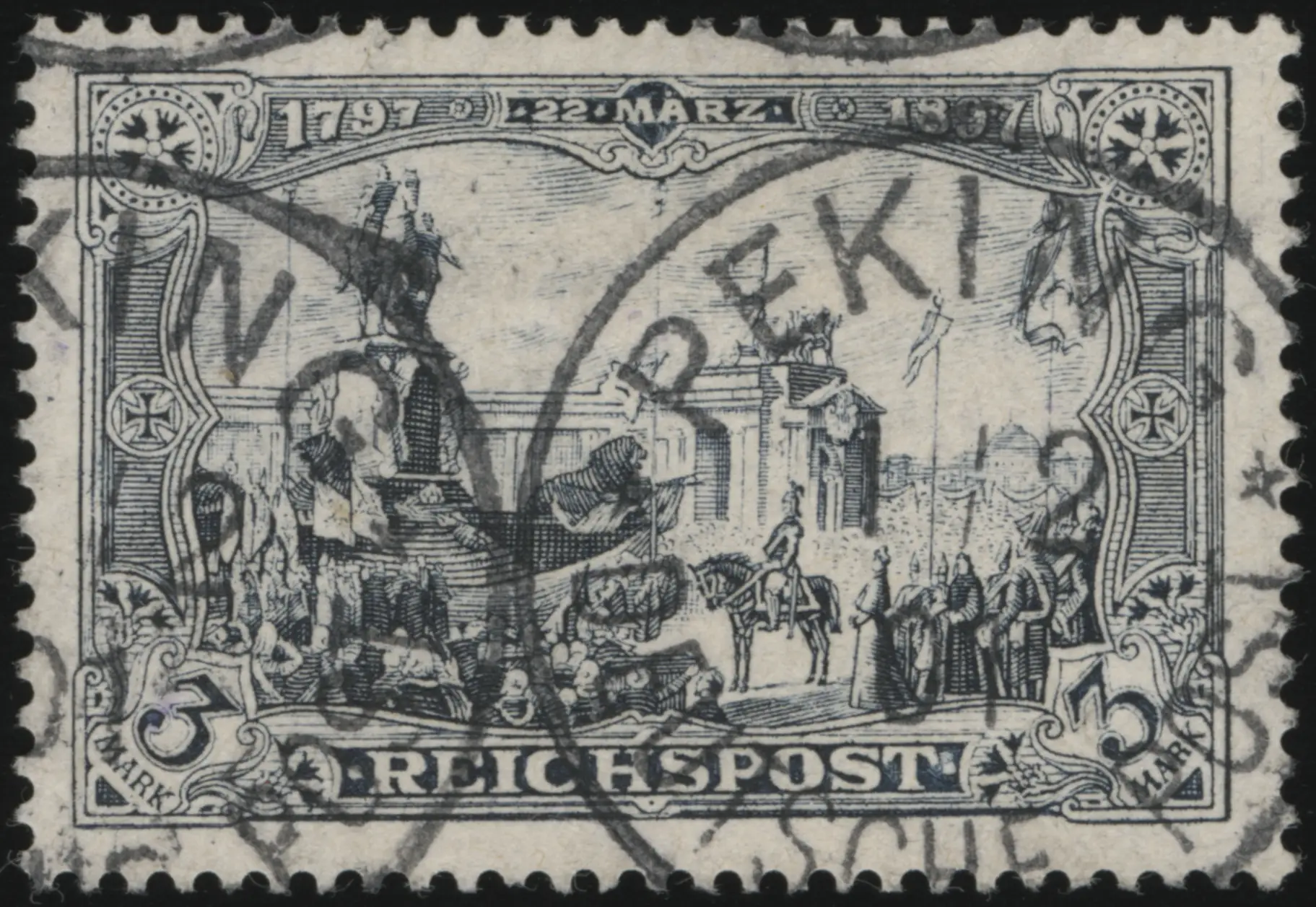 MiNr. P V l II
 MiNr. P V m
During the Boxer Rebellion, Germany ran short of postage at its offices in China. As a result, unoverprinted German stamps and stamps from Kiautschou were used at Feldpost and civilian post offices throughout the territory. The unoverprinted German and Kiautschou stamps used at these offices can be distinguished only by their cancels, and are referred to as “Petschili” issues.
The Petschili issues are generally catalogued in three groups — Krone/Adler Issues, Germania Issues, and Kiautschou Yacht Issues.
The Germania Issues were primarily used at the Shanghai, Tientsin, and Peking post offices, as well as Feldpost offices “a” and “b” within the Ostasiatischen Expeditionscorps (East Asian Expeditionary Corps) and Feldpost Station No. 2, though other lesser-used cancels exist from other stations.
The 2 Pfennig (MiNr. P V z) and 25 Pfennig (MiNr. P V da) values were not among the stocks in the local post offices. They are presumably from the stocks on-board the transport ships that brought German troops to Kiautschou or from the personal possession of individual soldiers. The 2 Pfennig (MiNr. P V z) is extremely common, as 2 Pfenning stamps were common among these alternative sources. The 25 Pfennig (MiNr. P V da) is not, and is the rarest of this set.
MiNr. P V k and MiNr. P V l exist in two types each due to variations in the original Germanias.
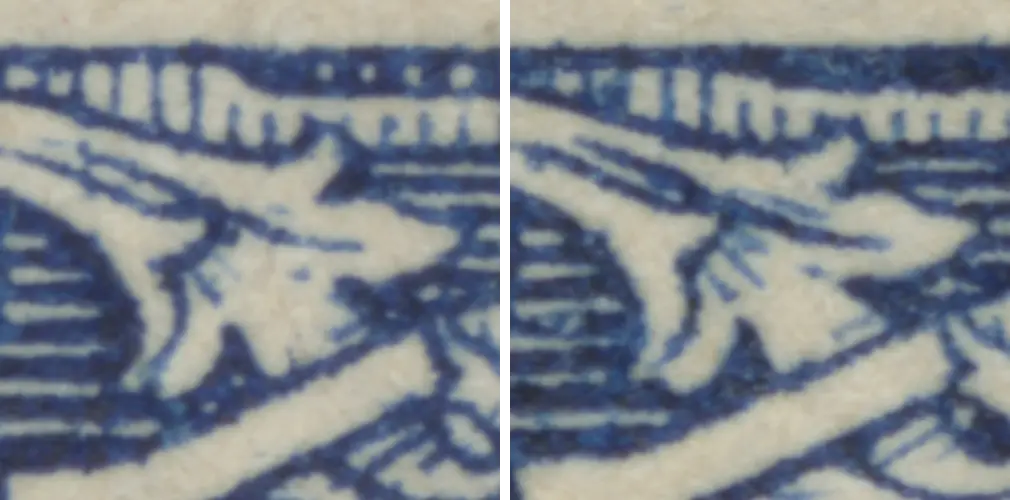
Few lines in bloom
More lines in bloom
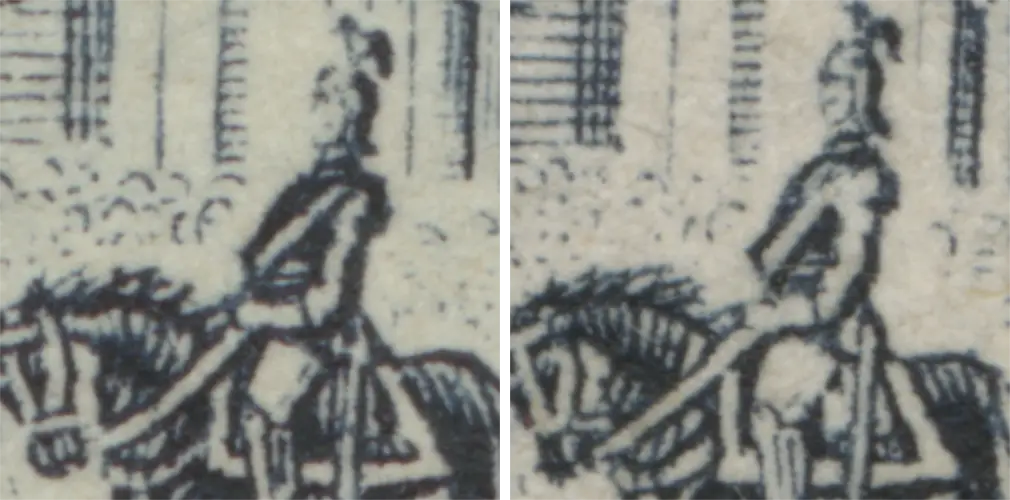
Sagging reins
Rider bent backward
Breast armor extends lower
Straight reins
Rider more upright
Breast armor not as low
The 3 Mark Germania stamp was printed in sheets containing a mixture of Types I and II. As a result, vertical mixed pairs can be found with Type I over Type II or Type II over Type I.
 MiNr. P V l I / II Vertical Pair
 MiNr. P V l II / I Vertical Pair
The 30 Pf, 40 Pf, and 50 Pf values can be found with plate flaws.
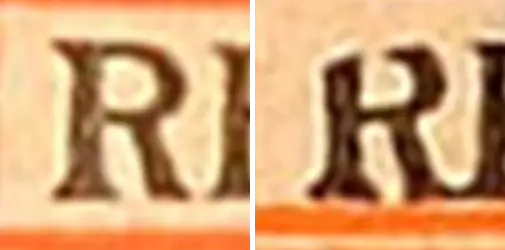
Posn. Unknown
 MiNr. P V e II
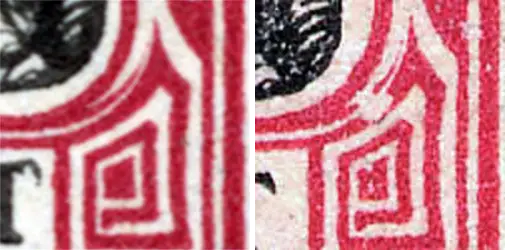
Posn. Unknown
 MiNr. P V f XIII
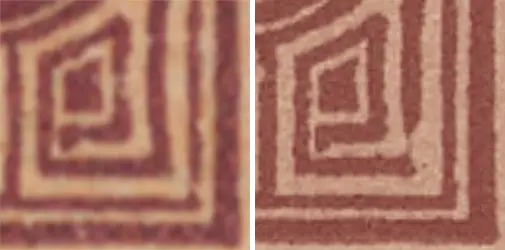
Posn. Unknown
 MiNr. P V g XII
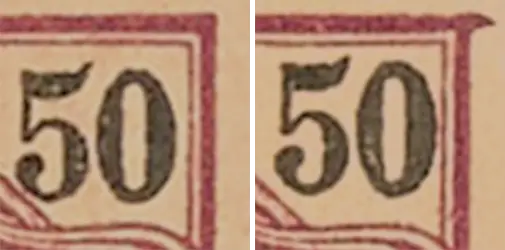
Posn. Unknown
 MiNr. P V g XV
Germania dates of use at the Feldpost stations are as follows, though cancels are known as late as 31 December 1902. Those after 31 August 1901 are typically favor cancels.
MiNr. P V z
MiNr. P V a
MiNr. P V aa
MiNr. P V b
MiNr. P V d
MiNr. P V c
Postcard MiNr. AP 50 with stamps MiNr. P V z, P V a, P V b, P V c, P V d, P V da (front)
Postcard MiNr. AP 50 with stamps MiNr. P V z, P V a, P V b, P V c, P V d, P V da (rear)
MiNr. P V e
MiNr. P V f
MiNr. P V g
MiNr. P V h
MiNr. P V i
MiNr. P V k I
MiNr. P V k II
MiNr. P V l I
MiNr. P V l II
MiNr. P V m
During the Boxer Rebellion, Germany ran short of postage at its offices in China. As a result, unoverprinted German stamps and stamps from Kiautschou were used at Feldpost and civilian post offices throughout the territory. The unoverprinted German and Kiautschou stamps used at these offices can be distinguished only by their cancels, and are referred to as “Petschili” issues.
The Petschili issues are generally catalogued in three groups — Krone/Adler Issues, Germania Issues, and Kiautschou Yacht Issues.
The Germania Issues were primarily used at the Shanghai, Tientsin, and Peking post offices, as well as Feldpost offices “a” and “b” within the Ostasiatischen Expeditionscorps (East Asian Expeditionary Corps) and Feldpost Station No. 2, though other lesser-used cancels exist from other stations.
The 2 Pfennig (MiNr. P V z) and 25 Pfennig (MiNr. P V da) values were not among the stocks in the local post offices. They are presumably from the stocks on-board the transport ships that brought German troops to Kiautschou or from the personal possession of individual soldiers. The 2 Pfennig (MiNr. P V z) is extremely common, as 2 Pfenning stamps were common among these alternative sources. The 25 Pfennig (MiNr. P V da) is not, and is the rarest of this set.
MiNr. P V k and MiNr. P V l exist in two types each due to variations in the original Germanias.
Few lines in bloom
More lines in bloom
Sagging reins
Rider bent backward
Breast armor extends lower
Straight reins
Rider more upright
Breast armor not as low
The 3 Mark Germania stamp was printed in sheets containing a mixture of Types I and II. As a result, vertical mixed pairs can be found with Type I over Type II or Type II over Type I.
MiNr. P V l I / II Vertical Pair
MiNr. P V l II / I Vertical Pair
The 30 Pf, 40 Pf, and 50 Pf values can be found with plate flaws.
Posn. Unknown
MiNr. P V e II
Posn. Unknown
MiNr. P V f XIII
Posn. Unknown
MiNr. P V g XII
Posn. Unknown
MiNr. P V g XV
Germania dates of use at the Feldpost stations are as follows, though cancels are known as late as 31 December 1902. Those after 31 August 1901 are typically favor cancels.