Set Date(s)
7 July / 7 November 1900
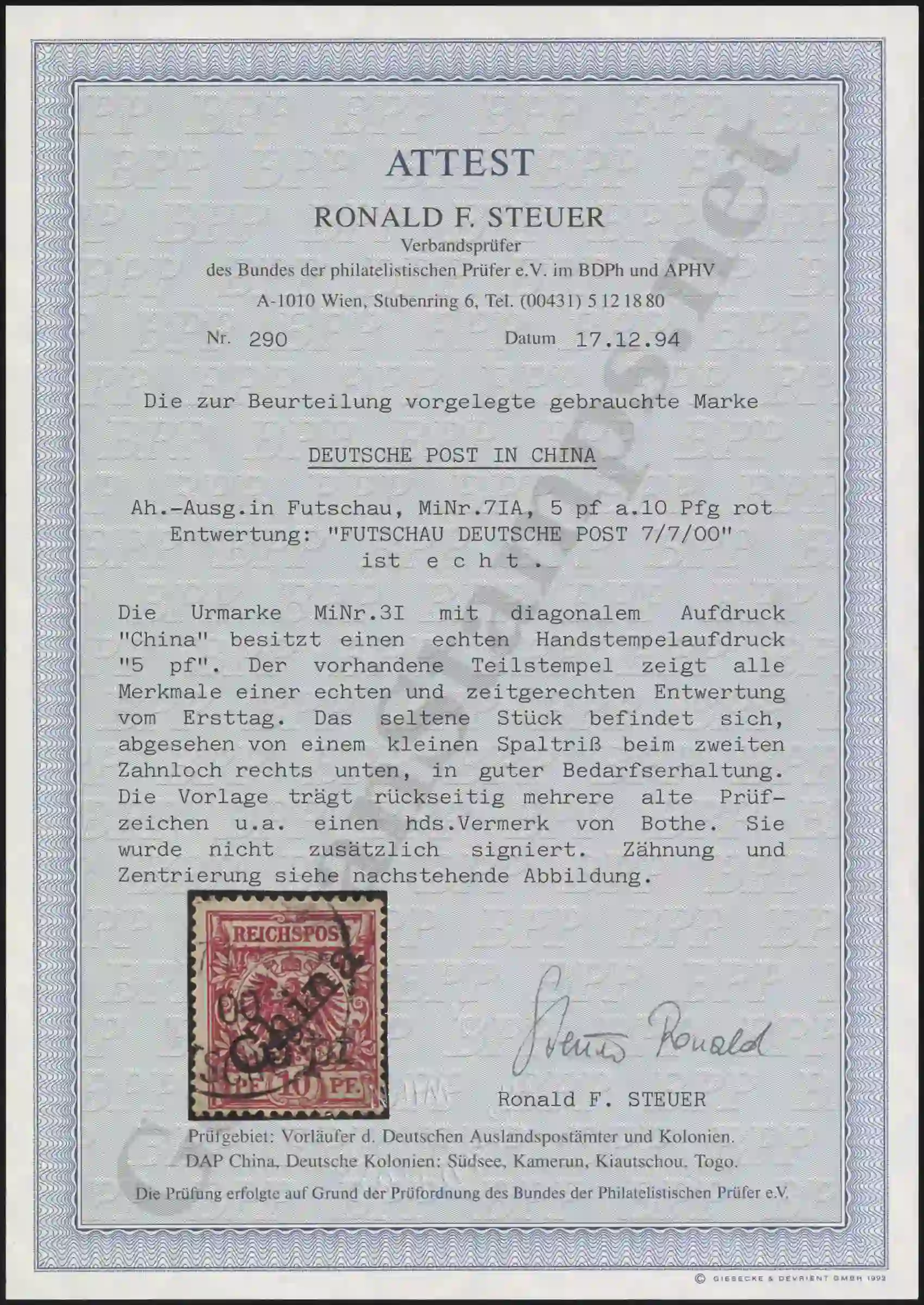
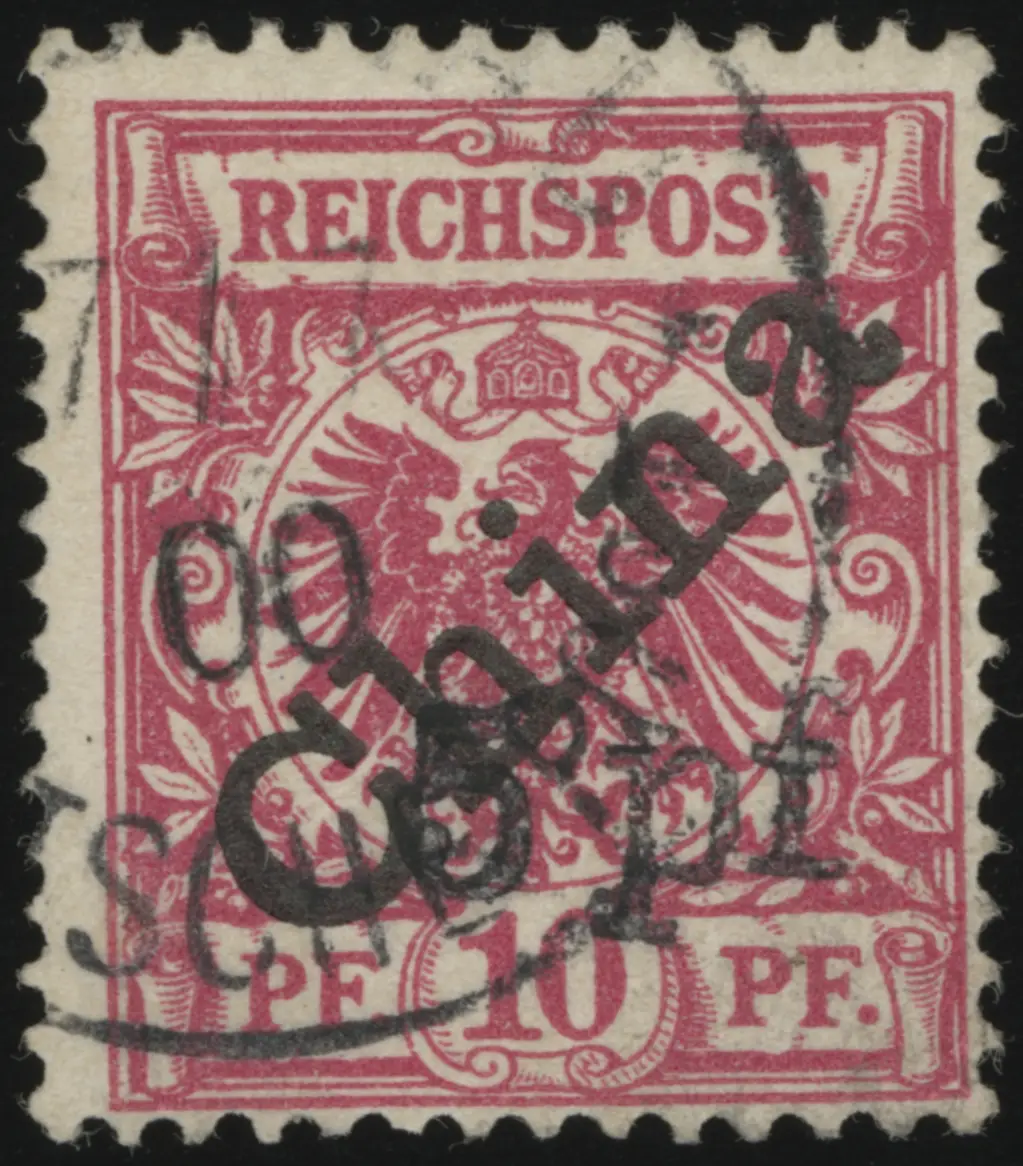 MiNr. 7 I A
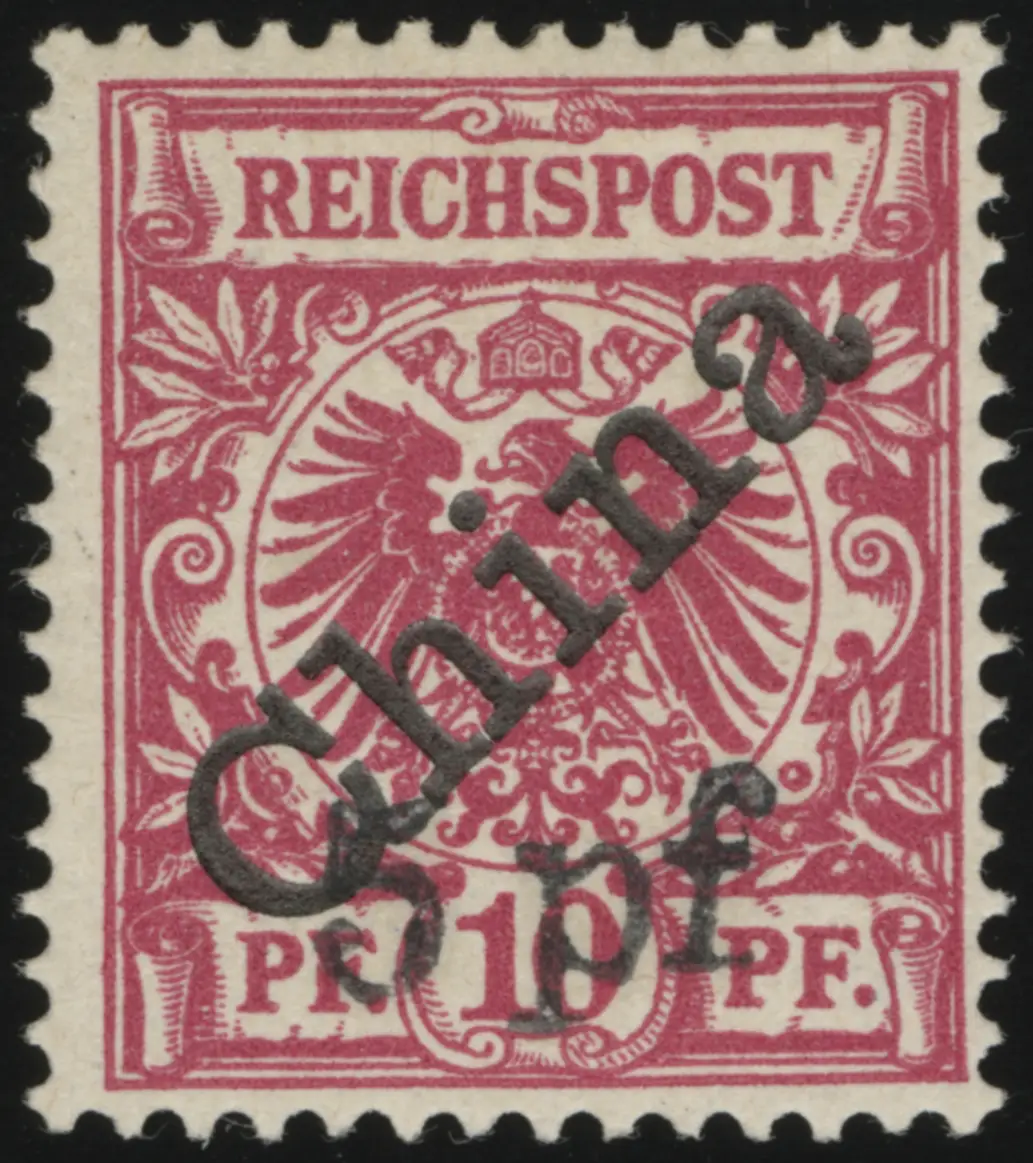 MiNr. 7 I B
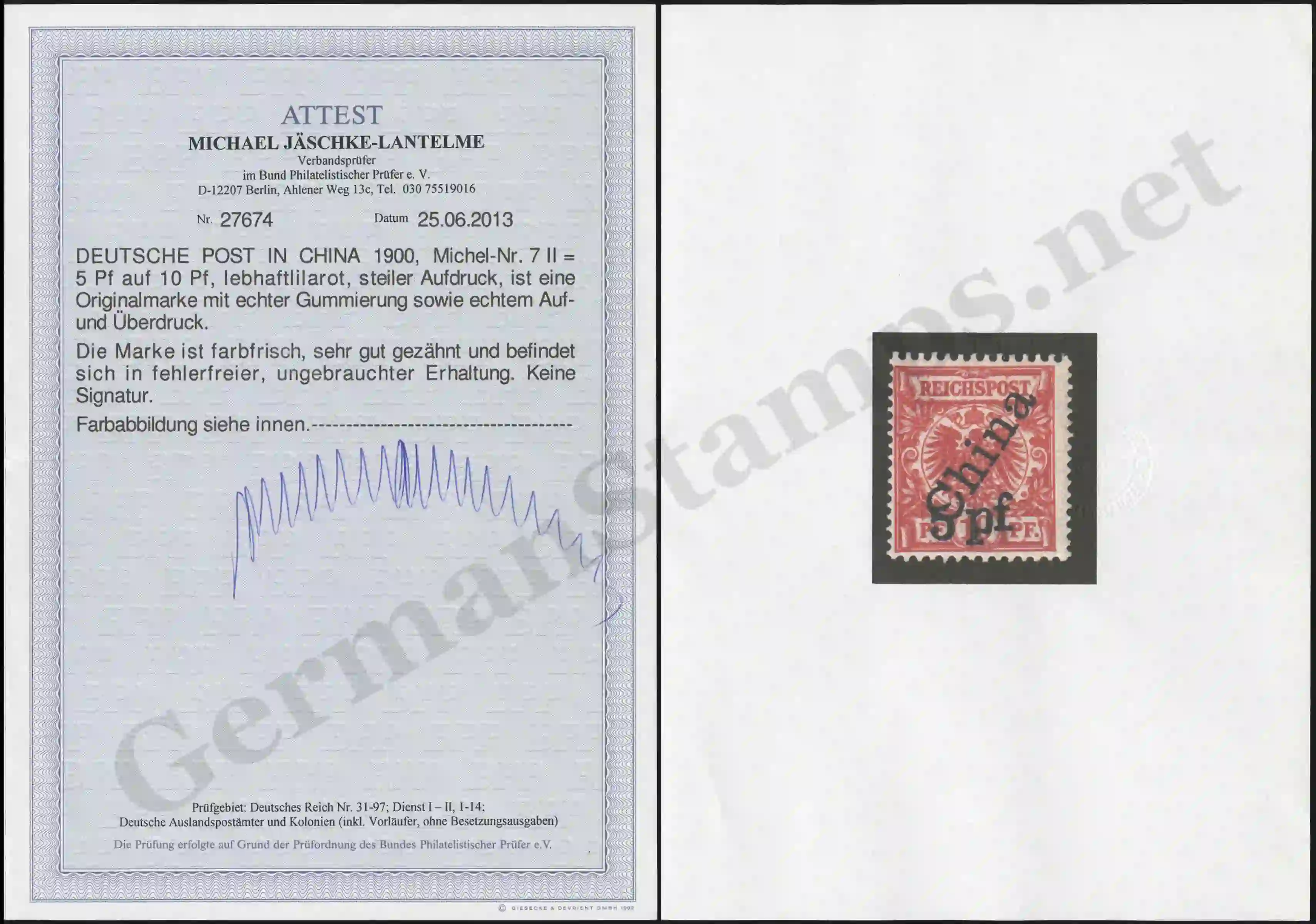
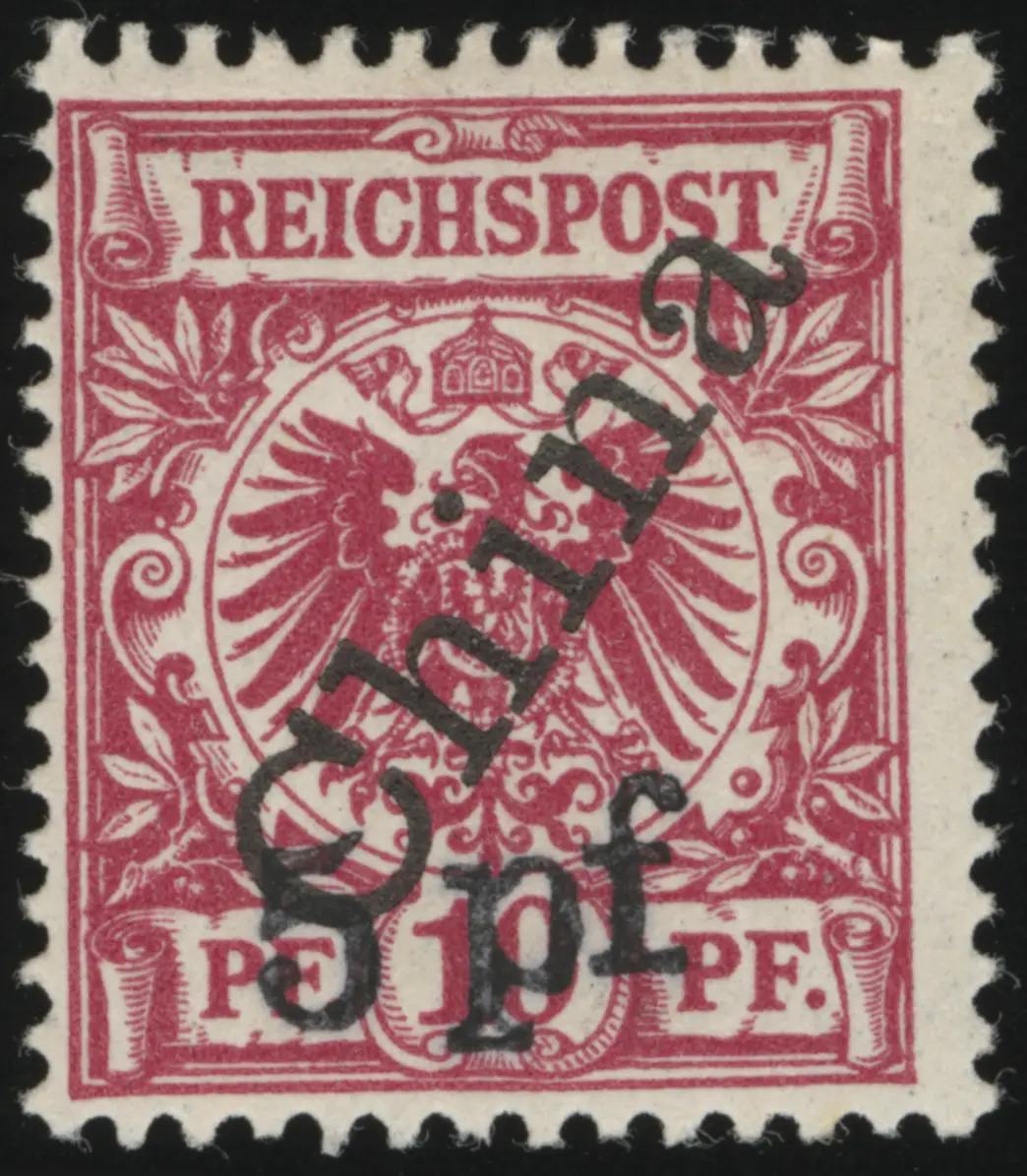 MiNr. 7 II
During the Boxer Rebellion, there was a great shortage of postage at the German post offices in China. To remedy this shortage, German and Kiautschou postage was used in a variety of provisional forms. Among these were the Futschau Provisionals.
Soon after opening the Futschau post office on 19 June 1900, the post office ran out of 5-Pfennig stamps. To remedy the shortage, the postmaster ordered wood type from a Chinese print shop, which was made into a handstamp.
The first printing, on 7 July 1900, consisted of 1,400 overprints of MiNr. 3 II (56° “China” Overprint) and 100 overprints of MiNr. 3 I (45° “China” Overprint).
To satisfy the heavy demand by collectors, a second printing of 2,500 overprints of MiNr. 3 I (45° “China” Overprint) was made on 7 November 1900. The MiNr. 7 I printings can be distinguished only by their cancel dates. All unused copies of MiNr. 7 I are presumed to be from the second printing.
Double overprints can be found on all three varieties.
 MiNr. 7 I A DD
 MiNr. 7 I B DD
 MiNr. 7 II DD
These stamps were printed in 10×10 sheets, with two sheets per printing pane, arranged vertically. As a result, gutter pairs (in German, Zwischtenstegpaare) exist containing stamps from the bottom row of the top sheet and the top row of the bottom sheet.
 MiNr. 7 I B ZS
 MiNr. 7 II ZS
MiNr. 7 I A
MiNr. 7 I B
MiNr. 7 II
MiNr. 7 II ZS
MiNr. 7 I A
MiNr. 7 I B
MiNr. 7 II
During the Boxer Rebellion, there was a great shortage of postage at the German post offices in China. To remedy this shortage, German and Kiautschou postage was used in a variety of provisional forms. Among these were the Futschau Provisionals.
Soon after opening the Futschau post office on 19 June 1900, the post office ran out of 5-Pfennig stamps. To remedy the shortage, the postmaster ordered wood type from a Chinese print shop, which was made into a handstamp.
The first printing, on 7 July 1900, consisted of 1,400 overprints of MiNr. 3 II (56° “China” Overprint) and 100 overprints of MiNr. 3 I (45° “China” Overprint).
To satisfy the heavy demand by collectors, a second printing of 2,500 overprints of MiNr. 3 I (45° “China” Overprint) was made on 7 November 1900. The MiNr. 7 I printings can be distinguished only by their cancel dates. All unused copies of MiNr. 7 I are presumed to be from the second printing.
Double overprints can be found on all three varieties.
MiNr. 7 I A DD
MiNr. 7 I B DD
MiNr. 7 II DD
These stamps were printed in 10×10 sheets, with two sheets per printing pane, arranged vertically. As a result, gutter pairs (in German, Zwischtenstegpaare) exist containing stamps from the bottom row of the top sheet and the top row of the bottom sheet.
MiNr. 7 I B ZS
MiNr. 7 II ZS