Set Date(s)
November 1899
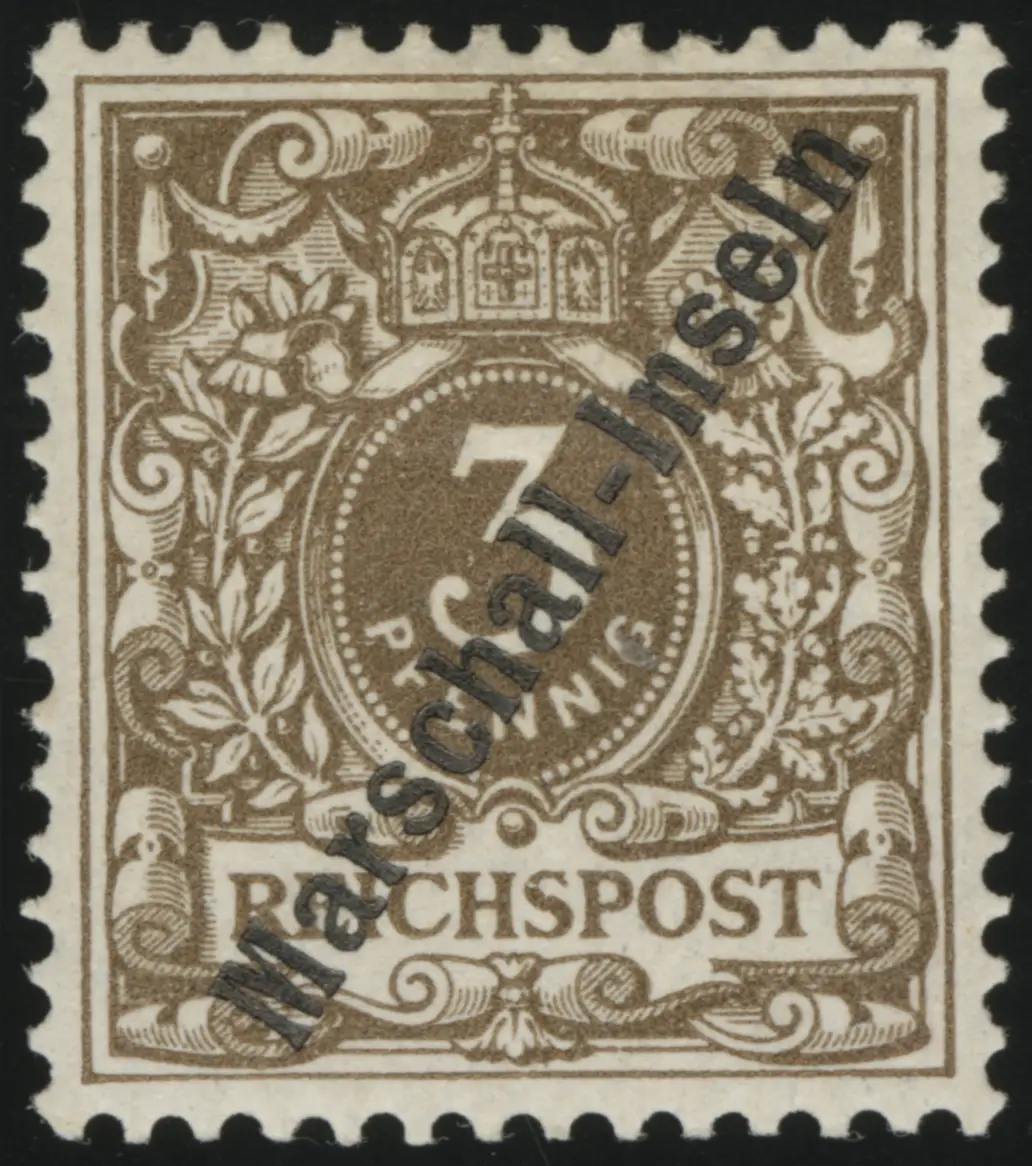 MiNr. 1 II a
 MiNr. 1 II b
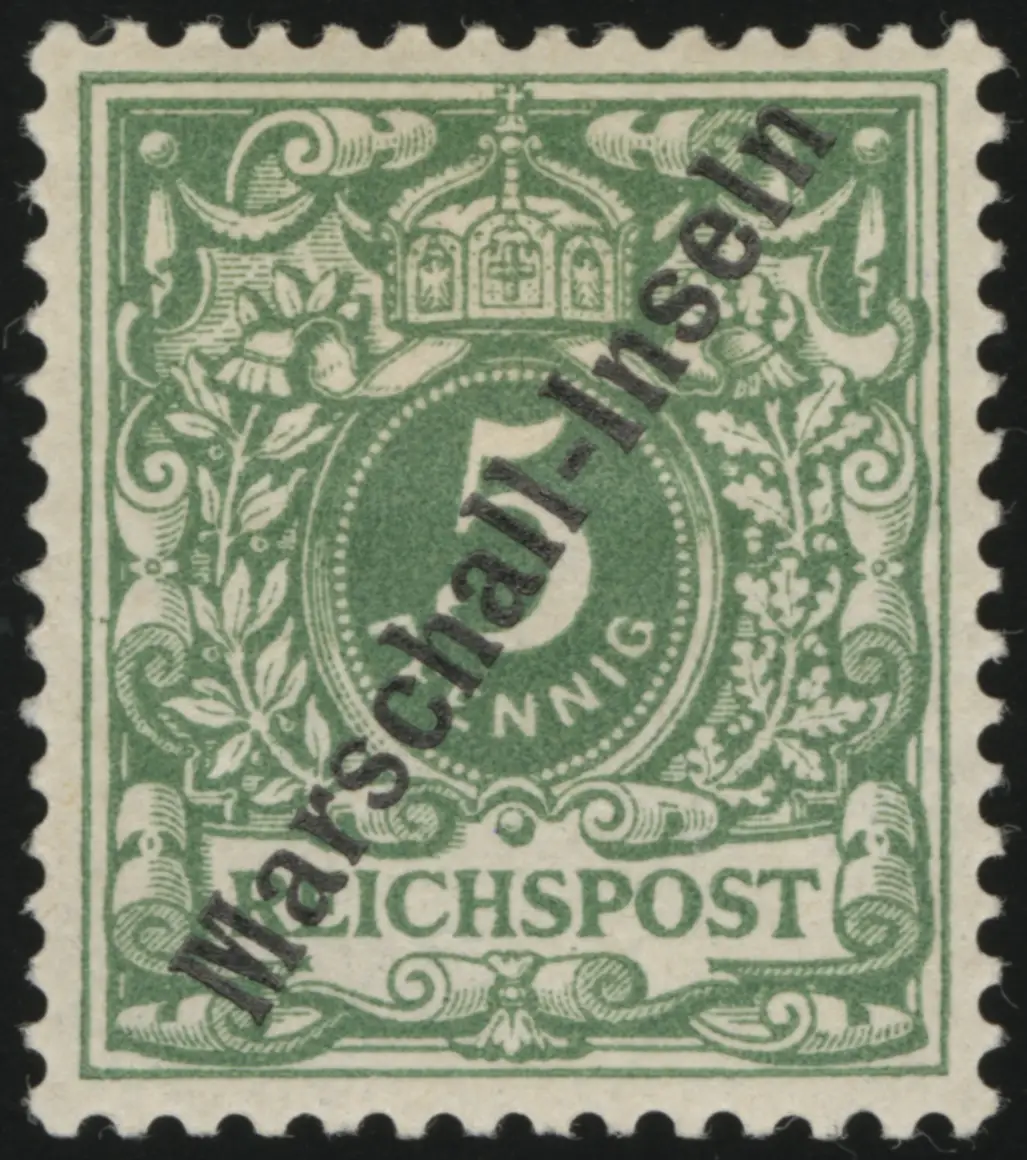 MiNr. 2 II
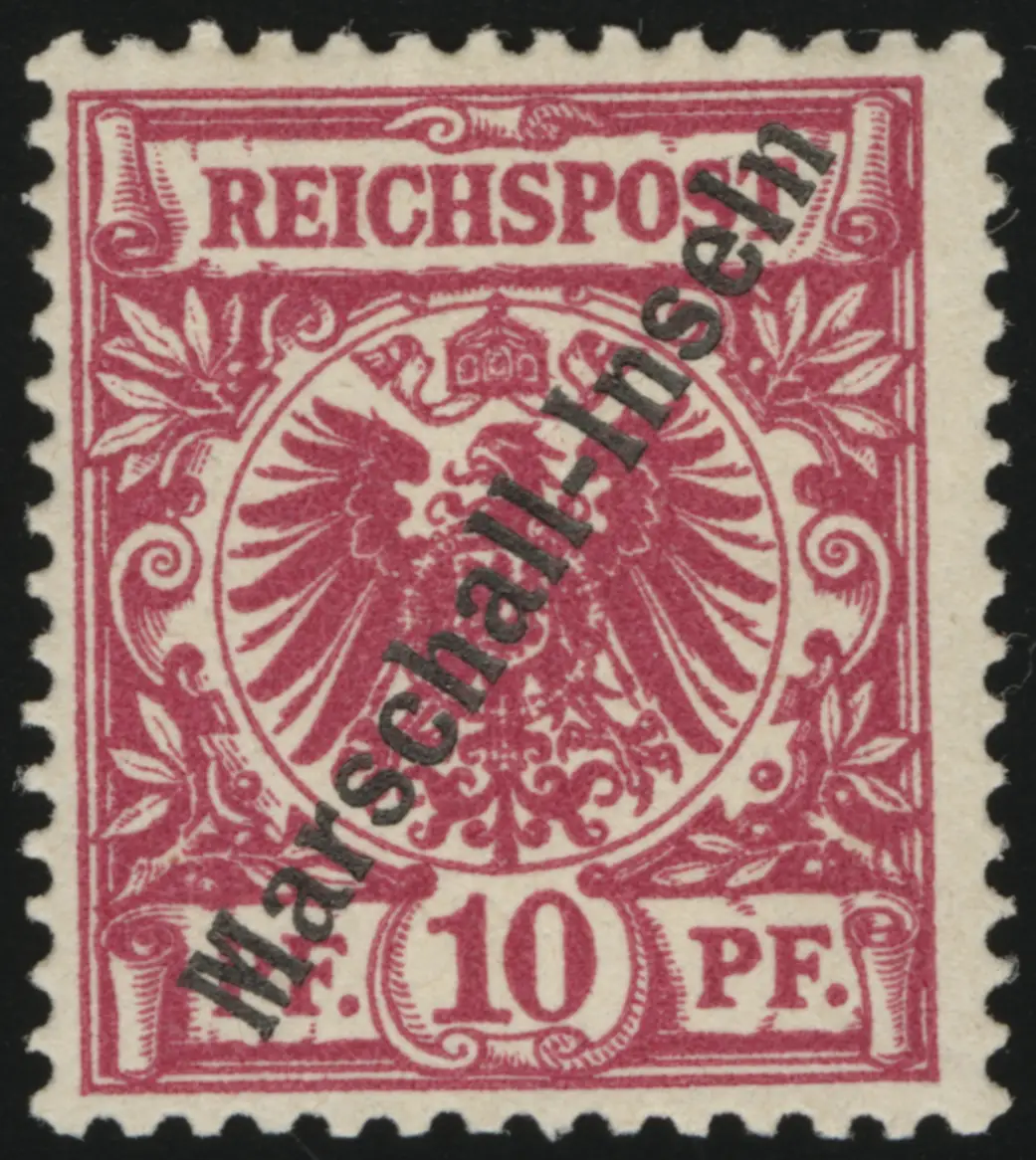 MiNr. 3 II a
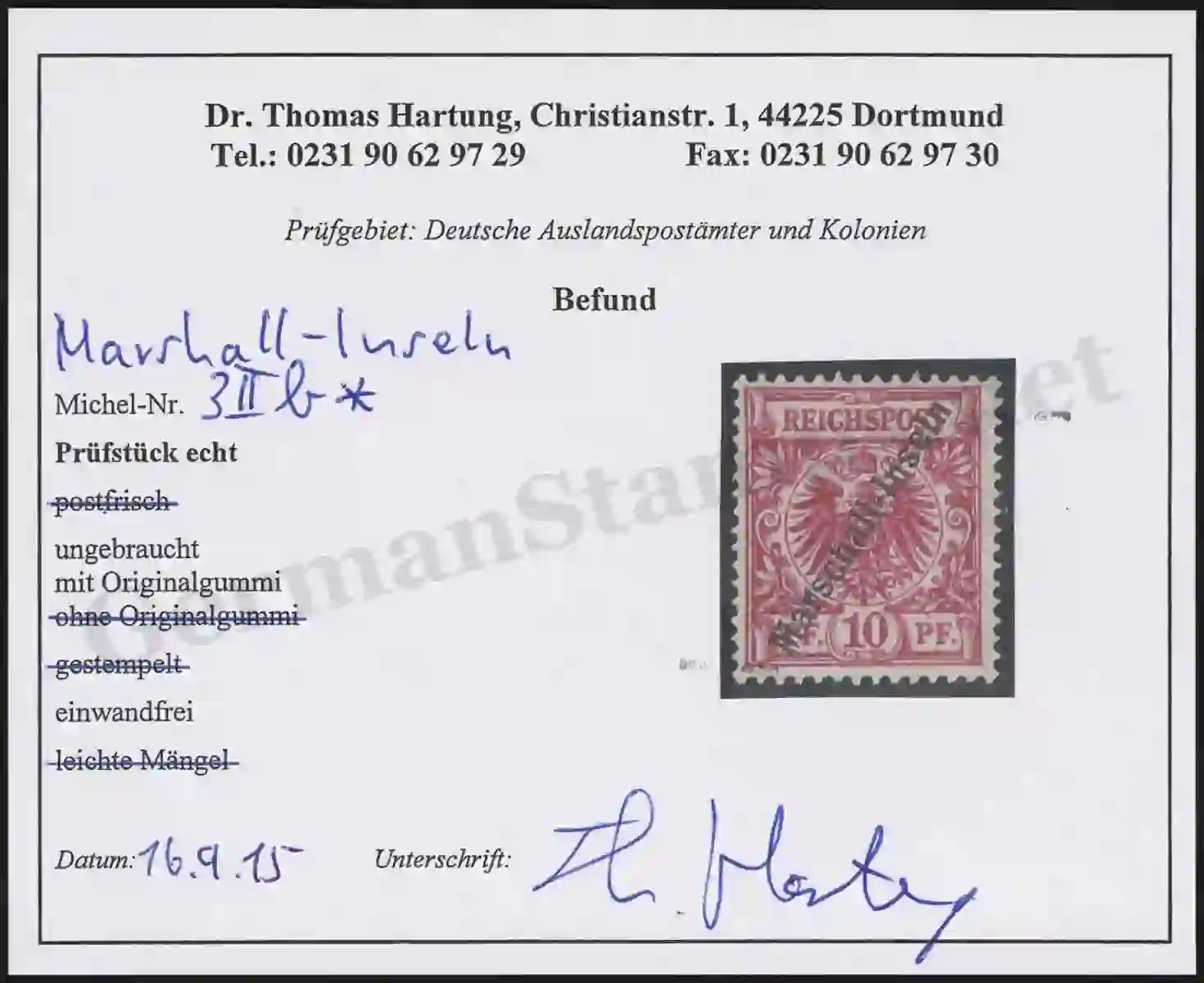
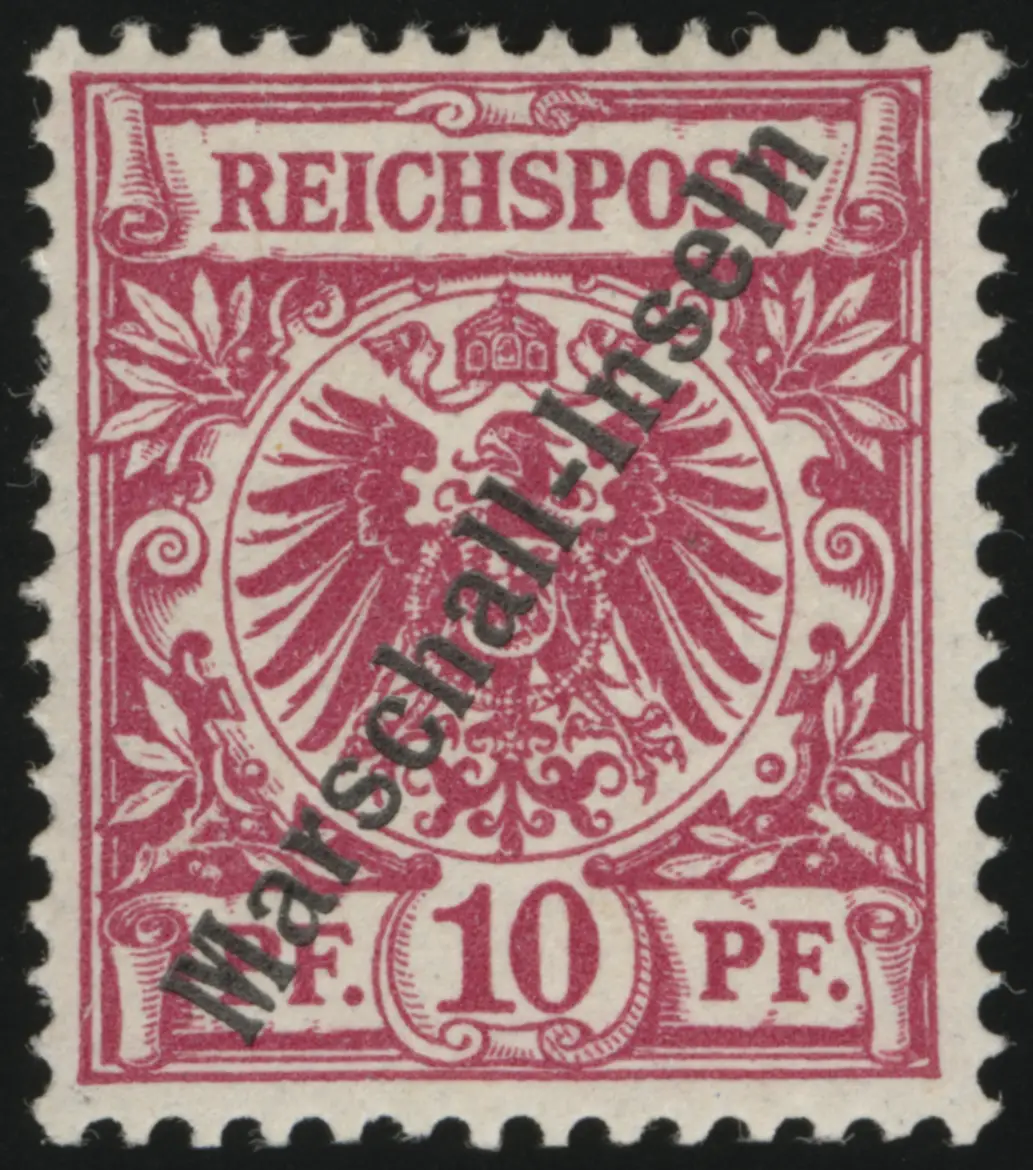 MiNr. 3 II b
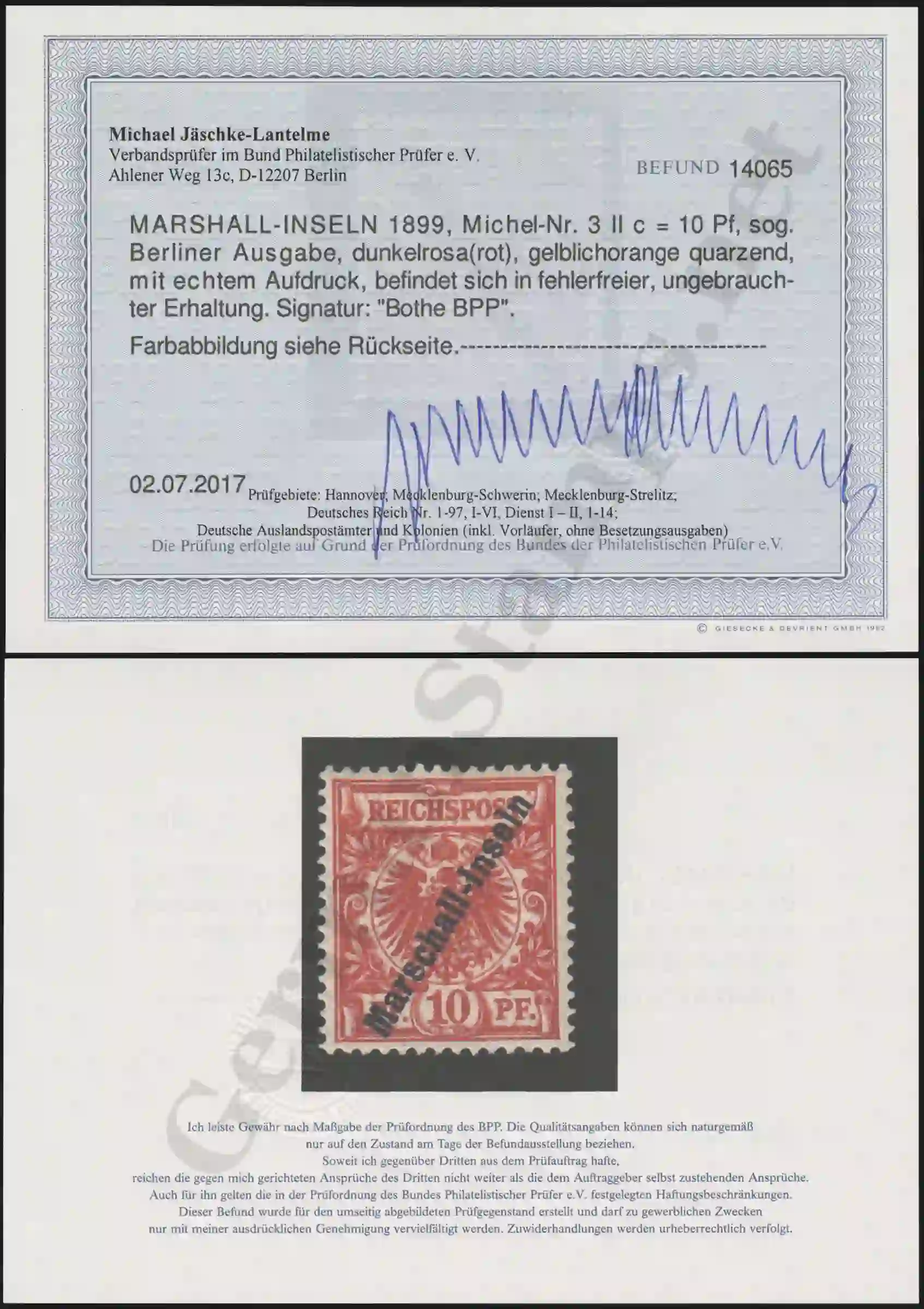
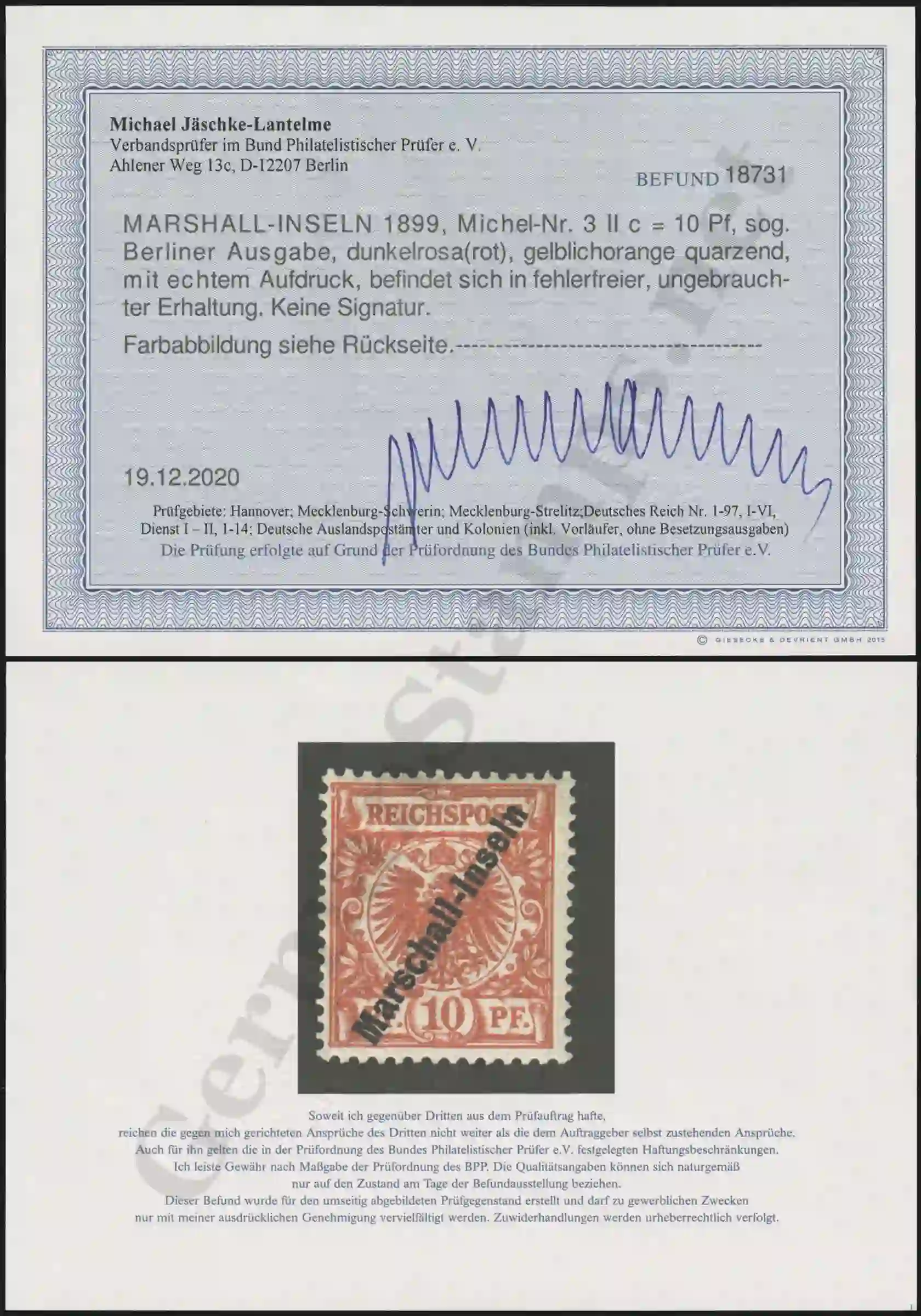
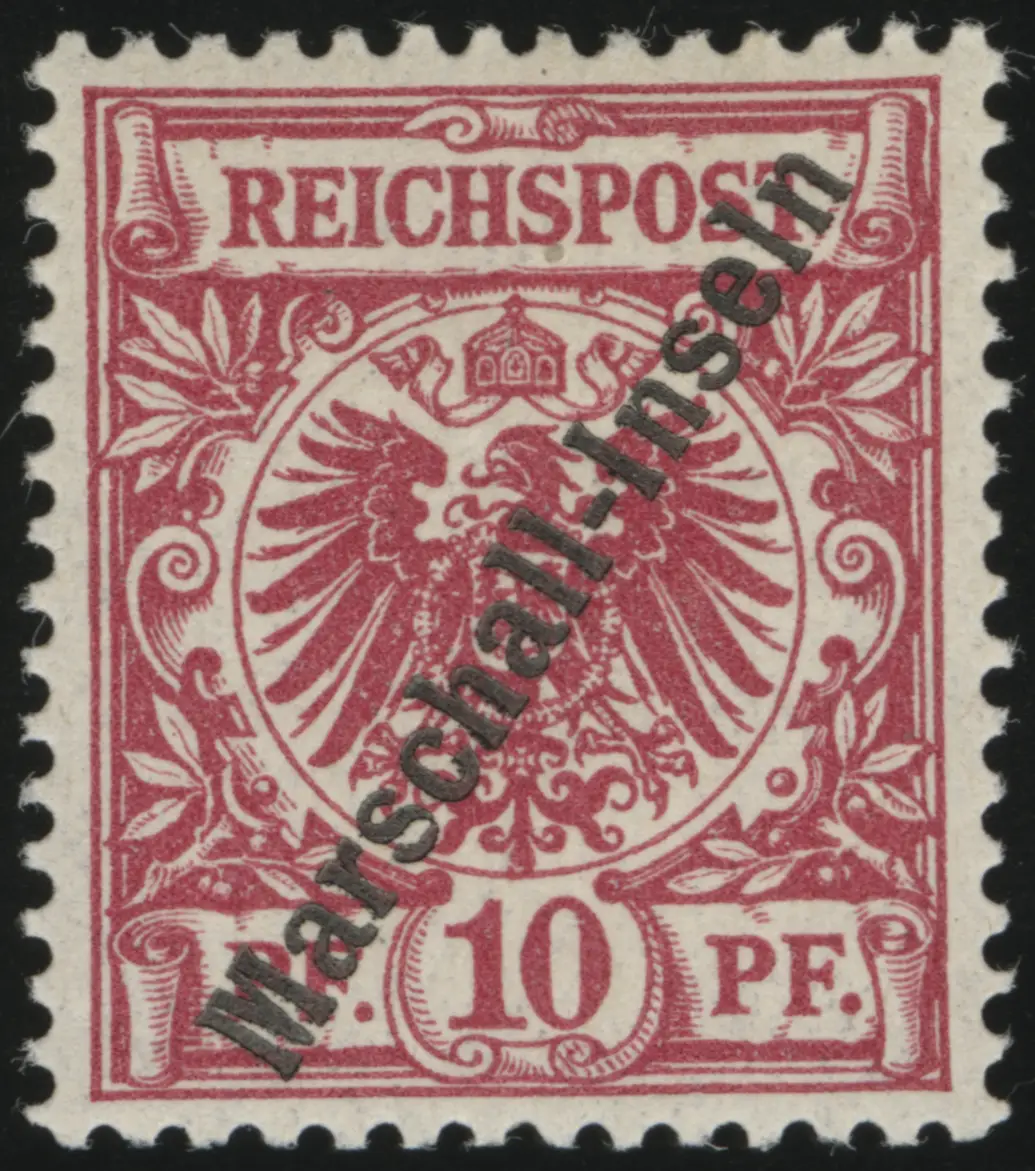 MiNr. 3 II c
 MiNr. 3 II d
 MiNr. 3 II e
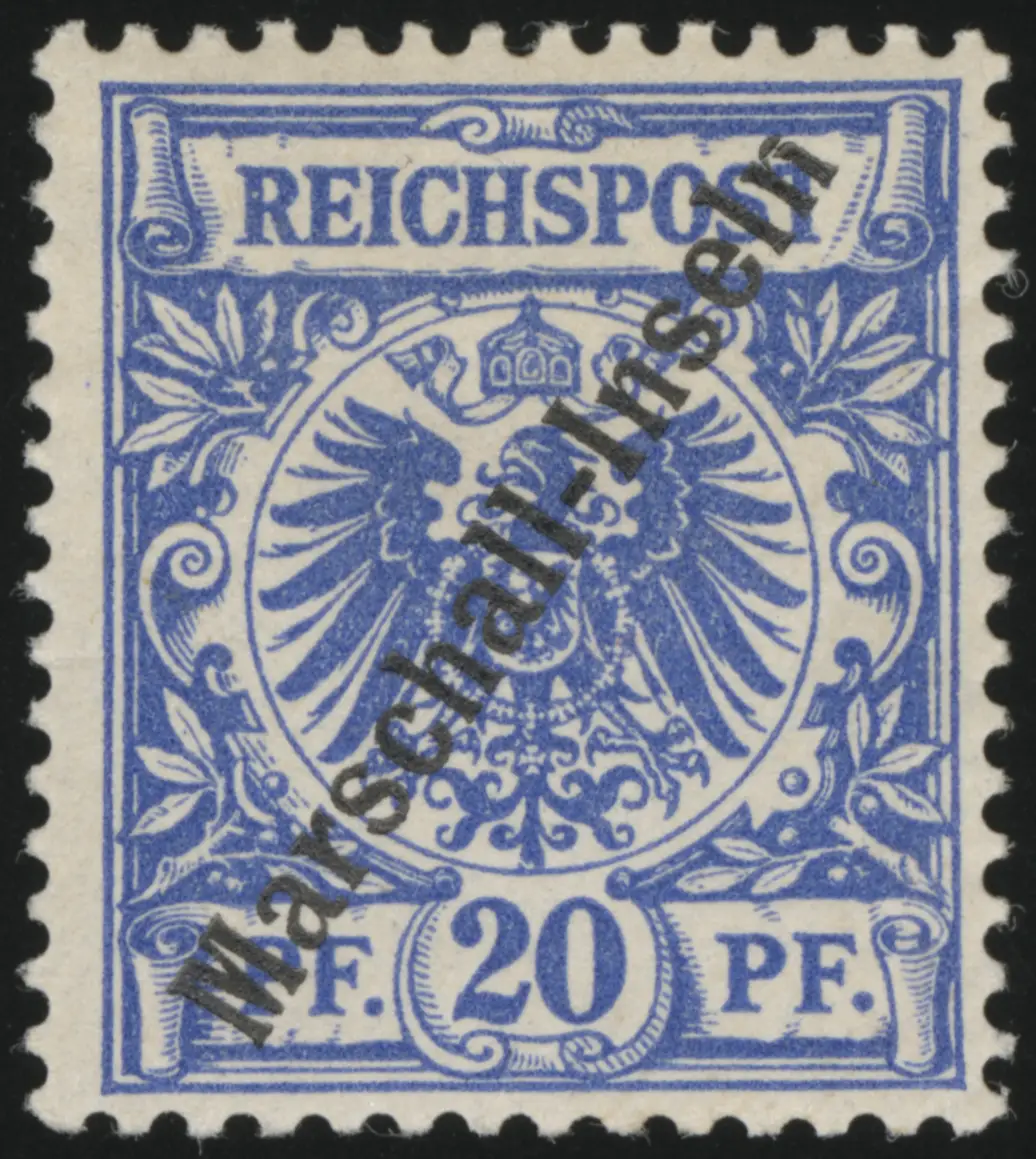 MiNr. 4 II
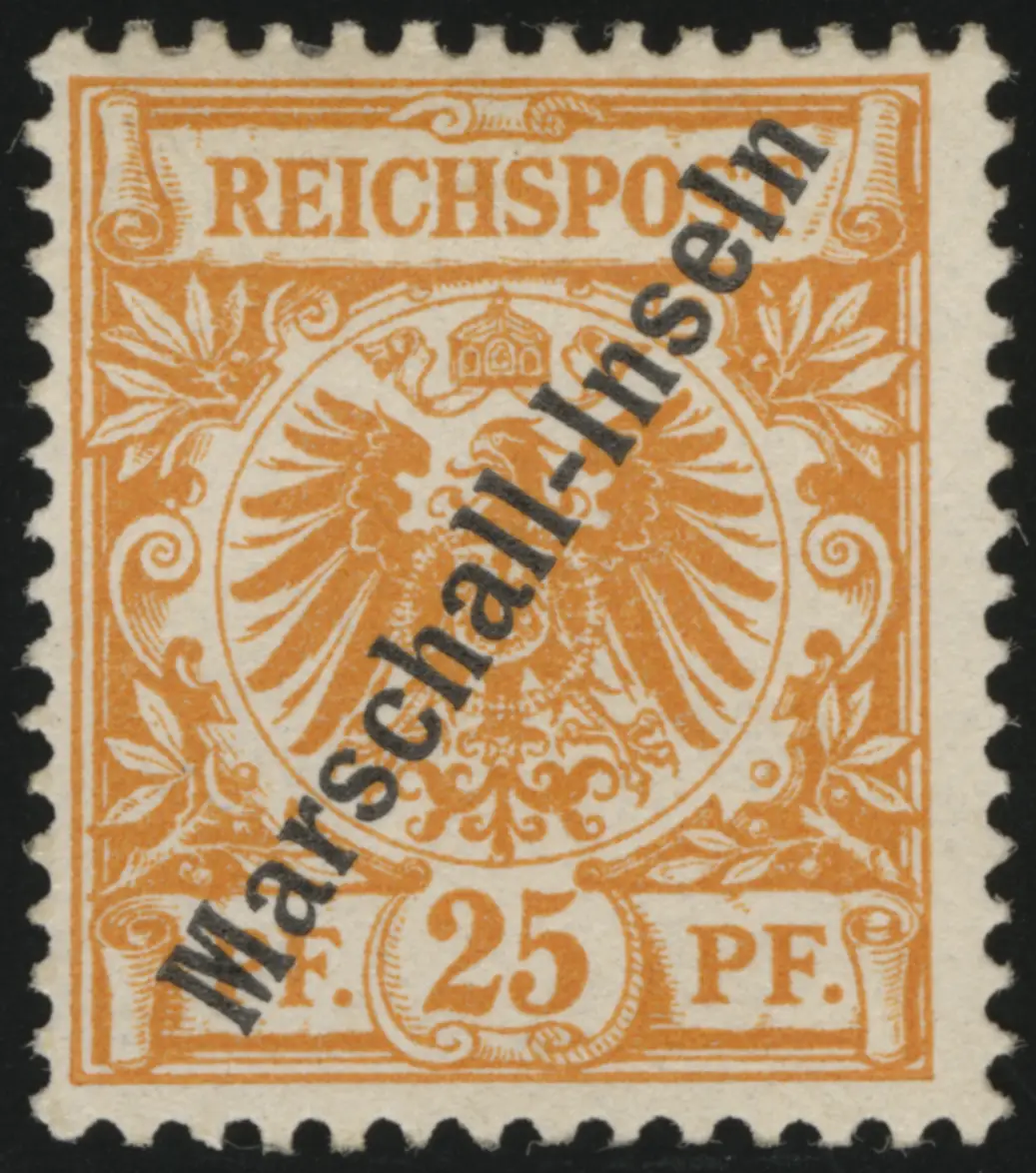 MiNr. 5 II a
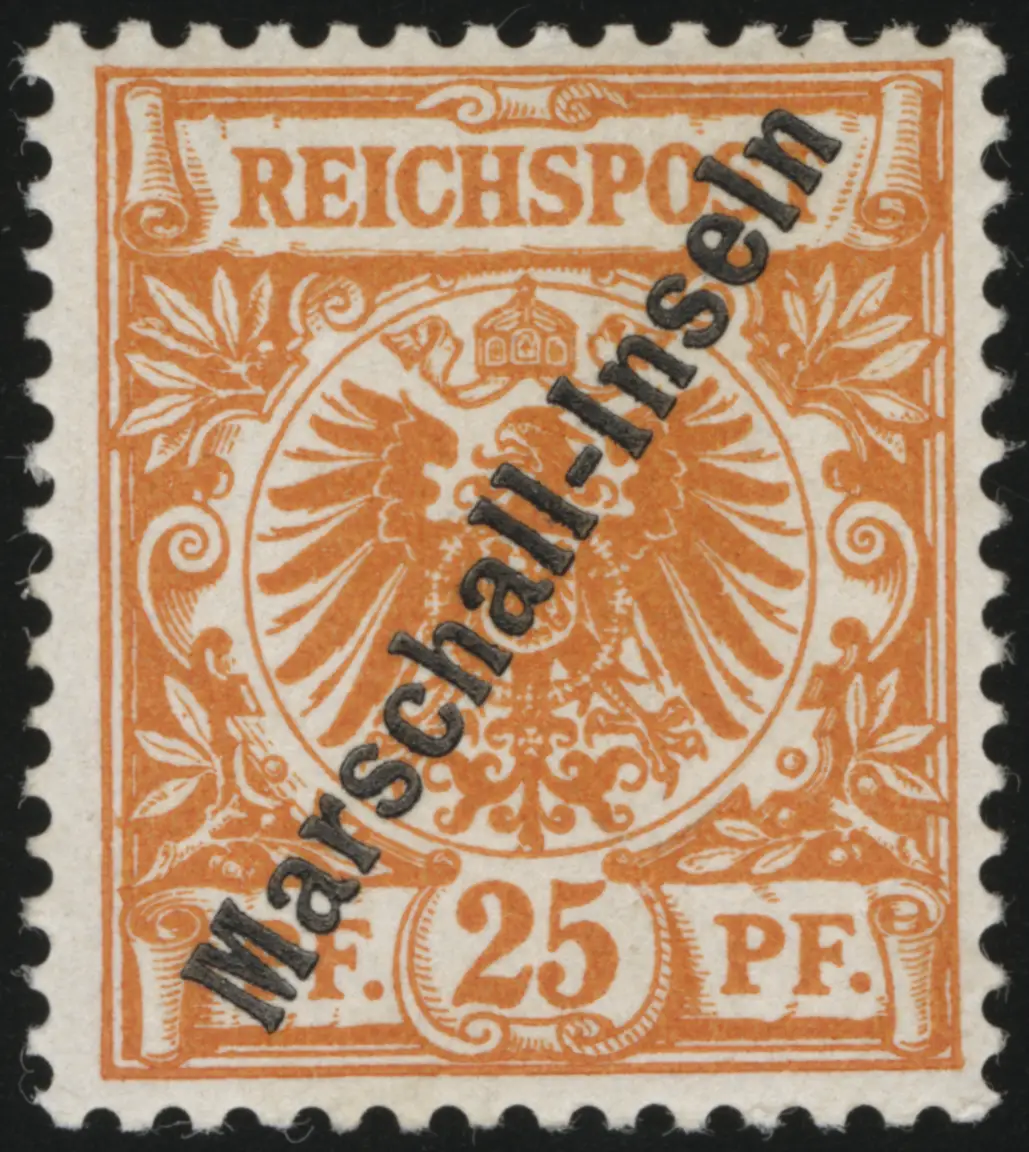 MiNr. 5 II b
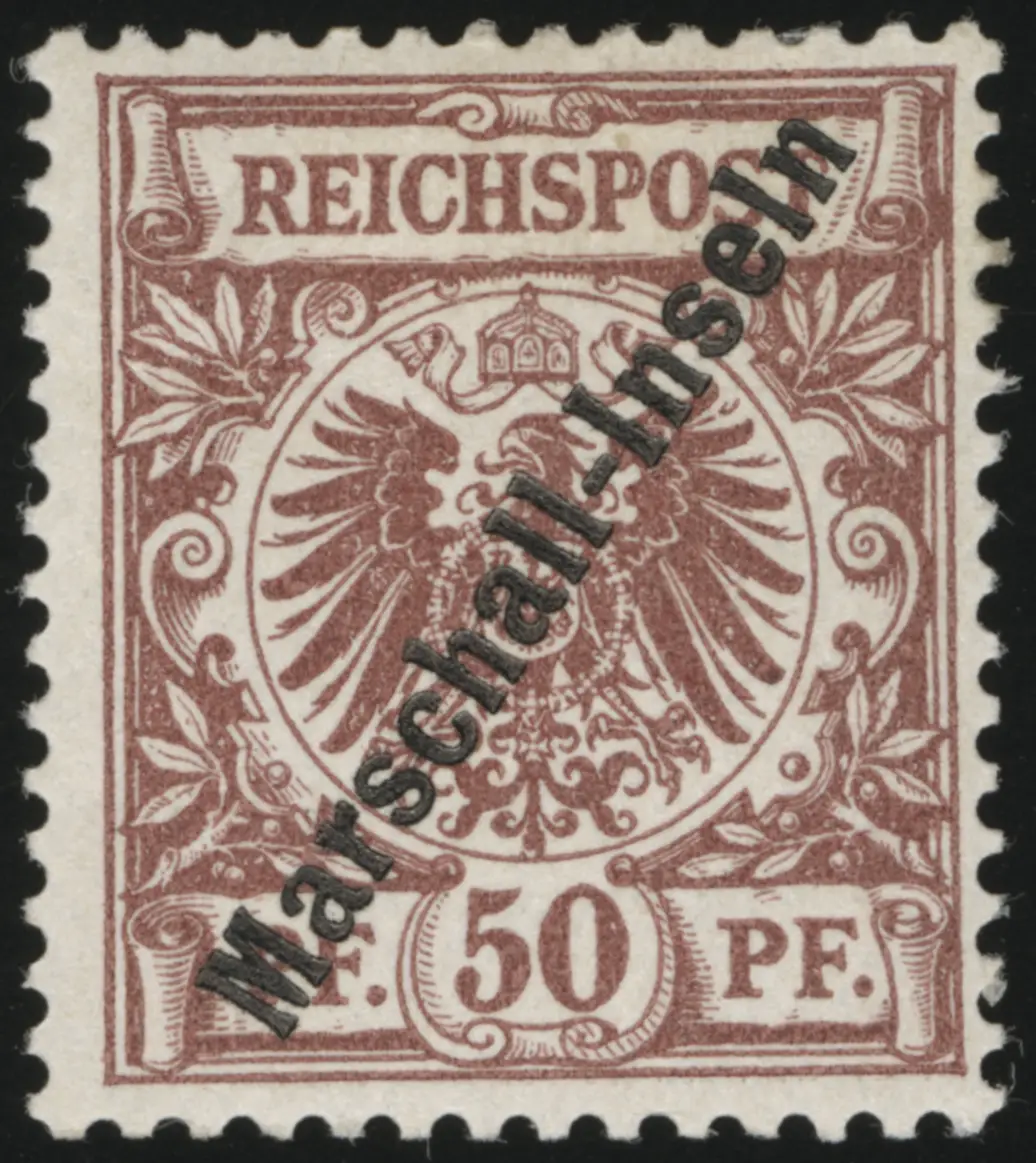 MiNr. 6 II
In 1899, a German stamp dealer named Philipp Kossack supplied the Imperial German Postal Museum with a large collection of Schleswig-Holstein stamp varieties which the Museum had sought for the national stamp collection.
In return for his valuable contribution for the Museum, Kossack asked for a large quantity of the previous Marshall Island overprint issues. These were about to increase greatly in value, as the stamps overprinted “Marschall Inseln” were being phased out in favor of new issues overprinted with the new spelling, “Marshall Inseln.”
An unknown number of these reprints eventually made it to Jaluit. Of these, many were not canceled in the ordinary course of business, but rather in an attempt by stamp dealers and collectors to acquire a Jaluit-canceled variety. For example, Kossack himself had at least 150 sets of the reprints attached to self-addressed covers, which were canceled in Jaluit for mailing back to him in Berlin.
The Berlin reprints are difficult to distinguish from the 1897 Overprints, with only slight variations in color, paper, and gum.
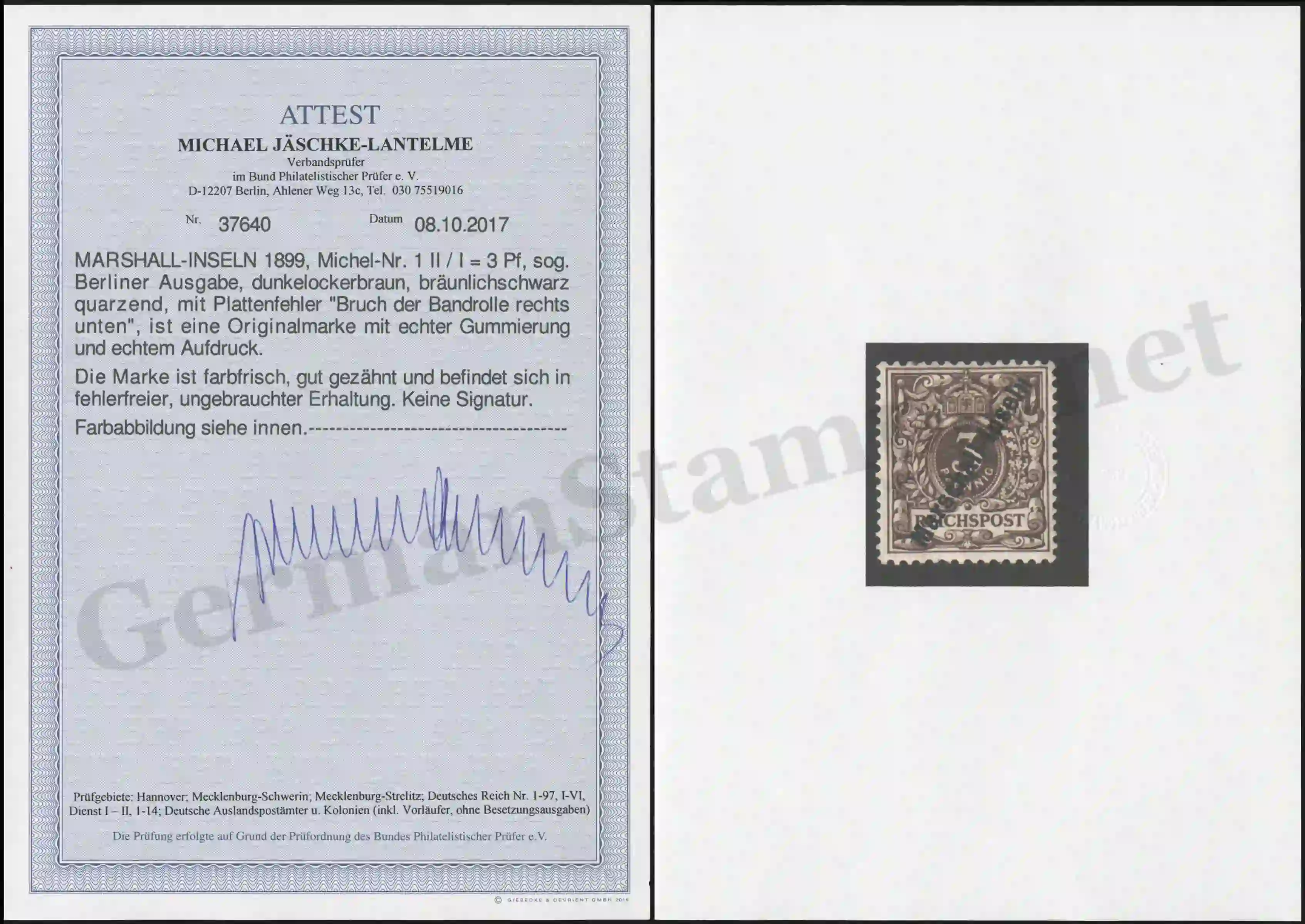
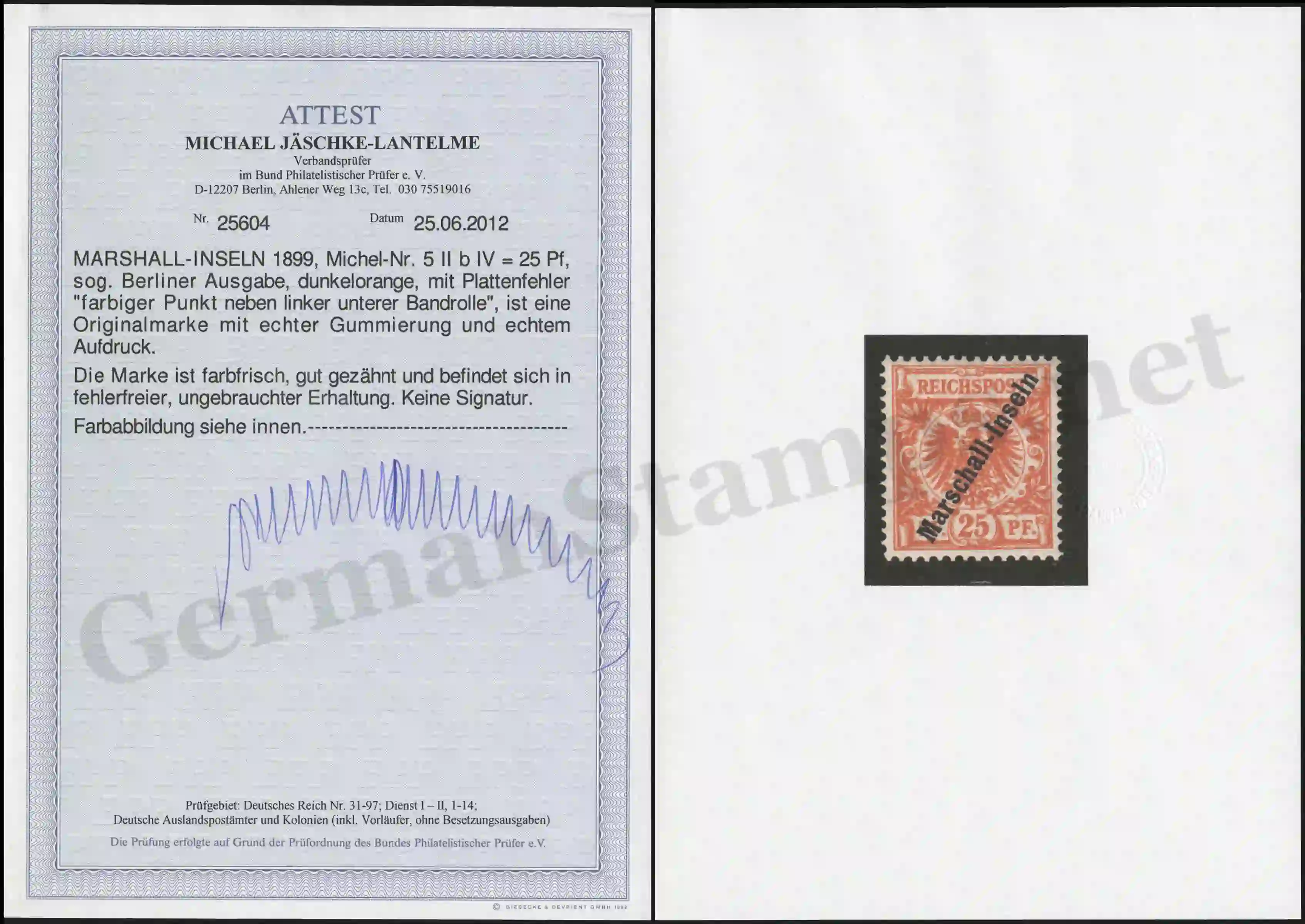
The 3 Pf and 25 Pf can be found with plate flaws on the underlying stamps.
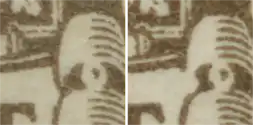
Posn. 33, 38, 83, 88
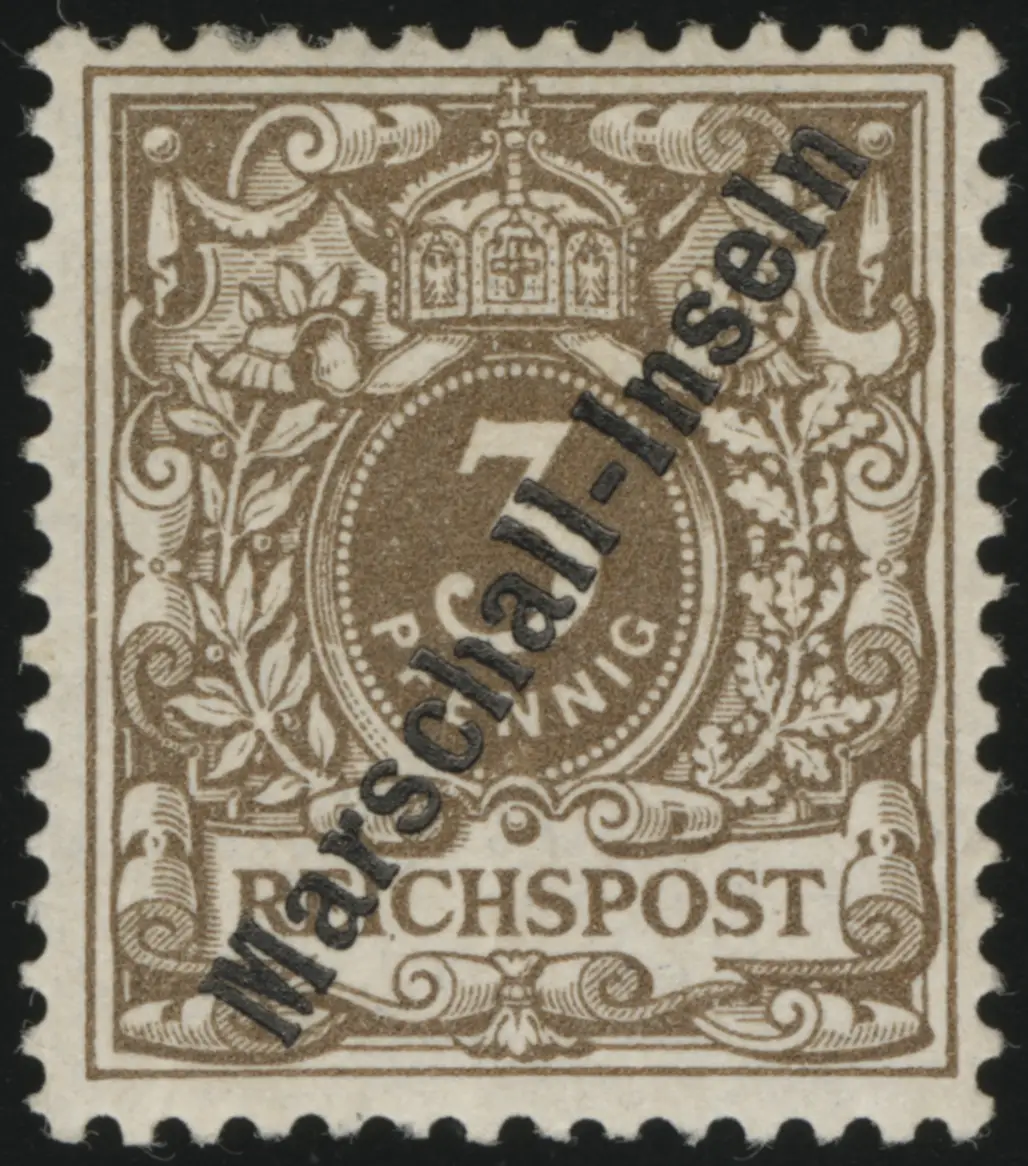 MiNr. 1 II a I
 MiNr. 1 II b I
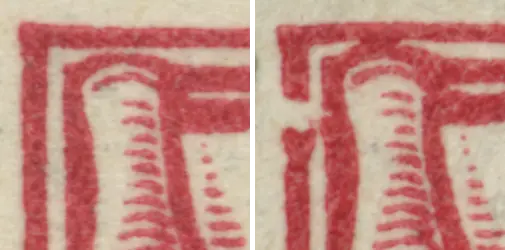
Posn. Unknown
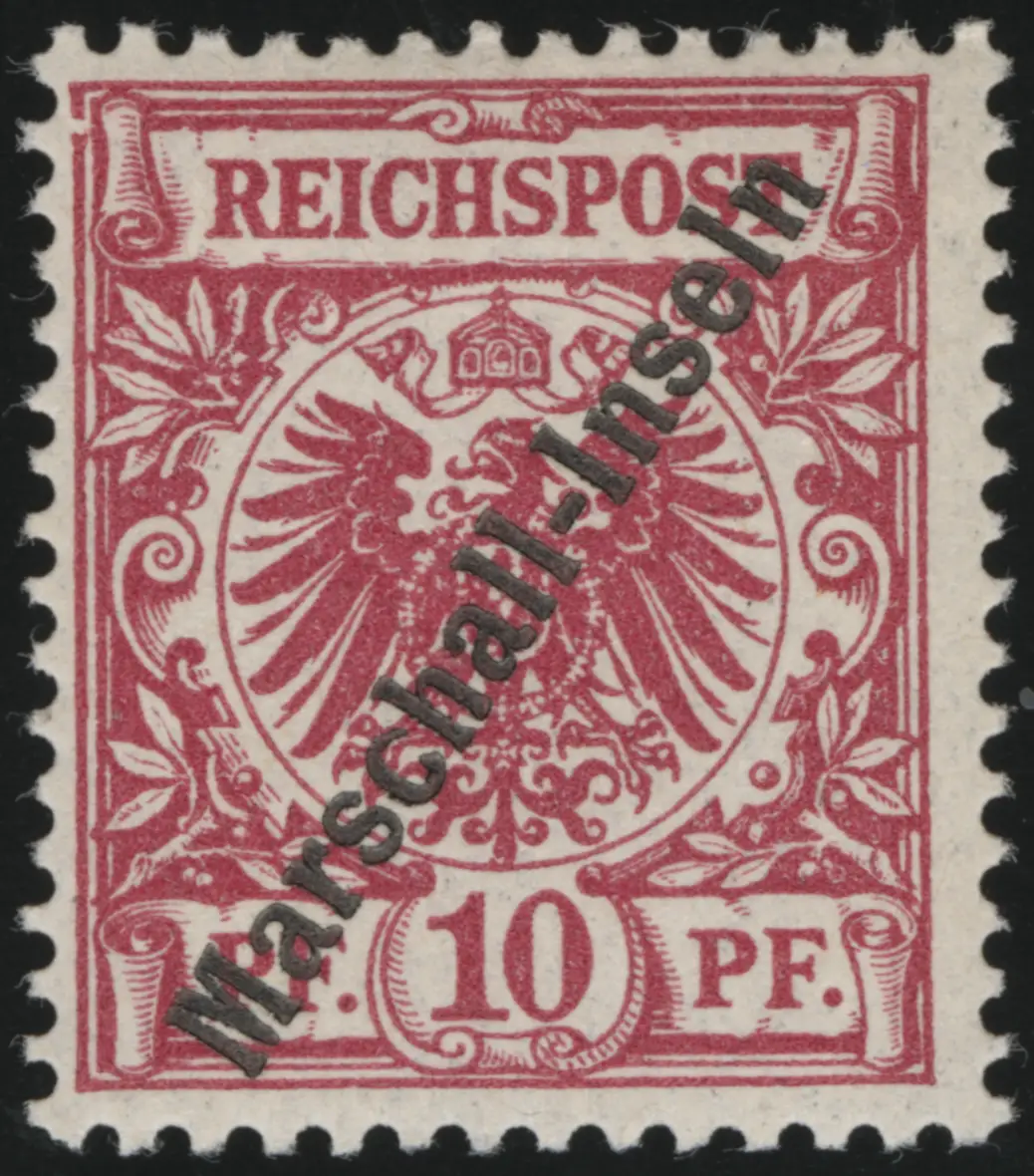 MiNr. 3 II c Unl.
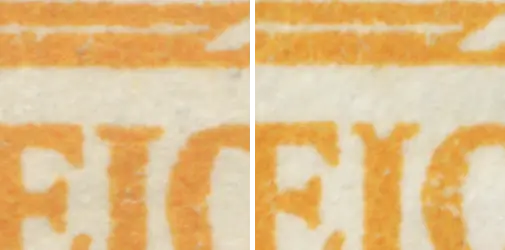
Posn. 22, 27, 72, 77
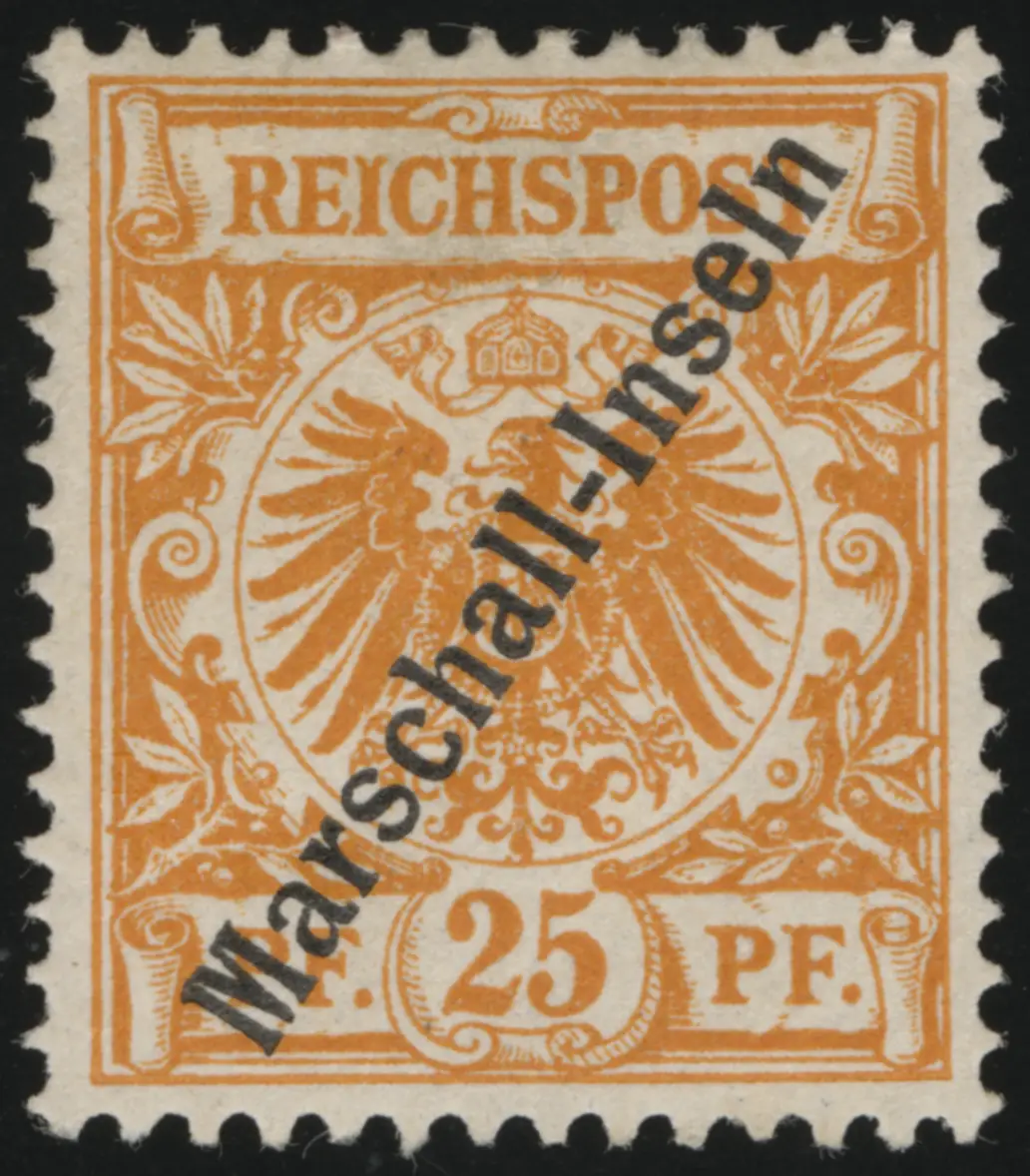 MiNr. 5 II a II
 MiNr. 5 II b II
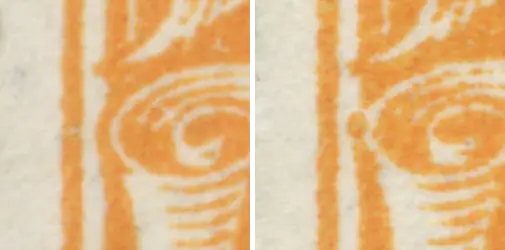
Posn. Unknown
 MiNr. 5 II a IV
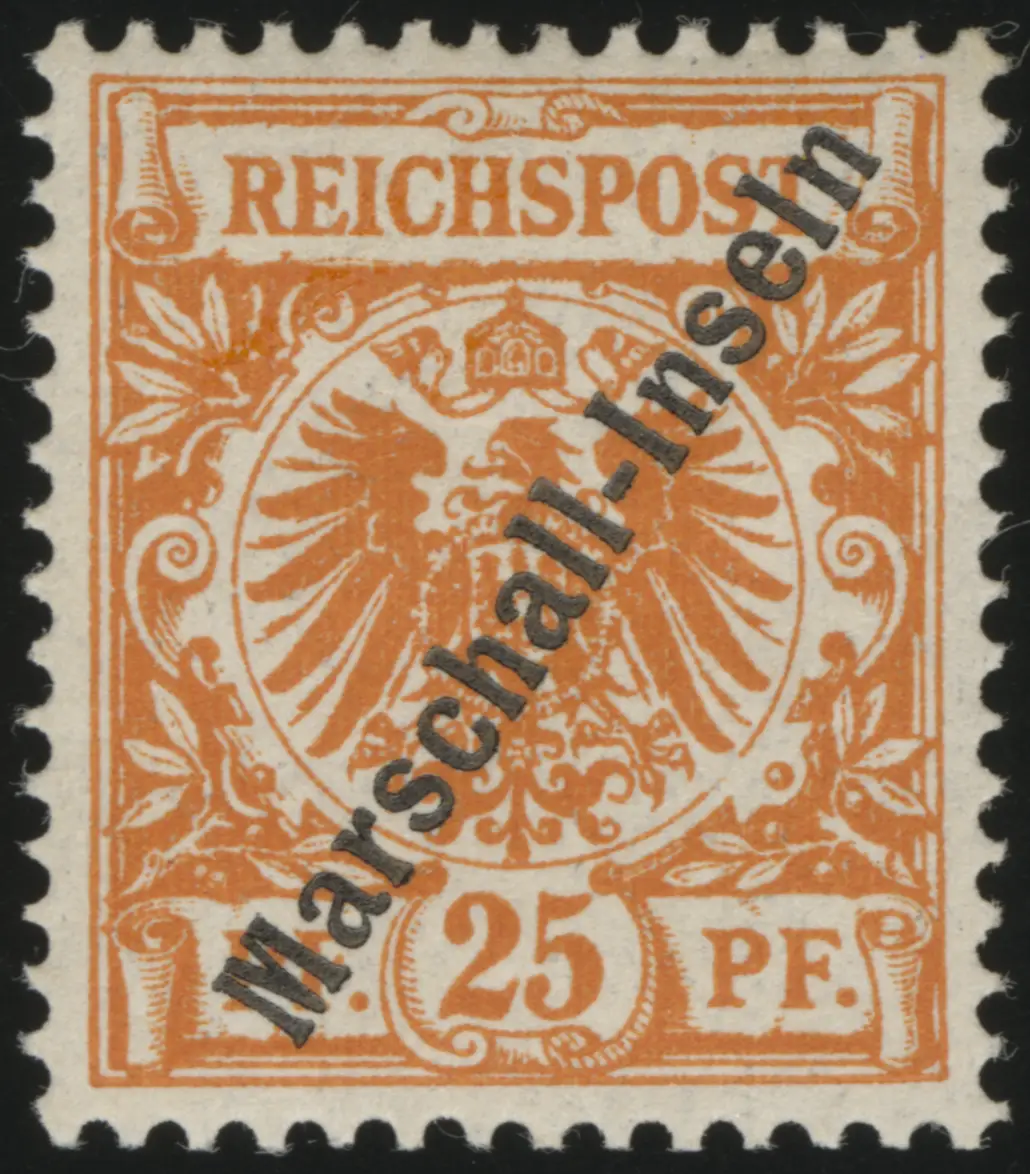 MiNr. 5 II b IV
These stamps were printed in 10×10 sheets, with two sheets per printing pane, arranged vertically. As a result, gutter pairs (in German, Zwischtenstegpaare) exist containing stamps from the bottom row of the top sheet and the top row of the bottom sheet.
 MiNr. 1 II a ZS
 MiNr. 2 II ZS
 MiNr. 3 II a ZS
 MiNr. 3 II b ZS
 MiNr. 3 II c ZS
 MiNr. 4 II ZS
 MiNr. 5 II a ZS
 MiNr. 5 II b ZS
 MiNr. 6 II ZS
MiNr. 1 II a
MiNr. 1 II b
MiNr. 2 II
MiNr. 3 II a
MiNr. 3 II b
MiNr. 3 II c
MiNr. 3 II d
MiNr. 3 II e
MiNr. 4 II
MiNr. 5 II a
MiNr. 5 II b
MiNr. 6 II
MiNr. 6 II ZS
MiNr. 1 II a
MiNr. 1 II b
MiNr. 2 II
MiNr. 3 II a
MiNr. 3 II b
MiNr. 3 II c
MiNr. 3 II d
MiNr. 3 II e
MiNr. 4 II
MiNr. 5 II a
MiNr. 5 II b
MiNr. 6 II
In 1899, a German stamp dealer named Philipp Kossack supplied the Imperial German Postal Museum with a large collection of Schleswig-Holstein stamp varieties which the Museum had sought for the national stamp collection.
In return for his valuable contribution for the Museum, Kossack asked for a large quantity of the previous Marshall Island overprint issues. These were about to increase greatly in value, as the stamps overprinted “Marschall Inseln” were being phased out in favor of new issues overprinted with the new spelling, “Marshall Inseln.”
An unknown number of these reprints eventually made it to Jaluit. Of these, many were not canceled in the ordinary course of business, but rather in an attempt by stamp dealers and collectors to acquire a Jaluit-canceled variety. For example, Kossack himself had at least 150 sets of the reprints attached to self-addressed covers, which were canceled in Jaluit for mailing back to him in Berlin.
The Berlin reprints are difficult to distinguish from the 1897 Overprints, with only slight variations in color, paper, and gum.
The 3 Pf and 25 Pf can be found with plate flaws on the underlying stamps.
Posn. 33, 38, 83, 88
MiNr. 1 II a I
MiNr. 1 II b I
Posn. Unknown
MiNr. 3 II c Unl.
Posn. 22, 27, 72, 77
MiNr. 5 II a II
MiNr. 5 II b II
Posn. Unknown
MiNr. 5 II a IV
MiNr. 5 II b IV
These stamps were printed in 10×10 sheets, with two sheets per printing pane, arranged vertically. As a result, gutter pairs (in German, Zwischtenstegpaare) exist containing stamps from the bottom row of the top sheet and the top row of the bottom sheet.
MiNr. 1 II a ZS
MiNr. 2 II ZS
MiNr. 3 II a ZS
MiNr. 3 II b ZS
MiNr. 3 II c ZS
MiNr. 4 II ZS
MiNr. 5 II a ZS
MiNr. 5 II b ZS
MiNr. 6 II ZS