
German Auxiliary Markings
In 1869, German missionaries established the first German presence in the territory that would become German East Africa. In 1884, the Company for German Colonization was founded by German explorer Carl Peters, and immediately began establishing treaties with local chiefs in the coastal region.
Over the next decade, the newly-founded German East Africa Company would increase German influence in the area by opening customs houses and forming agreements with local chiefs and Sultans. In the last years of the 1880s, however, Arabs opposed to the increased European presence began raiding and killing German settlers. The German East Africa Company requested assistance from the Imperial government, which quickly came in the form of ships and men under the command of newly-appointed Imperial Commissioner Hauptmann Hermann von Wissmann. Within a year, the insurrection was crushed, and in 1891, Germany acquired sovereignty over the entire territory.
During World War I, mail sent from Germany to German East Africa could receive one or more route markings. Among these were markings noting the route and markings noting that an item had to be returned to sender for reasons related to the war.
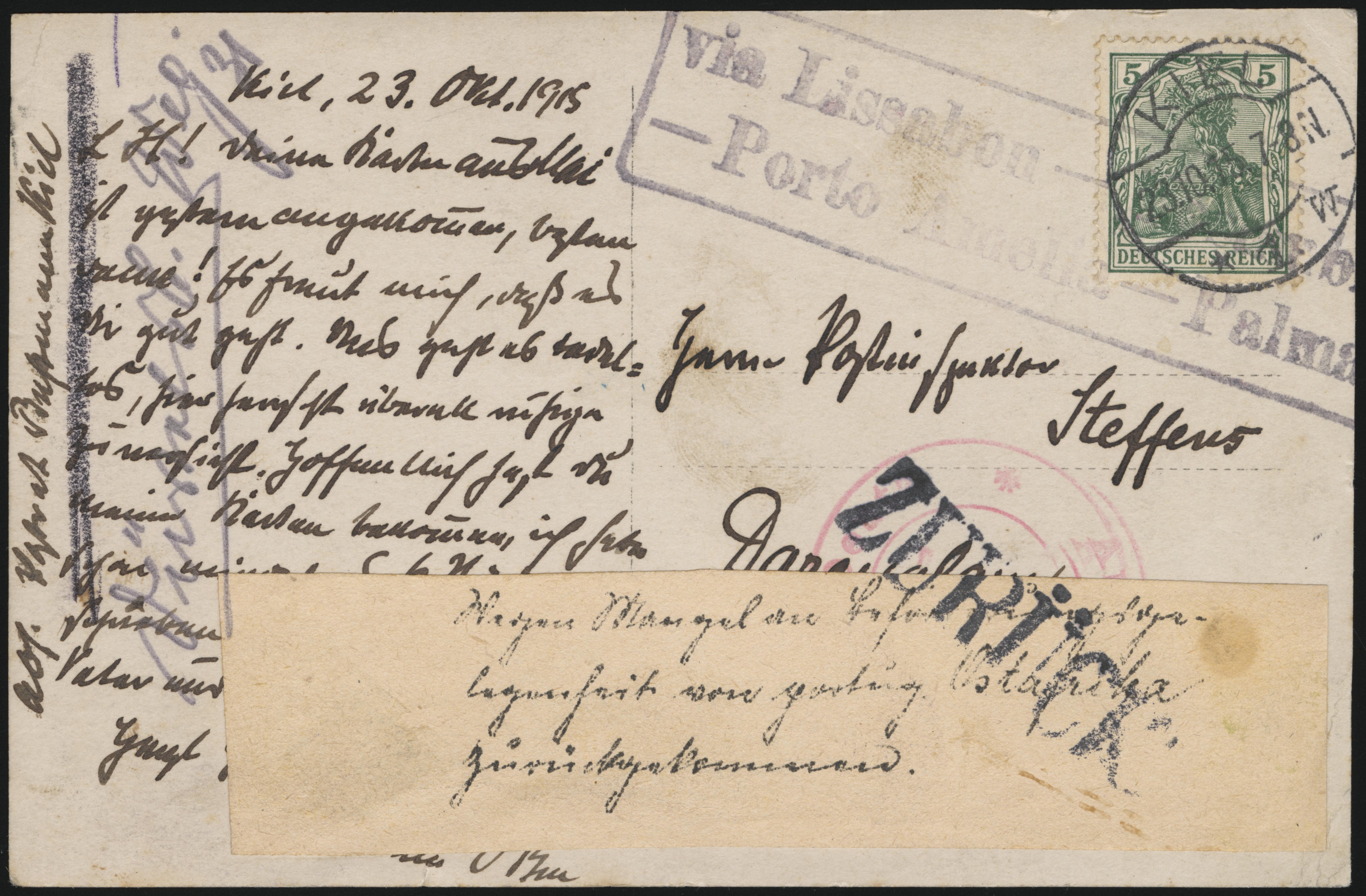 23 October 1915 (front)
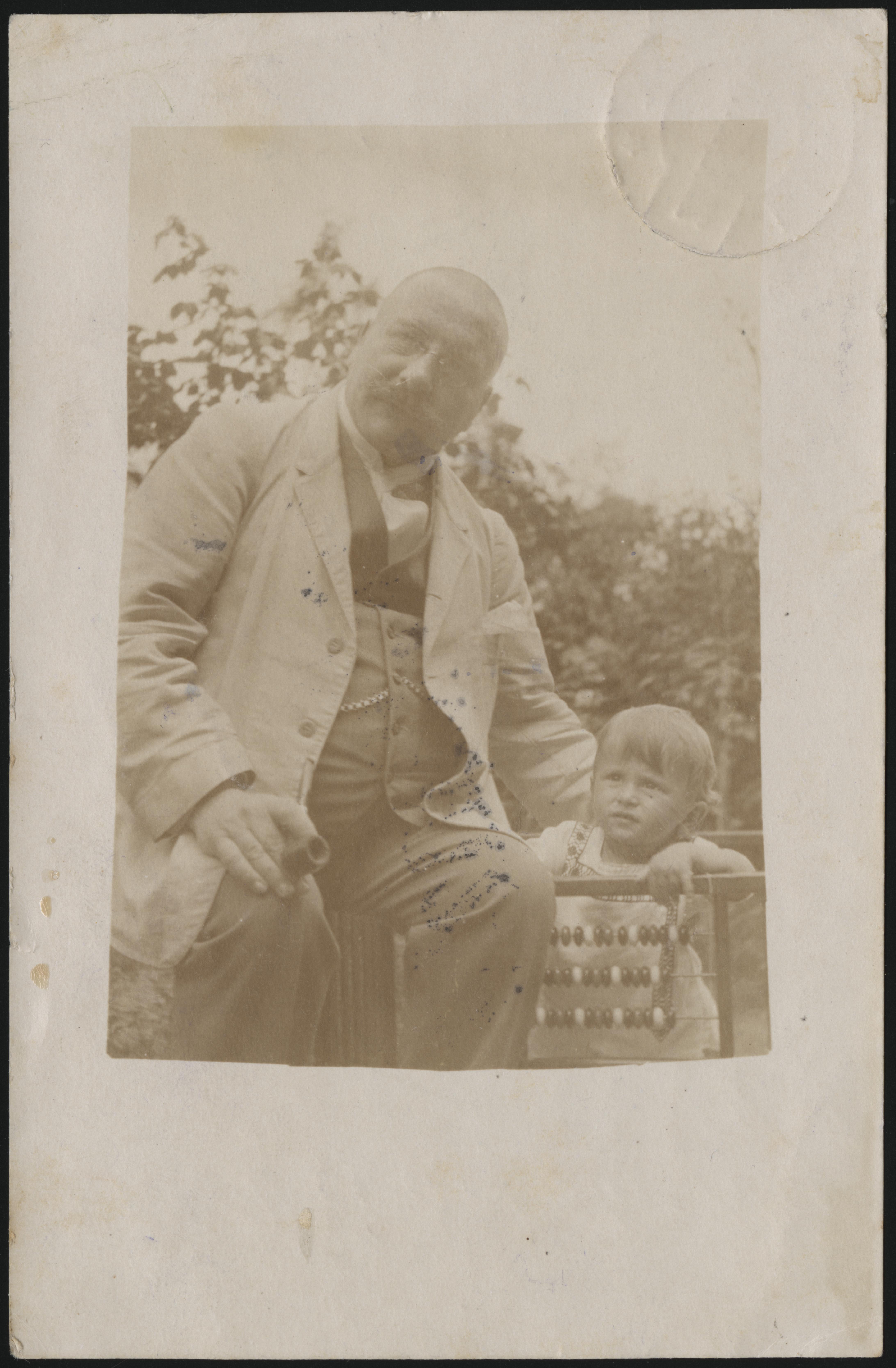 23 October 1915 (rear)
Postmark Information
Catalog:
- Friedemann Unlisted
- ArGe Kolonien via Lissabon-Mosambik-Porto Amelia-Palma
Dates of Use:
-
1914 to c. 1915
Notes:
-
Used on inbound mail routed via Portuguese East Africa
-
2-line rectangular framed handstamp “via Lissabon-Mosambik-Porto Amelia-Palma”

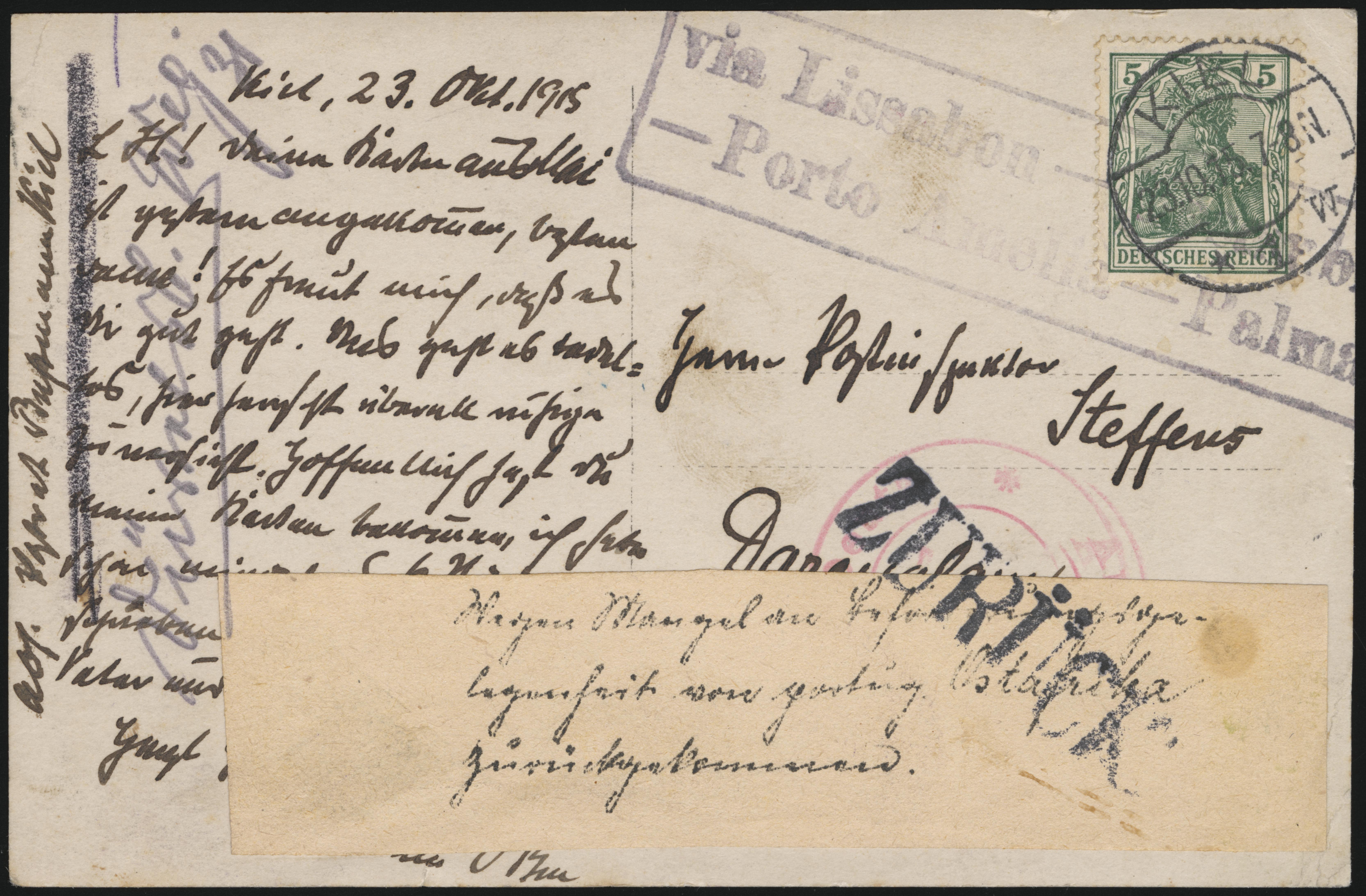 23 October 1915 (front)
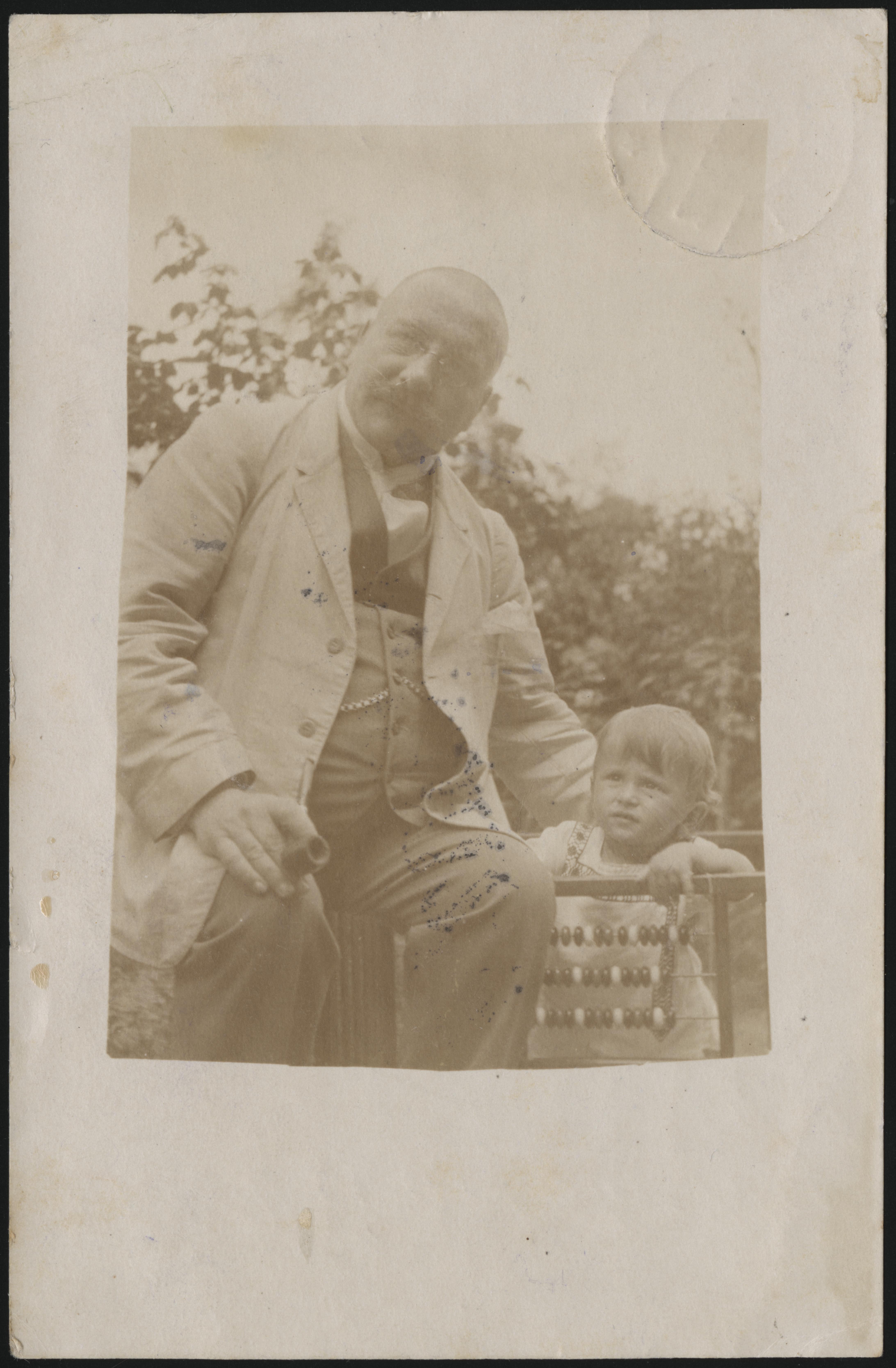 23 October 1915 (rear)
Postmark Information
Catalog:
- Friedemann Unlisted
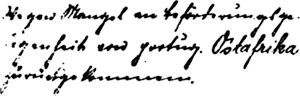
- ArGe Kolonien Wegen Mangel an Beförderungsge-legenheit von portug. Ostafrika zurückgekommen.
Dates of Use:
-
c. 1915 to c. 1916
Notes:
-
On inbound mail returned to sender once Portugal ceased allowing mail routed to Deutsch-Ostafrika via Portuguese East Africa
-
Handwritten adhesive label “Wegen Mangel an Beförderungsge-legenheit von portug. Ostafrika zurückgekommen.” (Returned from Portuguese East Africa due to lack of transportation.)
 Undated (front)
 Undated (rear)
Postmark Information
Catalog:
- Friedemann Unlisted
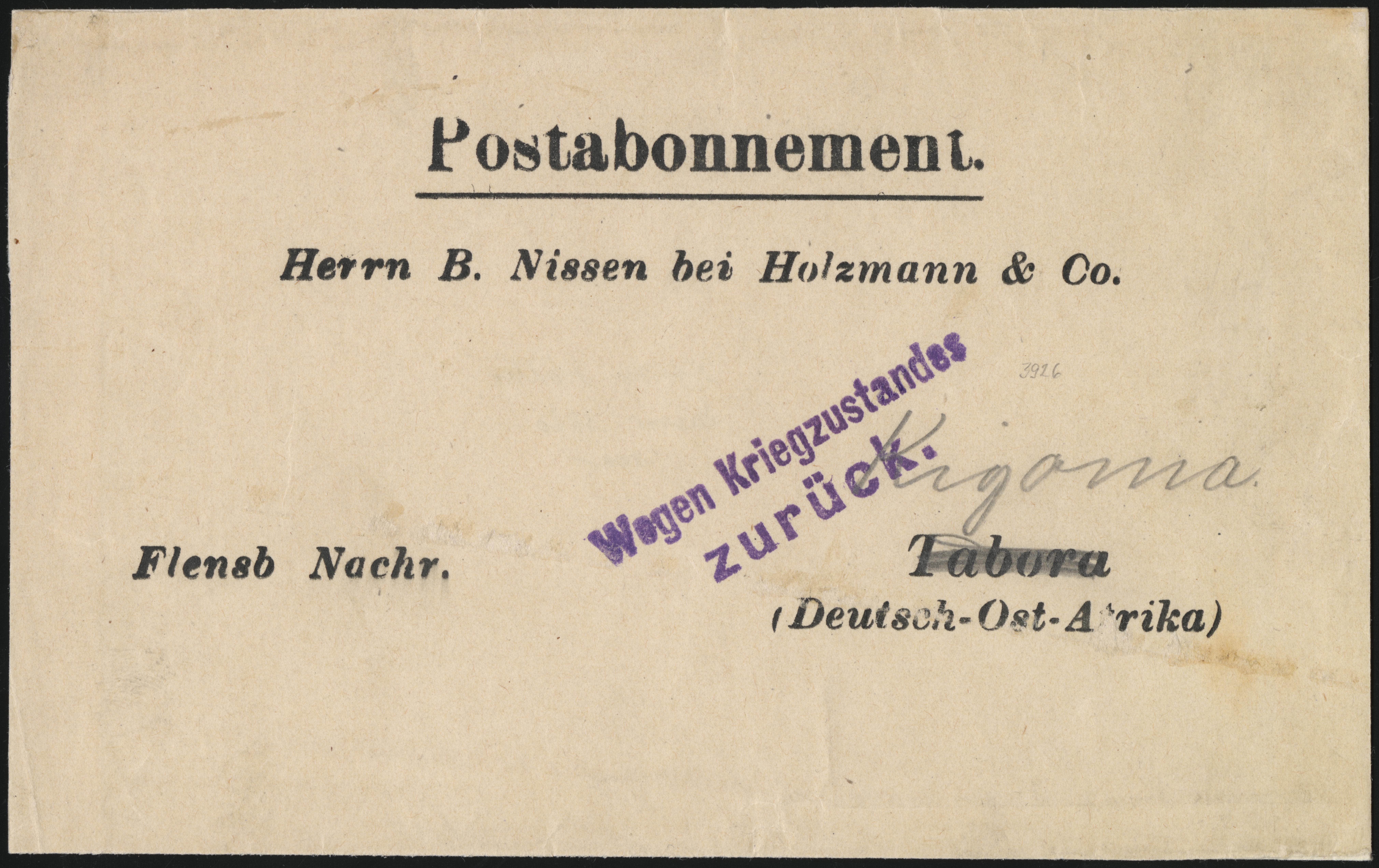
- ArGe Kolonien Wegen Kriegszustandes zurück
Date of Use:
-
c. 1914 to c. 1916
Notes:
-
Used on inbound mail returned to sender as undeliverable due to the war
-
Handstamp “Wegen Kriegszustandes zurück” (Returned due to war)

Postmark Information
Catalog:
- Friedemann Unlisted
- ArGe Kolonien Zurück keine Verbindung
Dates of Use:
-
c. 1914 to c. 1916
Notes:
-
Used on inbound mail returned to sender as undeliverable due to the war
-
Rectangular handstamp “Zurück keine Verbindung” (Returned due to lack of a connection)
 23 October 1915 (front)
 23 October 1915 (rear)
Postmark Information
Catalog:
- Friedemann Unlisted
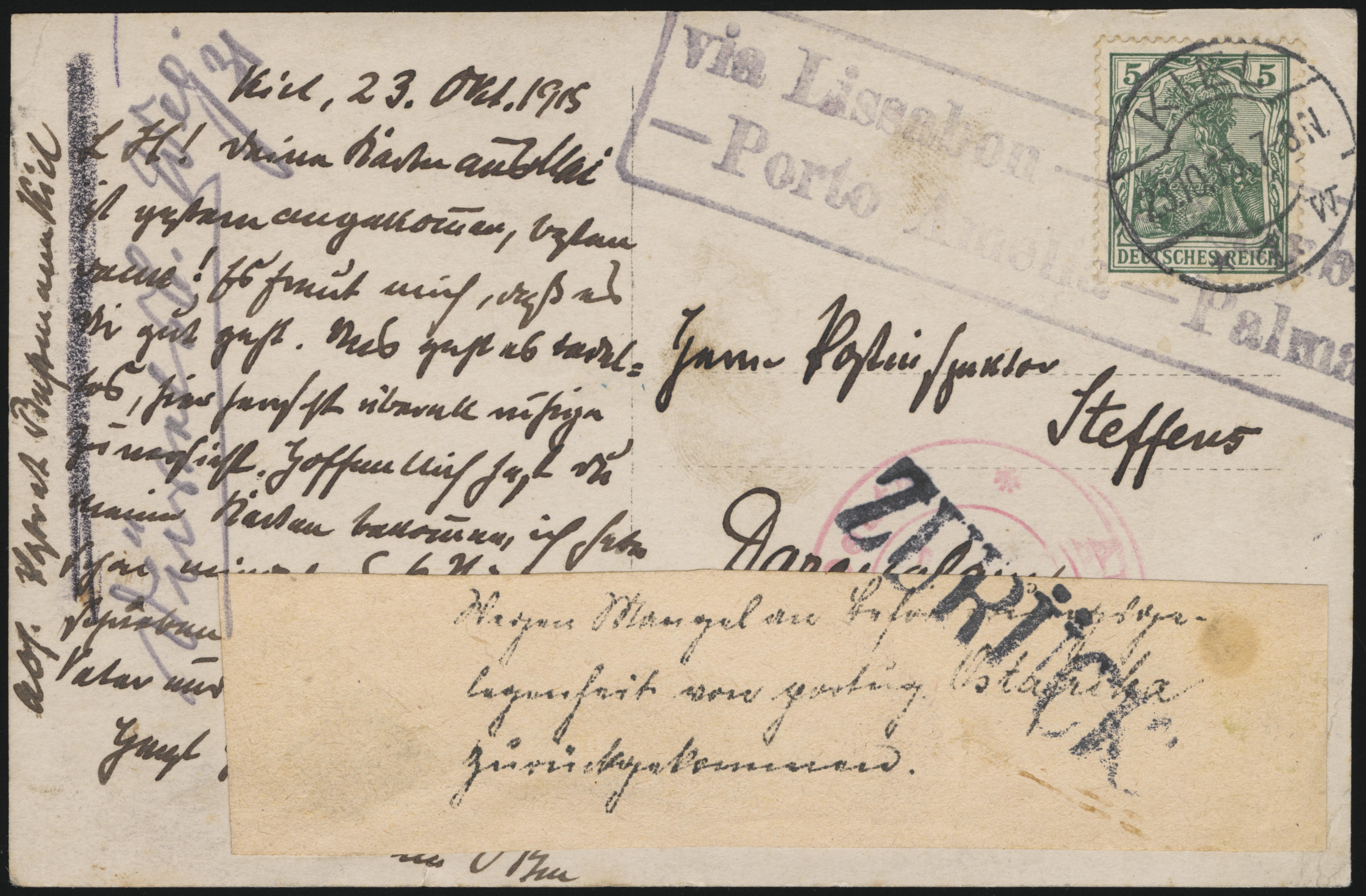
- ArGe Kolonien Zurück
Dates of Use:
-
c. 1914 to c. 1916
Notes:
-
Used on inbound mail returned to sender as undeliverable due to the war
-
Handwritten or handstamped “Zurück” (Return)
German Auxiliary Markings
In 1869, German missionaries established the first German presence in the territory that would become German East Africa. In 1884, the Company for German Colonization was founded by German explorer Carl Peters, and immediately began establishing treaties with local chiefs in the coastal region.
Over the next decade, the newly-founded German East Africa Company would increase German influence in the area by opening customs houses and forming agreements with local chiefs and Sultans. In the last years of the 1880s, however, Arabs opposed to the increased European presence began raiding and killing German settlers. The German East Africa Company requested assistance from the Imperial government, which quickly came in the form of ships and men under the command of newly-appointed Imperial Commissioner Hauptmann Hermann von Wissmann. Within a year, the insurrection was crushed, and in 1891, Germany acquired sovereignty over the entire territory.
During World War I, mail sent from Germany to German East Africa could receive one or more route markings. Among these were markings noting the route and markings noting that an item had to be returned to sender for reasons related to the war.
23 October 1915 (front)
23 October 1915 (rear)
Postmark Information
Catalog:
- Friedemann Unlisted
- ArGe Kolonien via Lissabon-Mosambik-Porto Amelia-Palma
Dates of Use:
-
1914 to c. 1915
Notes:
-
Used on inbound mail routed via Portuguese East Africa
-
2-line rectangular framed handstamp “via Lissabon-Mosambik-Porto Amelia-Palma”
23 October 1915 (front)
23 October 1915 (rear)
Postmark Information
Catalog:
- Friedemann Unlisted
- ArGe Kolonien Wegen Mangel an Beförderungsge-legenheit von portug. Ostafrika zurückgekommen.
Dates of Use:
-
c. 1915 to c. 1916
Notes:
-
On inbound mail returned to sender once Portugal ceased allowing mail routed to Deutsch-Ostafrika via Portuguese East Africa
-
Handwritten adhesive label “Wegen Mangel an Beförderungsge-legenheit von portug. Ostafrika zurückgekommen.” (Returned from Portuguese East Africa due to lack of transportation.)
Undated (front)
Undated (rear)
Postmark Information
Catalog:
- Friedemann Unlisted
- ArGe Kolonien Wegen Kriegszustandes zurück
Date of Use:
-
c. 1914 to c. 1916
Notes:
-
Used on inbound mail returned to sender as undeliverable due to the war
-
Handstamp “Wegen Kriegszustandes zurück” (Returned due to war)
Postmark Information
Catalog:
- Friedemann Unlisted
- ArGe Kolonien Zurück keine Verbindung
Dates of Use:
-
c. 1914 to c. 1916
Notes:
-
Used on inbound mail returned to sender as undeliverable due to the war
-
Rectangular handstamp “Zurück keine Verbindung” (Returned due to lack of a connection)
23 October 1915 (front)
23 October 1915 (rear)
Postmark Information
Catalog:
- Friedemann Unlisted
- ArGe Kolonien Zurück
Dates of Use:
-
c. 1914 to c. 1916
Notes:
-
Used on inbound mail returned to sender as undeliverable due to the war
-
Handwritten or handstamped “Zurück” (Return)
Album Page(s)


