Set Date(s)
January 1915 / 1923
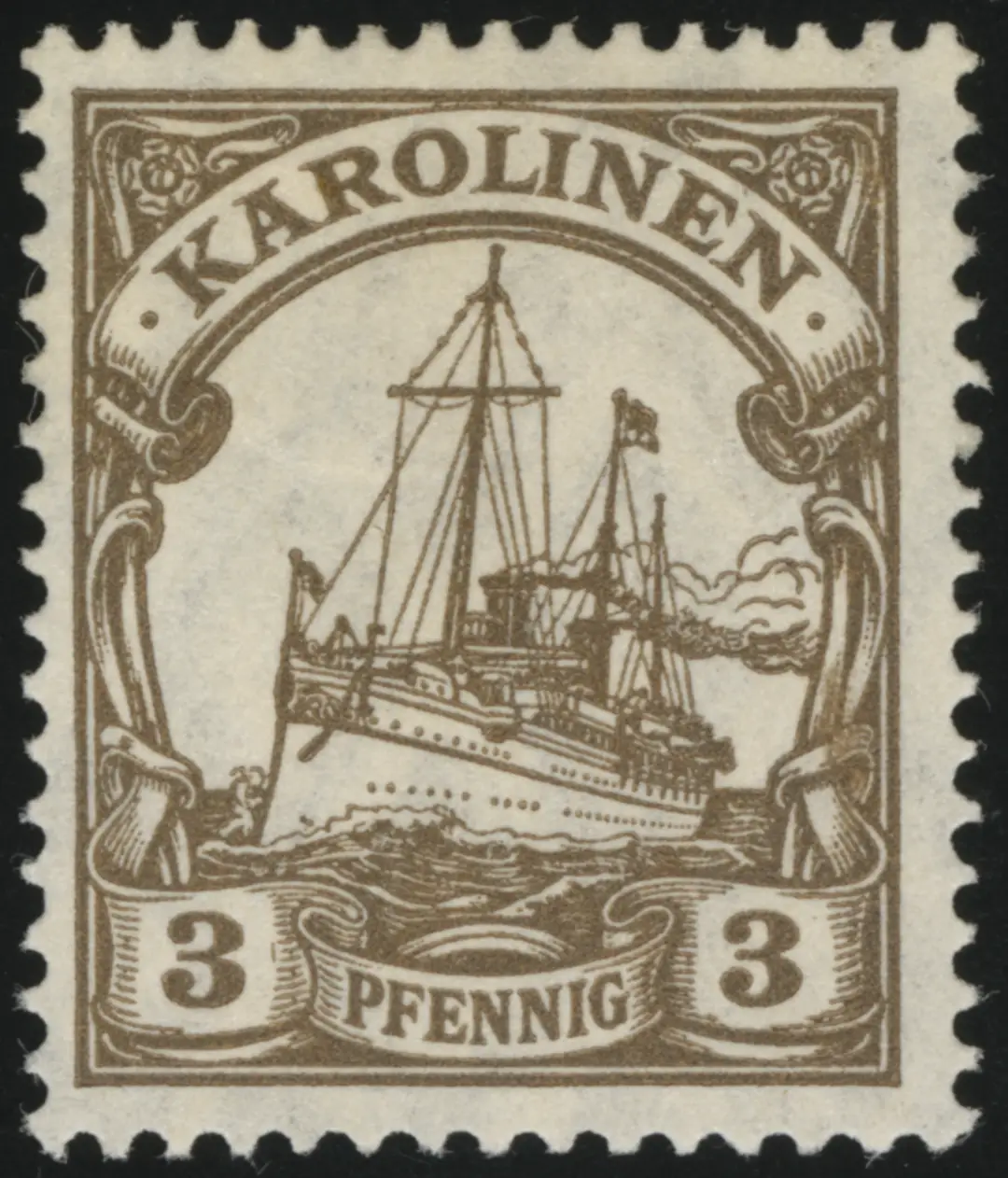 MiNr. 21
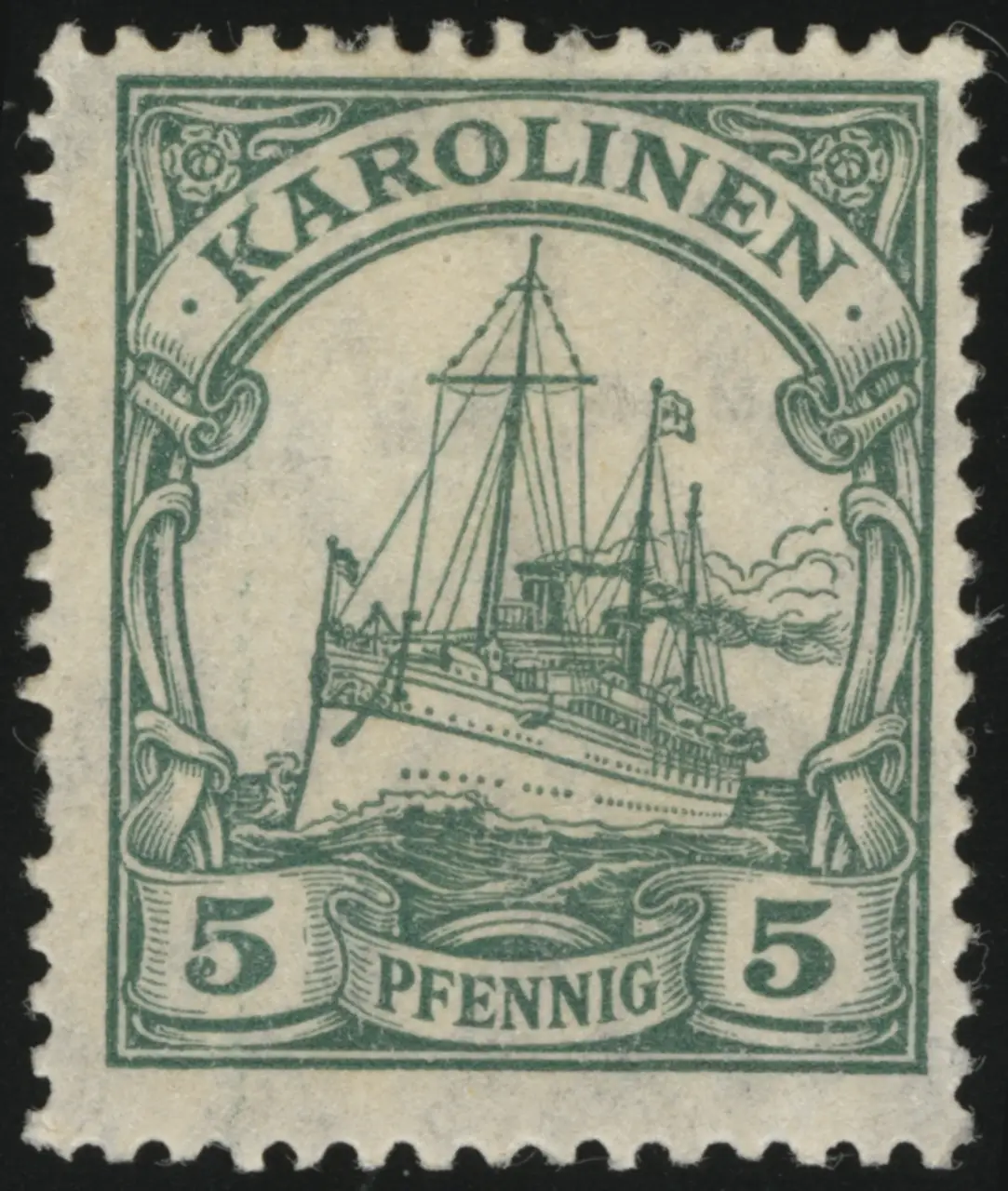 MiNr. A 21
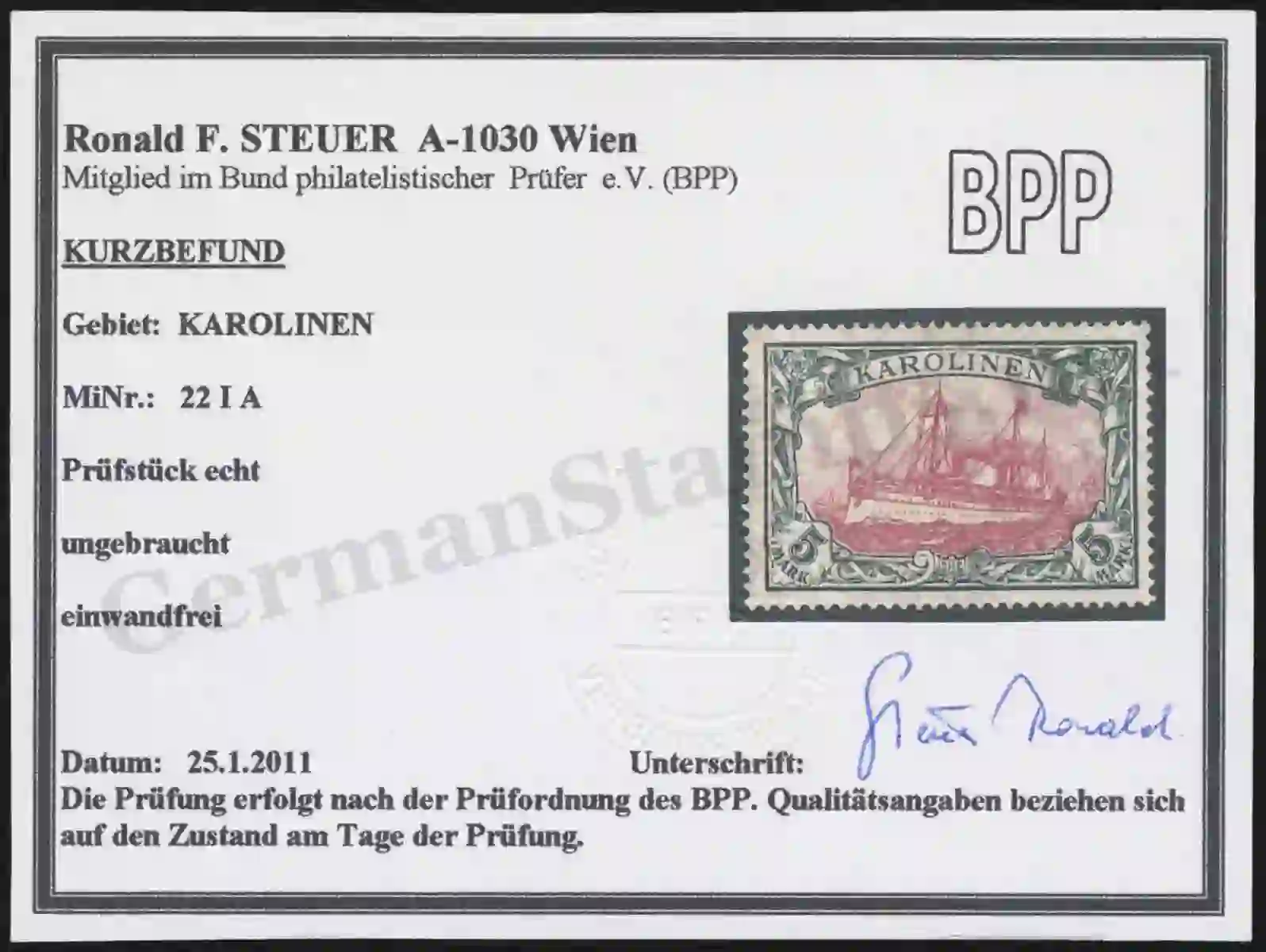
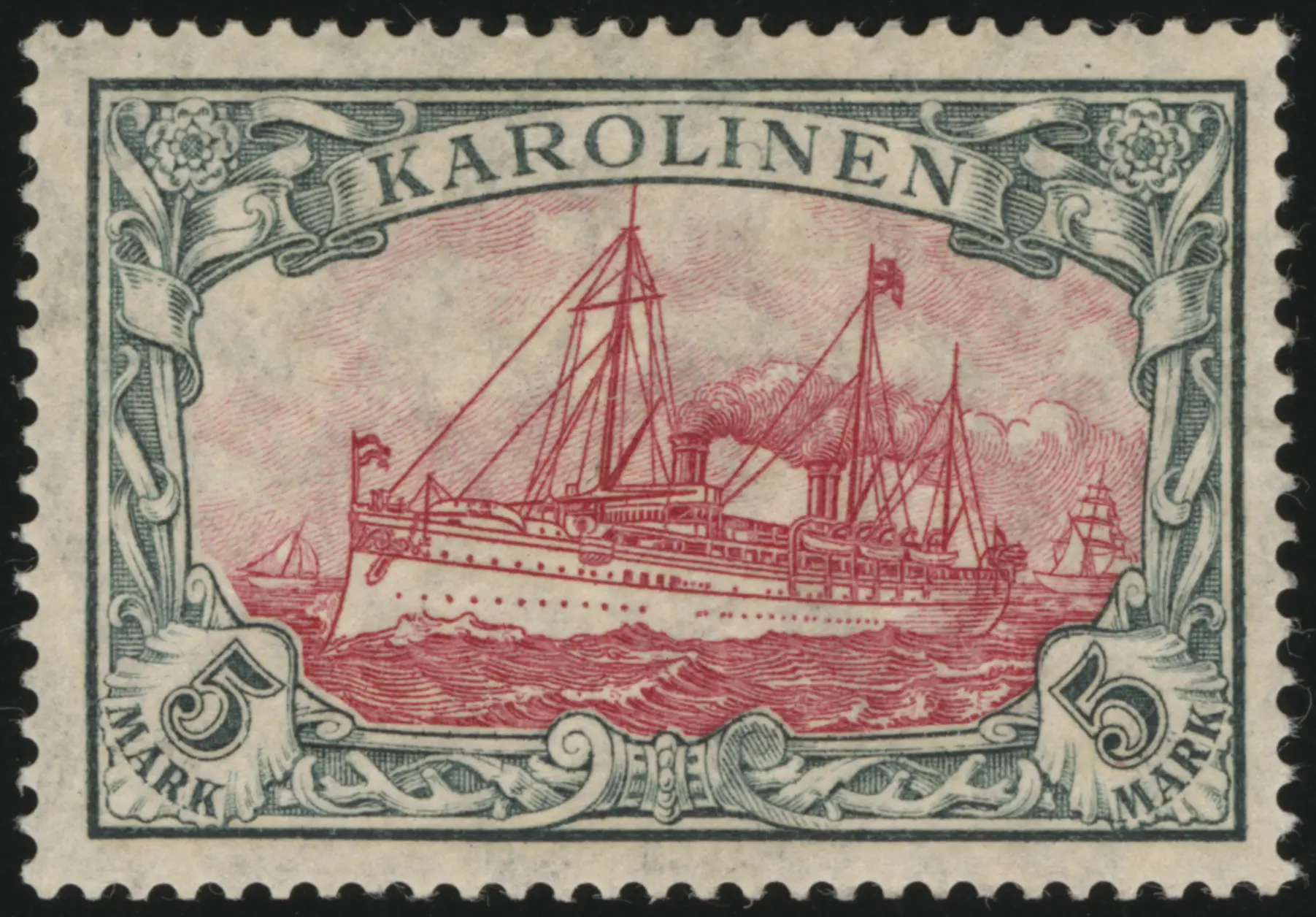 MiNr. 22 I A
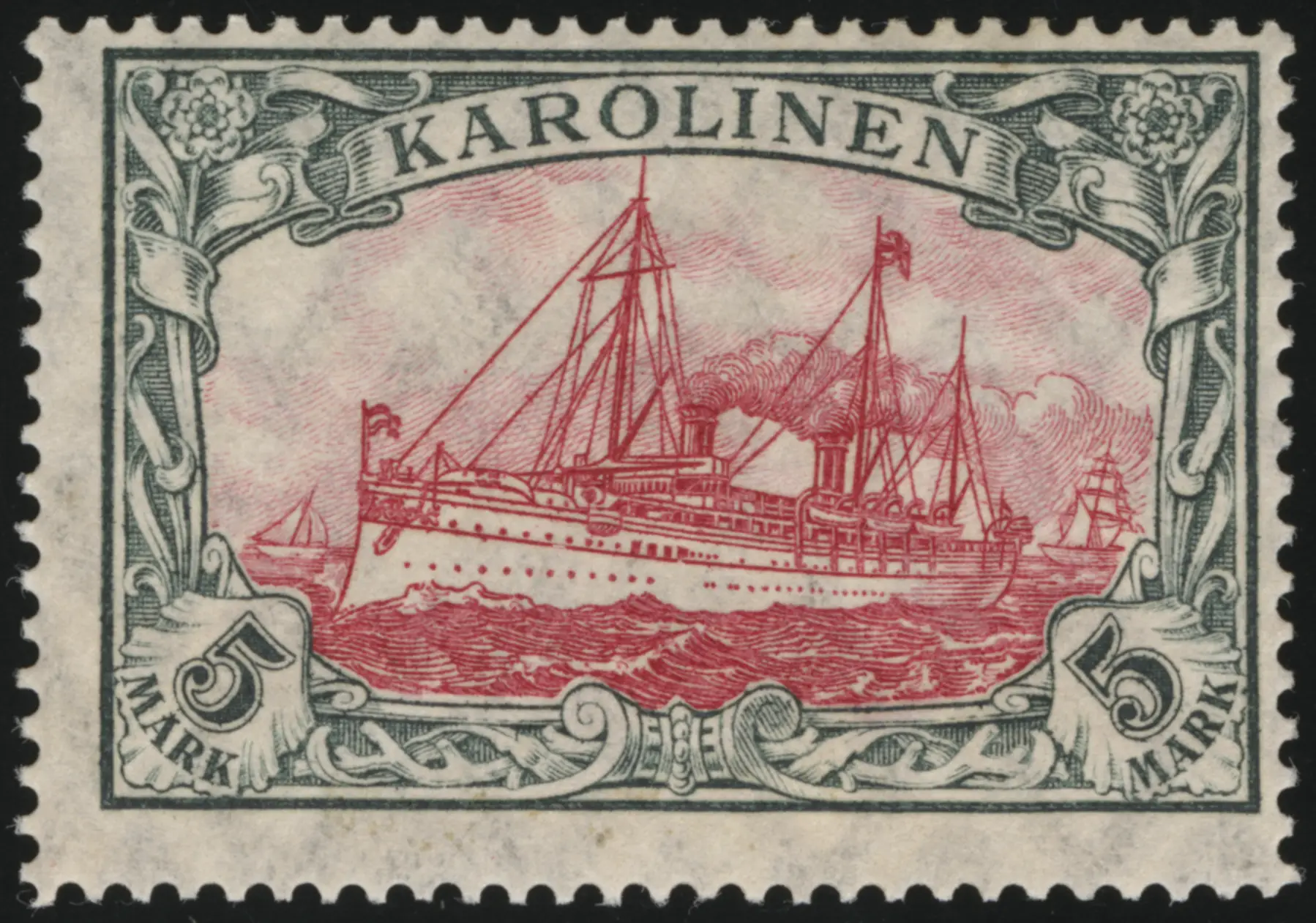 MiNr. 22 II A
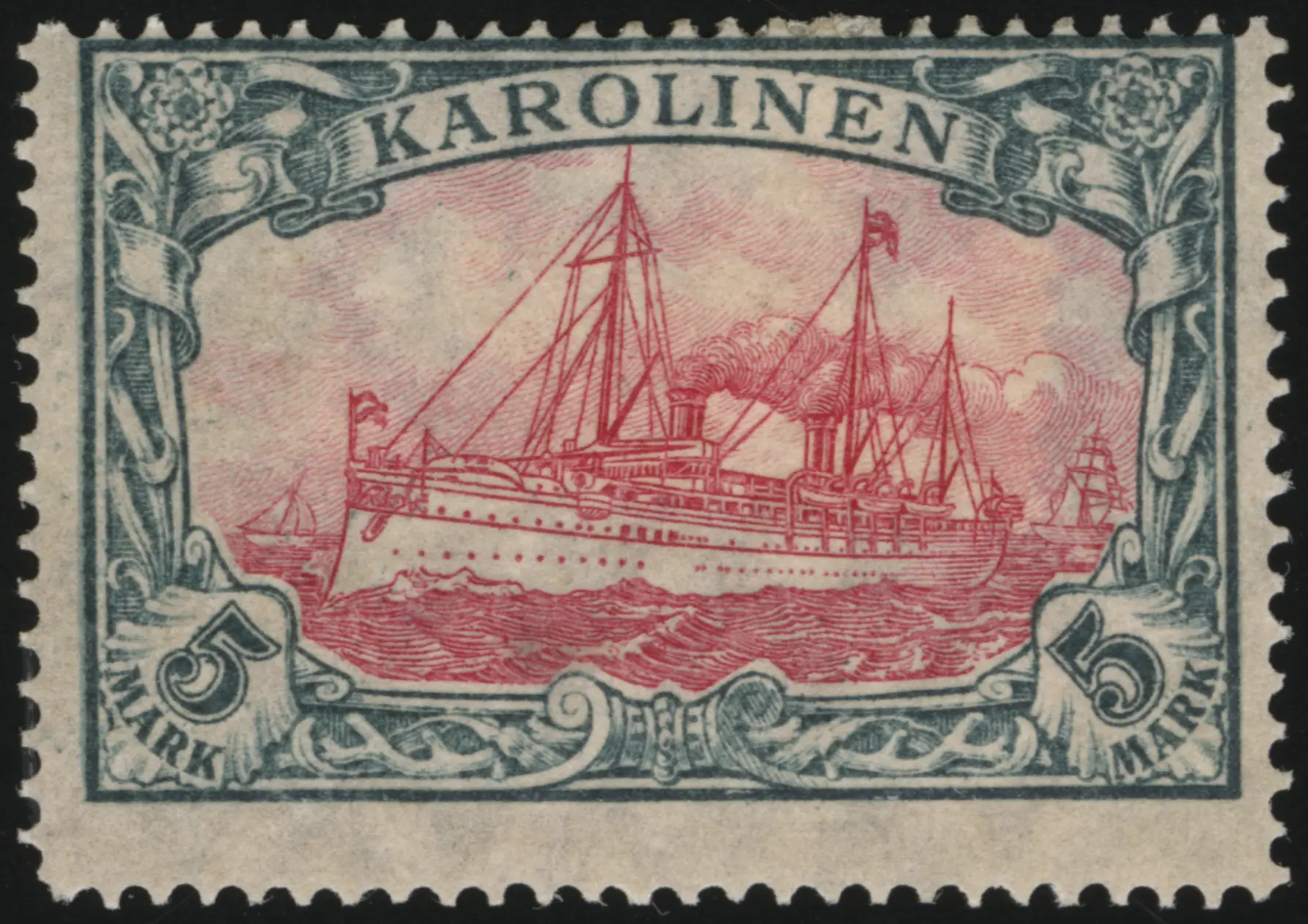 MiNr. 22 II B
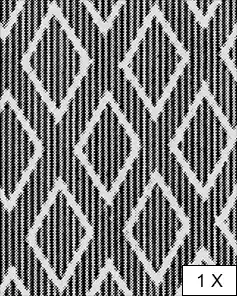
Beginning in 1905, Germany began phasing in the use of watermarked paper on its new issues.
This practice eventually led to the introduction of new Yacht issues which were similar to the 1900 issues, but featured a lozenge-shaped watermark.
These issues were never postally used due to the fall of the German Karolinen. The stamps were only sold at philatelic sales windows in Berlin.
“Peace printings” exist for MiNr. 22 (MiNr. 22 I A). The “peace printings” are slightly different in color from the “war printings,” with better quality paper and printing.
MiNr. 21 & A 21 were printed in 10×10 sheets, which were then run through a perforation machine. The machine used to perforate an unknown number of these sheets was designed to perforate two 10×10 sheets printed side-by-side with a margin in-between, rather than a single 10×10 sheet as the stamps were printed. This resulted in an extra perforation along the left margin of the sheet. For this reason, left margin copies of some printings of these issues can be found with a perforated margin, giving the appearance of a blank field attached at the left. These copies command a significant premium.
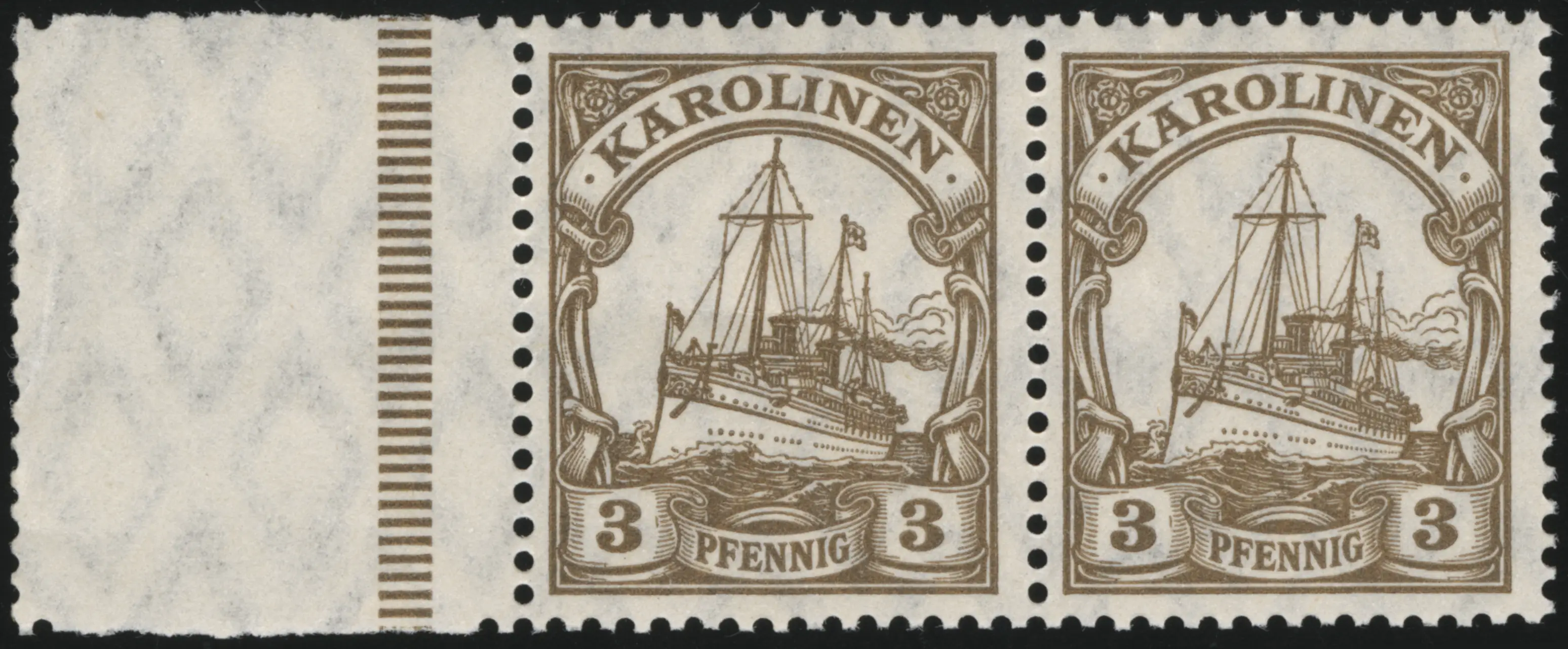 MiNr. 21 L / MiNr. 21 Pair
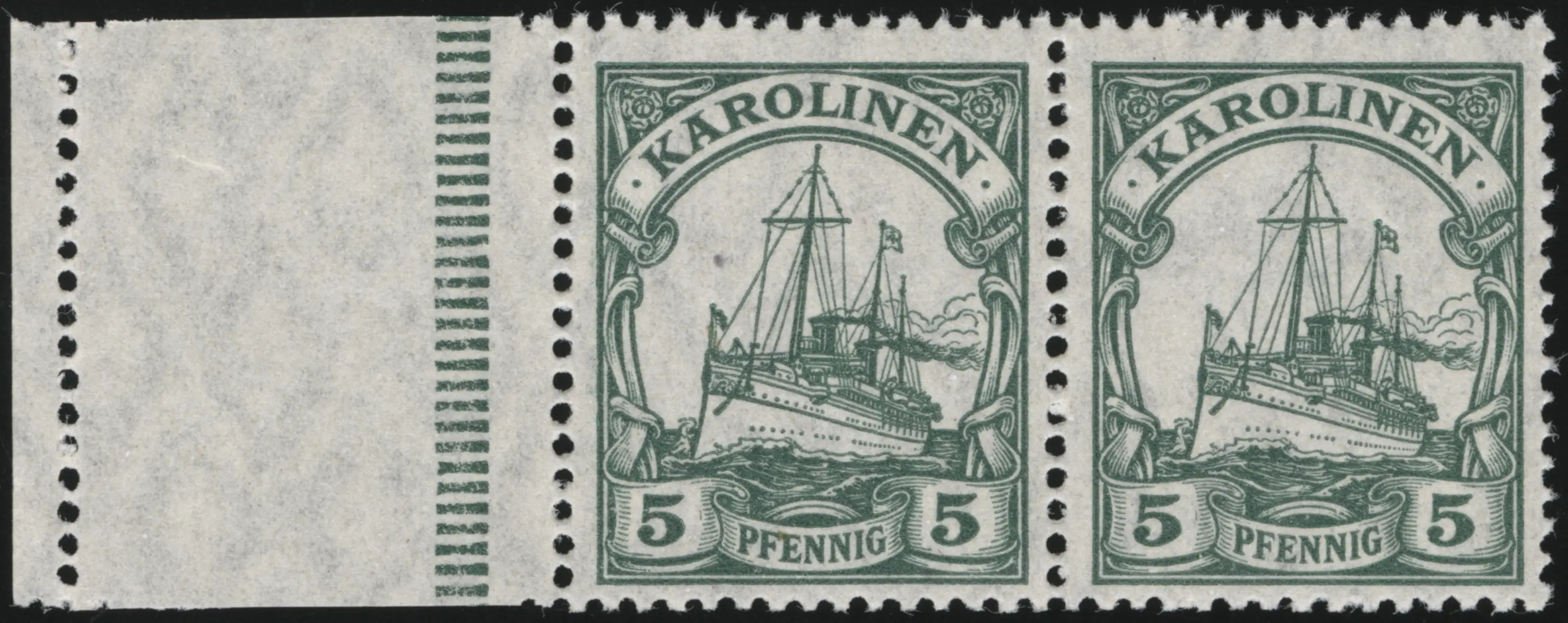 MiNr. A 21 L / MiNr. A 21 Pair
In 1902, the Reichsdruckerei (Reich Printing Office) began printing in the margins of stamp sheets the internal order number under which the stamps were printed. This order number, or Hausauftragsnummer (HAN), varied in location. For MiNr. 21, it can be found in the right or bottom margins. For MiNr. A 21, it can be found in the bottom margin.
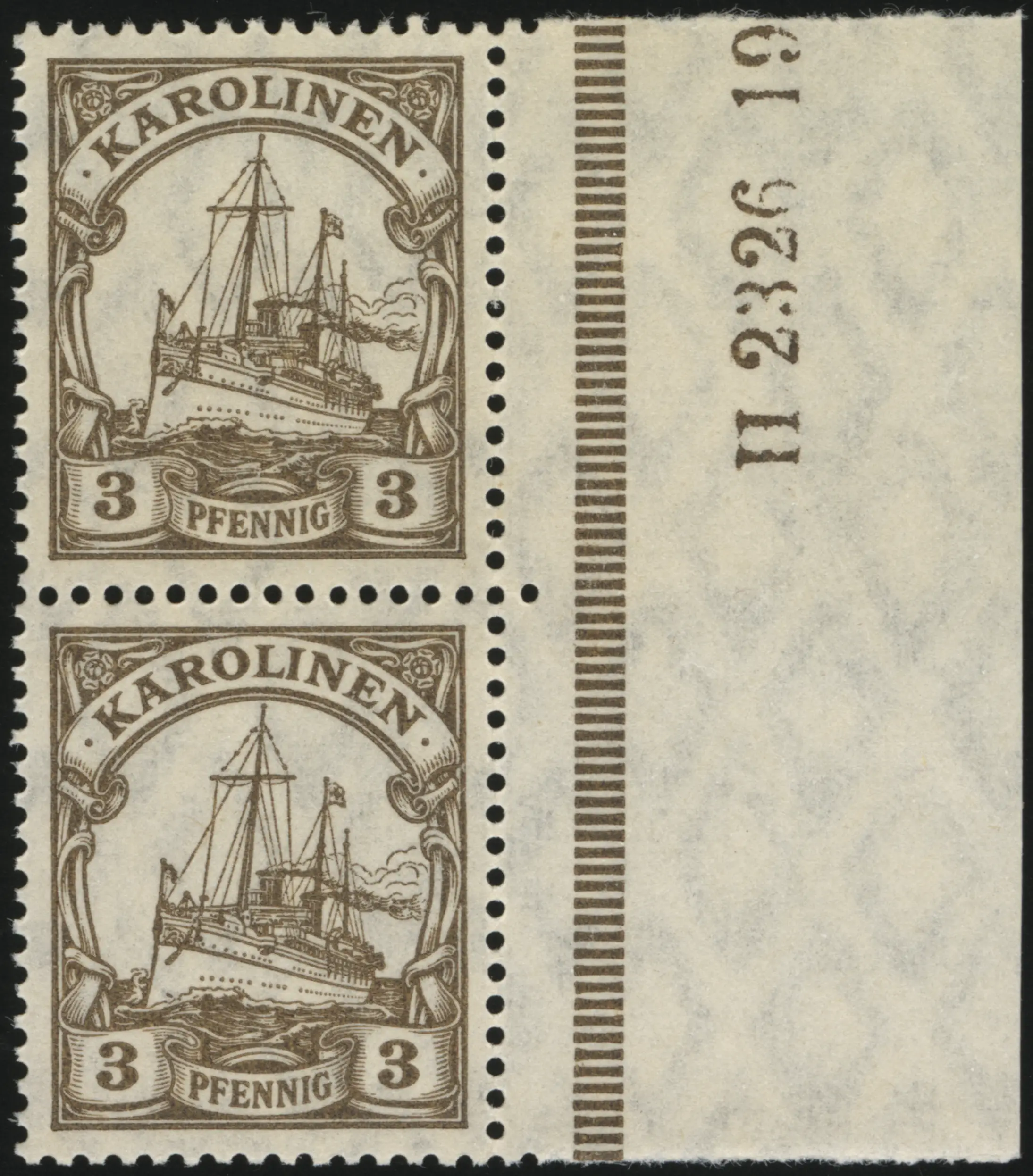 MiNr. 21 HAN H 2326.19 pair
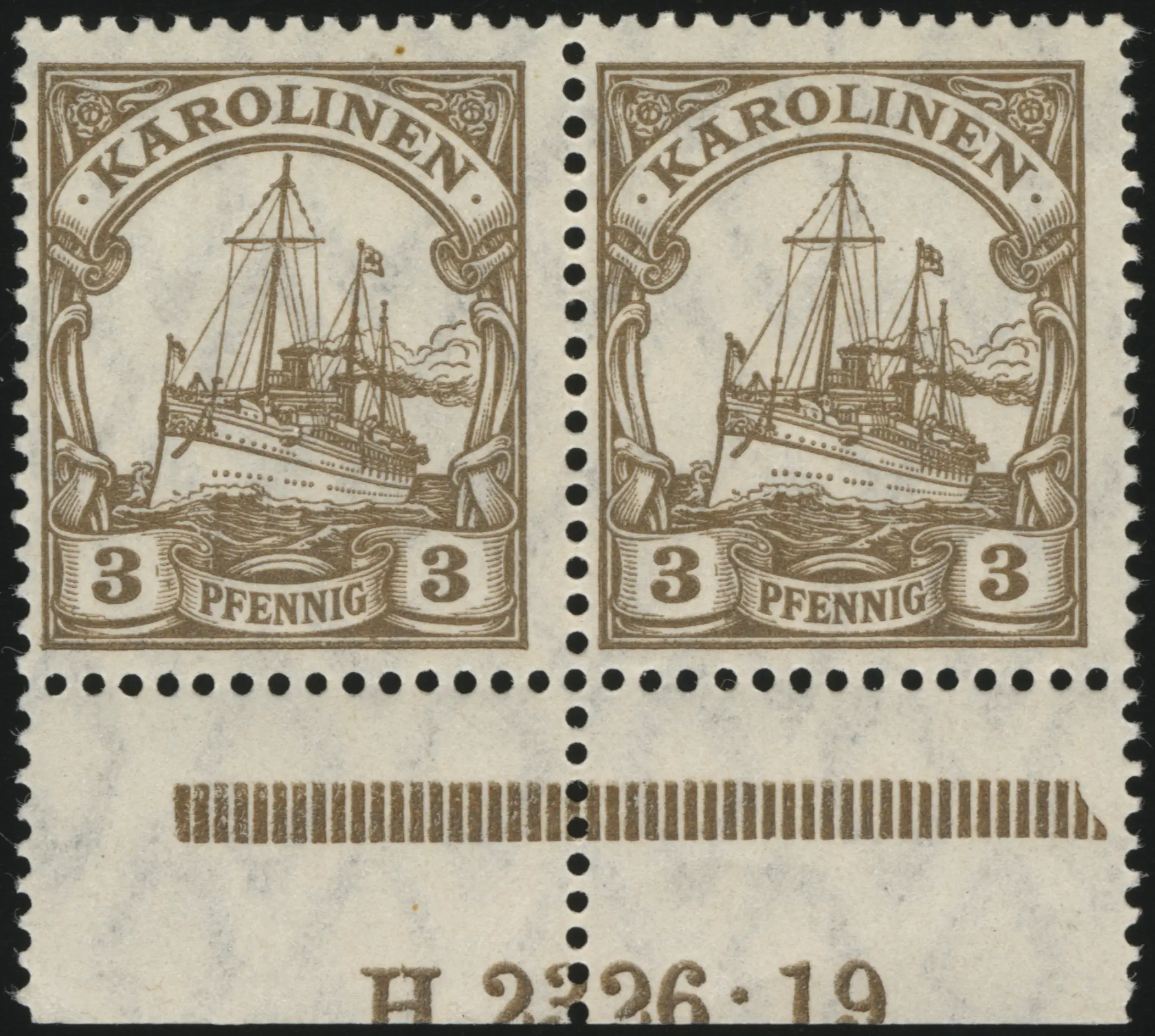 MiNr. 21 HAN H 2326.19 pair
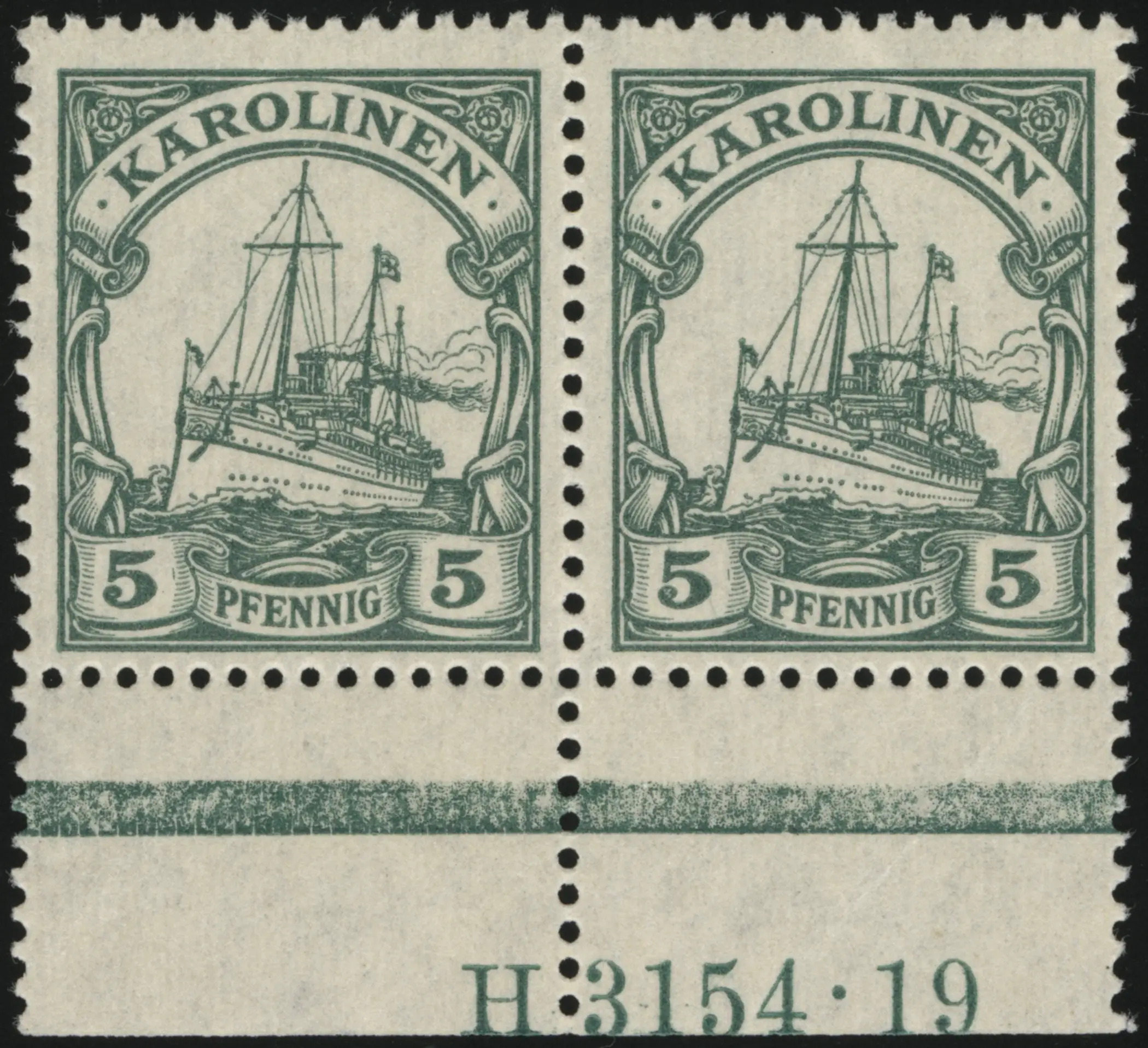 MiNr. A 21 HAN H 3154.19 pair
MiNr. 21
MiNr. A 21
MiNr. 22 I A
MiNr. 22 II A
MiNr. 22 II B
MiNr. A 21 HAN H 3154.19 pair
MiNr. 21
MiNr. A 21
MiNr. 22 I A
MiNr. 22 II A
MiNr. 22 II B
Beginning in 1905, Germany began phasing in the use of watermarked paper on its new issues.
This practice eventually led to the introduction of new Yacht issues which were similar to the 1900 issues, but featured a lozenge-shaped watermark.
These issues were never postally used due to the fall of the German Karolinen. The stamps were only sold at philatelic sales windows in Berlin.
“Peace printings” exist for MiNr. 22 (MiNr. 22 I A). The “peace printings” are slightly different in color from the “war printings,” with better quality paper and printing.
MiNr. 21 & A 21 were printed in 10×10 sheets, which were then run through a perforation machine. The machine used to perforate an unknown number of these sheets was designed to perforate two 10×10 sheets printed side-by-side with a margin in-between, rather than a single 10×10 sheet as the stamps were printed. This resulted in an extra perforation along the left margin of the sheet. For this reason, left margin copies of some printings of these issues can be found with a perforated margin, giving the appearance of a blank field attached at the left. These copies command a significant premium.
MiNr. 21 L / MiNr. 21 Pair
MiNr. A 21 L / MiNr. A 21 Pair
In 1902, the Reichsdruckerei (Reich Printing Office) began printing in the margins of stamp sheets the internal order number under which the stamps were printed. This order number, or Hausauftragsnummer (HAN), varied in location. For MiNr. 21, it can be found in the right or bottom margins. For MiNr. A 21, it can be found in the bottom margin.
MiNr. 21 HAN H 2326.19 pair
MiNr. 21 HAN H 2326.19 pair
MiNr. A 21 HAN H 3154.19 pair